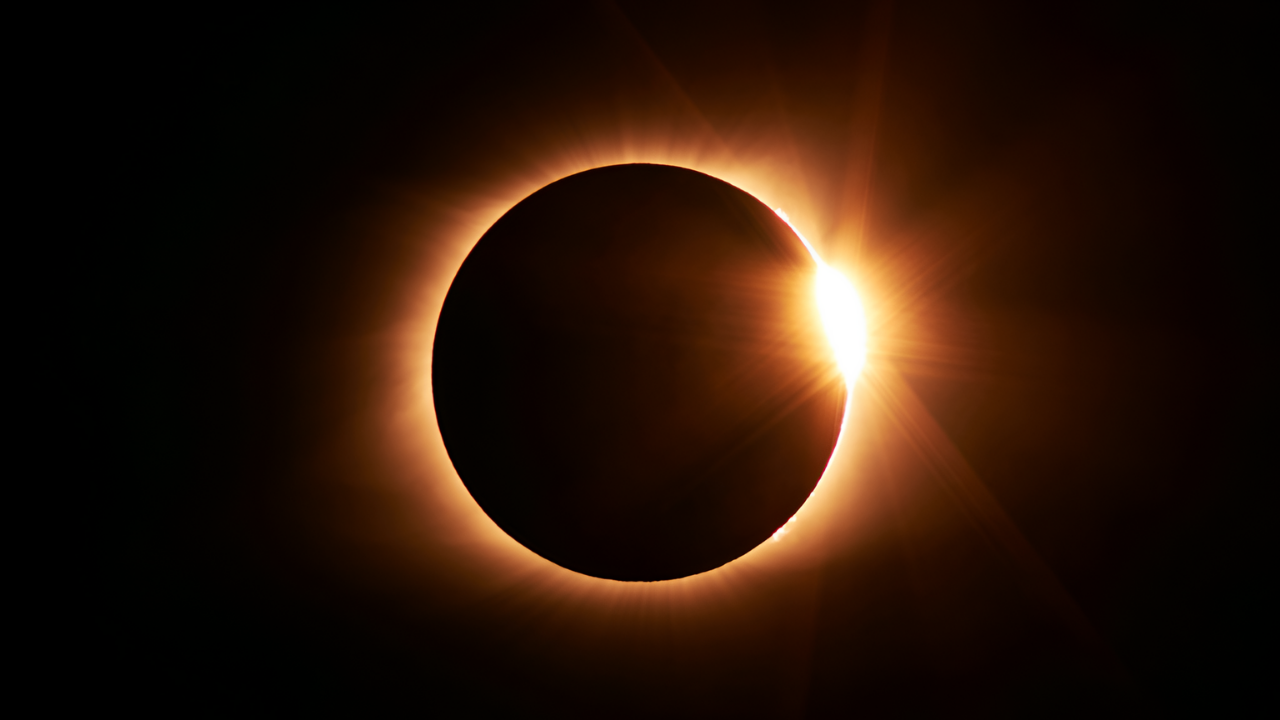
On August 2, 2027, around 1:00 p.m. in Luxor, Egypt, the sky will darken to twilight blue, stars will emerge in daylight, and temperatures will plummet. For 6 minutes and 23 seconds, the Sun will disappear completely behind the Moon, marking the second-longest total solar eclipse of the 21st century and the longest visible from easily accessible land between 1991 and 2114.
This astronomical phenomenon, already dubbed the “Eclipse of the Century,” will sweep across three continents in a spectacular display that will transform midday into midnight for tens of millions of people.
A Hemisphere-Scale Spectacle
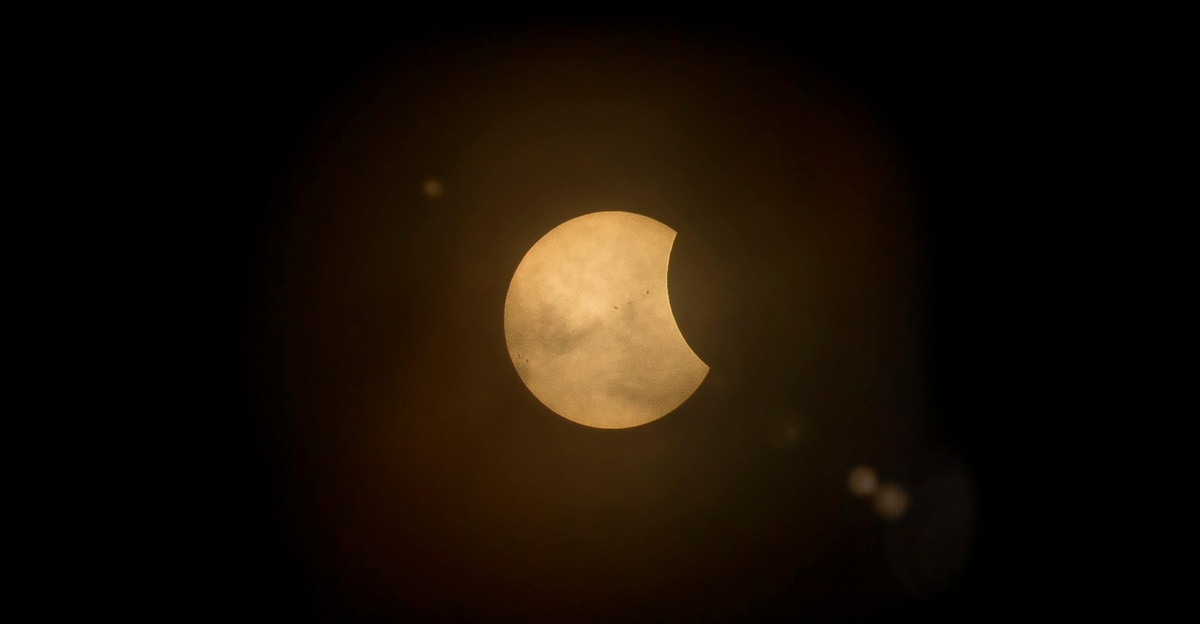
The August 2027 eclipse represents an unprecedented opportunity for mass observation. An estimated 89 million people live directly within the path of totality, more than double the 44 million who experienced the April 2024 North American eclipse. When partial eclipse viewers are included, over 4.6 billion people—57.48% of Earth’s population across the Eastern Hemisphere—will witness some phase of this celestial event.
The partial eclipse will be visible across nearly the entire European continent, all but the southern quarter of Africa, the Middle East, and from South and Southeast Asia. One source estimates that over 200 million people could attempt to watch the eclipse, making it potentially the most photographed astronomical event in human history.
Unlike most eclipses that traverse oceans or remote lands, this path crosses multiple major population centers, sacred sites, and tourist destinations. Cities including Cádiz and Málaga in Spain, Gibraltar, Tangier in Morocco, Benghazi in Libya, Luxor in Egypt, and the holy cities of Mecca and Jeddah in Saudi Arabia will all experience complete darkness at midday.
Celestial Precision Enables Extraordinary Duration
The exceptional 6-minute-23-second duration results from a near-perfect alignment of astronomical factors. On August 2, 2027, Earth will be near aphelion—its farthest point from the Sun at approximately 152 million kilometers—causing the Sun to appear slightly smaller in the sky. Simultaneously, the Moon will reach perigee just 2.5 hours after the eclipse, approaching its closest point to Earth and appearing larger than usual.
This combination of a seemingly smaller Sun and a larger Moon allows the Moon to completely obscure the solar disk for an extended period. Additionally, because the eclipse path runs close to the equator, the Moon’s shadow travels more slowly across Earth’s surface at these lower latitudes, further extending totality.
The shadow will race eastward at varying speeds as it crosses the planet. The approximately 258-kilometer-wide (160-mile) path of totality will begin over the Atlantic Ocean and make landfall at the Strait of Gibraltar before sweeping across southern Spain, North Africa, and the Middle East.
Ranking Among the Century’s Longest Eclipses
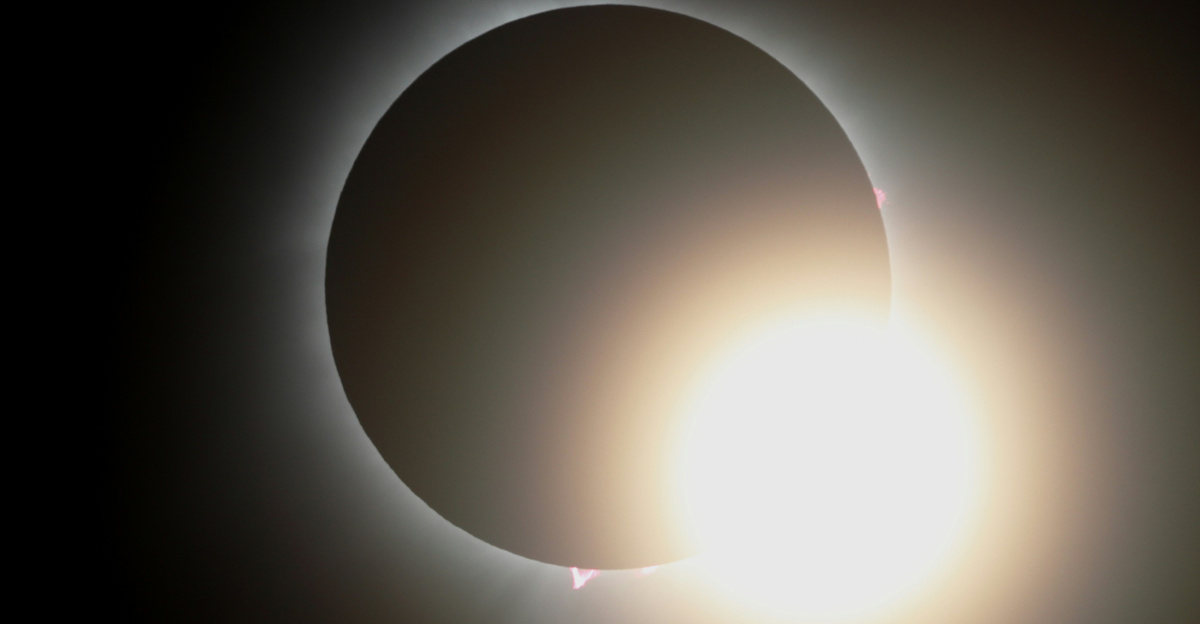
The August 2, 2027 eclipse stands as the second-longest total solar eclipse of the 21st century. Only the July 22, 2009 eclipse exceeded it, with a maximum duration of 6 minutes 38.86 seconds over the Pacific Ocean. However, that eclipse’s longest duration on land occurred on remote, uninhabited North Iwo Jima, where visiting requires special permission.
The 2027 eclipse claims the distinction of being the longest total solar eclipse on easily accessible land this century. The next total eclipse to surpass this duration on land will not occur until June 3, 2114—87 years in the future.
By comparison, most total solar eclipses last only 2 to 3 minutes. The widely celebrated April 2024 North American eclipse peaked at 4 minutes 28 seconds. The August 2027 event offers more than double typical viewing time, allowing unprecedented opportunities for scientific observation and public engagement.
Optimal Viewing: Egypt’s Ancient Landscape

The point of greatest eclipse—where totality lasts longest—will occur in Egypt’s New Valley Governorate, approximately 60 kilometers (37 miles) southeast of Luxor. Here, darkness will reign for the full 6 minutes and 23 seconds shortly after 1:00 p.m. local time.
Luxor presents ideal conditions for eclipse viewing. The city offers world-class tourism infrastructure, direct access to ancient monuments including Karnak Temple and the Valley of the Kings, and statistically favorable August weather with low cloud cover and minimal precipitation. Multiple tour operators are already offering luxury Nile cruise packages with eclipse viewing from historic hotels and specially selected riverside sites.
Other prime locations include Libya and central Egypt, regions known for clear, dry conditions during summer months. The path also crosses Benghazi, where totality will last 6 minutes 11 seconds, and multiple cities in Tunisia, Algeria, and Morocco with durations exceeding 5 minutes.
Sensory Transformation and Biological Response
During totality, observers will witness the Sun’s corona—the superheated outer atmosphere normally invisible against the Sun’s brightness—appear as a delicate white halo around the darkened disk. Venus, Mercury, Jupiter, and Saturn will emerge in the darkened sky, and the Winter Hexagon asterism will become visible across most continental viewing areas.
The horizon will glow with a 360-degree sunset effect as light from beyond the shadow’s edge illuminates the atmosphere. Shadows will sharpen, colors will mute due to the rapid dimming, and temperatures will drop abruptly by 5 to 15 degrees Fahrenheit (3 to 8 degrees Celsius).
Studies from the April 2024 North American eclipse documented dramatic biological responses. Research published in 2025 found that 29 bird species altered their behavior during totality, with many singing dawn choruses in midday darkness. Half of the species studied only changed their rhythms when obscuration exceeded 99 percent. Infrastructure sensors will detect nightfall conditions, triggering streetlights across cities in the path.
Preparation Imperatives and Safety

Viewing any portion of the eclipse outside totality requires ISO 12312-2 certified solar eclipse glasses, which block 99.997 percent of the Sun’s light. Counterfeit glasses provide no protection and can cause permanent retinal damage. Only during the brief period of totality—when the Moon completely covers the Sun—is it safe to view with the naked eye.
The scale of interest presents significant logistical challenges. Regions in southern Spain and Morocco reported hotel sell-outs 18 months before the eclipse in late 2025. Tourism officials predict a multi-million-euro economic surge. The April 2024 eclipse overwhelmed small North American towns with traffic gridlock, fuel shortages, and strained emergency services; the 2027 event will affect far more people across international borders.
Eclipse experts strongly recommend securing accommodations and travel plans 18 to 24 months in advance. Mobility and access to weather forecasts remain critical, as cloud cover can obscure viewing even at optimal locations.
Spain’s Remarkable Year of Eclipses
Spain occupies a unique position in eclipse history. The country will experience its first total solar eclipse in decades on August 12, 2026, when a path of totality sweeps across northern Spain with 1 to 2 minutes of totality. Less than one year later, on August 2, 2027, southern Spain—including Cádiz and Málaga—will experience another total eclipse.
This represents the first time Spain will witness two total solar eclipses within a single year. An annular eclipse will follow in January 2028. The Spanish government has established a national eclipse committee to coordinate eclipse-related activities, tourism management, and scientific expeditions.
A Cosmic Moment for Humanity
Even veteran astronomers describe totality as emotionally overwhelming—a visceral reminder of humanity’s place in cosmic rhythms spanning millennia. As the Moon’s shadow races across ancient temples where civilizations tracked celestial cycles thousands of years ago, the August 2027 eclipse bridges past and present in a shared moment of wonder.
The event occurs at the Moon’s descending node in Solar Saros cycle 136, a series that produces long-duration eclipses every 18 years, 11 days, and 8 hours. The next eclipse in this series will occur on August 12, 2045, crossing the United States, Caribbean, and South America.
With 18 months remaining from early 2026, preparations intensify across three continents. The eclipse will test tourism infrastructure, international coordination, and emergency services while offering tens of millions their only opportunity in a lifetime to stand in the Moon’s shadow. For 6 minutes and 23 seconds, the ancient dance of celestial mechanics will unite a hemisphere in darkness and awe.
Sources:
NASA Eclipse Website – Total Solar Eclipse of July 22, 2028
Australian Astronomical Society – Eclipse Path Data and Duration Specifications
Space.com – Solar Eclipse Temperature Drop and Phenomena Documentation
Science Journal and Nature – Bird Behavior During Total Solar Eclipses (2024-2025 Research)
American Astronomical Society – ISO 12312-2 Eclipse Glasses Safety Standards
Astronomical Society of Australia – Sydney Eclipse Visibility and Totality Duration Analysis