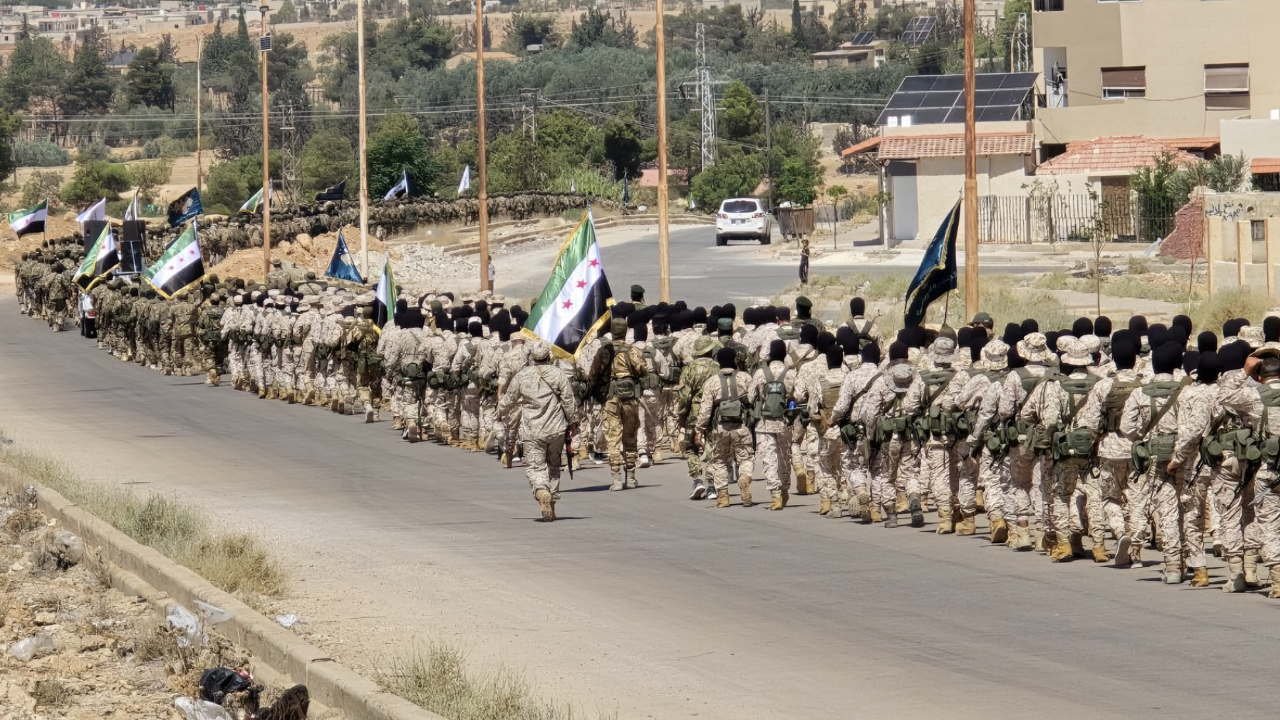
In mid-January 2026, Syrian government forces and allied Arab tribal fighters executed a swift cross-Euphrates offensive, overrunning key positions held by the U.S.-backed Syrian Democratic Forces (SDF) in Deir al-Zor and Raqqa provinces. This two-day operation captured vital oil and gas fields, dams, and population centers, eroding over a decade of Kurdish-led autonomy and redirecting energy revenues to Damascus.
Stakes and Shifting Power
President Ahmed al-Sharaa’s transitional government, formed after Bashar al-Assad’s ouster in late 2024, views the gains as essential for consolidating authority. The SDF’s territorial losses fueled resentment among local Arab communities, who had chafed under perceived Kurdish dominance. Damascus now controls major revenue streams from oil and gas, challenging U.S. influence and altering regional dynamics in eastern Syria.
Civil War Background
Syria’s post-2011 civil war fragmented the country into rival zones. The SDF, with U.S.-led coalition support against ISIS, established semi-autonomous rule in the northeast and east, relying on fields like Omar oil and Conoco gas for funding. After Assad’s fall, al-Sharaa’s administration rebuilt its army, sparking tensions with Kurdish forces and minorities through intermittent clashes.
The 48-Hour Seizure
From January 17 to 18, Syrian units and tribal militias breached SDF lines, seizing the Omar oil field—Syria’s largest—the Conoco gas facility, Tabqa area, and Euphrates dams. The rapid advance, described across reports as extensive, forced SDF retreats and cut off critical infrastructure funding. Defections by Arab SDF fighters accelerated the collapse, exposing internal fractures.
Tribal Role and Regional Backing
Euphrates valley tribes, long opposed to YPG influence, bolstered the offensive from Raqqa countryside to Deir al-Zor. Turkey, viewing the YPG as a PKK extension, endorsed the setbacks and backed Damascus’s border and resource claims. SDF commander Mazloum Abdi confronts criticism over failed negotiations and eroding U.S. guarantees.
Ceasefire and Integration Deal
A January 18 ceasefire outlined individual SDF fighter integration into Syrian forces after vetting, with civilian staff retained under oversight. Damascus assumed control of borders, energy sites, and institutions, while the SDF handles ISIS detention facilities like Shaddadeh temporarily. Al-Sharaa issued decrees promising local representation and protections within a unified state, absorbing former rebels into a national army.
Doubts About Durability
Analysts warn the framework may falter, with potential YPG resistance, sabotage, or clashes persisting. SDF movements suggest incomplete de-escalation. Al-Sharaa’s centralization rejects federalism or “Rojava”-style autonomy, prioritizing state control over minorities.
International and Regional Fallout
Turkey aligned closer with Damascus against Kurdish groups, while Saudi Arabia eyes ties with the new leadership. U.S. leverage wanes as SDF folds into Syrian structures, impacting anti-ISIS efforts and Middle East posture. Damascus gains legal hold on resources, dams, and ISIS camps, raising due process concerns.
Identity and Future Stakes
Arabs view the rollback as correcting marginalization, while Kurds fear cultural erosion and PKK stigma. The offensive signals a new phase: reduced fragmentation, stronger central statehood. Stability depends on security, services, inclusion, and managing Turkey tensions. If mechanisms hold, unified control could aid anti-ISIS fights and refugee returns; failure risks repression or conflict cycles.
Sources:
Reuters, Syrian forces seize major oil, gas fields in eastern Syria, 18 January 2026
Jerusalem Post, Understanding the unfolding new power conflict in Syria, 17 January 2026
ABC News, What to know about Syria’s main Kurdish-led force and its deal with Damascus after suffering major losses, 19 January 2026
Daily Sabah, Syria moves to new phase after major defeat of terrorist YPG, 19 January 2026
Wikipedia, Syrian Democratic Forces–Syrian transitional government clashes (2025–present), 20 September 2025