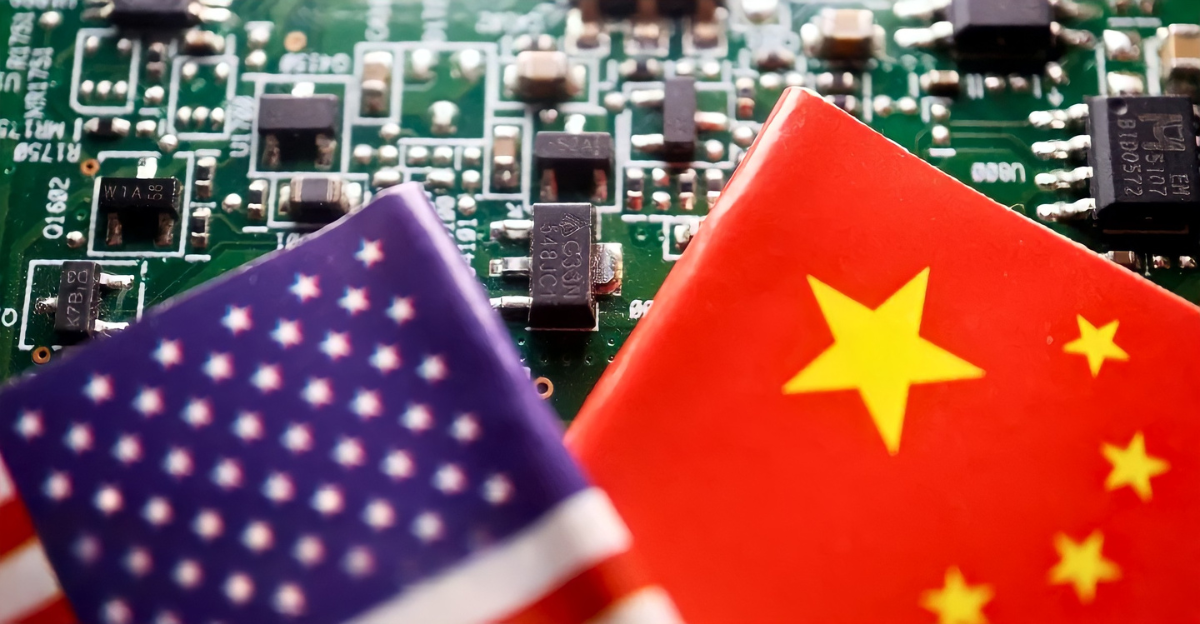
An unprecedented monetization of export controls has occurred with the recent US policy requiring major chipmakers Nvidia and AMD to send 15% of their sales revenue from AI chips in China to the US government. This new agreement, which was started during the later Trump administration and is being carried out under Biden’s, uses trade restrictions as a tool to generate income as well as a defensive one.
It is a prime example of the transition in high-tech geopolitics from traditional trade policy to a more transactional, state-interventionist approach. Although the restrictions are justified by security concerns about China’s technological advancements, detractors contend that the United States is profiting from limited market access, which raises moral and legal concerns about export taxes and economic coercion.
The Background of Trade Restrictions Between the United States and China

Over the past ten years, trade restrictions aimed at China’s semiconductor sector have changed from specific sanctions on particular businesses to widespread prohibitions on the export of sophisticated chips. Biden-era export controls in 2023–2024, which forbade the sale of high-performance chips and chipmaking equipment essential to AI and military applications, furthered US policy, which had started with early tariffs and blocklists against companies like Huawei and SMIC.
In the past, these steps were taken to safeguard semiconductor supply chains in the United States and its allies while slowing China’s technological advancements. Profit-sharing is a novel approach to monetizing export licenses, though, and it represents a transactional paradigm that has not been observed in previous trade wars or sanctions. In addition to reflecting growing geopolitical rivalry, this evolution adds complexity to diplomatic relations and corporate compliance.
The Nature of the Monetization Deal and Its Mechanics

The agreement states that AMD’s MI308 chip and Nvidia’s H20 AI chip, both of which need export licenses, can only be sold in China if the companies agree to give the US government 15% of their profits made in China. This entangles state economic interests with corporate profit, functioning as a de facto levy on exports.
Such agreements defy accepted conventions, which hold that regulatory limitations rather than the exporting state’s direct revenue extraction determine market access. This model challenges established public-private trade boundaries and has come under legal scrutiny for possibly being unconstitutional export taxes. Furthermore, it creates a precedent for transactional diplomacy in which export permits are treated like commodities, potentially changing the dynamics of international trade and granting coercive leverage over multinational corporations.
Economic Justification and American Strategic Advantages

Supporters contend that by preventing China from gaining unfettered access to advanced AI chips, a market valued at billions of dollars a year, the agreement puts the US government in a position to recover financial gains lost. Washington finances incentives for domestic semiconductor manufacturing and counteracts economic losses from trade restrictions by turning export licenses into revenue streams.
Global businesses are also alerted to the costs of doing business with China under US supervision by this monetization. Additionally, it encourages reshoring chip production in the United States by matching fiscal penalties and tariffs with commitments to domestic investment, as demonstrated by Apple’s manufacturing expansions worth over $100 billion. In order to preserve American technological leadership in the face of growing competition from China, the strategy aims to strategically integrate industrial policy, national security, and commercial leverage.
Rebuttals on the Basis of Law and Ethics

Critics point out that the US Constitution prohibits export taxes, which is what happens when export licenses are tied to a percentage of sales revenue. This legal ambiguity raises the possibility of legal challenges that could make the agreement unenforceable. Ethically, monetizing restrictions turns market access into a commodity, combining corporate profits with state power and possibly penalizing businesses for entering foreign markets.
Additionally, critics argue that this policy undermines trust and complicates U.S.-China tech relations by confusing fiscal opportunism with national security. They caution that it might encourage China to strike back or seek self-sufficiency more vigorously, escalating decoupling patterns and global supply chain fragmentation and ultimately harming the competitiveness of American industries abroad.
Effect on the Competitiveness of the US Semiconductor Industry

The monetization agreement gives the US government short-term revenue, but it has complicated long-term effects on industry. The lucrative Chinese market, which generates significant sales and R&D revenue required for innovation, is less accessible to US businesses due to restrictions. The licensing agreement maintains restricted market access, but at a price that might deter timeliness and scale. Export restrictions also interfere with supply chains and make it harder for American companies to keep an eye on and react to changes in China’s chip industry.
It is feared that these combined forces may weaken US semiconductor dominance by allowing competitors with less stringent regulations to gain emerging market share or by postponing revenue reinvestment, which is crucial for the development of next-generation chips.
China’s Domestic Growth and Industrial Reaction

China’s chip industry is still growing strongly thanks to government-backed investments, talent development, and domestic innovation, even in the face of US export restrictions and the monetization agreement. China’s integrated circuit exports in 2024 increased by more than 20% year over year to reach about $141 billion, demonstrating the country’s resilience and rapidity in developing its own capabilities.
China has started large-scale funding programs (like the “Big Fund”), industrial policies that encourage self-sufficiency in chip design and manufacturing, and diversification away from American technologies. This undermines Washington’s efforts to curb China’s technological ascent and draws attention to a strategic conundrum: limiting sophisticated imports could hasten China’s transition to technological independence and eventually weaken American influence.
Additional Geopolitical and Supply Chain Consequences

Global supply chains for semiconductors, artificial intelligence chips, and related technologies are impacted by US restrictions and their monetization effects, which go far beyond bilateral trade. Global markets are being disrupted by the export license backlog, which has reached a 30-year high. This forces supply chain fragmentation, with companies in China, Taiwan, South Korea, and Europe filling gaps.
As nations diversify their technologies and sourcing, this fragmentation drives up costs, slows the diffusion of innovation, and promotes geopolitical realignments. The strategy runs the risk of undermining American technological leadership while revealing weaknesses in highly interconnected supply chains, such as increased global costs for consumer electronics and auto parts. This newfound economic pressure also encourages others to monetize similarly, setting the stage for trade weaponization in other industries.
International Norms and Enforcement Challenges

Chipmakers must maintain constant oversight and transparency in order to comply with a profit-sharing requirement, which is challenging given their diverse accounting practices and global corporate structures. The monetization agreement also goes against established international trade regulations that forbid export taxes and unfair licensing practices.
A legal and diplomatic minefield could result, with impacted nations or businesses turning to the WTO or other dispute resolution channels. The agreement also forces other countries to reconsider their export restrictions and possible economic concessions, which could undermine multilateral cooperation on technology governance. Future discussions on important topics like technology transfer agreements, global supply chain security, and AI regulation are made more difficult by this deterioration of norms.
Unexpected Industry Mix-Up: Trade Policy, Financialization, and Technology

This monetization presents a new combination of financial statecraft and technology policy. The US government is taking an equity stake in the profits of its top chipmakers that deal with China. Although export licensing is unprecedented, this combination of industrial policy and direct state revenue claims is similar to sovereign wealth fund strategies.
The future role of governments in financially “partnering” with multinational corporations is one of the fascinating questions it raises. Would this put pressure on the development of new financial products that include geopolitical risk premiums linked to contingent earnings from exports? The case might lead to new frameworks that blur the lines between public and private sectors in strategic areas by combining transactional revenue generation with economic security.
Monetization as a Masterpiece of Realpolitik
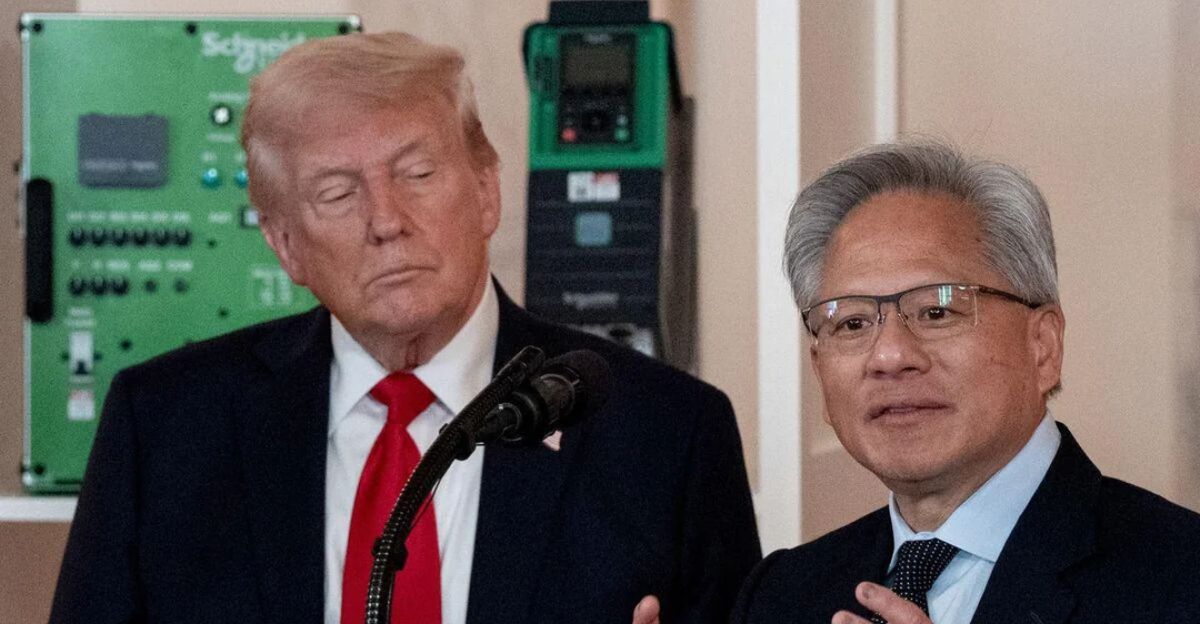
Monetizing restrictions, according to some, is a practical realpolitik reaction to a geopolitical rival abusing free markets. The United States is gaining value from a crowded, competitive market rather than merely preventing sales and losing out on opportunities. This strategy, which uses state power to collect rents from international tech commerce, is consistent with past mercantilist practices modified for the digital economy.
It might discourage the expansion of Chinese demand while giving American policymakers financial leverage to reinvest in domestic semiconductors. This deal, despite its risks, represents an evolved hybrid approach between sanctions and commerce, emphasizing transactional leverage over ideological purity and potentially redefining economic statecraft in the context of superpower rivalry.
The Danger of Retaliatory Divorce
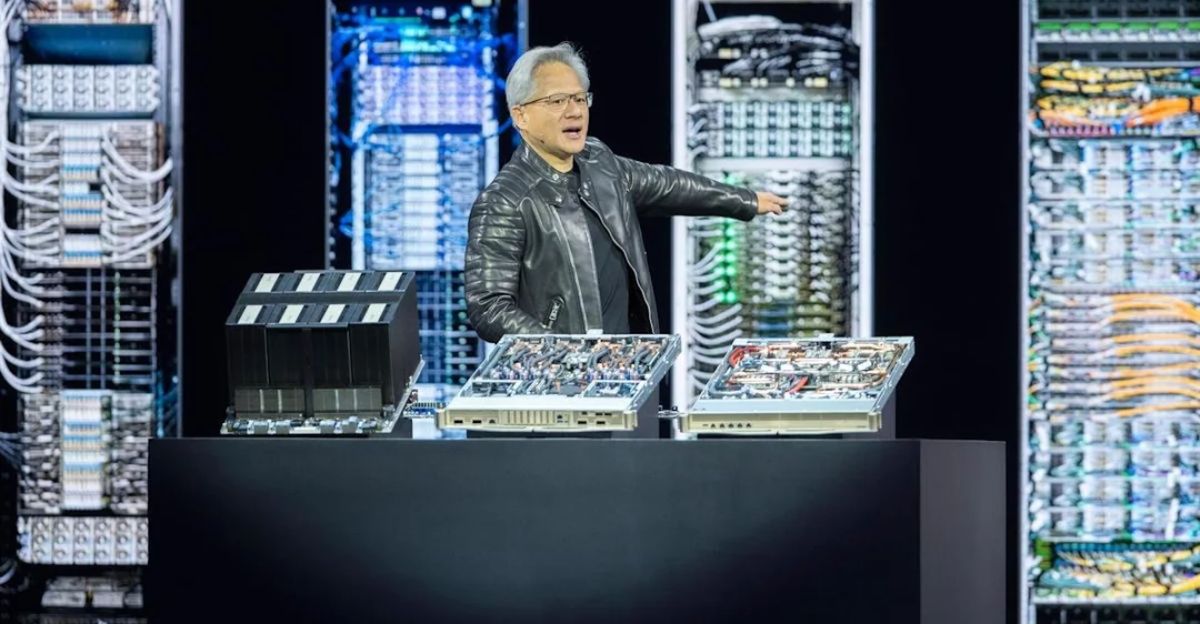
The monetization agreement runs the risk of inciting severe retaliatory actions from China, including more stringent export restrictions on American semiconductor inputs or legal action against American companies doing business in China. Beijing has already used anti-monopoly probes and sanctions against significant American chip manufacturers.
Global production costs could rise, and interconnected innovation networks could be undermined by a tit-for-tat spiral that speeds up tech decoupling. This case serves as an example of how financializing trade restrictions can turn into full-fledged techno-nationalist warfare, surpassing economic competition. Global supply chains could be severely disrupted, AI developments could be delayed, and geopolitical instability could result from such failures, highlighting the need for a well-balanced policy that strikes a balance between economic sustainability and strategic containment.
The Model of “Export Revenue Capture”

The agreement can be viewed as a new international trade model known as “Export Revenue Capture,” in which governments use revenue-sharing requirements on exports as a means of strategic leverage and indirect taxation. By focusing on corporate revenue streams that are directly connected to restricted markets, this model departs from tariffs and quotas.
For businesses, governments, and trading partners, it creates layered incentives and compliance challenges. It would take new international legal frameworks and accounting standards to implement such a model widely. It might turn access to profitable markets into regulated financial transactions, having previously unheard-of effects on diplomatic relations, investment choices, and corporate strategic planning.
Growth in China Chip Exports Despite Barriers

Despite US restrictions, China’s chip exports increased by more than 20% in 2024, which defied expectations and demonstrated the inadequacy of export controls in halting China’s technological advancement. Strong state-led investment initiatives totaling hundreds of billions of dollars in capital, the maturation of the domestic industry, and the rising demand for integrated circuits for consumer electronics, automotive, and artificial intelligence technologies worldwide are the leading causes of this growth.
This information emphasizes that export controls, even ones that are monetized, are insufficient to stop China’s chip aspirations and may unintentionally promote legislative measures that increase China’s technological prowess and market dominance.
Impacts of the Second Order on International Tech Innovation Ecosystems

By shifting revenue flow and generating uncertainty about market access, the monetization plan and associated export restrictions cause systemic shocks to global tech innovation. Companies based outside of China might work with non-US partners and speed up alternative R&D pipelines to create supply chains that get around US regulations. Because of this fragmentation, the global tech ecosystem runs the risk of splitting into rival blocs with different standards, capacities, and incentives for innovation.
This would hinder cross-border cooperation, which is essential for advances in semiconductor design, artificial intelligence, and quantum computing. Geopolitical fault lines within the global tech landscape and a slowdown in technological advancement could result from these second-order effects.
Investment Strategies and Financial Markets

Investors are adjusting their portfolios to prioritize companies exempt from export restrictions and semiconductor manufacturing hubs located outside of China. The monetization agreement exacerbates volatility by raising doubts about revenue growth for US tech companies that do business in China.
Furthermore, new risk pricing and hedging tools in financial markets might be prompted by the precedent of government revenue claims on corporate foreign earnings. Startup growth and the diffusion of technology across borders may be impacted by a decline in venture capital and private equity investment flows aimed at China’s tech sector. Global capital allocation patterns in innovation-driven industries may be altered by these financial market dynamics, which could also intensify tech decoupling.
Using Monetization as a Bargaining Tool

It is possible that the US government sees monetization as leverage in larger trade negotiations rather than just as a way to generate revenue. Washington may send a message to Beijing that it is prepared to increase pressure unless it receives concessions on intellectual property, technology transfer, or market access if it continues to demand financial rents from chip exports to China.
This agreement might be a component of a larger “carrot and stick” economic statecraft strategy that combines market participation incentives with restrictions. This theory is unproven, but it fits with trends in recent US trade policy that emphasize transactional diplomacy and measured coercion to accomplish geopolitical goals.
The Function of Reciprocity and Perceived Fairness

Mutual perceptions of fairness in trade relations between the United States and China are at risk of being undermined by the monetization policy. The United States may be seen in China as taking advantage of trade tensions for financial gain rather than pursuing moral security interests if it directly benefits from restricted sales.
On topics like AI ethics, cyber norms, and climate technology sharing, this view may harden the positions of Chinese negotiators and reduce reciprocal cooperation. Strategic uncertainty could be heightened by the psychological decline in bilateral trust, which could lead to heightened suspicion, reciprocal limitations, and increased opposition to multilateral technology governance frameworks.
Effect on Developed Markets and Smaller Chipmakers

Smaller US chip companies may face greater difficulties with export licensing complexity and uncertain returns on China market entry, even though Nvidia and AMD are the ones facing the monetization deal. This could decrease overall market competitiveness while consolidating market power in incumbents that can absorb costs.
Allies who depend on US semiconductor imports from China also have to deal with price hikes and supply interruptions. The competitive geography of the global industry may be unexpectedly reshaped by the knock-on effects, which could encourage diversified sourcing, reshoring to Poland or India, and new investment in local semiconductor capabilities.
Conclusion
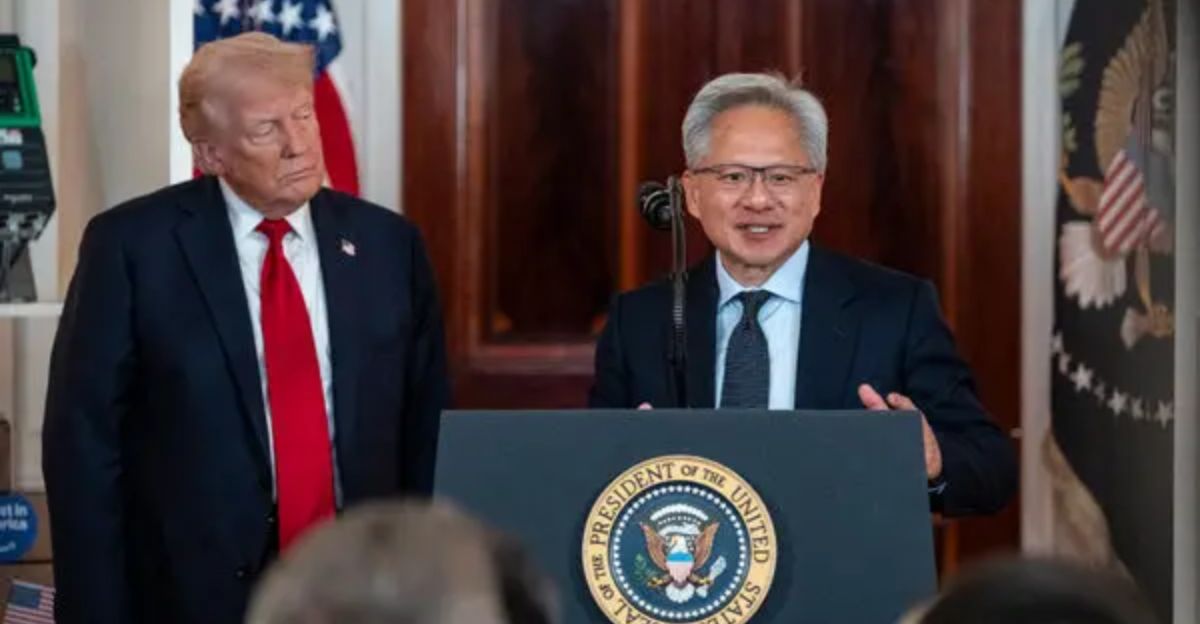
At the intersection of industrial strategy, economic statecraft, and national security, the US’s monetization of China’s chip restrictions through revenue-sharing agreements with Nvidia and AMD is a disruptive trade policy experiment. It brings up important legal, moral, economic, and geopolitical issues in addition to directly bringing in money for the government and sending a strong message about Chinese technological innovation.
The policy runs the risk of destabilizing supply chains, causing retaliatory decoupling, accelerating China’s technological self-sufficiency, and shattering global innovation ecosystems. Because of its unprecedented nature, it necessitates close examination, openness, and sound strategic judgment to make sure that it advances rather than impedes US interests in a high-tech rivalry that is becoming more complex.