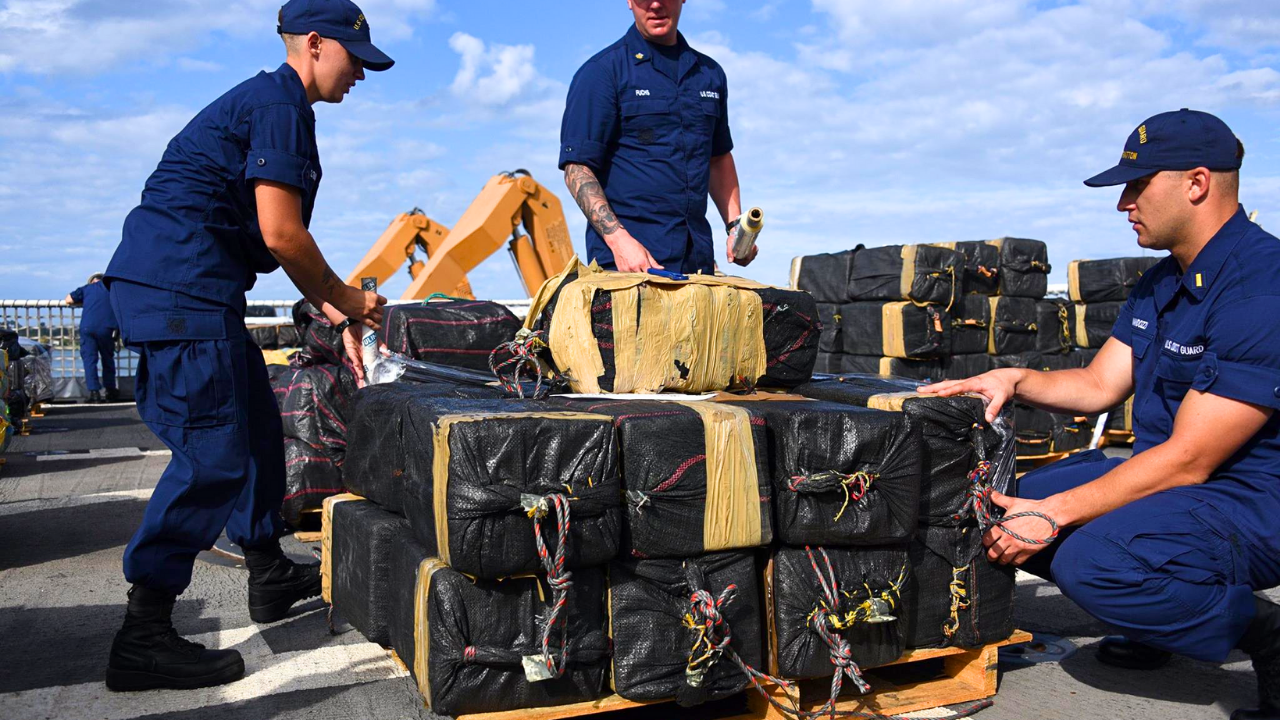
Port Everglades, Florida, became the stage for a record-breaking narcotics seizure on November 19, 2025, when Coast Guard Cutter Stone offloaded nearly 25 tons of cocaine worth an estimated $362 million. The haul, collected during a single Eastern Pacific patrol, came from 15 separate interdictions and now stands as the largest cocaine seizure from one patrol in Coast Guard history.
The operation underscored how much of the narcotics battle plays out far from U.S. shores, across a vast ocean that traffickers have long treated as a primary corridor to North American markets.
Stone and the Surge at Sea
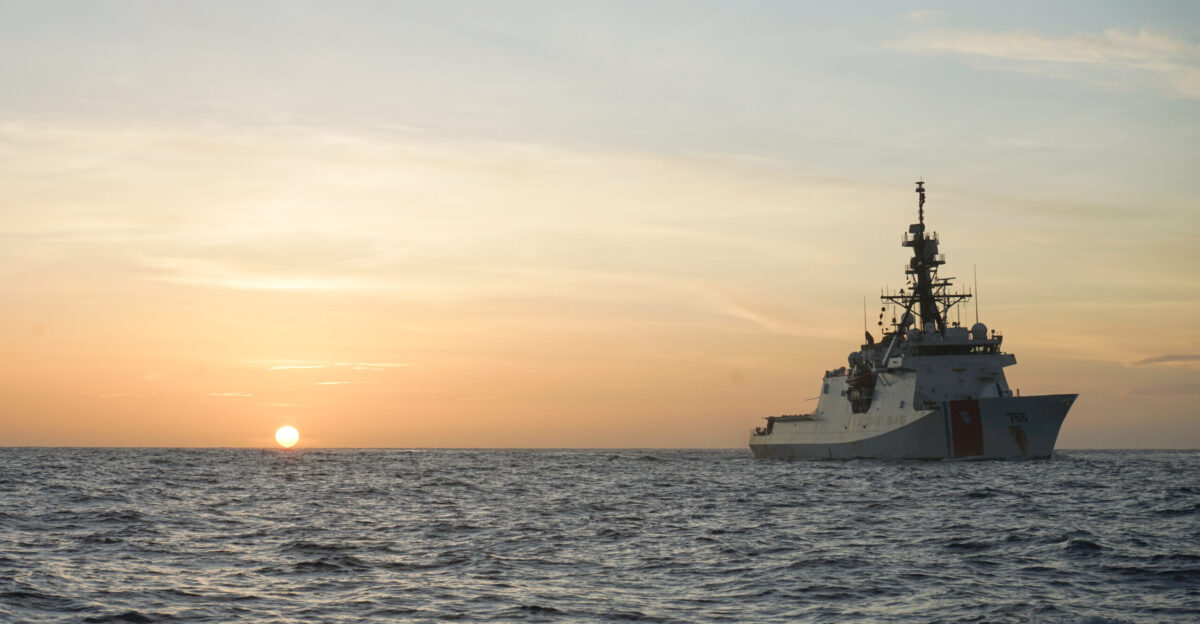
Cutter Stone, a 418-foot Legend-class vessel homeported in Charleston, South Carolina, was designed for precisely this kind of high-endurance mission. With a crew of about 120, advanced radar, a 57mm deck gun, and helicopter facilities, the cutter serves as a mobile operations hub hundreds of miles offshore. Under the command of Capt. Anne O’Connell, who assumed command in June 2025, Stone deployed to the Eastern Pacific as part of a wider push to disrupt maritime trafficking routes.
O’Connell brought a background that includes degrees from MIT and Harvard, experience as a White House Fellow, and prior commands on multiple cutters. That experience translated into aggressive but disciplined operations during Stone’s patrol, as boarding teams and aviation detachments hunted smuggling vessels moving north from Colombia toward Central America and the United States. By the time Stone moored in Port Everglades, the ship’s record-setting haul had become a symbol of a broader shift in tempo at sea.
Operation Pacific Viper and HITRON’s Role
Stone’s patrol unfolded within Operation Pacific Viper, a Coast Guard-led surge that began in August 2025 and concentrated assets against drug trafficking networks in the Eastern Pacific. By December, the operation had seized more than 150,000 pounds of cocaine valued at roughly $1.1 billion, involving multiple cutters, aircraft, and coordination through Joint Interagency Task Force-South (JIATF-South). The sustained campaign sought to exert constant pressure rather than sporadic disruption.
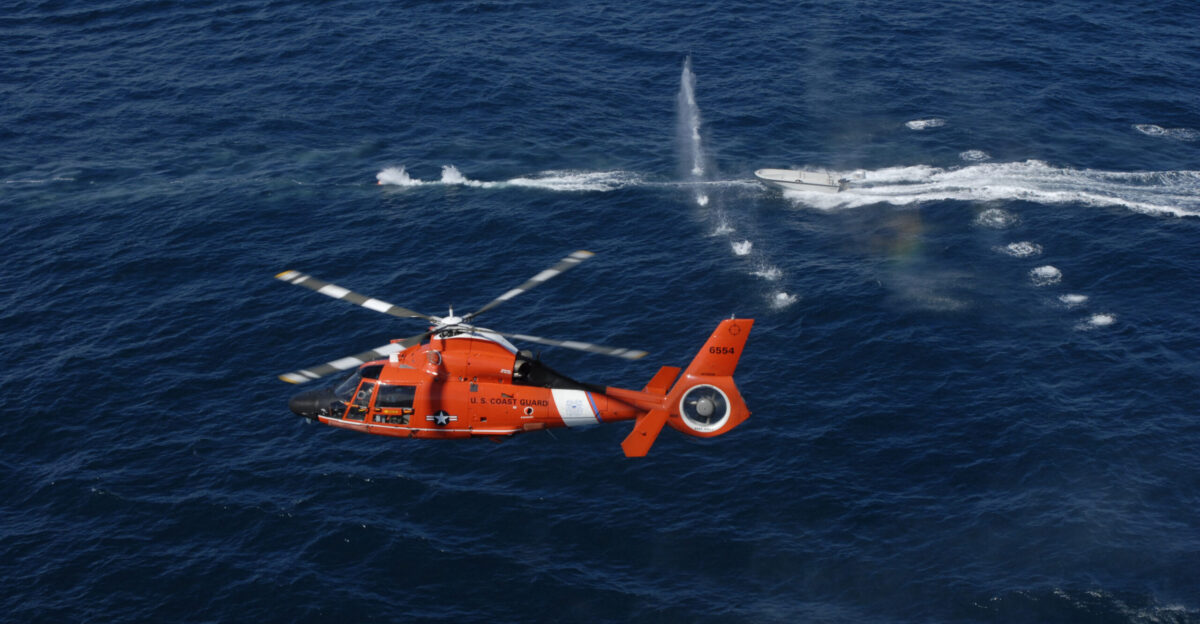
Central to that effort is HITRON, the Helicopter Interdiction Tactical Squadron based at Cecil Field in Jacksonville, Florida. HITRON aircrews deploy with cutters like Stone, flying MH-65C Dolphin helicopters hundreds of miles offshore to intercept “go-fast” boats—long, low-profile craft designed for speed and stealth. On August 25, 2025, HITRON logged its 1,000th drug interdiction when a helicopter crew stopped a vessel southwest of Acapulco carrying 3,600 pounds of cocaine.
Since the start of fiscal year 2025 in October 2024, the squadron’s operations have contributed to seizures totaling an estimated $3.3 billion in narcotics, reflecting an intensified operational pace.
How High-Speed Interdictions Work
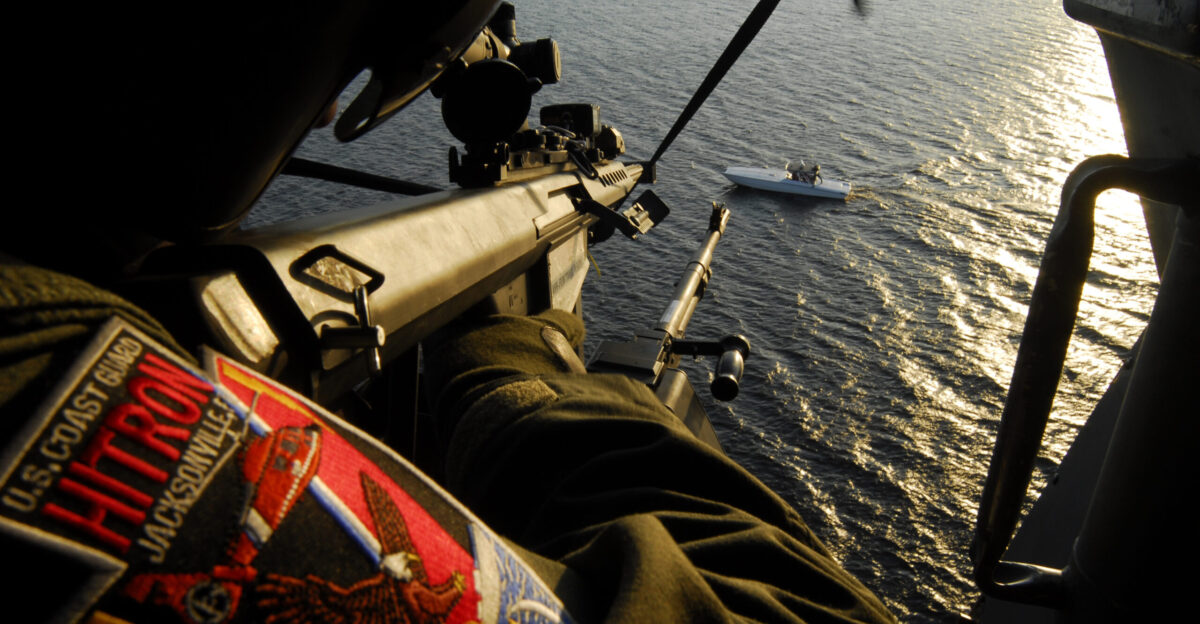
Maritime interdictions are designed around precision rather than destruction. When a suspect vessel is identified—often using intelligence and surveillance provided by JIATF-South in Key West—HITRON helicopters approach and issue radio commands in English and Spanish for the crew to stop. If the vessel flees, aircrews fire warning bursts from M240 machine guns across the bow.
If the smugglers still refuse to comply, trained marksmen aboard the helicopter use .50-caliber Barrett rifles to disable the engines with carefully aimed shots. The goal is to stop the vessel without sinking it or endangering its occupants. Once the engines are disabled, Coast Guard small boats launched from the cutter close in to secure the crew, recover drugs, and collect evidence. This combination of aviation assets, surface ships, and command-and-control support has become the backbone of the Coast Guard’s offshore counter-drug strategy.
From Colombian Production to U.S. Shores
The scale of the seizures in 2025 reflects a surge in global cocaine production, particularly in Colombia. According to the United Nations Office on Drugs and Crime, global production reached 3,708 tons in 2023, representing a 34 percent increase from the previous year. Colombia accounted for about 2,664 metric tons and roughly two-thirds of the world’s coca cultivation.
Much of the cocaine that Stone and other cutters intercepted originated in Colombia’s southwestern regions, moving along Pacific routes toward Central America and then overland or by sea toward the United States.
Smugglers rely heavily on go-fast boats between 20 and 50 feet in length, built from fiberglass and composite materials and powered by engines exceeding 1,000 horsepower. In calm conditions, they can reach speeds of approximately 80 mph and maintain high speeds even in rougher seas, making them difficult for larger cutters to catch without air support. Their objective is simple: outrun law enforcement until reaching territorial waters, where jurisdictional limits complicate interdiction.
A Record Year and What Comes Next
The efforts at sea in 2025 translated into unprecedented totals. By the end of fiscal year 2025 on September 30, the Coast Guard reported seizing about 510,000 pounds of cocaine, exceeding any previous annual record and tripling the long-term average of 167,000 pounds. Officials calculated that amount as equivalent to roughly 193 million potentially lethal doses, based on a 1.2-gram fatal threshold. Acting Coast Guard Commandant Kevin Lunday said the record showed the service was defeating cartel and narco-terrorist operations and protecting communities from the downstream effects of the drug trade.
The momentum continued into December, when Cutter Munro conducted a single interdiction of more than 20,000 pounds of cocaine—the largest such seizure in 18 years—while Cutter James made four successful interdictions totaling 19,819 pounds in just ten days. At the strategic level, JIATF-South reported supporting the disruption of 402.7 metric tons of cocaine as of August 2025, surpassing its previous record of 328.4 metric tons.
Charleston-based Legend-class cutters, operating under Atlantic Area Command and Vice Adm. Nathan Moore, have become central players in these deployments, rotating through Eastern Pacific patrols from a homeport more often associated with Atlantic operations. Their work underscores a broader reality: although public debate often focuses on land borders, an estimated 80 percent of narcotics headed for U.S. streets move across the ocean first.
For crews aboard cutters like Stone, the record-setting numbers represent more than statistics. Each load of cocaine intercepted means money denied to cartels and associated criminal enterprises, and potentially countless cases of addiction, violence, and corruption averted on shore. Yet Colombian production remains at record highs, and traffickers continue to adapt with new routes and tactics. As Operation Pacific Viper and HITRON aircrews maintain pressure across the Eastern Pacific, the contest at sea is set to continue, with cutters like Stone at the center of a long-running effort to push the fight as far from U.S. communities as possible.
Sources:
“Media Advisory: Coast Guard to offload more than $362 million in cocaine” — U.S. Coast Guard News (Nov. 18, 2025)
“Coast Guard continues to break records, offloading over $362 million in illicit narcotics” — Joint Interagency Task Force-South News (Nov. 18, 2025)
“Coast Guard sets historic record with amount of cocaine seized in FY25” — U.S. Coast Guard News (Nov. 5, 2025)
“Coast Guard seizes 150,000 pounds of cocaine through Operation Pacific Viper” — U.S. Coast Guard News (Dec. 8, 2025)
“Colombia: Potential cocaine production increased by 53 per cent in 2023, according to new UNODC survey” — United Nations Office on Drugs and Crime (Oct. 17, 2024)