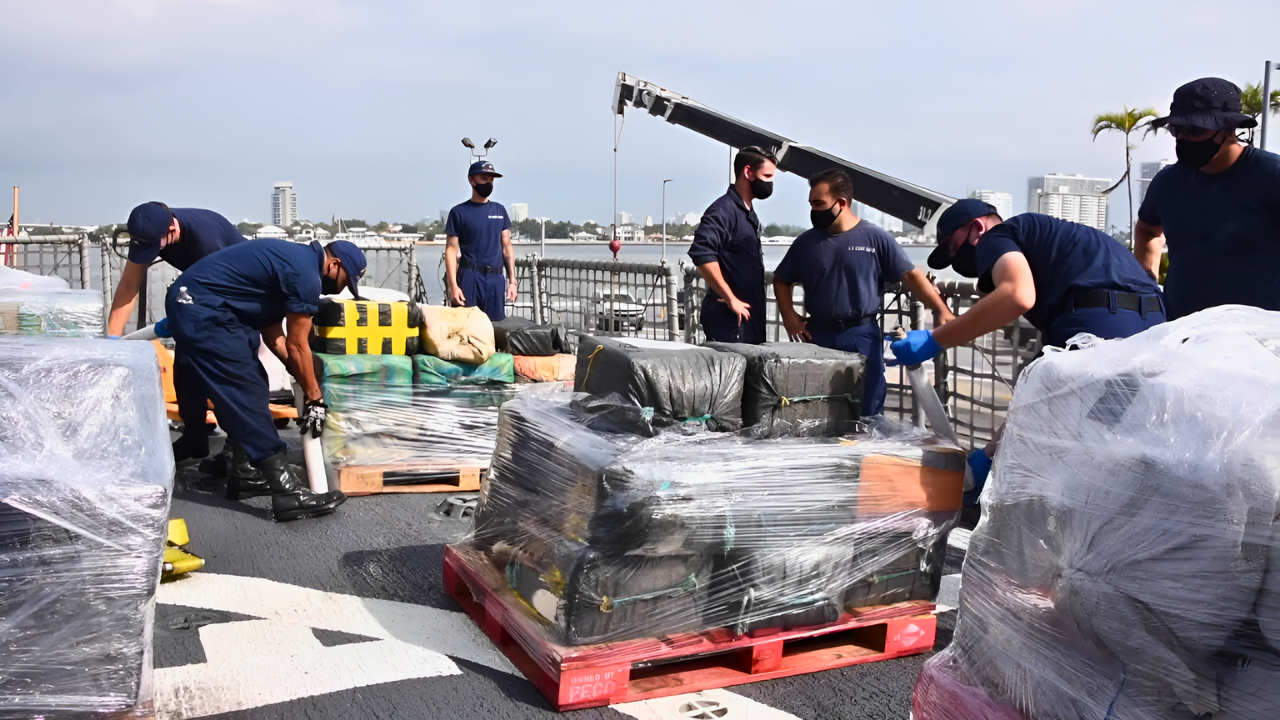
Coast Guard aircraft used warning shots followed by disabling fire to stop non-compliant go-fast vessels in international waters. The rounds targeted engines, not crews, forcing boats to halt safely.
These vessels are designed for speed and evasion, often carrying massive cocaine loads from South America. In this cycle, three boats were interdicted and 12 suspects arrested, all now facing federal charges. Cartels continue testing boundaries, raising risks at sea.
Viper Surge
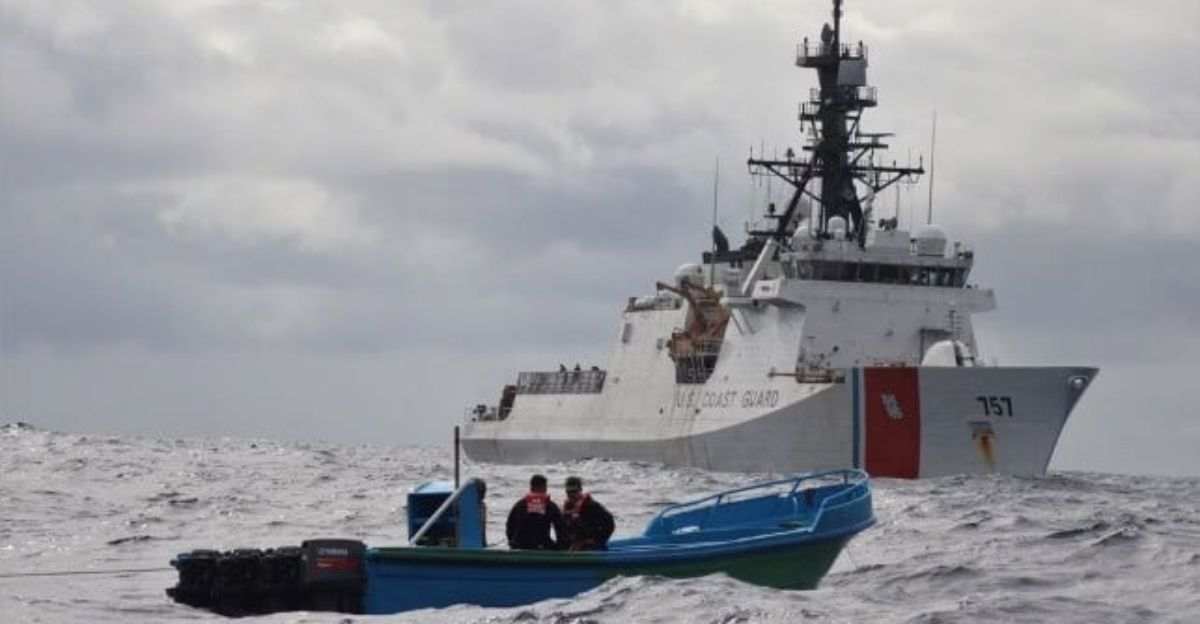
Operation Pacific Viper launched in August 2025, flooding the Eastern Pacific with cutters, aircraft, and tactical teams. The goal: disrupt cocaine routes flowing north from Central and South America.
Since the surge began, the Coast Guard has seized more than 150,000 pounds of cocaine, intercepting roughly 80% of U.S.-bound maritime narcotics. The operation builds on decades of interdiction authority, applying sustained pressure to cartel sea lanes.
Record Breaker
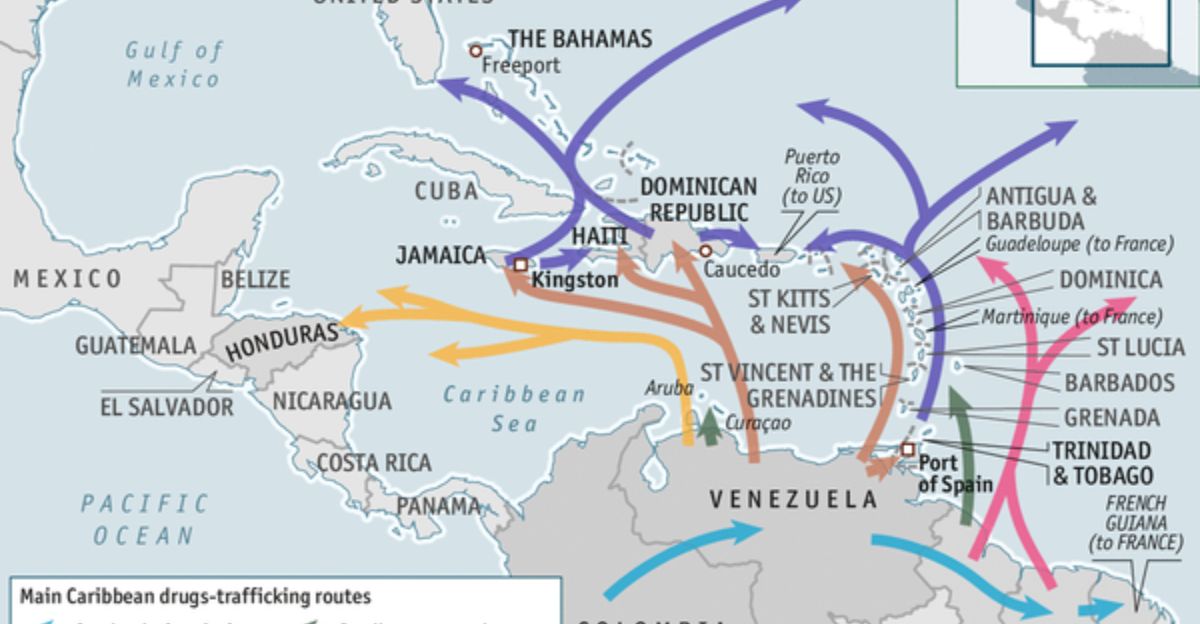
The Eastern Pacific has become the busiest drug-smuggling corridor in the world. Under Pacific Viper, Coast Guard cutters are averaging tons of cocaine seized per patrol.
These interdictions deny cartels billions in revenue used to fund wider criminal networks. Among recent stops, one go-fast vessel stood out—its cargo alone threatened to eclipse historic records. That promise soon became reality.
Munro’s Haul
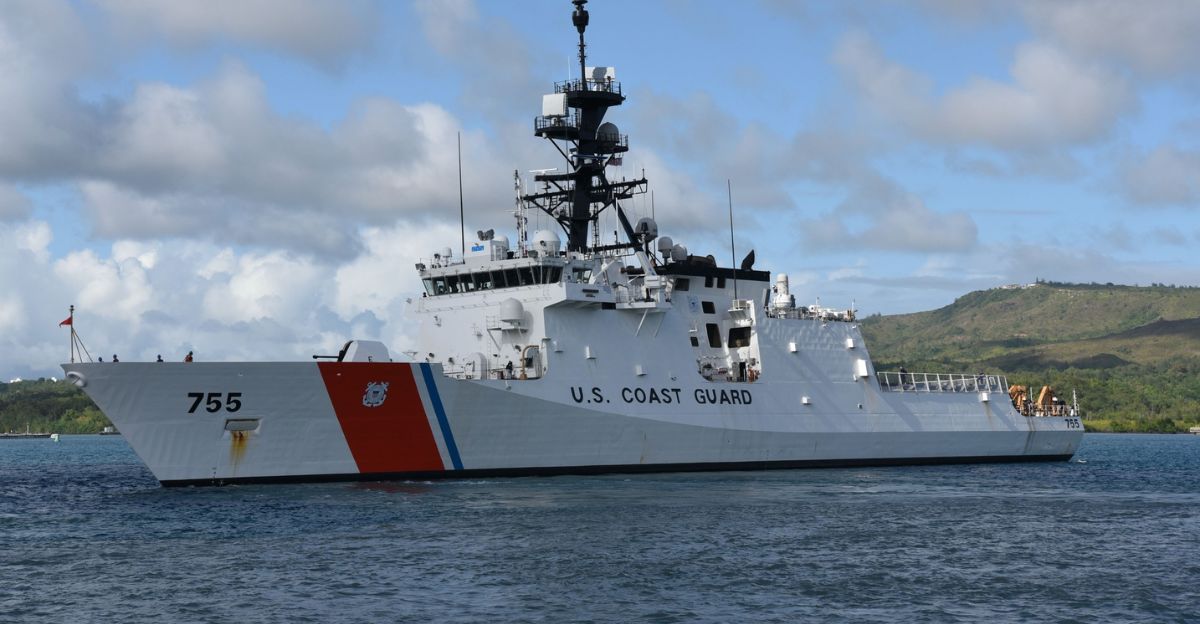
On December 2, 2025, Coast Guard Cutter Munro intercepted a single go-fast vessel carrying more than 20,000 pounds of cocaine, the largest single-boat seizure since March 2007. Working with Coast Guard aircrews, Munro disabled the boat’s engines after it refused to stop.
The drugs were later transferred to Cutter Active and offloaded in San Diego, bringing the total haul to 27,000 pounds.
West Coast Threat
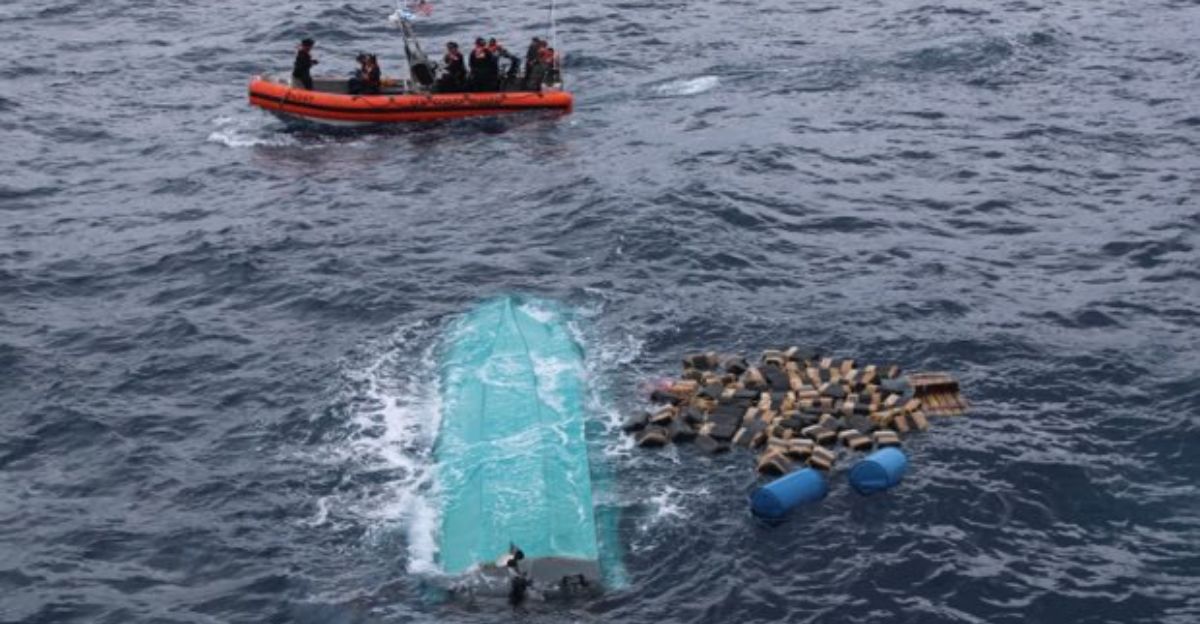
The seized cocaine was bound for U.S. markets, with West Coast ports as likely entry points. By stopping shipments at sea, Pacific Viper blocks drugs before they can move inland.
Since August, the operation has denied cartels over $1.1 billion in revenue. San Diego’s port has become a key offload site, reflecting both the scale of maritime trafficking and the effort required to counter it.
Crew Courage
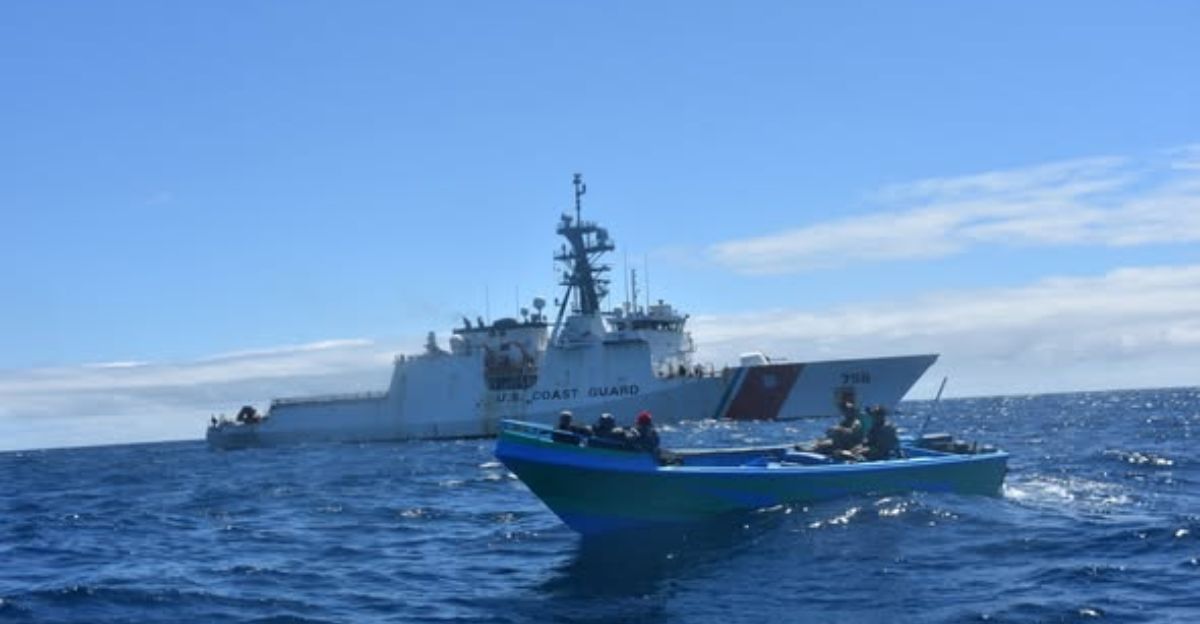
Crews involved in the interdictions logged thousands of miles at sea. Cmdr. Earl Potter praised Cutter Active’s crew for their “ingenuity and perseverance” after extended patrols across the Pacific.
In this operation cycle, three boats were interdicted and 12 suspects detained. Rear Adm. Jeffrey Novak confirmed the authority used: aircraft issue warnings, then fire disabling shots when vessels refuse to comply. Precision and restraint remain central.
Lethal Shift

Alongside Coast Guard interdictions, the Trump administration has authorized lethal strikes against certain alleged drug boats. Since September, dozens have been killed, drawing controversy over legality—especially reports of follow-up strikes on survivors of an earlier attack.
While the Coast Guard focuses on arrests and seizures, detection and coordination run through Joint Interagency Task Force–South, linking military and law-enforcement roles in the drug war.
Cartel Blow
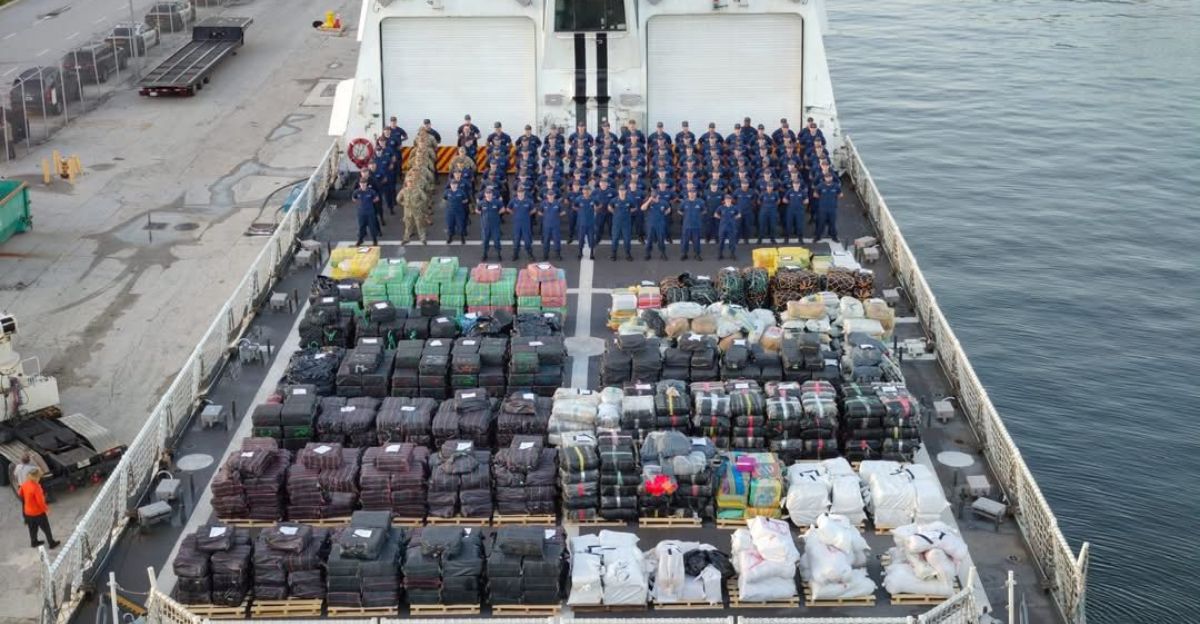
Operation Pacific Viper has become a major financial blow to narcotrafficking networks. More than 150,000 pounds seized translates into massive revenue losses and disrupted supply chains.
In November, Coast Guard Cutter Stone made history by offloading approximately 49,010 pounds of illicit narcotics from 15 interdictions during a single patrol—the largest single-patrol cocaine seizure by any Coast Guard cutter. Maritime routes still move most U.S.-bound cocaine, but sustained interdictions are reshaping how and where cartels operate.
Arrest Surge
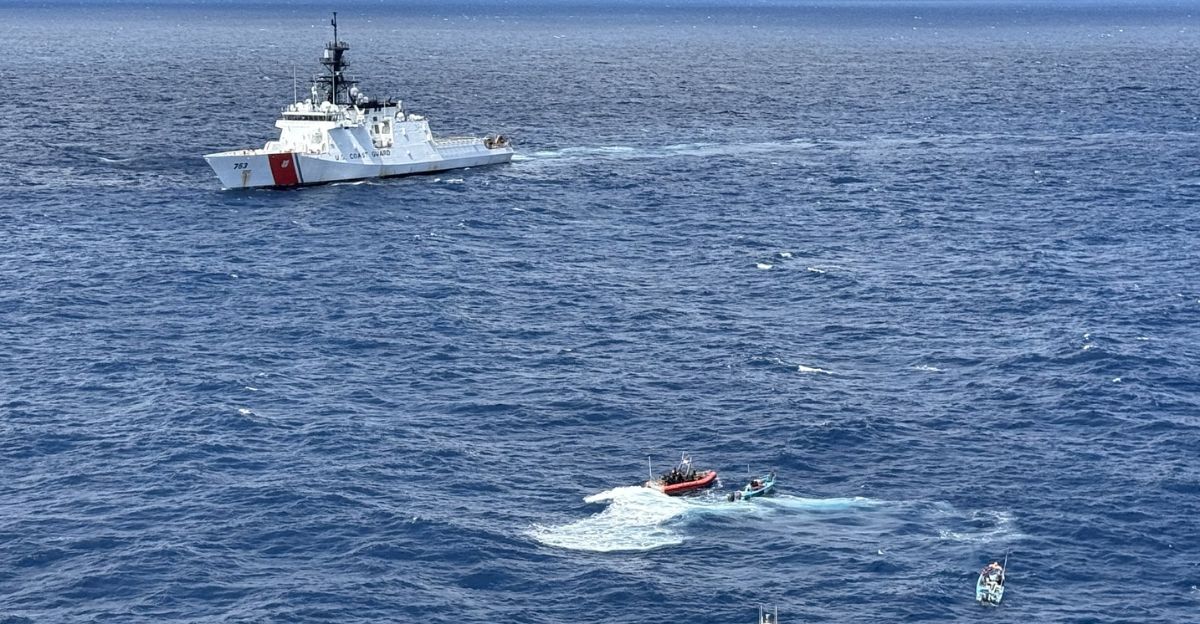
Since August, Pacific Viper has resulted in 34 interdictions and 86 arrests. In this offload cycle, three boats were interdicted with a combined 12 suspects taken into custody.
Coast Guard officials increasingly describe these crews as “suspected narcoterrorists,” reflecting links between drug profits and organized violence. Each seizure now pairs drugs removed from circulation with networks disrupted through federal prosecutions.
Tactic Backlash
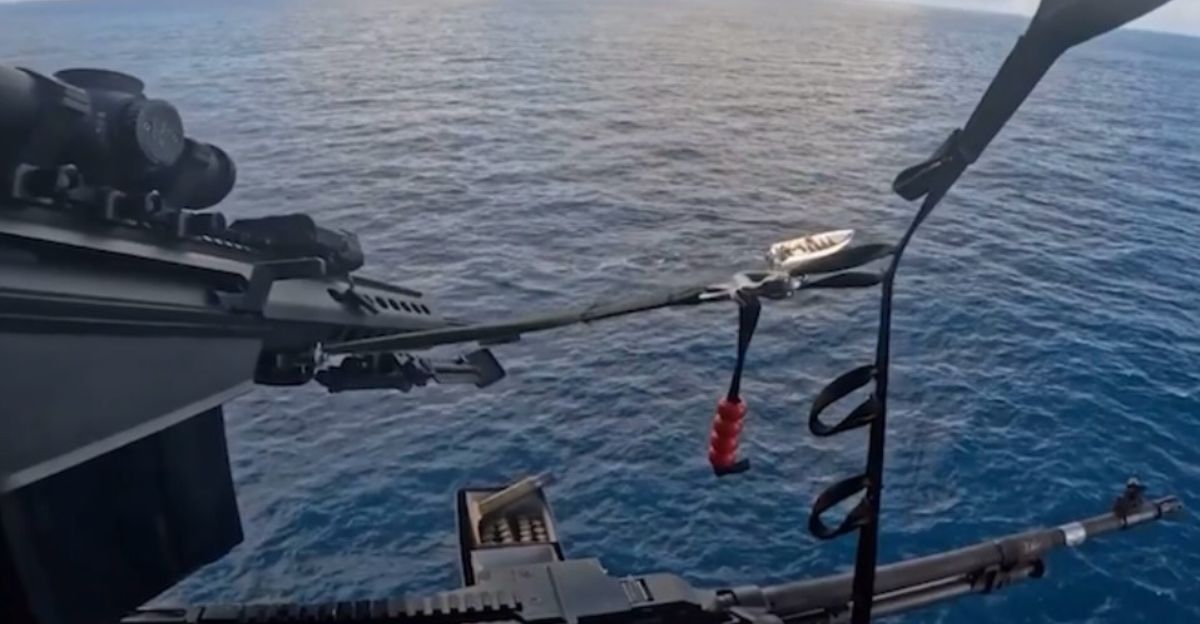
The use of disabling fire—shooting engines from aircraft—has sparked debate. Supporters note it prevents prolonged chases and avoids boarding at high speed.
Critics worry about escalation risks in crowded or unstable conditions. Rear Adm. Novak has defended the tactic as long-standing and tightly controlled, used only after repeated non-compliance. As smugglers innovate, enforcement methods continue to evolve under scrutiny.
Leadership Push

Senior officials have publicly backed Pacific Viper’s aggressive posture. DHS Secretary Kristi Noem praised the mission to “disrupt, dismantle, and destroy” cartel operations.
Acting Commandant Adm. Kevin Lunday emphasized maritime control: “We own the sea.” Under Pacific Area leadership, including Rear Adm. Novak, assets have surged, signaling a strategic shift toward sustained maritime dominance against traffickers.
Asset Ramp-Up
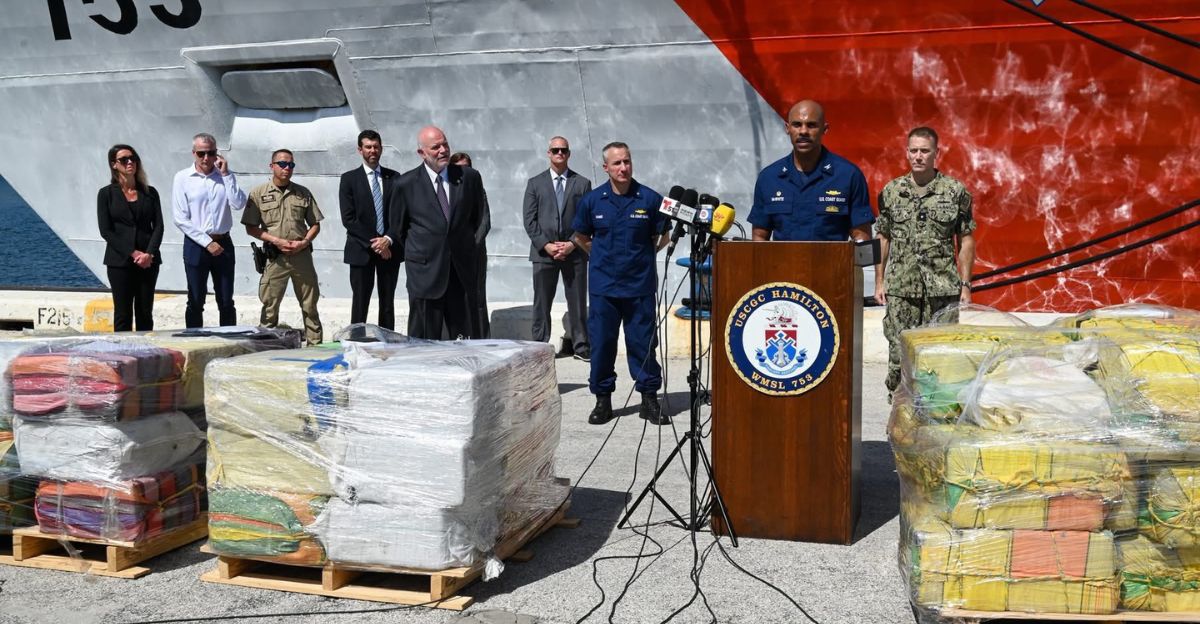
Pacific Viper represents one of the Coast Guard’s largest modern deployments. More than 220 cutters and 185 aircraft are involved across rotations, supported by tactical law-enforcement teams.
Interdictions follow a pattern: detection by JIATF-South, interception by Coast Guard units. Recent operations highlight the intensity of the surge: in November, Cutter James conducted four cocaine seizures across 10 days, netting 19,819 pounds total, including 9,581 pounds on November 15, 3,225 pounds on November 23, and 7,055 pounds across two separate interdictions on November 25 conducted in coordination with Cutter Active.
Expert Doubts
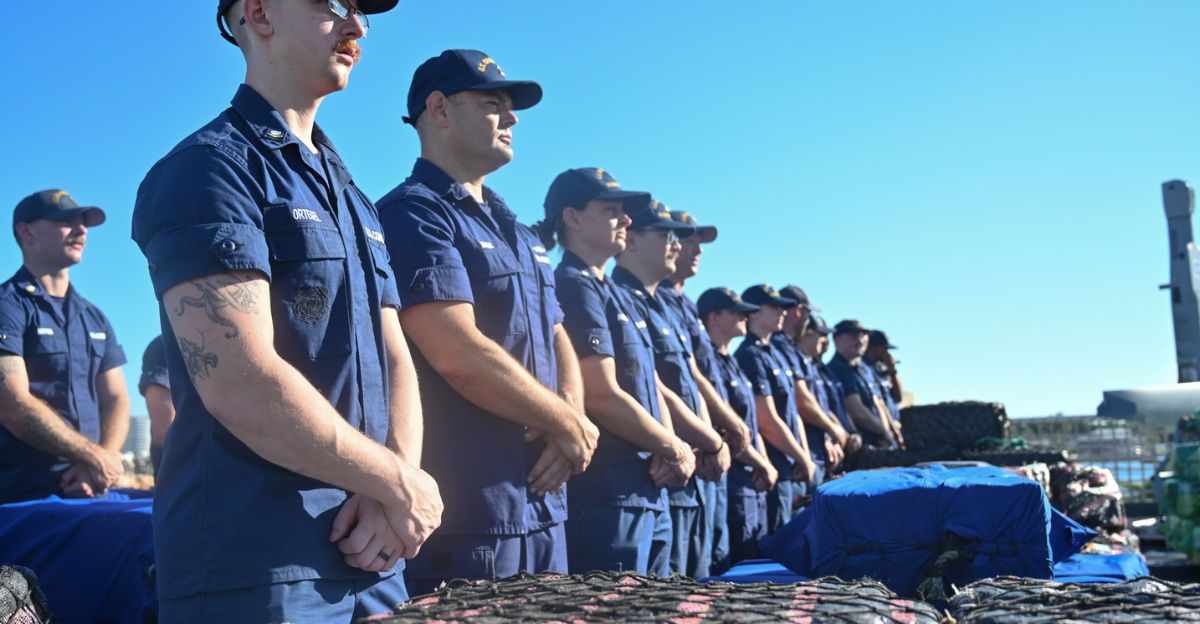
While the 20,000-pound single-boat seizure set a near-20-year record, analysts caution that cartels adapt quickly. Routes may shift, vessels may change, and budgets remain finite.
Coast Guard leadership acknowledges the challenge. “We’re already working toward the next milestone,” Novak said. The question remains whether sustained pressure can reduce production—or simply force traffickers to innovate again.
Future Seas
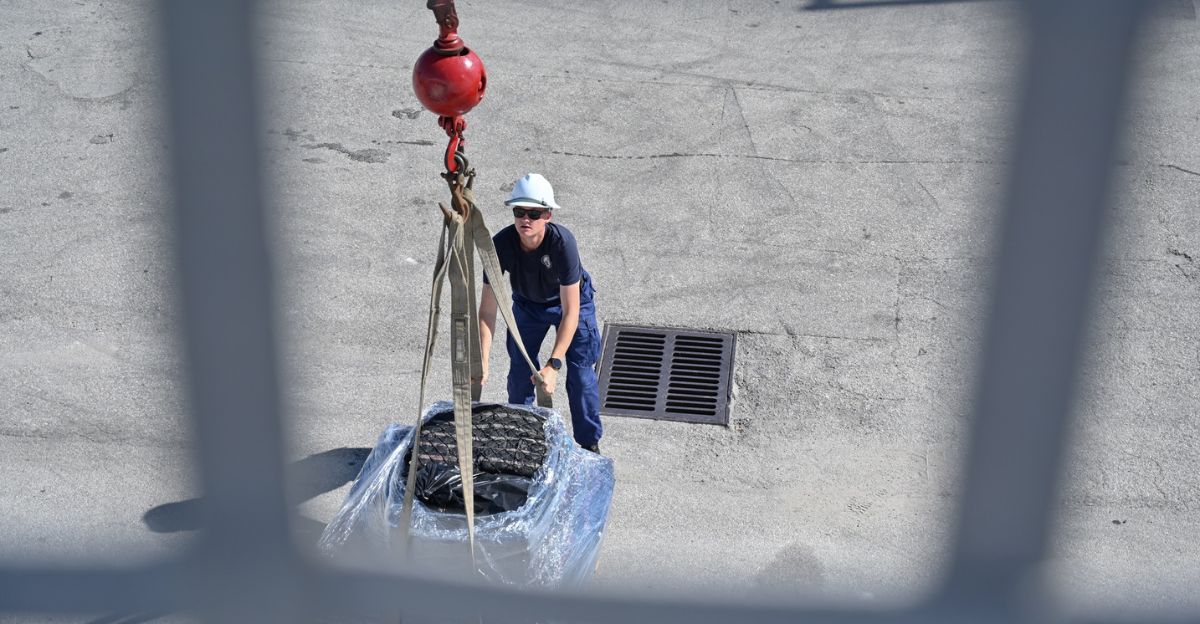
With 27,000 pounds offloaded in one cycle and 150,000 pounds seized since August, Pacific Viper has momentum. Yet cartels continue testing limits with speed, volume, and risk.
Disabling fire, arrests, and controversial strikes now define the Pacific front of the drug war. The Coast Guard vows persistence—but whether maritime dominance can permanently choke these routes remains an open question.
Sources:
U.S. Coast Guard (Official Press Release) — “Coast Guard seizes 150,000 pounds of cocaine through Operation Pacific Viper” (December 8, 2025)
CBS News — “20,000-pound cocaine seizure by Coast Guard breaks 18-year-old record” (December 6, 2025)
Homeland Security Today — “Coast Guard Cutter Stone Logs Largest Single-Patrol Cocaine Seizure by Any Coast Guard Cutter” (November 19, 2025)
Defense Visual Information Distribution Service (DVIDS) — “U.S. Coast Guard Cutter Active returns home following counterdrug patrol; $413M cocaine seized” (December 18, 2025)
Stars and Stripes — “Coast Guard cutter offloads more than $362 million worth of narcotics at Port Everglades” (November 20, 2025)