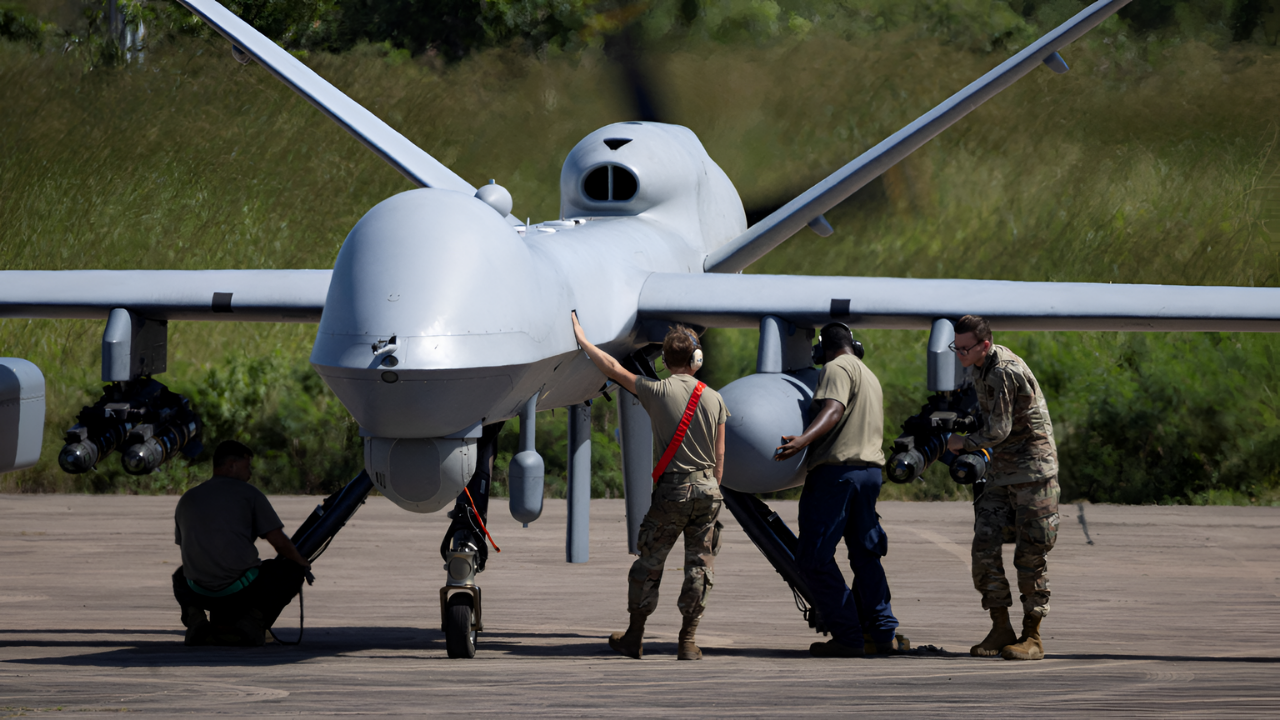
In late 2025, a U.S. campaign that had mostly played out at sea crossed a new line on land. After months of maritime interdictions and oil sanctions aimed at Venezuelan President Nicolás Maduro, the Trump administration authorized a covert drone strike on Venezuelan territory, followed weeks later by a secret operation to capture Maduro himself. The actions, publicly framed as part of an intensified offensive against narcotics trafficking, are now at the center of disputes over intelligence, legality, and the future of U.S. intervention in Latin America.
Pressure Campaign Turns Kinetic
By December 2025, U.S. officials were warning internally that drug trafficking networks linked to organized crime groups using Venezuelan ports were expanding. Publicly, President Trump increased his focus on Venezuela, emphasizing narcotics routes and announcing a $50 million reward for Maduro’s capture. Military assets, including MQ-9 Reaper drones armed with Hellfire missiles, were moved to bases in Puerto Rico as part of what officials called an enhanced “pressure campaign.”
Previous U.S. strikes since September 2025 had targeted suspected drug vessels in international waters, deliberately avoiding foreign territory. Earlier administrations had resisted taking action inside Venezuela because of diplomatic risks and international law concerns. Trump’s statements suggested greater readiness to authorize strikes on land if officials could connect targets to national security and drug enforcement justifications.
A key element of that case was Tren de Aragua, a Venezuelan gang that emerged from the prison system and expanded into a transnational operation. The group is involved in drug smuggling, extortion, and human trafficking across South America and the Caribbean. In January 2025, the Trump administration labeled Tren de Aragua a “foreign terrorist organization,” giving it a legal framework more commonly used against armed groups in conflict zones. U.S. officials argued the gang controlled port facilities and drug-loading operations along Venezuela’s coast.
First Strike on Venezuelan Soil
On December 24, 2025, the CIA carried out what officials later described as the first documented U.S. military strike on Venezuelan territory. MQ-9 Reaper drones fired Hellfire missiles at a port facility in northwestern Venezuela previously identified by U.S. intelligence as a key staging hub for narcotics shipments to sea. The strike destroyed dock structures, multiple boats, and left the facility unusable.
Trump confirmed the operation in a radio interview on December 26, saying, “There was a major explosion in the dock area where they load the boats up with drugs.” According to U.S. accounts, the target site was unoccupied when the missiles hit, and no casualties were reported.
Residents from nearby indigenous Wayuu fishing communities in the Alta Guajira region later described hearing a powerful blast between December 18 and 24. Independent analysts who reviewed photographs and satellite imagery documented destroyed docks, burned hulls, and debris along the waterfront, consistent with a precision strike on maritime infrastructure.
Local fishermen reported that the explosion damaged boats and nets they relied on for income, raising concerns about contamination and the safety of their coastal waters. Venezuela’s Interior Minister Diosdado Cabello condemned the strike, calling it the result of “months of imperial madness” and portraying it as an attack on sovereign territory. Local media interviewed affected residents who voiced fear that more attacks could follow.
Intelligence Fractures and Regime-Change Claims
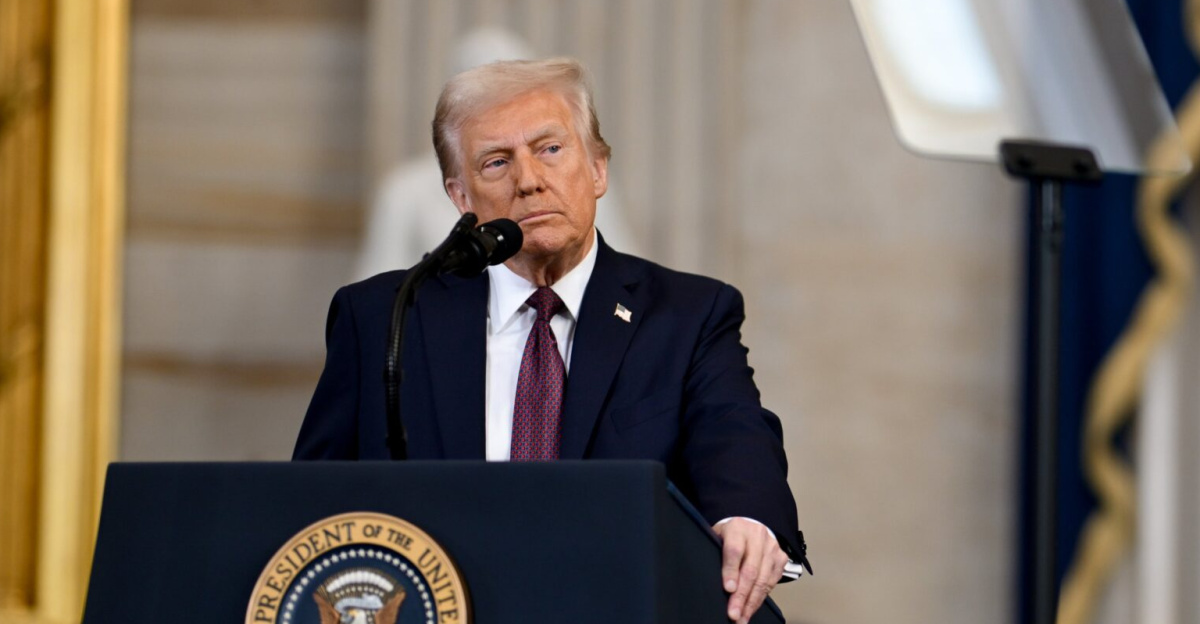
From the outset, the rationale for the strike rested on specific claims about links between Tren de Aragua and the Maduro government. The Trump administration said the gang operated with Maduro’s cooperation and under his control. Yet a declassified National Intelligence Council assessment from April 2025 stated the Maduro regime “probably does not have a policy of cooperating with [Tren de Aragua],” a view echoed by analysts at the FBI and the Office of the Director of National Intelligence.
That divergence highlighted a rift inside the U.S. government over whether the facilities targeted in December were properly described as Maduro-directed drug hubs. In May 2025, Trump dismissed senior intelligence officials who disputed his assertions about the gang’s relationship with the Venezuelan state. Their removal came months before the strike, suggesting that internal dissent over the administration’s framing was resolved through personnel changes ahead of any kinetic action.
The December strike later appeared to be one step in a broader plan. In early January 2026, U.S. military forces operating inside Venezuela seized Maduro in Caracas during “Operation Absolute Resolve.” The revelation that American personnel had carried out a capture mission on Venezuelan soil indicated that the earlier port strike had helped shape conditions for a larger regime-focused campaign, even as the White House publicly presented the December action as a narrow anti-drug operation.
Legal, Constitutional, and Diplomatic Fallout
The drone strike and the subsequent capture took place without a specific authorization for the use of military force or a formal declaration of war by Congress. The administration did not invoke emergency war powers or follow the classified briefing processes that normally accompany major operations. Congressional oversight committees were informed after the fact, prompting legal experts to question whether the president had exceeded constitutional limits on unilateral military action.
Under the War Powers Resolution of 1973, the executive branch must report such operations within 48 hours and seek congressional approval within 60 days. The statute’s enforcement has long been contested, and the Venezuela actions renewed debate over how far a president can go without explicit legislative backing, especially when operating on the territory of a state that is not formally at war with the United States.
Internationally, Venezuela’s government denounced the strike and the later capture as violations of sovereignty and international law. The Organization of American States expressed concern, and legal scholars debated whether counter-narcotics arguments could justify a unilateral attack under the United Nations Charter and regional conventions that emphasize non-intervention. Some experts argued that anti-drug operations occupy a different legal category than traditional warfare; others maintained that crossing a border without consent, absent an imminent threat, undercuts core principles of the international order.
U.S. allies in Europe and Latin America issued cautious statements that stopped short of full endorsement or condemnation, reflecting unease about the precedent but also reluctance to openly confront Washington. Analysts warned that the operation, the first CIA land strike in Venezuela and one of the closest U.S. actions to its own borders in decades, echoed Cold War-era interventions and could trigger retaliatory threats against American citizens and interests in the region. [EDITED: Changed from “roughly 300,000 Americans living in Latin America” to “American citizens and interests in the region” – the specific figure could not be verified, though concerns about retaliation against Americans are documented]
Looking Ahead: Precedent and Unresolved Questions
With the port destroyed and Maduro in U.S. custody, attention has shifted to what comes next for Venezuela’s political transition, humanitarian situation, and U.S. troop presence. The campaign marked a shift from maritime interdiction and economic pressure to direct military operations framed in the language of a “drug war,” blurring the line between counter-narcotics enforcement and regime-change policy.
Inside the U.S. government, senior intelligence officials at the National Intelligence Council, FBI, and ODNI continued to maintain that Maduro and Tren de Aragua largely pursue separate interests. Partial congressional transcripts suggest these analysts stressed uncertainty about the extent of any collaboration. Their skepticism, coupled with the lack of prior congressional authorization, raises questions about whether policy aims drove the interpretation of intelligence rather than the reverse.
For future administrations, the Venezuela operation may serve as both model and warning. Supporters may point to it as an example of decisive action under a counter-drug or counter-terrorism banner, especially given the relatively muted international backlash compared with previous large-scale interventions. Critics are likely to focus on the contested intelligence, civilian impact on local communities, and legal ambiguities, arguing that any durable precedent will face political, judicial, and diplomatic challenges in the years ahead.
Sources
The New York Times: “C.I.A. Conducted Drone Strike on Port in Venezuela”
CNN: “Exclusive: CIA carried out drone strike on port facility in Venezuela”
PBS Newshour: “A timeline of U.S. military escalation against Venezuela leading to Maduro’s capture”
NBC News: “Eyewitnesses describe mysterious explosion in northwest Venezuela”
Al Jazeera: “Fact-checking Trump following US ‘capture’ of Venezuela’s Maduro”
The Atlantic Council: “What Trump’s Venezuela oil blockade means for Maduro and the world”