
Analysts project the global neuromorphic computing market to skyrocket – from roughly $7.5 billion in 2024 to nearly $59 billion by 2033.
This explosive forecast set the stage for an unexpected breakthrough emerging from Zhejiang University. In mid-2025, engineers there quietly assembled a brain-inspired supercomputer that the world hadn’t seen coming.
Against this backdrop of surging market demand, the global neuromorphic sector (still very small today) waited on a breakthrough hidden inside the lab.
Energy Crisis
The urgency for brain-like computing comes from AI’s huge power hunger. Training large models often consumes thousands of joules per query, whereas the human brain runs on only about 20 J/s.
“There’s nothing in the world as efficient as our brain,” notes neuromorphic researcher Nitin Kumar.
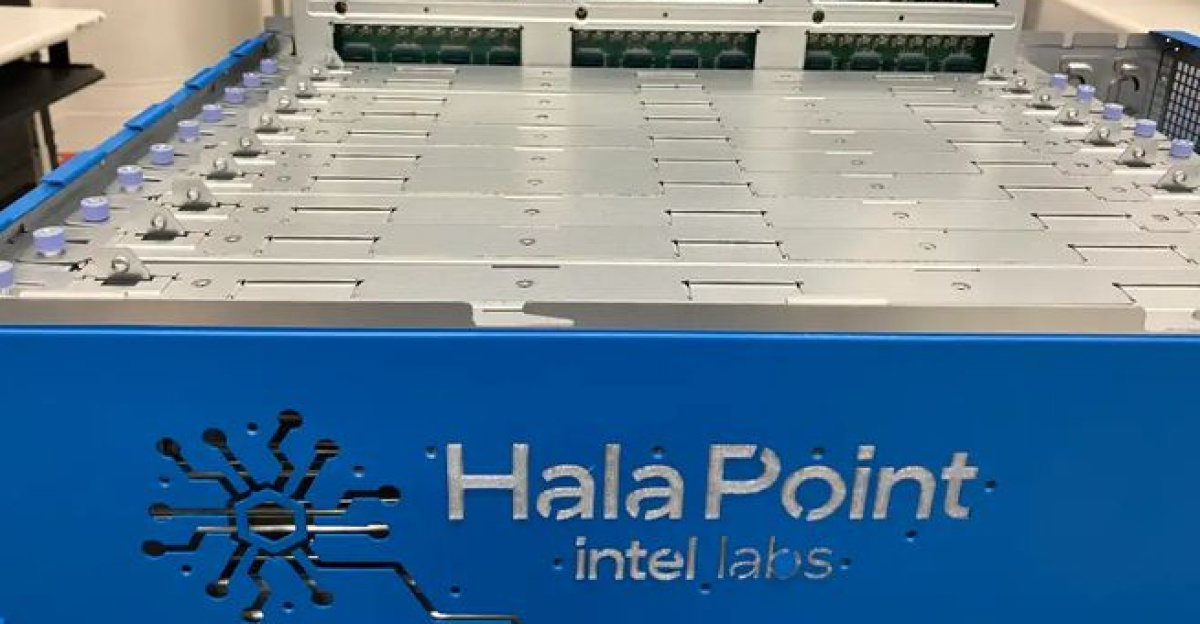
By comparison, Intel’s 2024 Hala Point system (1.15 billion neurons) achieved ~15 TOPS/W but drew about 2,600 W at full tilt.
With data-center electricity demand set to double by 2030, the computing industry is desperate for new, sustainable architectures.
Neuromorphic Foundation
Neuromorphic computing dates back decades as researchers tried to mimic the brain’s architecture. Unlike von Neumann CPUs (separate memory and compute), neuromorphic chips merge processing and memory like neural tissue.
Early examples include IBM’s 2015 TrueNorth chip – a fully digital neurosynaptic processor containing 1 million neurons at just 65 mW.
Intel later developed the Loihi family of neuromorphic NPUs.
Throughout the 2010s and early 2020s, academic and industry labs steadily scaled up spiking networks and algorithms. These brain-like chips process information with event-driven pulses instead of continuous signals, promising huge efficiency gains as they mature.
Mounting Pressure
Traditional silicon technology is hitting its limits. Shrinking transistors further risks quantum leakage and overheating, making Moore’s Law unsustainable for powering ever-larger AI models.
Meanwhile, large AI models now demand exponentially more compute and energy. Governments have responded with massive funding: China’s Made in China 2025 plan committed billions into AI chip R&D.
The race is on to find post-Moore alternatives.
Neuromorphic computing – leveraging nature’s blueprint – has emerged as one of the most promising paths to continue AI progress without unsustainable power growth.
Darwin Monkey Unveiled
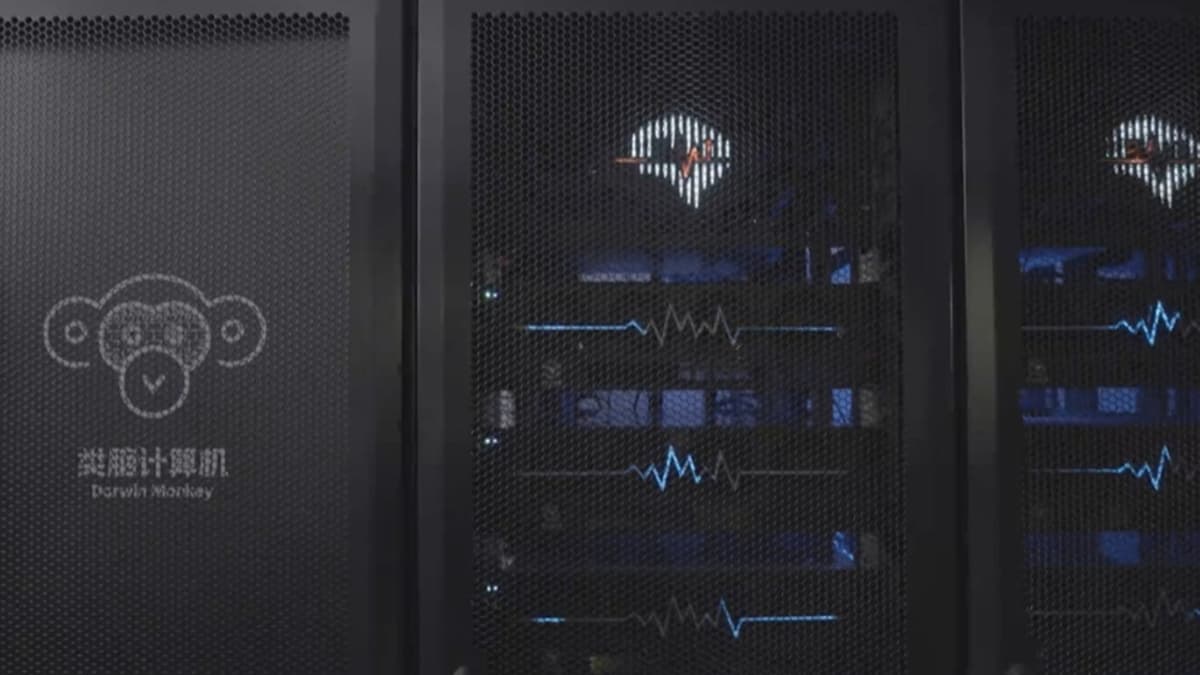
On August 2, 2025, Zhejiang University announced Darwin Monkey (code-named Wukong) – the world’s first neuromorphic supercomputer with over 2 billion artificial neurons.
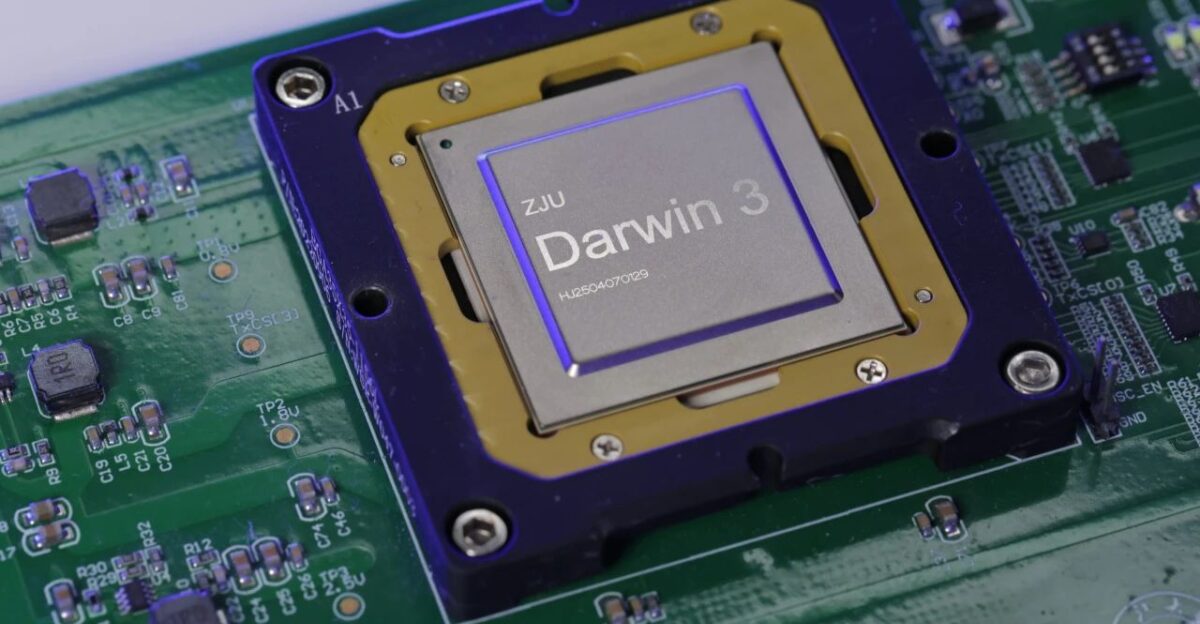
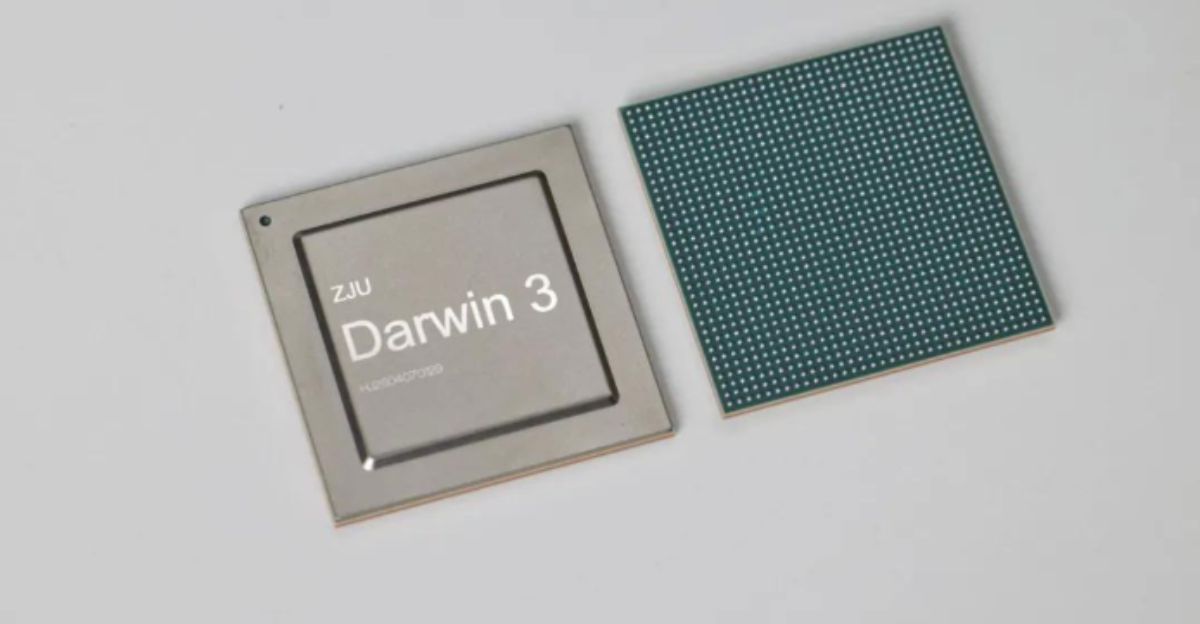
Built from 960 custom “Darwin 3” chips across 15 blade servers, the system mimics a macaque’s cortical complexity (~100 billion synapses).
Remarkably, it achieves this at only ~2,000 W total power use. Zhejiang’s project leader, Dr. Pan Gang, celebrated the advance: “Wukong’s large-scale, highly parallel, and low-power features will provide a new computing paradigm”.
Darwin Monkey nearly doubled Intel’s previous record (1.15B neurons) on roughly 600 W less power.
Regional Impact

The breakthrough has turned China’s Zhejiang Province into a neuromorphic hub. Developed at Zhejiang University’s State Key Lab of Brain-Machine Intelligence, Darwin Monkey is now running real AI workloads.
It successfully hosted DeepSeek’s brain-inspired language model to perform logical reasoning, content generation, and math problem-solving.
Local universities and tech firms have begun using its vast neural resources for new experiments.
Eastern China now boasts computational power once only found in major national labs, enabling advanced neuroscience and AI research that was previously out of reach.
Human Perspective

“We have built the world’s first brain-like computer based on a dedicated neuromorphic chip with more than 2 billion neurons,” said Dr. Pan Gang, director of Zhejiang’s lab.
He explained that Darwin Monkey can “serve as a new computational foundation for the development of AI,” acting as a simulation tool for neuroscientists and helping scientists better understand the brain.
His team emphasized the machine’s “large scale, high parallelism, and low power consumption” as the basis for this new computing paradigm.
These words came after years of collaboration between Zhejiang University and Zhejiang Lab.
Competitive Landscape
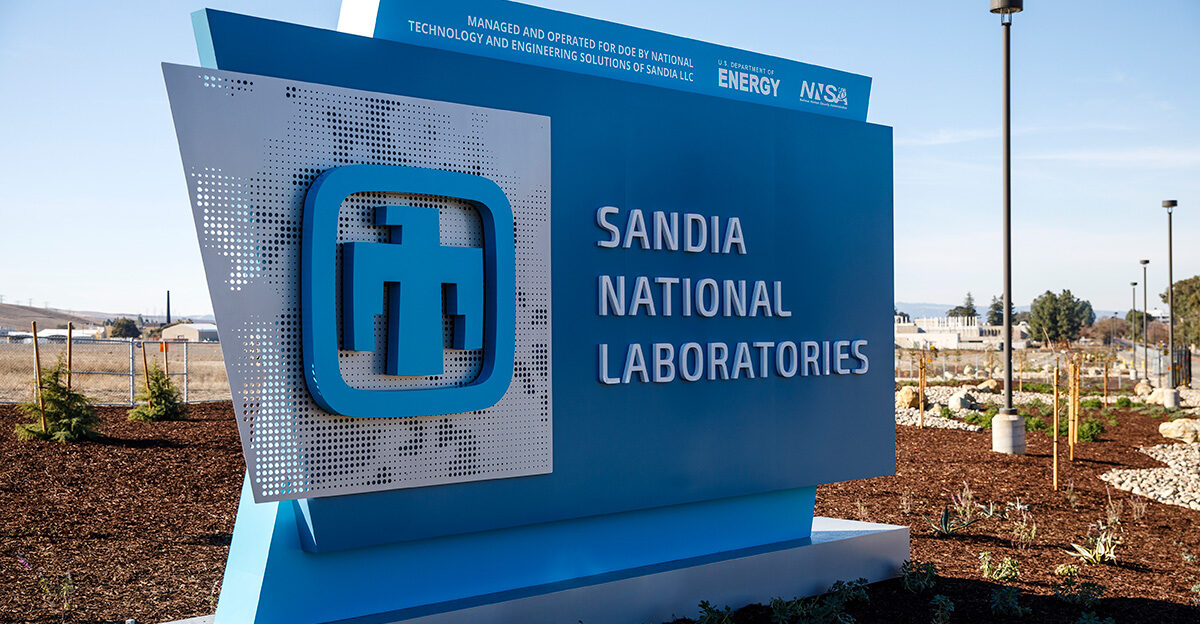
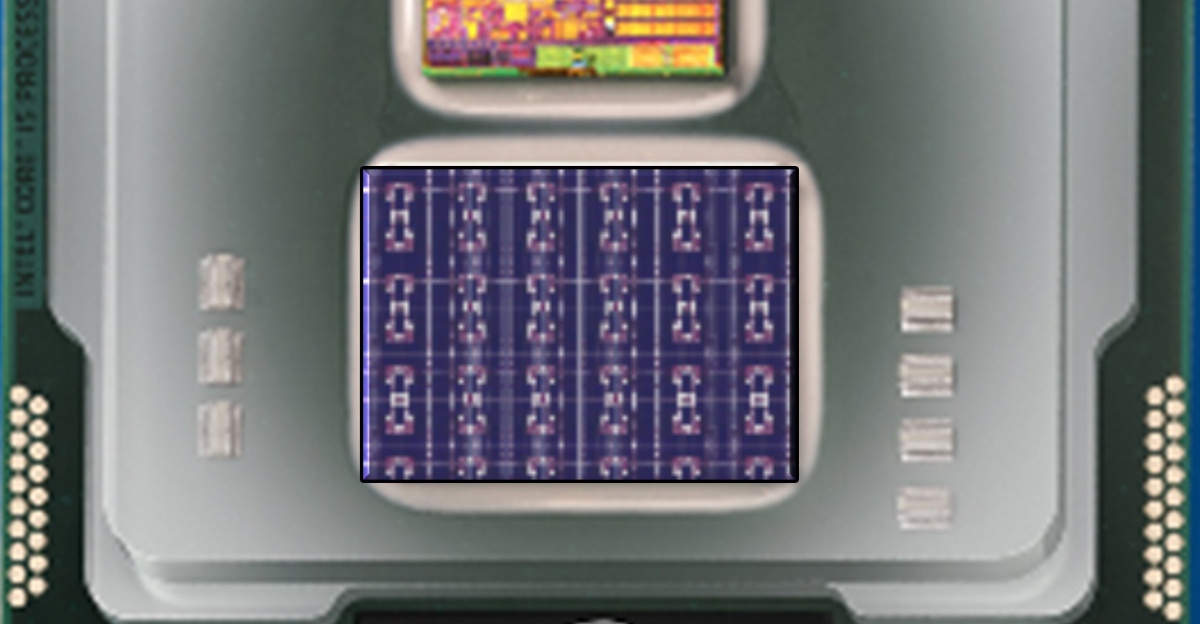
Before Darwin Monkey, the record-holder was Intel’s 2024 Hala Point neuromorphic system at Sandia National Labs: 1.15 billion neurons across 1,152 Loihi 2 chips.
Hala Point could reach ~15 TOPS/W at INT8 precision, but it drew up to 2,600 W. By contrast, Darwin Monkey’s 2,000 W load is 600 W lower for nearly double the neurons.
Competing chips are far smaller: IBM’s TrueNorth had 1 million neurons, and BrainChip’s latest Akida tops out around 1.2 million.
Darwin Monkey leapfrogs decades of neuromorphic progress.
Market Transformation
The neuromorphic computing market is on fire. One analysis shows growth from ~$28.5 million in 2024 to ~$1.33 billion by 2030.
Other forecasts see it reaching tens of billions by the mid-2030s.
North America currently holds the lead (about 37% share in 2024), but China’s Darwin Monkey threatens to shift the balance.
Neuromorphic chips are poised for applications in energy-sensitive domains: autonomous vehicles, robots, smart sensors, and even brain-computer interfaces.
Matching high AI performance with low power is a game-changer.
Biological Benchmark
In neural terms, Darwin’s Monkey nearly matches a macaque monkey’s brain. The 2+ billion neurons in its chip array approach the ~1.4 billion neurons in a macaque cortex.
Each Darwin 3 chip contains ~2.35 million spiking neurons (plus specialized brain-inspired instruction sets and on-chip learning).
The system can already simulate simpler brains: teams ran models of C. elegans (worm), zebrafish, and mouse brains, scaling up to monkey-level.
Even so, most neuromorphic devices remain tiny: as one industry expert noted, “Akida can have 1.2 million neurons and 100 billion synapses… our efficiency is better than IBM and Intel”, underscoring how those chips are orders of magnitude smaller than Darwin Monkey.
Development Challenges
Reaching this milestone required solving huge engineering puzzles. The team had to invent new ways to interconnect nearly a thousand chips and a scalable brain-inspired OS.
Reports note Darwin 3’s design and the accompanying operating system were breakthroughs in distributed neural integration.
Cooling and coordinating 960 chips at once was nontrivial – the researchers devised advanced liquid cooling and synchronization hardware to manage power and timing.
Every aspect, from chip layout to software, had to be rethought, which makes the success of Darwin Monkey all the more remarkable.
Strategic Partnership

Darwin Monkey was built on a close state-industry partnership. Zhejiang University led the research, while Zhejiang Lab – backed by the provincial government and Alibaba – provided fabrication and funding support.
This model allowed rapid scaling beyond what a single university could do.
Essentially, academic innovators and corporate engineers worked hand-in-hand: professors designed the architectures while lab facilities manufactured the chips.
Such coordinated support is typical of China’s push into critical tech areas, ensuring ample resources for projects like Darwin Monkey.
Recovery Architecture

In fact, Darwin Monkey follows a deliberate scaling path. In 2020, the team unveiled “Darwin Mouse,” a 120-million-neuron system modeled on a mouse brain.
Subsequent generations built on that foundation.
Each new Darwin chip increased neuron counts and enhanced interconnects. The progression from Darwin Mouse to today’s Darwin Monkey reflects steady, iterative innovation.
Over five years, the capacity jumped nearly 16×, showing that brain-scale computing is advancing rapidly. This history suggests future Darwin systems could approach human-brain scale, if the scaling continues.
Expert Assessment
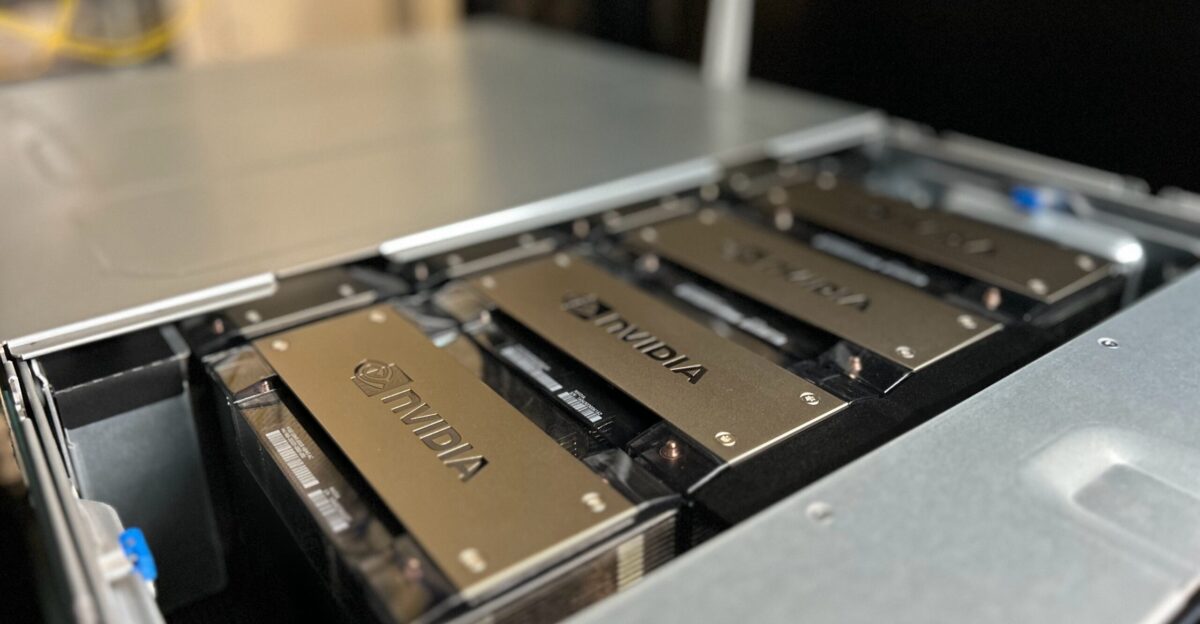
Analysts call Darwin Monkey a potential game-changer in AI hardware. By mimicking brain circuits, it achieves energy efficiency far beyond GPUs – estimates suggest neuromorphic designs can be 10×–100× more efficient per operation.
However, experts also caution that neuromorphic systems require specialized programming. The field lacks the mature software tools and developer ecosystems that GPUs enjoy.
For commercial adoption, users need easier programming models and broader libraries of spiking neural networks.
Darwin Monkey proves the concept, but mainstream use will depend on building the rest of the ecosystem.
Future Implications
The success of Darwin Monkey shifts the conversation about AI’s future. As traditional silicon reaches its limits, brain-inspired architectures emerge as a viable path forward.
This breakthrough signals that China is now a serious player in post-Moore computing, potentially altering global tech leadership.
Policymakers and technologists are asking what comes next: will future supercomputers emulate biology instead of chemistry?
The answer may reshape AI strategy worldwide. In any case, Darwin Monkey’s achievements suggest the next era of AI won’t just be about smaller transistors, but about thinking more like nature.
Geopolitical Ramifications

Darwin Monkey arrives amid intense US–China tech competition. Crucially, it was built using purely Chinese-developed chips and tools – circumventing Western export restrictions on high-end AI hardware.
This demonstrates China’s growing indigenous capability in cutting-edge AI infrastructure. Analysts note that such tech independence will influence national security and economic planning.
Darwin Monkey reduces China’s vulnerability to chip embargoes. It sends a clear message: despite trade barriers, China’s domestic innovation can still produce world-class AI platforms, shifting the balance in global tech competitiveness.
International Response

News of China’s brain-like supercomputer has spurred reactions abroad. US and European research agencies have signaled new funding boosts for their own neuromorphic initiatives, and companies like Intel and IBM are accelerating Loihi research programs.
International collaborations are re-evaluated in light of the breakthrough: universities and firms are tightening IP agreements and conducting security reviews on joint AI projects.
Countries now recognize neuromorphic computing as strategically vital, prompting a flurry of policy and investment activity to avoid falling behind.
Environmental Implications
Energy-conscious observers see good news: Darwin Monkey’s 2,000 W power draw is a big improvement on conventional AI hardware. It moves closer to the 20 W brain-power baseline, shrinking AI’s carbon footprint.
This matters because data centers already consume a sizable chunk of global electricity (several per cent) and are set to more than double their power use by 2030.
By doing complex computing with tiny power, neuromorphic systems could make AI growth more sustainable.
In future, brain-inspired chips may let us scale AI without the corresponding spike in emissions.
Societal Transformation

As machines approach brain-like complexity, society must adapt. Philosophers and the public debate whether ultra-complex neuromorphic AI could ever attain consciousness or sentience.
Engineers and universities, meanwhile, are racing to update curricula: students will need new skills in spiking neural networks, synaptic programming and brain modeling.
Schools are already introducing neuromorphic hardware labs and courses.
Public discourse is broadening, too – people wonder what it means to have devices that compute like living brains.
The Darwin Monkey story is spurring both excitement and soul-searching about AI’s role in our world.
Paradigm Shift
Darwin Monkey truly heralds a new era of computing. It suggests that future AI may be built on biological principles rather than pure math, validating decades of brain-inspired research.
In practical terms, this achievement means the question isn’t if machines can work more like brains – it’s how fast we can learn and scale those principles.
As one futurist put it, Darwin Monkey shows “the days of digital-only computers are numbered,” and that our trajectory now points toward a post-digital world where intelligence is coded in spikes, not bytes.