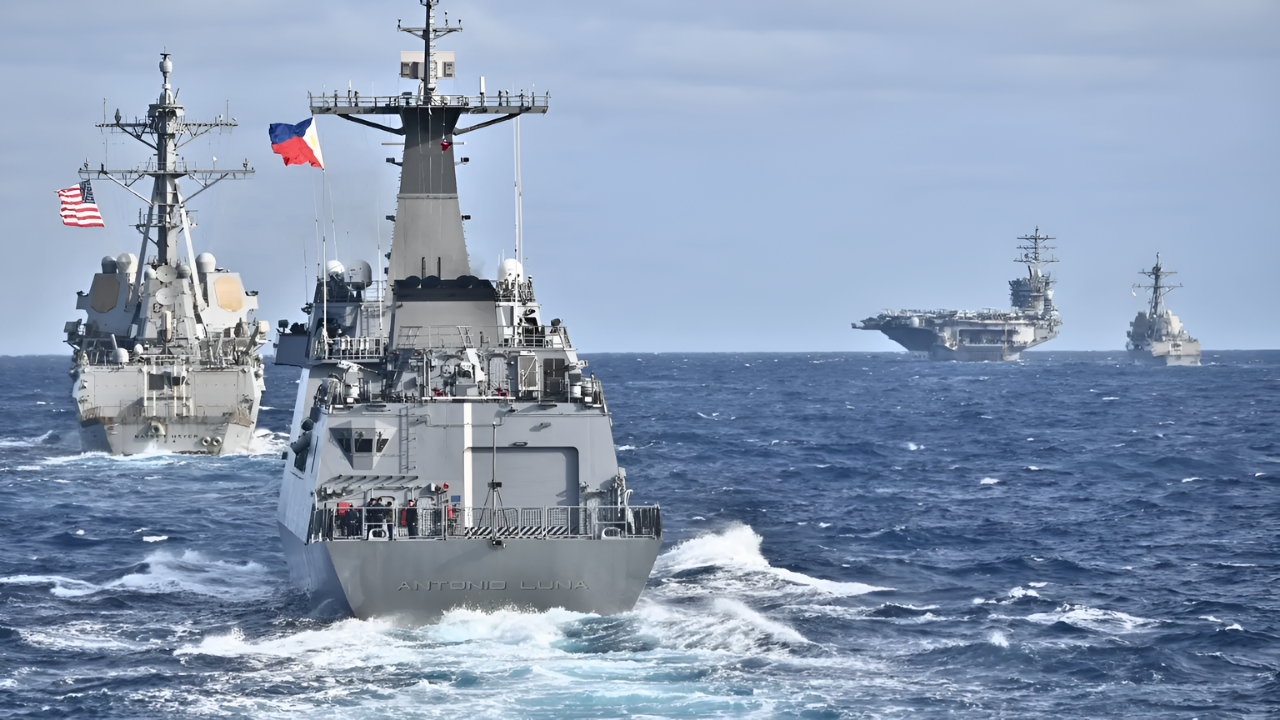
The 1.38 million square mile South China Sea has emerged as a critical flashpoint between China and a US-led coalition of allies conducting coordinated naval operations in November 2025.
Beijing has issued sharp warnings, characterizing these military activities as provocative interference in waters it claims as sovereign territory, despite international rulings rejecting its expansive territorial assertions and supporting freedom of navigation principles.
Strategic Importance of the Disputed Region
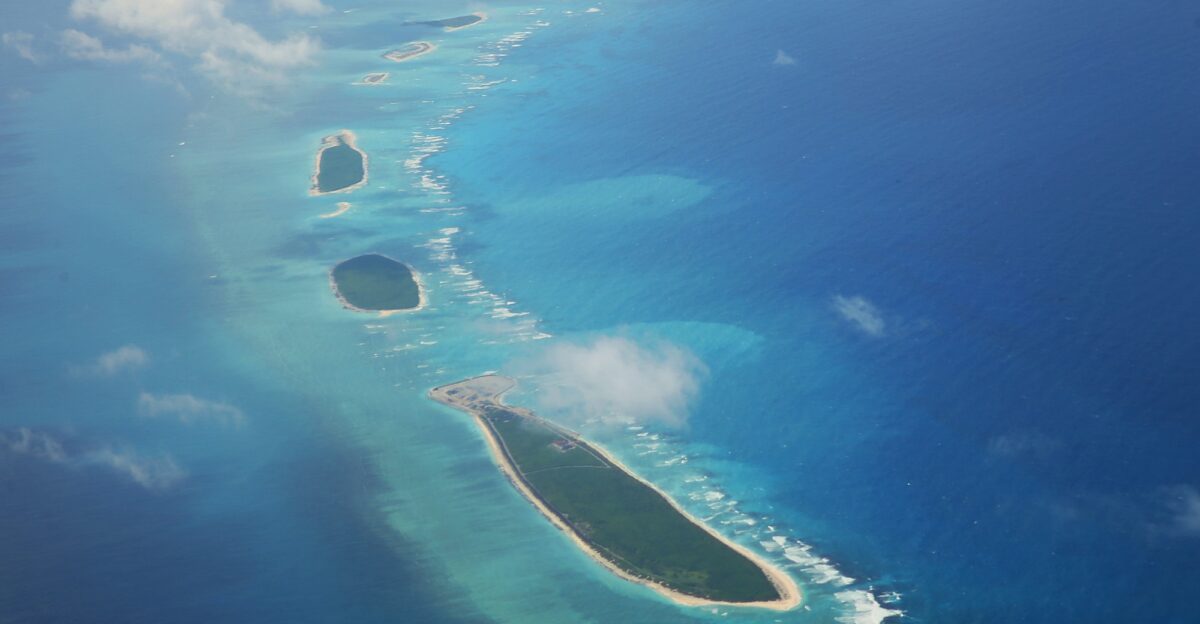
The South China Sea represents one of the world’s most strategically vital maritime corridors, covering approximately 3.6 million square kilometers. This waterway serves as a crucial commercial passage through which approximately 3.4 trillion dollars worth of global trade transits annually.
The region also contains an estimated 11 billion barrels of oil reserves, significant natural gas deposits, and valuable rare-earth minerals essential for the development of advanced technology and the transition to clean energy.
China’s Controversial Claims
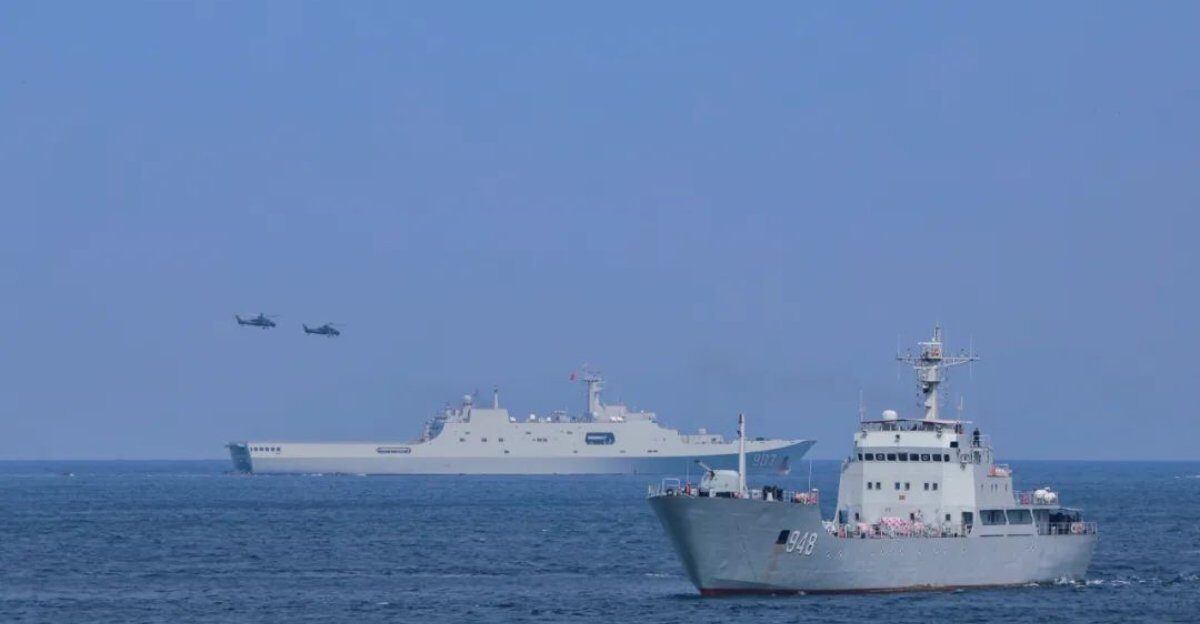
China claims nearly the entire South China Sea based on its controversial “nine-dash line,” which extends approximately two thousand kilometers from the Chinese mainland and encompasses over half of the sea’s expanse. However, a landmark 2016 international tribunal at The Hague ruled that Beijing has no legal or historical basis for these expansive maritime claims under international law.
Despite this ruling, China continues to enforce its claims through military expansion and administrative actions.
The Trilateral Military Exercise
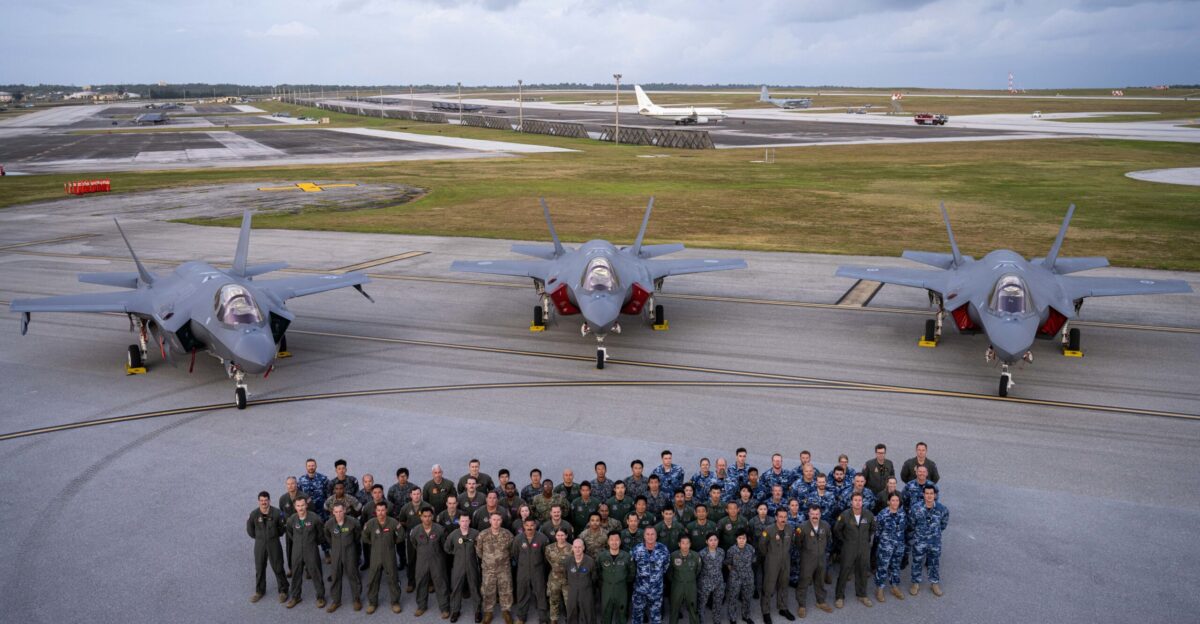
On November 14, 2025, the United States, the Philippines, and Japan conducted the 13th Multilateral Maritime Cooperative Activity within the Philippines’ exclusive economic zone, commonly referred to as the West Philippine Sea.
The operation featured the USS Nimitz Carrier Strike Group alongside major assets from the Armed Forces of the Philippines and Japan Maritime Self-Defense Force. This marked the first time a US aircraft carrier had operated near Scarborough Shoal since the beginning of 2025.
USS Nimitz’s Historic Final Deployment
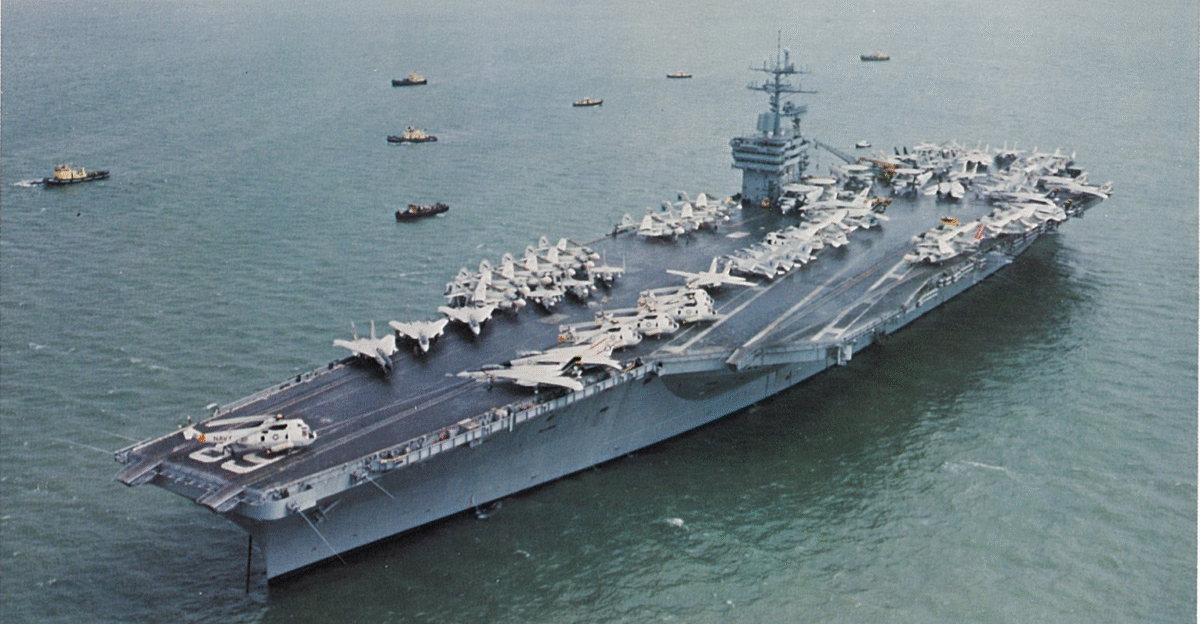
The USS Nimitz, completing its final deployment before retirement after more than fifty years of service, conducted exercises specifically in the Scarborough Shoal area, a contested feature within the Philippines’ exclusive economic zone.
This deployment sent a strong message of support for the Philippines amid escalating tensions with China. The carrier strike group’s presence demonstrated continued US commitment to regional stability and freedom of navigation operations.
USS George Washington Enters the Theater
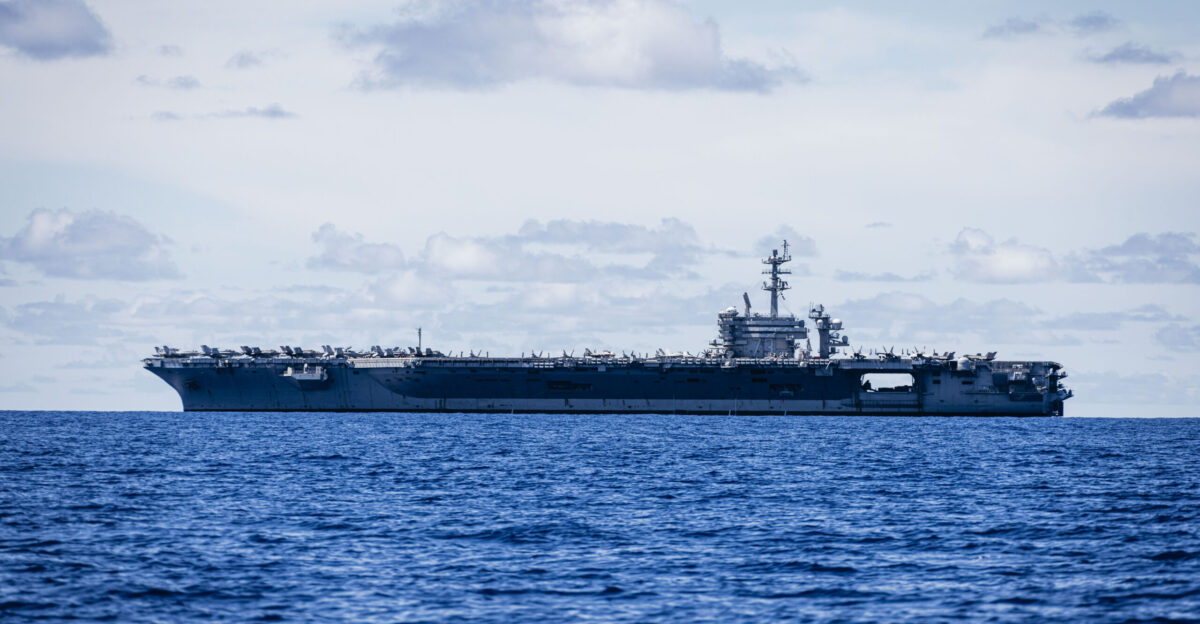
Following the Nimitz operations, the USS George Washington, the US Navy’s sole forward-deployed aircraft carrier based in Yokosuka, Japan, entered the South China Sea in mid-November 2025 during its regional patrol operations.
Satellite imagery from the European Space Agency captured the carrier strike group operating in waters west of Palawan, the Philippines’ westernmost province. The George Washington appeared to be moving toward areas where the Nimitz had been conducting salvage operations.
China’s Military Warning
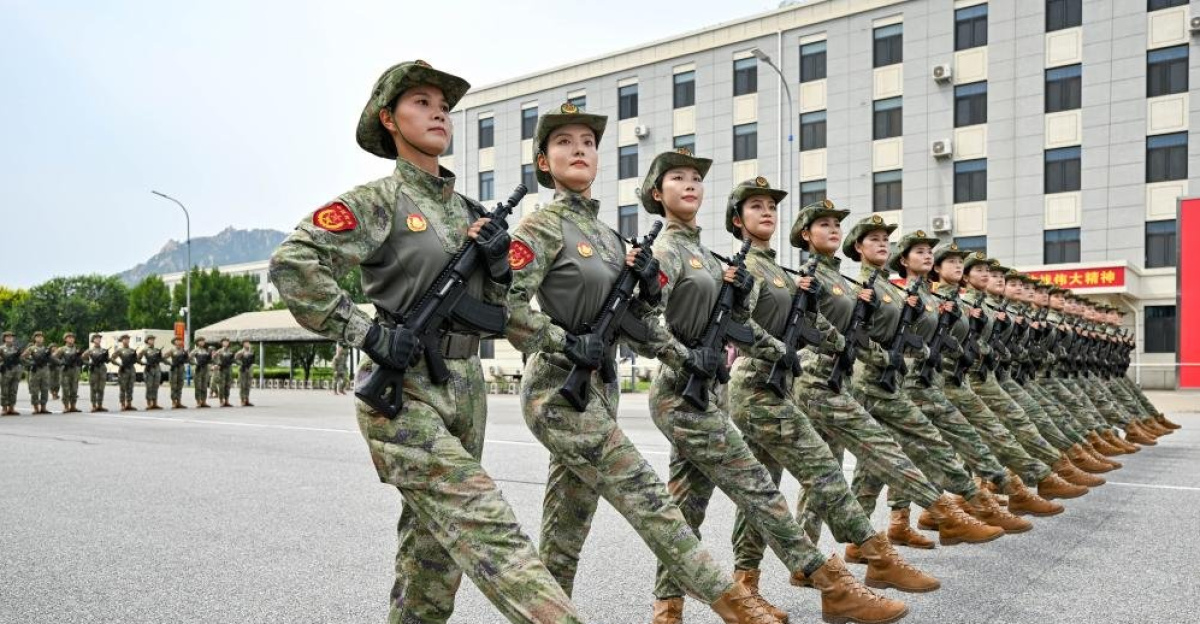
The Chinese military issued stern warnings through multiple official channels regarding the trilateral operations.
The People’s Liberation Army Southern Theater Command stated it would “maintain a high degree of alert” and “resolutely defend China’s territorial sovereignty and maritime rights and interests.” PLA commanders emphasized readiness to “control any military activities that disrupt the South China Sea.”
PLA Spokesperson’s Stark Language
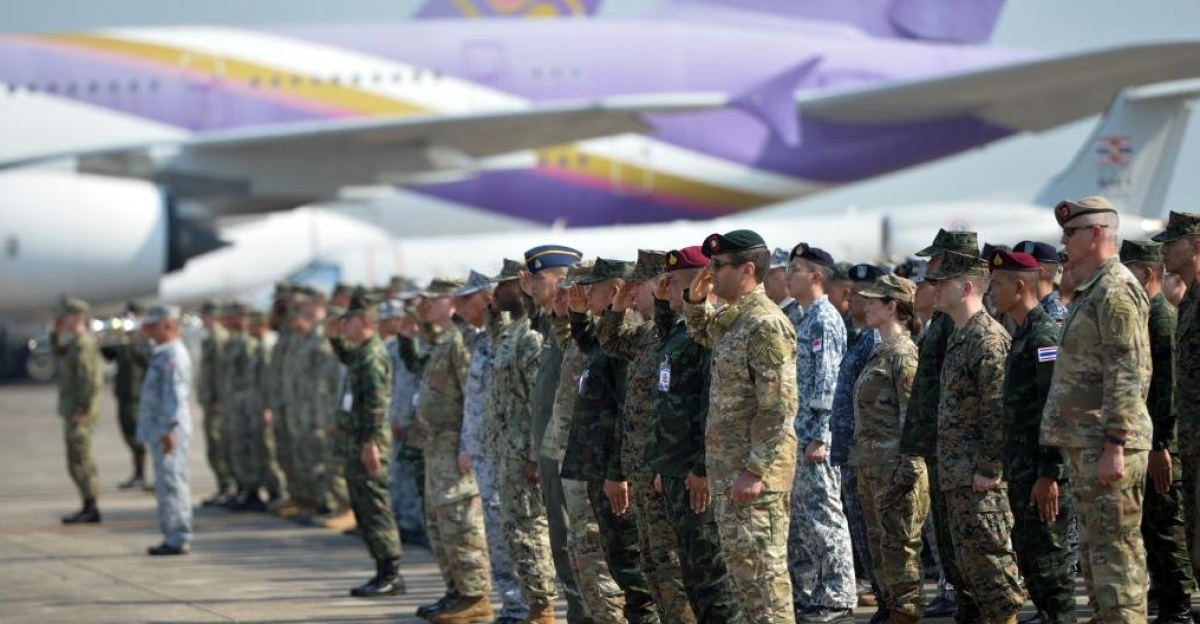
Tian Junli, spokesperson for the PLA Southern Theater Command, accused the Philippines of colluding with external forces and issued a direct warning to Manila. He stated: “We solemnly warn the Philippine side to immediately stop provoking incidents and engaging in actions that heighten tensions in the South China Sea.”
Beijing organized bomber formations to conduct routine patrols in the South China Sea in response to the trilateral exercises.
Chinese Foreign Ministry Response
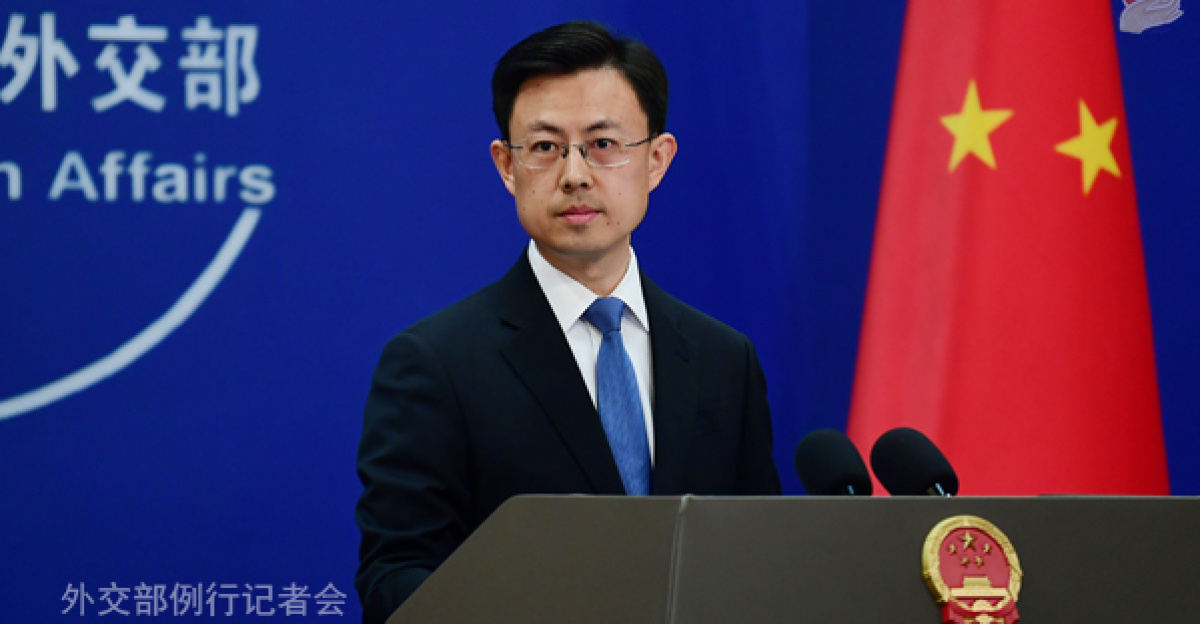
Chinese Foreign Ministry spokesperson Guo Jiakun blamed the incidents on recurring US military activity in the region. He declared, “The US has been flexing muscles by frequently sending military vessels and aircraft to the South China Sea.
This is the underlying cause of security challenges at sea and disruptions to regional peace and stability.” Beijing consistently portrays US operations as destabilizing.
US Counterargument on Stability

A senior US administration official countered China’s claims about regional stability and security.
The official told Military.com that China’s “sweeping territorial and maritime claims in the South China Sea and its increasingly coercive actions continue to undermine regional stability.” The US asserts that Beijing’s actions “fly in the face of its prior commitments to resolve disputes peacefully.”
Aircraft Recovery Mission Complications
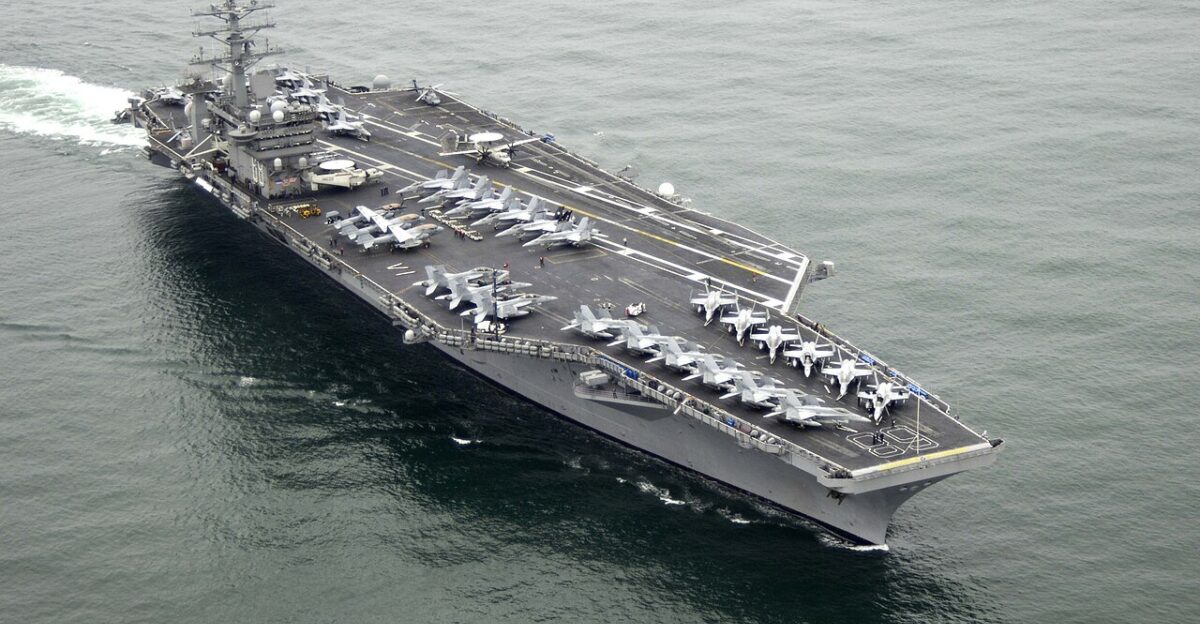
Adding complexity to the escalating situation, the US Navy is racing to recover two military aircraft that crashed in the South China Sea on October 26, 2025.
An F/A-18 Super Hornet and an MH-60 Seahawk helicopter from the USS Nimitz sank in contested waters. The salvage ship USNS Salvor is conducting recovery operations, with concerns that China could gain access to sensitive US military technology if it reaches the wreckage first.
The Mysterious Dual Crash
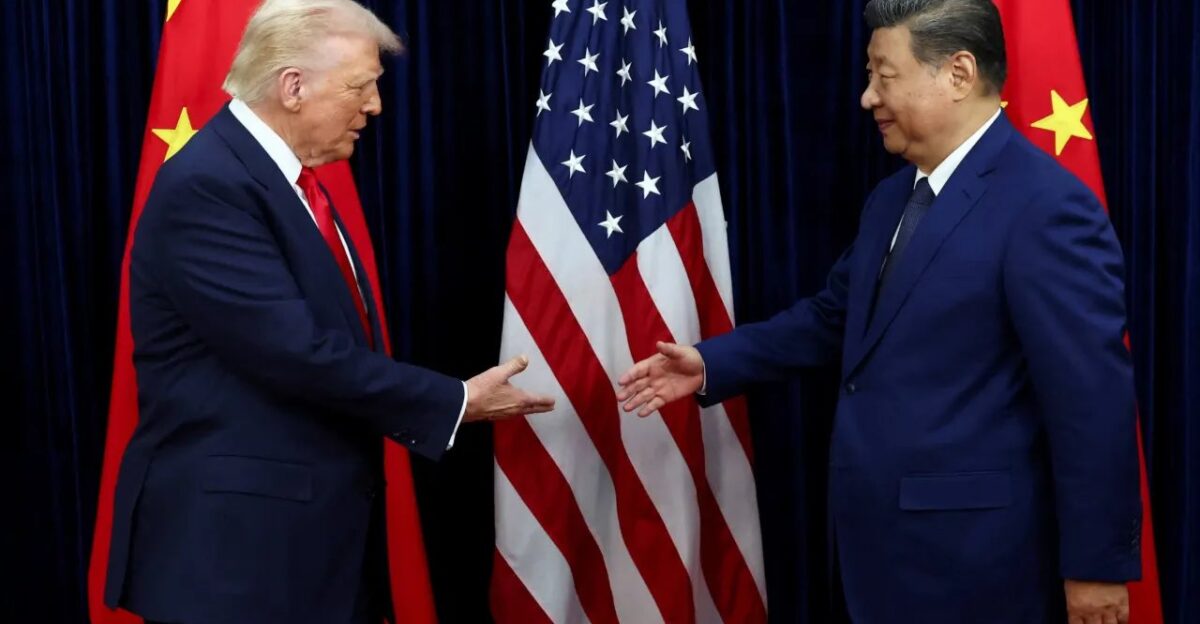
The two aircraft crashed within thirty minutes of each other, creating unusual circumstances that military officials are still investigating. Former President Donald Trump suggested that “bad gas” may have caused both incidents, though official investigations remain ongoing.
The incident underscores the operational challenges and risks associated with military activities in the contested South China Sea region.
US-Philippines-Japan Strategic Partnership
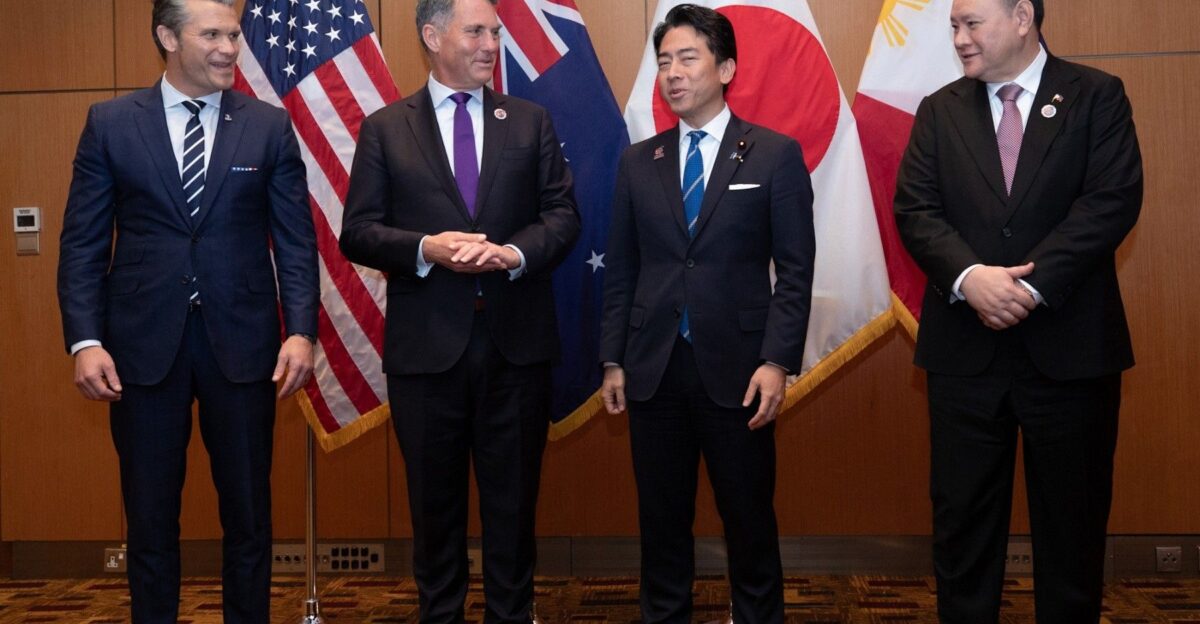
The November operations follow the historic US-Philippines-Japan trilateral summit in April 2025, where the three nations pledged deeper maritime cooperation and expanded defense coordination.
In October 2025, US Secretary of War Pete Hegseth and Philippine Defense Secretary Gilbert Teodoro Jr. announced the creation of Task Force-Philippines to “reestablish deterrence in the South China Sea.” This partnership aims to enable faster responses to Chinese activities in disputed waters.
Task Force-Philippines Mission
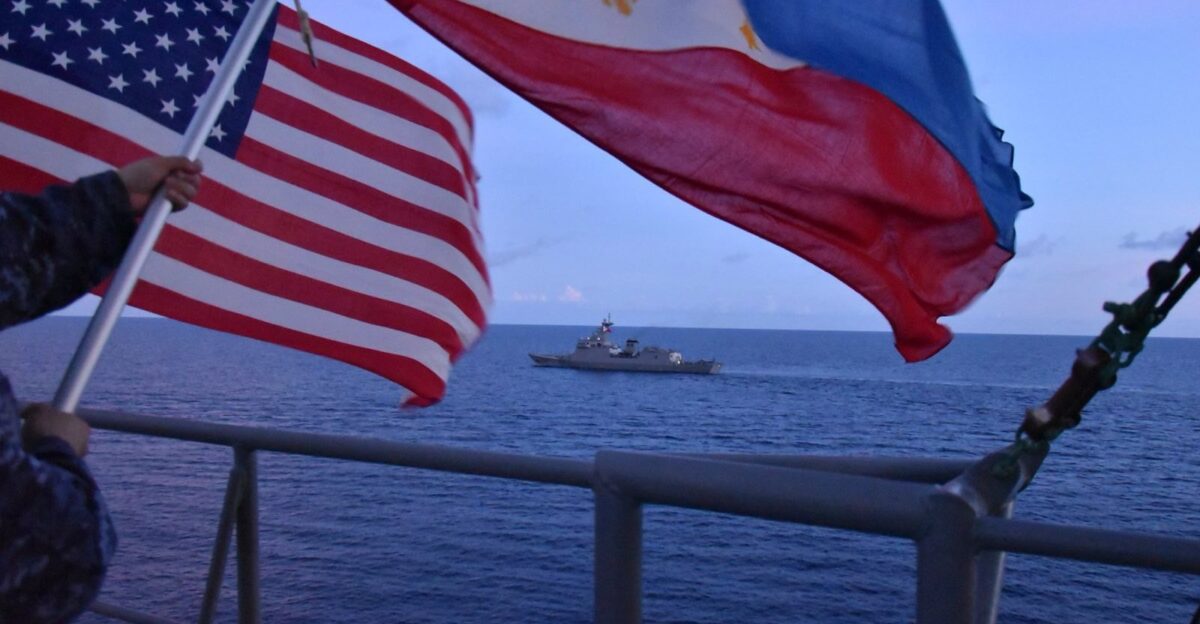
The newly created Task Force-Philippines represents a significant escalation in US-Philippine military cooperation and coordination efforts. Secretary of War Hegseth stated: “We don’t seek confrontation, but of course we’re ready to protect our interests, individually and mutually.”
He also condemned China’s behavior, citing “videos and pictures of water cannons, ship-to-ship collisions, and illegal boardings at sea.”
China’s Island Militarization Strategy
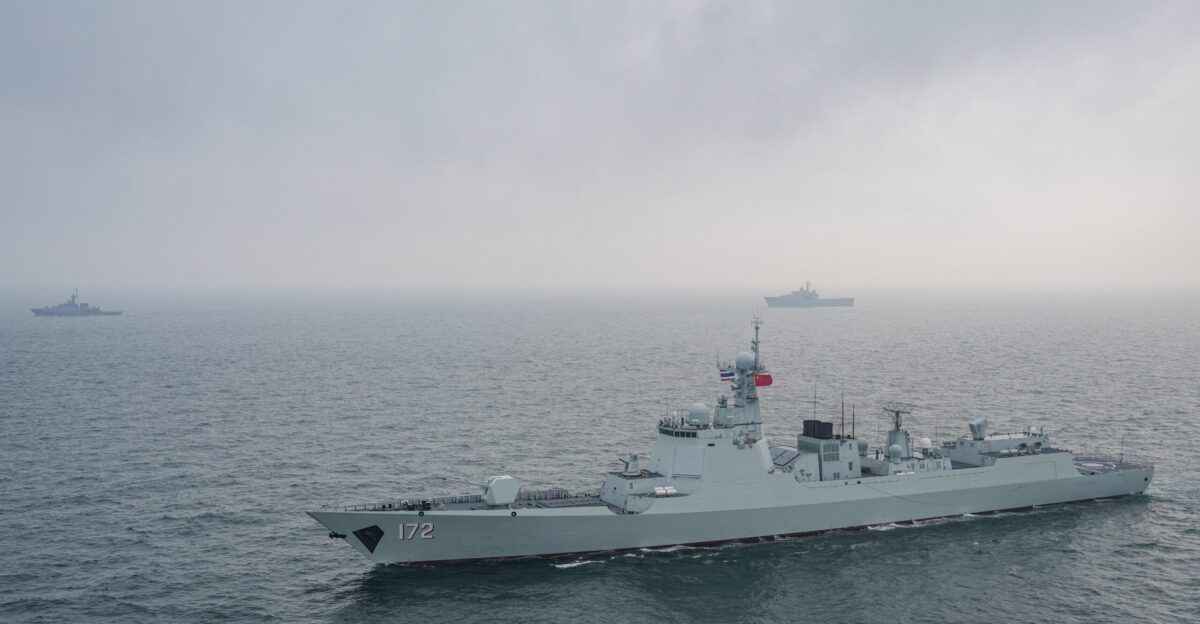
China has bolstered its territorial claims over the past two decades by constructing military facilities on disputed islands and reefs.
The People’s Liberation Army Navy has transformed these features into fortified outposts equipped with advanced surveillance and weapons systems. The People’s Liberation Army Navy, now the world’s largest by ship count, recently commissioned its third aircraft carrier, the CNS Fujian.
Chinese Naval Expansion Milestones
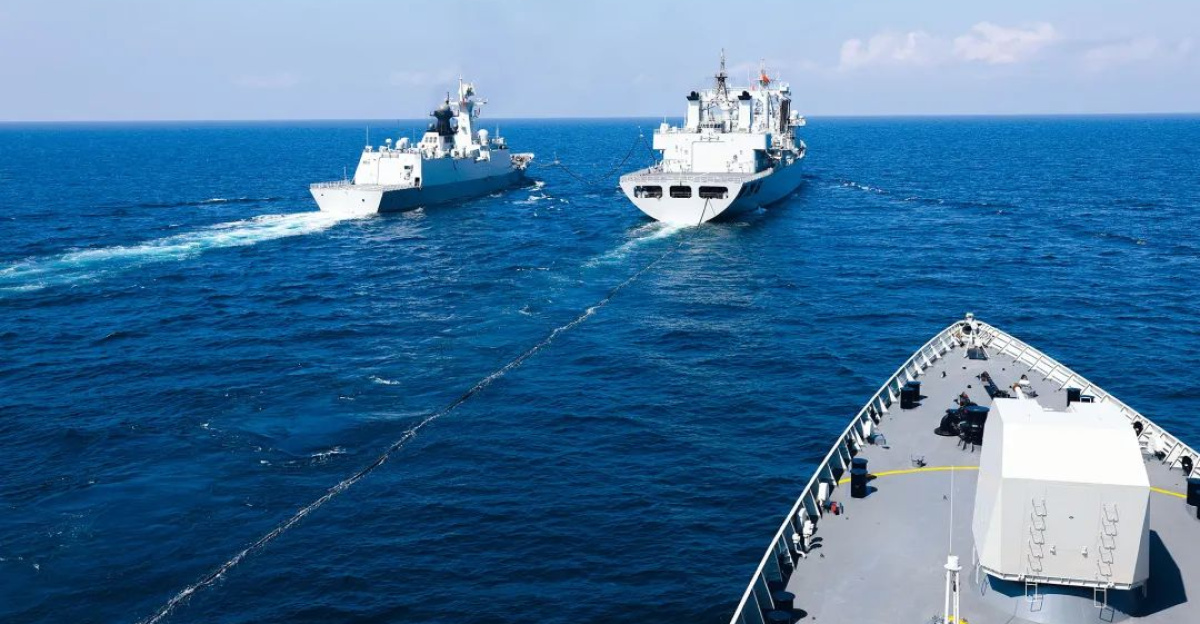
Earlier in 2025, China simultaneously deployed two operational aircraft carriers—the Liaoning and Shandong—to the Western Pacific, marking a significant milestone, as described by security analysts.
This demonstration of enhanced naval power showcased Beijing’s ability to project military force across greater distances. The deployment of multiple carriers simultaneously represents a new capability for the Chinese Navy.
Freedom of Navigation Principles
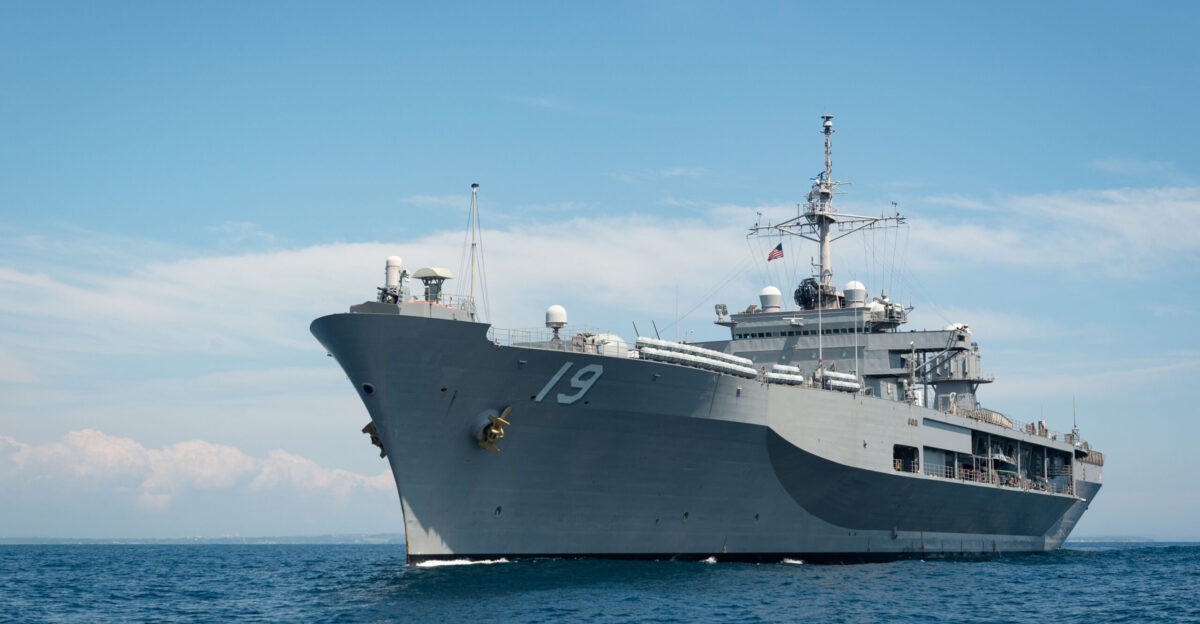
The United States maintains that China’s claims and military expansion threaten freedom of navigation through these critical waters and international commerce.
US 7th Fleet spokesperson Lt. Sarah Merrill stated: “The United States is defending its right to fly, sail, and operate wherever international law allows. Nothing China says otherwise will deter us.” Australia has also conducted routine transits through the South China Sea.
Competing Perspectives on International Law
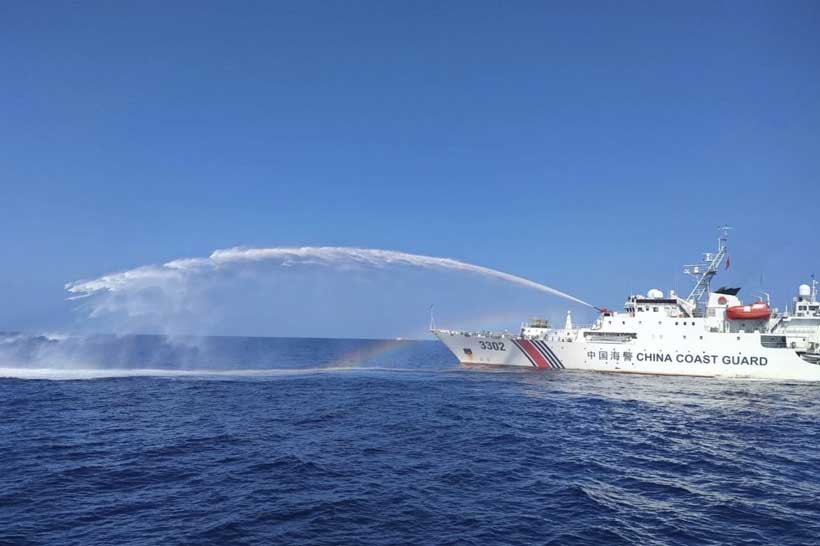
From Beijing’s perspective, what the US labels as “freedom of navigation operations” constitutes territorial intrusions into sovereign Chinese waters.
Conversely, Washington and its allies view these operations as legitimate exercises of international navigation rights under the UN Convention on the Law of the Sea. This fundamental disagreement continues to drive tensions between the two powers.
De-escalation Dialogue Efforts
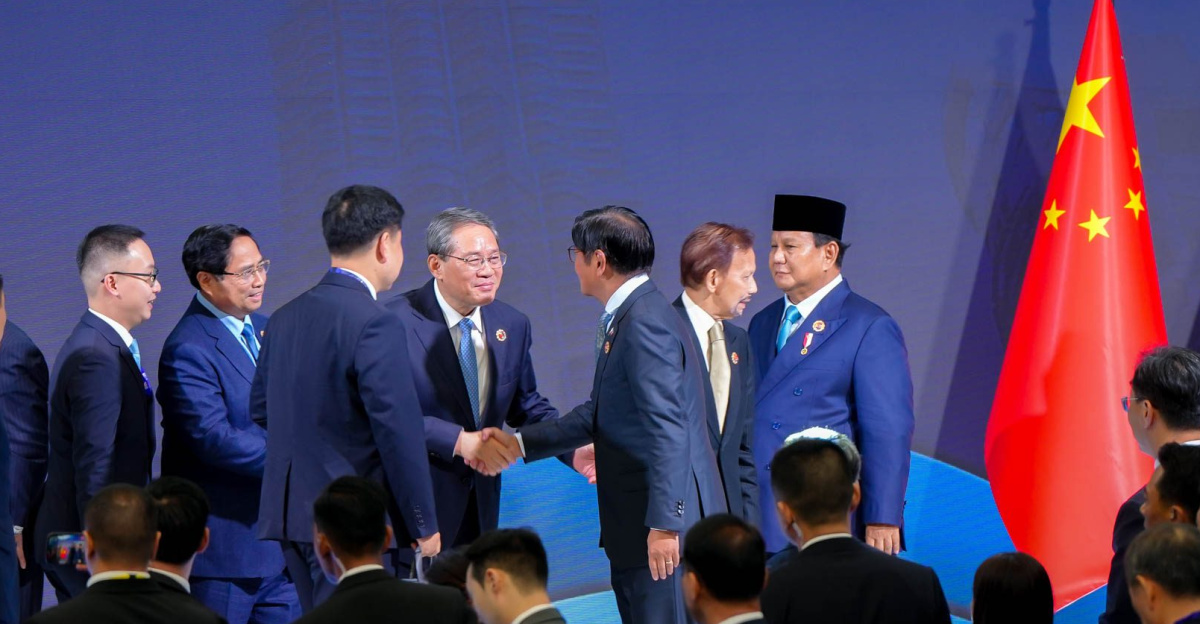
Despite heated rhetoric, the United States and China held their second round of maritime security talks in Hawaii from November 18 to 20, 2025. The Chinese navy described the discussions as “frank and constructive,” with both sides exchanging views on air and sea encounters.
These twice-yearly talks represent efforts to manage risks and maintain communication channels between the two militaries.
Uncertain Path Forward
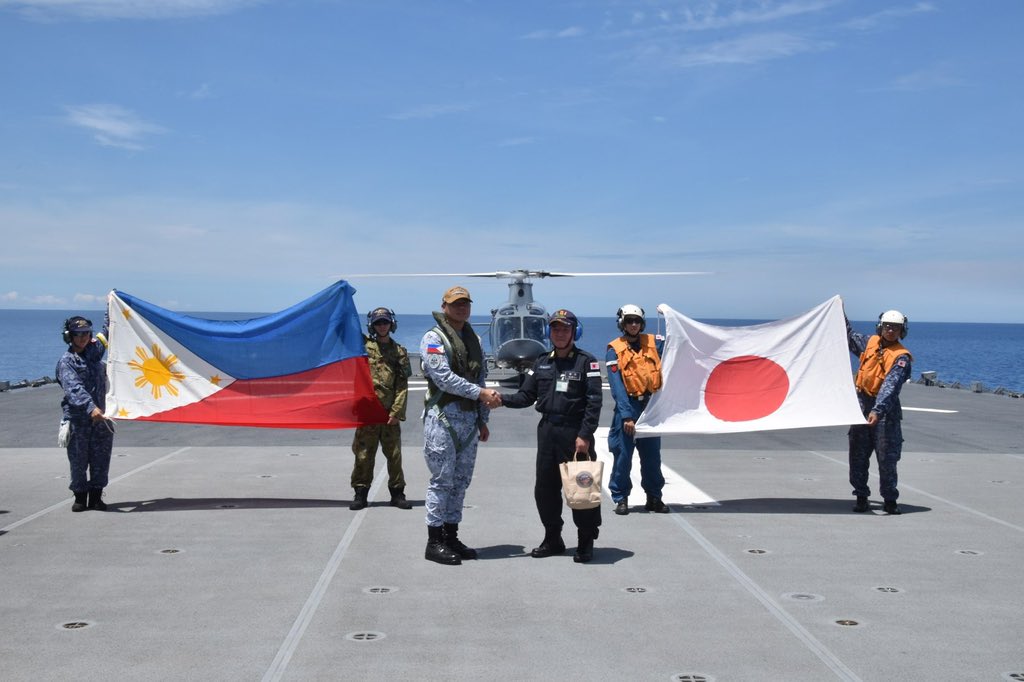
While military-to-military communication channels remain open, fundamental disagreements persist between Washington and Beijing over regional sovereignty and navigation rights.
The deployment of multiple carrier strike groups, combined with trilateral US-Philippines-Japan cooperation, signals sustained American commitment to the region. However, escalating military activities and nationalist rhetoric from both sides suggest tensions will likely continue throughout 2026 and beyond, with no immediate diplomatic resolution in sight.