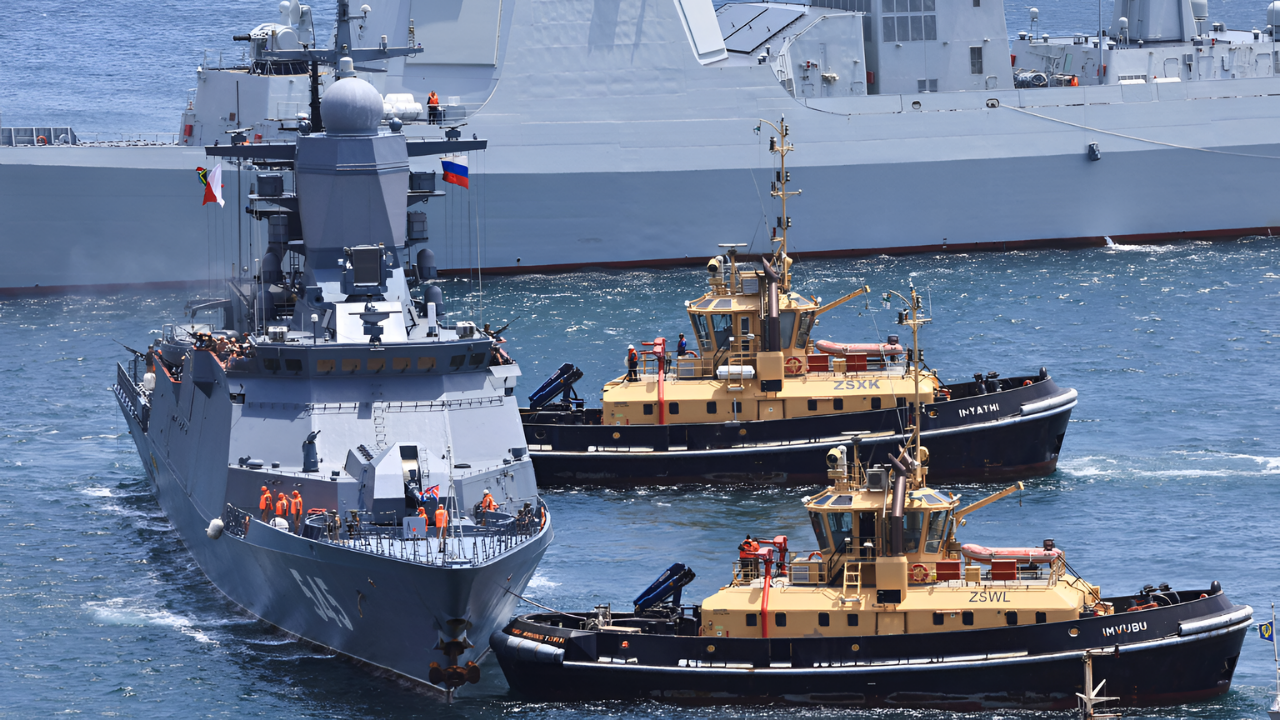
A major multinational naval exercise off South Africa’s coastline has brought warships from China, Russia, Iran and other nations to one of the world’s most critical trade corridors. The drills, unfolding in False Bay near Cape Town, come at a moment when disruptions in the Red Sea have forced hundreds of container vessels to abandon the Suez Canal route and instead navigate around the Cape of Good Hope—a detour that concentrates an estimated $1 trillion or more in annual trade along South Africa’s shores. With heavily armed fleets now operating close to this lifeline, concerns are mounting over whether the exercises signal a shift in maritime security dynamics that could affect insurance premiums, freight costs and geopolitical alignments.
Naval Forces Converge
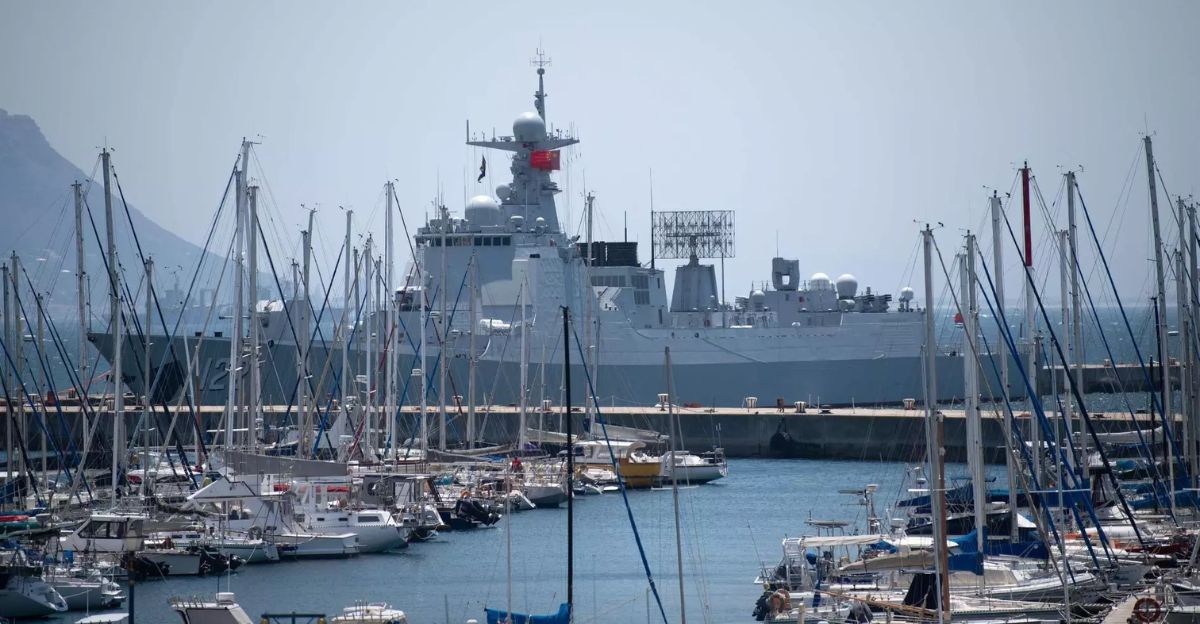
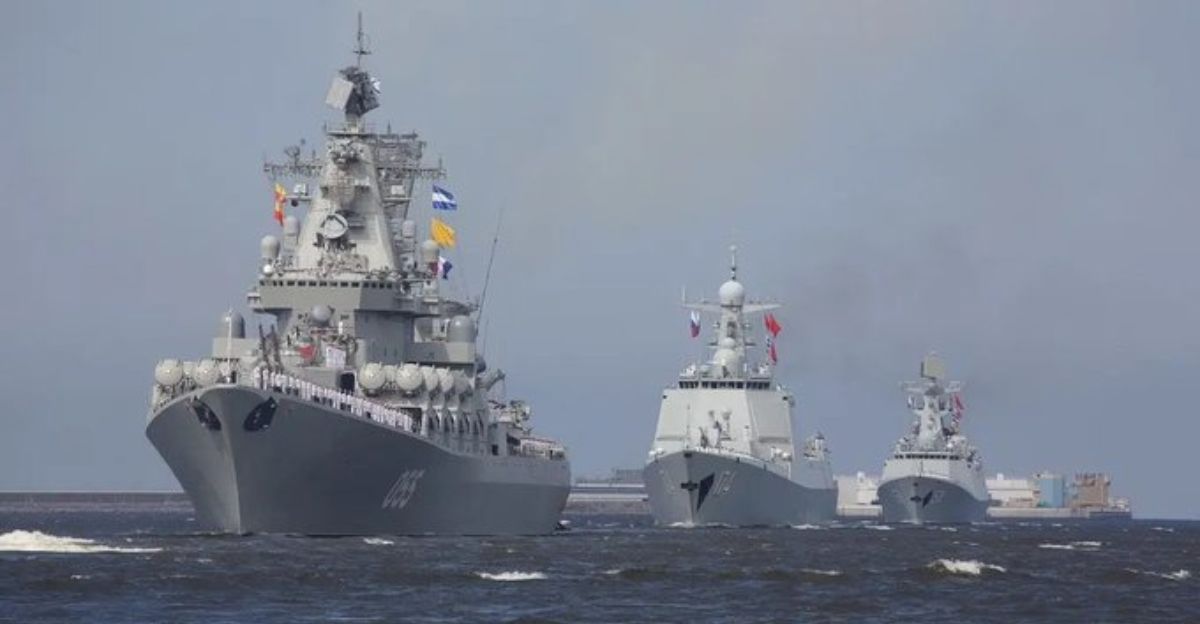
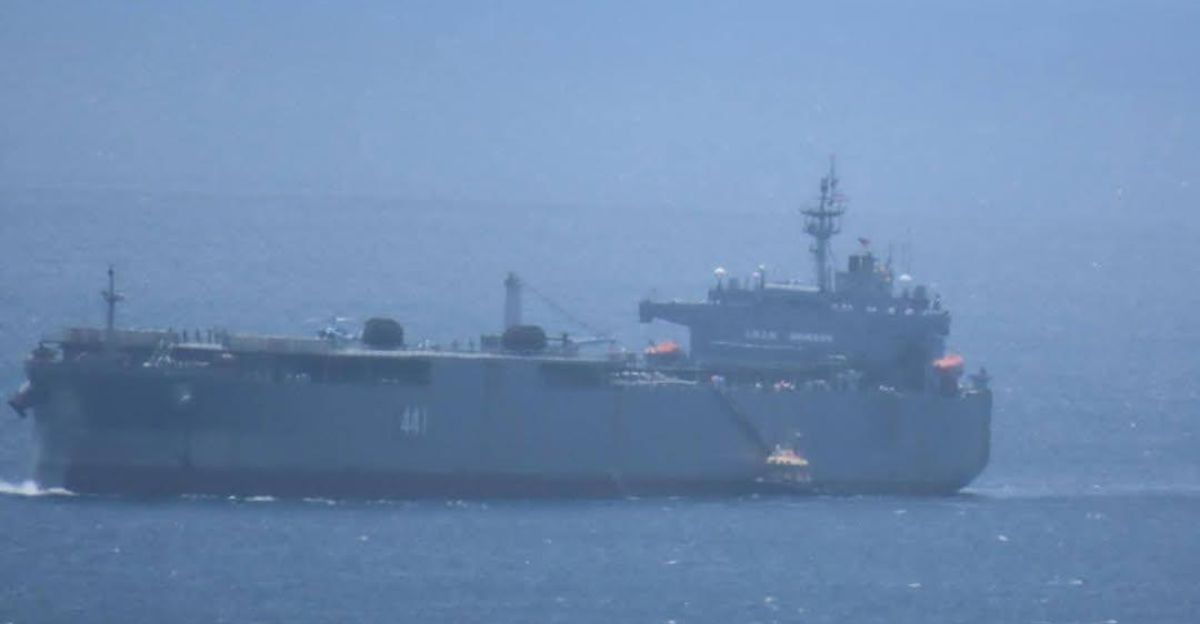
The exercise known as Will for Peace 2026 officially launched on January 10 with an opening parade at Simon’s Town Naval Base, where China’s guided-missile destroyer Tangshan took a prominent role. Designed to escort carrier groups and counter air and missile threats, the Tangshan was joined by the Chinese replenishment ship Taihu, Russia’s corvette Stoikiy and support tanker Yelnya, and South Africa’s frigate SAS Amatola alongside the patrol vessel King Adam Kok III. Iran deployed the corvette Naghdi and support vessels, and the United Arab Emirates also participated, forming what organizers described as a BRICS Plus flotilla focused on maritime safety tasks including anti-piracy drills, search-and-rescue operations and protection of shipping routes. Observers from Brazil, Egypt, Ethiopia and Indonesia were present, though India—a founding BRICS member—was notably absent.
Captain Ndwakhulu Thomas Thamaha, the South African Navy’s joint task force commander, characterized the maneuvers as a demonstration of collective resolve to work together and stressed that in an increasingly complex environment, such operations are essential rather than optional. Chinese naval officials emphasized months of preparation and a shift toward more pragmatic exercises designed to address shared maritime security challenges.
Trade Corridor Under Pressure
Behind the choreography at sea lies the commercial reality that has made the Cape route strategically vital. Houthi attacks and other threats in the Red Sea have pushed many merchant ships to reroute around southern Africa, adding roughly 10 to 12 days and thousands of nautical miles to journeys between Asia and Europe. The World Bank reported that vessel traffic through the Red Sea and Bab El-Mandeb Strait—once carrying 30 percent of global container traffic—plummeted by three-quarters, while navigation volumes around the Cape of Good Hope surged by over 50 percent.
This diversion has strained capacity and driven freight rates sharply higher, with container rates for key Asia-Europe routes reaching between approximately $8,000 and $10,000 per forty-foot unit at the height of the disruption in 2024. Although new vessel deliveries and improved capacity management eased some pressure in 2025, logistics specialists warn that the system remains fragile. Any new shock near the Cape could ripple quickly through supply chains, unsettling insurers and cargo owners already wary after years of volatility.
Diplomatic Tensions Escalate
The decision to host BRICS Plus naval forces has sparked intense political friction within South Africa and strained relations with Western partners, particularly the United States. Iran’s involvement became a flashpoint when the US Embassy in South Africa issued a blunt statement criticizing Pretoria for welcoming Iranian security forces while protests and violent crackdowns unfolded inside Iran. Sources confirmed that President Cyril Ramaphosa’s office requested Iran to withdraw from the active sea phase of the exercise and assume observer status instead, reportedly out of concern for South Africa’s standing under the African Growth and Opportunity Act.
AGOA provides South Africa and other eligible sub-Saharan African nations with duty-free access to the US market for thousands of products and supports billions of dollars in bilateral trade. The US House of Representatives passed a three-year extension of AGOA in mid-January 2026, but lawmakers had warned that deepening defense ties with countries Washington labels adversaries could jeopardize eligibility. Reports of confusion over Iran’s status—including a swiftly deleted announcement that the Iranian corvette Naghdi had sailed with the flotilla—fueled perceptions of mixed signals between South Africa’s presidency and its defense establishment.
Opposition parties, led by the Democratic Alliance, accused the government of undermining South Africa’s professed non-aligned stance and risking economic fallout by aligning with Russian and Iranian forces. Defense analysts questioned whether prestige gained from hosting the drills outweighed potential costs if Western investment and export opportunities were damaged.
Forward Horizons
As the exercises concluded, attention shifted to what comes next. For South Africa, the coming months will reveal whether hosting BRICS Plus navies strengthens its claim to bridge global power blocs or deepens suspicions in Washington and Brussels. Analysts note that much depends on follow-up events—further joint exercises such as another Maritime Security Belt drill could entrench these naval partnerships, while any diplomatic clash or incident could quickly revive talk of sanctions or boycotts.
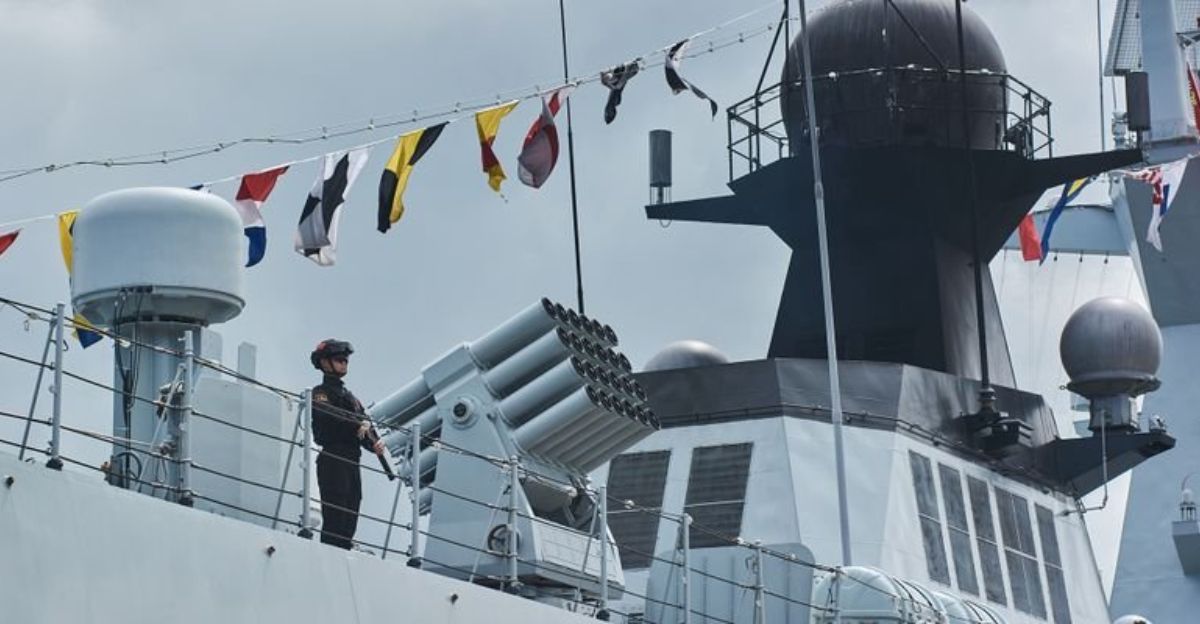
The convergence of warships near a trade artery carrying trillions of dollars underscores a broader contest over who shapes maritime security in an era when old alliances are being tested and new alignments are forming. Whether Will for Peace 2026 becomes a template for cooperation or a catalyst for deeper division will shape not only South Africa’s trajectory but also the security of one of the world’s most important shipping lanes.
Sources:
DefenceWeb, “BRICS Plus navies commence exercise off South African coast amid controversy”, 12 January 2026
Daily Maverick, “Iran, Russia and China sail into Simon’s Town as Exercise ‘Will for Peace’ kicks off”, 7 January 2026
South African Government (Gov.za), “Defence hosts Exercise Will for Peace 2026, 9 to 16 Jan”, 29 December 2025
SABC News, “South Africa hosts navies from BRICS Plus countries” (video report), 10 January 2026