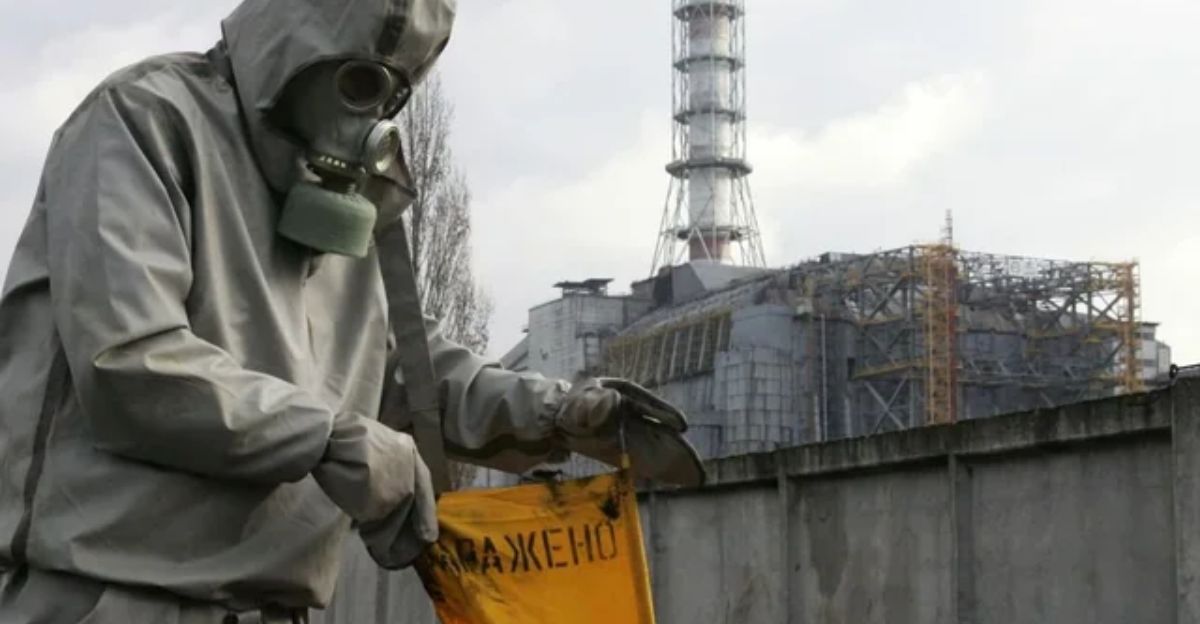
In 1986, an explosion at Reactor 4 in Chernobyl created one of Earth’s most dangerous places. Scientists believed nothing could survive there for centuries. However, decades later, researchers found something remarkable: a dark fungus not only living in the radioactive ruins but actually growing stronger in radiation. This discovery changed how scientists think about extreme survival and opened new possibilities for protecting astronauts and cleaning nuclear disaster sites.
The harsh Chernobyl zone contains radiation levels that kill humans in seconds. Plants die, animals leave, and soil remains poisoned for decades. Biologists once thought all life would disappear. Yet when scientists collected samples from reactor walls in 1997, they discovered life had flourished instead of vanished. Ukrainian scientist Nelli Zhdanova led this expedition and identified 37 different fungal species.
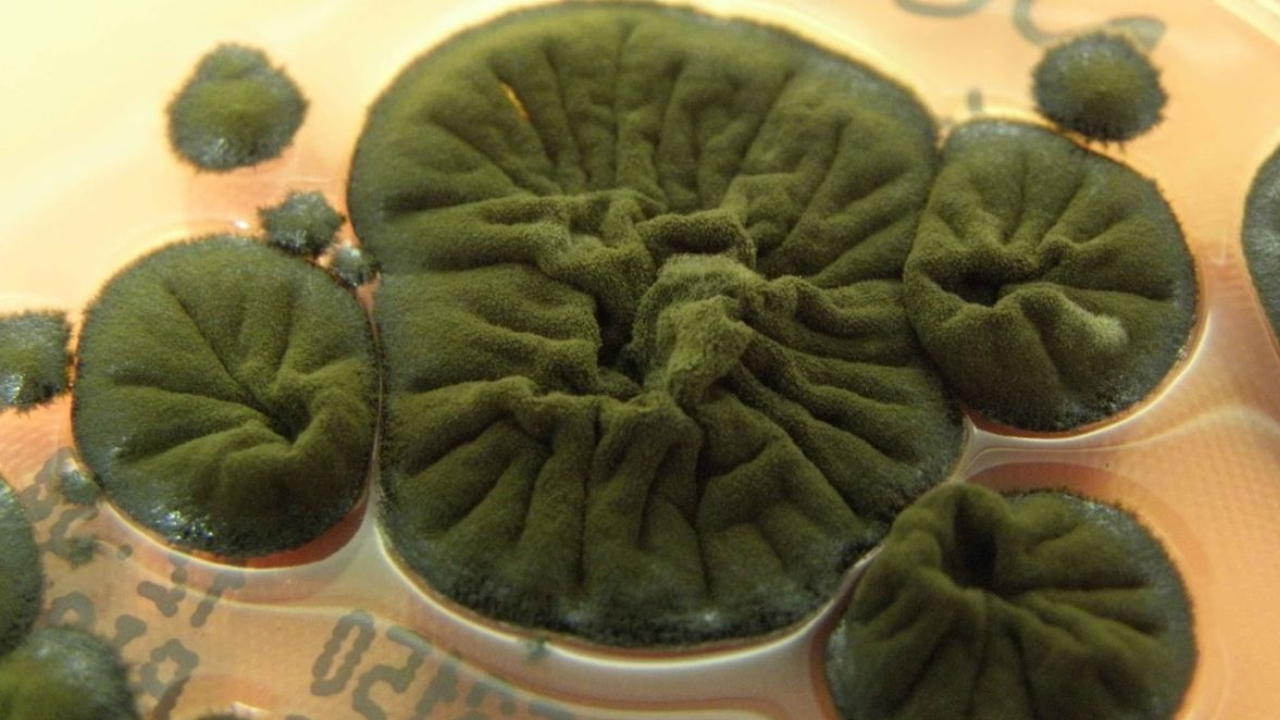
One species caught attention: a dark, melanin-rich fungus called Cladosporium sphaerospermum, which dominated the most radioactive zones. Her discovery sparked international research that continues to this day. Teams from Albert Einstein College of Medicine, Ukrainian universities, and European research institutions studied the fungus in laboratories, exposing it to controlled radiation levels too dangerous to test at the actual reactor.
How the Fungus Converts Radiation Into Energy
By the early 2000s, scientists had noticed something striking: the fungus not only tolerated radiation but also grew faster when exposed to it. In 2007, researcher Ekaterina Dadachova published findings that excited the scientific community.
The fungus actively grows toward radiation, a phenomenon known as “radiotropism.” Her laboratory tests showed that under radiation, the fungus’s mass increased more rapidly than in control samples without radiation. Scientists proposed a revolutionary theory: the fungus performs “radiosynthesis,” utilizing radiation as an energy source, much like plants use sunlight for photosynthesis.
The fungus packs its cell walls with melanin, the same pigment that colors human skin and protects against UV rays. When radiation interacts with melanin molecules, it alters their electronic properties through electron transfer. This process converts radiation energy into chemical energy that the cells use to grow and reproduce.
However, scientists admit they don’t yet understand the complete chemical pathway behind this process. Scientists remain cautious about claiming true radiosynthesis occurs; researcher Nils Averesch stated that “actual radiosynthesis, however, remains to be shown.” The fungus only thrives under chronic, low-dose radiation and dies quickly from high-dose exposure, unlike the bacterium Deinococcus radiodurans, which survives far higher radiation levels.
Future Uses for Space and Nuclear Cleanup
In 2018, scientists sent fungus samples to the International Space Station to test whether it truly harnesses radiation. The ISS orbits above Earth’s magnetic protection, exposing samples to cosmic radiation roughly 150 times stronger than ground level.
After 30 days in space, the fungus not only survived but grew 21 percent faster than Earth-based samples. The fungus also blocked approximately 2.4 percent of incoming radiation. These results interest NASA and European Space Agency scientists who face a serious problem: astronauts on long space missions encounter radiation exposure never experienced before in human exploration.
Researchers propose either extracting fungal melanin to create protective materials or cultivating the fungus inside spacecraft as a living radiation shield. At nuclear disaster sites like Chernobyl and Fukushima, the fungus could potentially accelerate radioactive breakdown through biological processes, offering a safer alternative to expensive and hazardous traditional cleanup.
Current research focuses on genetic sequencing to identify genes controlling radiation tolerance. International teams establish dedicated laboratories worldwide. Biotech companies explore melanin applications for protective coatings and medical shielding. Agricultural researchers investigate whether this fungus could help develop radiation-resistant crops.
The Chernobyl fungus demonstrates that environments written off as dead wastelands may contain biological solutions to humanity’s biggest challenges. Whether through protecting astronauts in space, cleaning up nuclear sites, or expanding knowledge about life’s limits, this organism promises discoveries far beyond the Exclusion Zone.
Sources
BBC Future, 28 Nov 2025
ScienceAlert, 30 Nov 2025
Caliber.az, 29 Nov 2025
Wikipedia, Deinococcus radiodurans
LADBible, 1 Dec 2025
Newsweek, 1 Dec 2025