Westlake Corporation, a Houston-based chemical producer, announced on December 15, 2025, plans to close three chlorovinyl production units and one styrene facility in North America, targeting unprofitable assets amid global market pressures.
Facility Closures and Asset Rationalization
The closures eliminate older facilities dependent on export markets, which face competition from lower-cost international rivals. This cuts about 15 percent of the company’s regional PVC capacity, allowing a shift toward more stable domestic operations.
The Aberdeen, Mississippi, suspension PVC plant, with one billion pounds of annual capacity, stands as the largest site affected. Long a key volume producer, it has suffered from persistent margin erosion in competitive export channels, prompting its permanent shutdown.
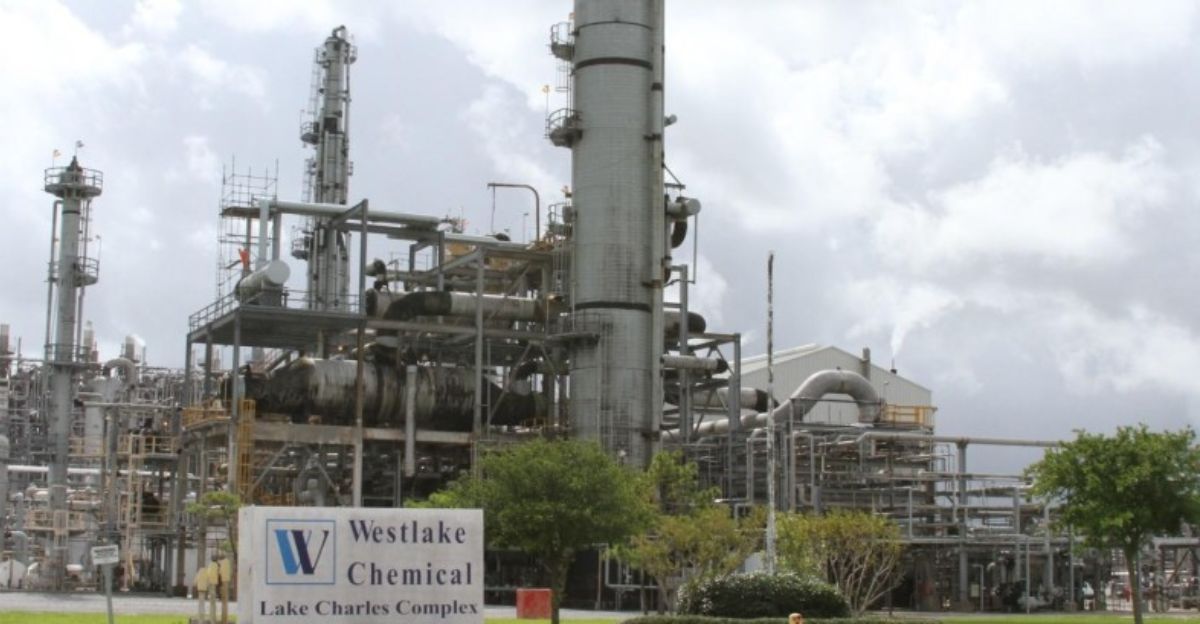
In Lake Charles, Louisiana, a vinyl chloride monomer (VCM) plant producing 910 million pounds yearly will cease operations. The move balances upstream supply with weaker downstream demand, curbing excess inventory buildup in a slow global economy.
Westlake will fully exit styrene production at its Lake Charles complex, shuttering a 570 million-pound monomer unit. Deemed non-core and lacking scale against global leaders, the facility has endured ongoing profitability strains.
The Lake Charles South chlor-alkali unit relies on outdated asbestos diaphragm technology, now targeted for phase-out by EPA regulations. Westlake opted against costly upgrades to membrane systems, choosing instead to retire the asset.
Financial Impact and Restructuring Costs
Restructuring carries $415 million in pre-tax costs, mostly non-cash at $357 million from asset write-offs and accelerated depreciation. These adjustments remove the facilities’ impaired value from the balance sheet.
Cash outlays total $58 million, mainly for severance and shutdowns, concentrated in the fourth quarter of 2025. This positions Westlake for a streamlined start to 2026.
Executives project $100 million in annual EBITDA gains from 2026 by shedding loss-making operations. The Performance & Essential Materials segment should see steadier margins as a result.
Annual free cash flow improvements of $175 million are anticipated post-closures, bolstering credit ratings and enabling continued dividends for shareholders.
Market Pressures Driving the Decision

China’s new plants have oversupplied chemicals worldwide, slashing prices and rendering U.S. exports from aging sites unviable. Westlake’s cuts represent essential capacity rationalization.
Sluggish construction and housing sectors, hit by high interest rates, have reduced needs for PVC products like pipes and siding. The reductions align output with actual consumption.
Strategic Direction and Workforce Impact
Around 295 employees across Mississippi and Louisiana face layoffs starting late December 2025. The company committed to severance and transition support for affected workers.
CEO Jean-Marc Gilson, in place since 2024, views the closures as core to his cost-cutting and reliability drive amid industry headwinds.
Seven remaining North American chlorovinyl sites leverage cheap natural gas feedstocks to serve local markets. Pruning weaker assets leaves Westlake leaner and better equipped for recovery.
These moves underscore the stakes in a volatile sector: survival hinges on agility against overcapacity and demand shifts, with Westlake betting on domestic strengths for sustained viability.
Sources:
“Westlake to Rationalize Certain North American Chlorovinyl and Styrene Assets.” Westlake Corporation / Business Wire, 15 Dec 2025.
“Westlake : Performance & Essential Materials Update.” MarketScreener, 15 Dec 2025.
“Form 8-K: Current Report.” U.S. Securities and Exchange Commission, 15 Dec 2025.