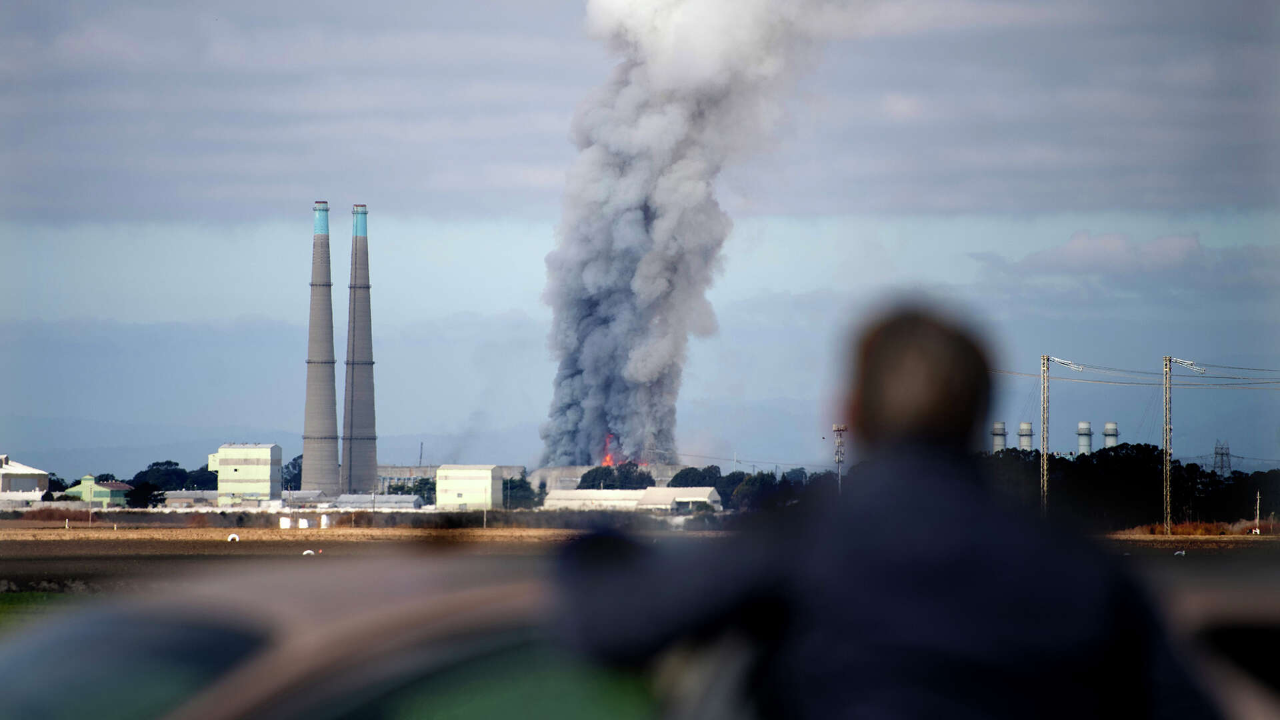
Nearly a year after a blaze tore through one of the world’s largest battery facilities on California’s Central Coast, new research shows the incident transformed from a localized industrial emergency into a far wider environmental contamination event.
When Grid Storage Turned Hazardous
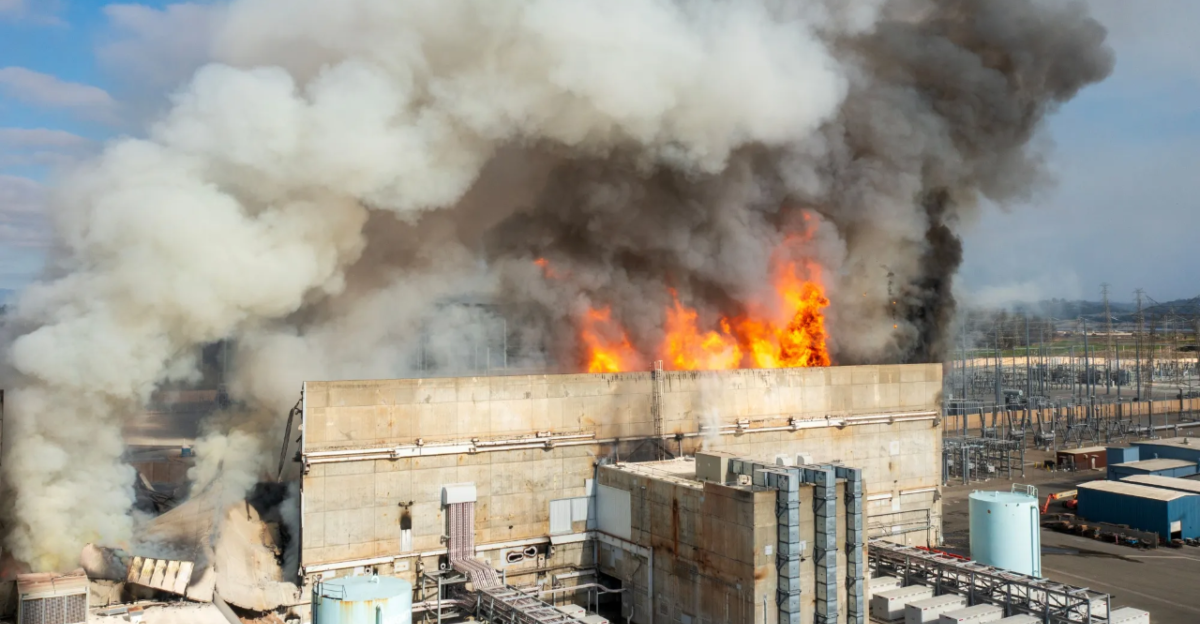
On January 16, 2025, a fire erupted inside Vistra Corp.’s 300‑megawatt lithium‑ion battery installation at Moss Landing, housed in a converted 1950s power plant. Roughly 1,200 nearby residents were ordered to evacuate as firefighters battled a blaze driven by thermal runaway, in which overheated battery cells triggered a cascading chain reaction.
Officials initially emphasized that the damage was contained and that air quality remained within safety limits. Those assurances have now been overtaken by a peer‑reviewed study from San José State University’s Moss Landing Marine Laboratories, published in Scientific Reports in November 2025. Drawing on years of pre‑fire environmental data, the research concludes that large quantities of toxic metals released by the fire settled over nearby wetlands rather than remaining confined to the facility.
Heavy Metals in a Critical Estuary

Elkhorn Slough, a protected estuary just inland from the power plant, is one of California’s most important coastal wetlands. It supports more than 340 bird species along with sea otters, harbor seals, and a diverse array of marine life. Within three days of the fire being contained, marine geologist Ivano Aiello and his team collected surface sediment samples across about 300 acres of marsh.
Laboratory analysis using X‑ray scanners and electron microscopes revealed microscopic particles of nickel, manganese, and cobalt embedded in the mud. The chemical fingerprint of those particles matched the nickel‑manganese‑cobalt (NMC) cathode chemistry used in Vistra’s batteries. The study calculated that roughly 25 metric tons—about 55,000 pounds—of heavy metals were deposited in that 300‑acre area alone, with surface concentrations jumping between tenfold and more than 1,000‑fold compared with pre‑fire baselines.
According to the study, that marsh survey area represents only about 2 percent of the metals thought to have been lofted into the atmosphere during the fire. Researchers estimate that 1,000 to 1,400 metric tons of cathode material entered the smoke plume, suggesting around 2.7 million pounds of particulate metals ultimately fell out over a much larger region.
Human Health Concerns and Community Response

From the day of the fire, many Moss Landing–area residents suspected the incident posed more than a short‑lived smoke hazard. People reported burning eyes, sore throats, nosebleeds, rashes, and a metallic taste that lingered for days. More than 2,500 residents joined an online group to document symptoms and share information. Federal air monitoring focused on gases and fine particulates in the atmosphere concluded that air quality was acceptable, while county health authorities still advised residents to remain indoors, adding to public confusion and distrust.
As time passed, community members began to organize their own sampling efforts. Independent soil tests reportedly found elevated metal levels as far as 46 miles from the plant. In February, residents—assisted by environmental advocate Erin Brockovich—filed a lawsuit against Vistra, Pacific Gas and Electric Co., and battery manufacturer LG Energy Solution. The complaint cites health impacts such as respiratory problems and nosebleeds and alleges that the companies failed to install and maintain adequate fire protection.
Scientists are now tracking how nickel, manganese, and cobalt move through water, sediment, and organisms in and around Elkhorn Slough. Early biological sampling has detected those metals in mussels and other species. For many organisms, current levels fall within historical ranges, but toxicologists note that these metals can bioaccumulate in tissues over time, raising questions about long‑term ecological and health effects that may take years to clarify.
Farmland, Regulation, and Cleanup
The Moss Landing complex sits amid some of California’s most productive farmland, including fields of strawberries, artichokes, and lettuce. The same fallout that reached the estuary likely settled on cropland and in irrigation sources, but authorities have not imposed broad restrictions on local produce or issued definitive guidance on food safety. The gap between confirmed environmental contamination and limited consumer advisories has become another point of contention in community meetings and legal filings.
Cleanup has proceeded under a patchwork of oversight. The U.S. Environmental Protection Agency ordered Vistra to fund the safe removal, treatment, and disposal of damaged batteries and contaminated water. Crews have disposed of more than half a million gallons of tainted water and removed thousands of destroyed battery modules. The Moss 300 building remains partially offline; Vistra must complete removal of all battery units before demolition. Next door, a separate PG&E battery array that experienced a fire in 2022 has faced opposition to full restart from local officials and residents.
Regulation Catches Up to Rapid Growth
The Moss Landing incident unfolded as California was rapidly expanding its grid‑scale battery capacity. The state now has 16,942 megawatts of storage operating—about one‑third of what it expects to need by 2045 to support a fully carbon‑free electricity system. State leaders, including Governor Gavin Newsom, have touted this build‑out as essential to integrating wind and solar power by storing surplus generation for use after dark or during low production periods.
The fire exposed how quickly deployment had outpaced regulation. The Moss Landing facility’s design—large banks of NMC batteries housed inside an aging power plant structure—differs from newer projects that typically use outdoor modular containers, wider spacing, and increasingly rely on lithium‑iron‑phosphate chemistry, which is considered less prone to thermal runaway. After the fire, the California Public Utilities Commission opened a formal investigation and began revising safety rules for energy storage.
Lawmakers responded with new legislation, including Assembly Bill 303 and Senate Bill 283, to require larger buffer zones around large battery sites, tighter fire and building codes, and closer coordination with local fire departments and emergency responders. Governor Newsom signed SB 283 in October, and updated fire code provisions based on NFPA 855 standards will take effect on January 1, 2026, for new projects.
These policy changes, along with evolving battery chemistries and outdoor designs, are intended to reduce the chances of another large‑scale failure. Yet enforcement and inspection capacity, along with rebuilding trust in affected communities, will determine how effective these safeguards prove as California heads toward a planned 50,000 megawatts of storage by mid‑century.
The Moss Landing fire has become a case study in both the promise and the risks of energy technologies central to climate goals. Peer‑reviewed evidence of heavy metal fallout has validated community concerns and reshaped the debate over how to monitor and manage large battery sites. As scientists continue to track metals moving through the Elkhorn Slough ecosystem and beyond, regulators and industry leaders face ongoing pressure to demonstrate that clean‑energy infrastructure can scale up without leaving slow‑moving toxic legacies behind.
Sources
San José State University – Moss Landing Marine Laboratories, Scientific Reports heavy metal fallout study (2025)
U.S. Environmental Protection Agency – Moss Landing Lithium-Ion Battery Fire Response and Cleanup Orders
Monterey County – 2025 Moss Landing Vistra Power Plant Fire incident updates and evacuation information
California Public Utilities Commission – Moss Landing fire investigation and battery storage safety rulemaking
California Energy Commission – 2025 battery storage fleet growth and grid integration reports