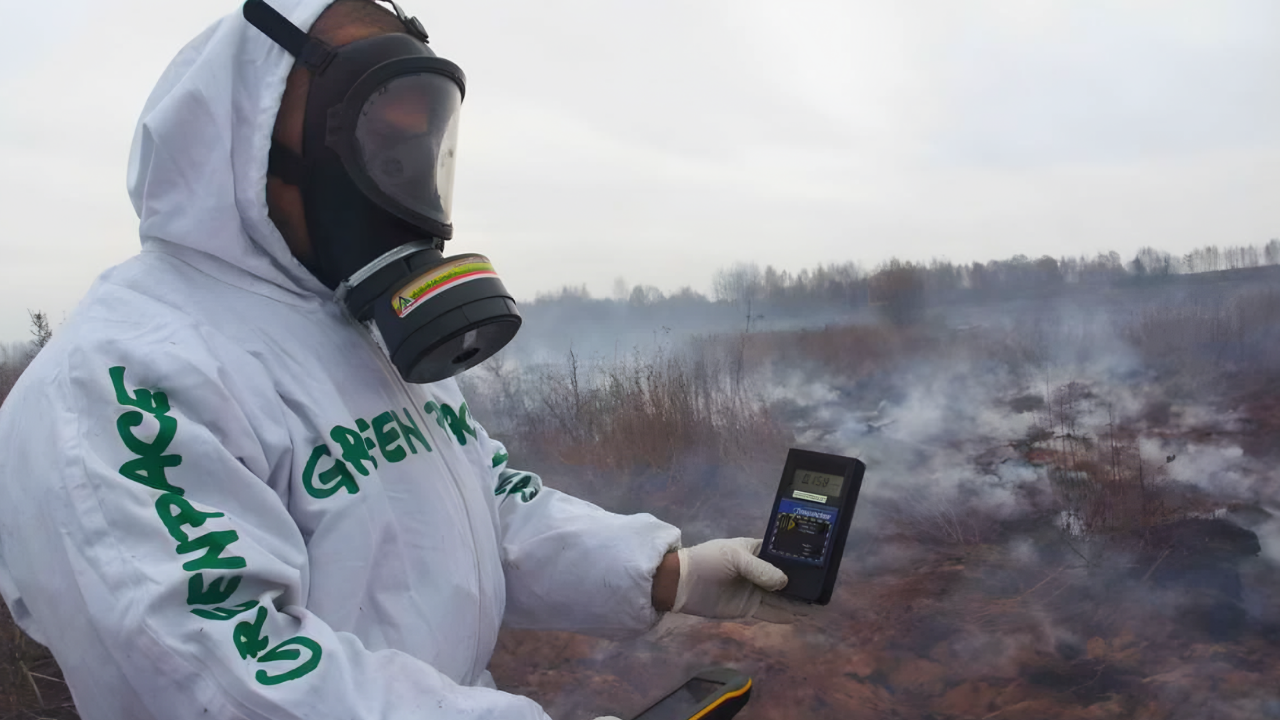
Three bright blue dogs spotted outside the Chernobyl nuclear plant in October 2024 triggered a global wave of speculation that quickly outpaced the facts. Photos of the animals, roaming near the edge of the restricted zone around the 1986 disaster site, ricocheted across major platforms and prompted theories that ranged from radiation-driven evolution to sophisticated digital fakery. Only weeks later did researchers and veterinarians close to the animals offer a much more ordinary explanation: spilled chemical dye from a tipped-over portable toilet.
Speculation in a Viral Vacuum
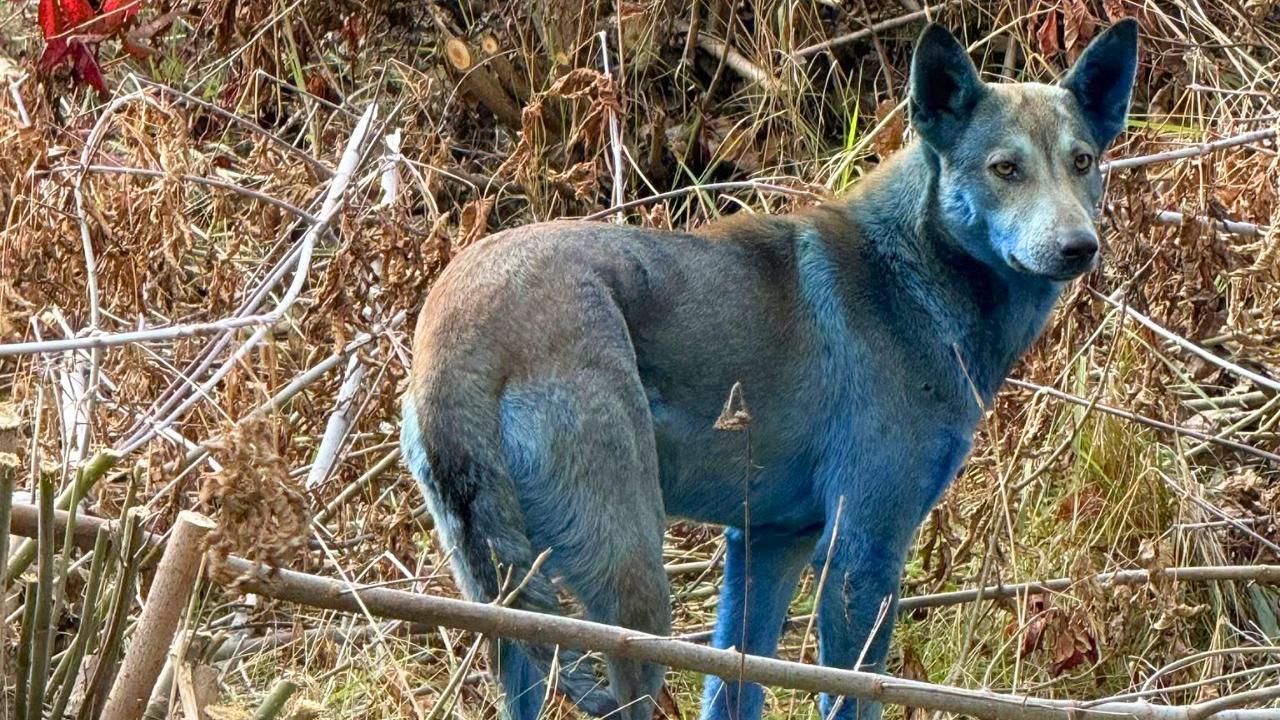
When the images first appeared on TikTok and Facebook, viewers raced to supply their own answers. Some insisted the vivid blue fur proved that the dogs had mutated in response to decades of radiation, treating the color as visible proof of genetic change. Others suggested the animals represented a new, better-adapted population uniquely suited to the contaminated landscape.
Skeptics on the same platforms claimed the photos were artificial, arguing that the saturated periwinkle tones looked more like an image filter than real fur. The Dogs of Chernobyl team, which had photographed the animals during fieldwork, initially admitted they were unsure what caused the coloring. That honest uncertainty, shared alongside the striking images, left an information gap that social media users filled with increasingly dramatic stories.
Chernobyl’s Abandoned Descendants
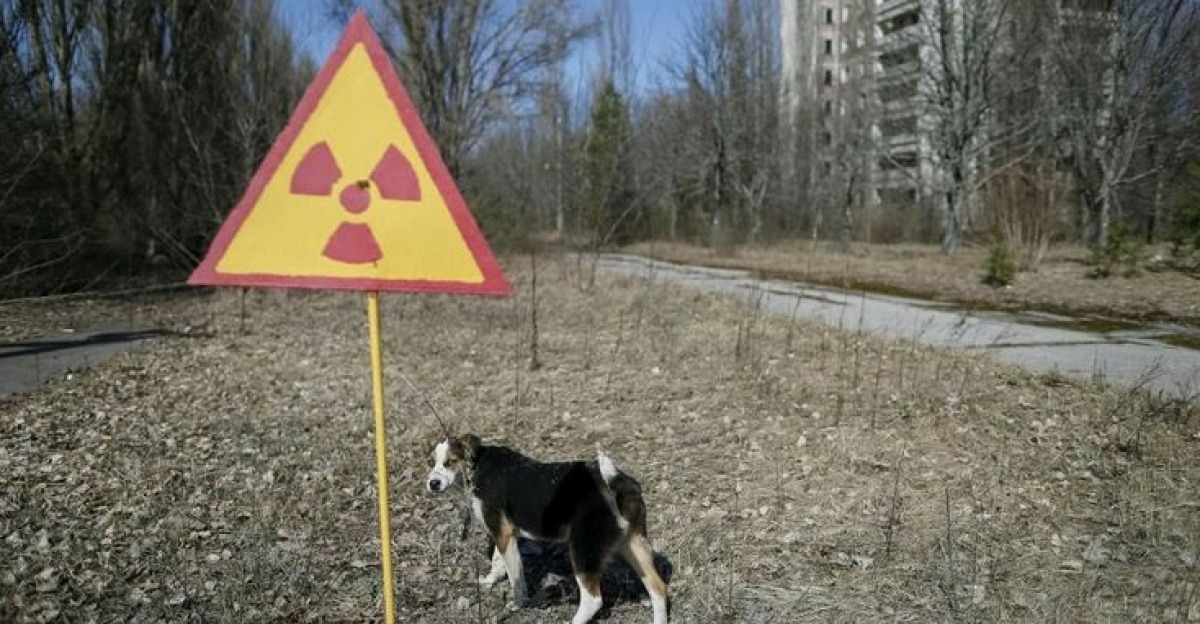
To understand why any dogs are present near the plant at all, it is necessary to return to April 26, 1986, when Reactor No. 4 exploded and the Soviet government cleared a broad region around the facility. Authorities created an 18.6-mile exclusion zone and evacuated more than 120,000 people from 189 settlements within days, insisting the move was temporary and instructing residents to leave pets behind.
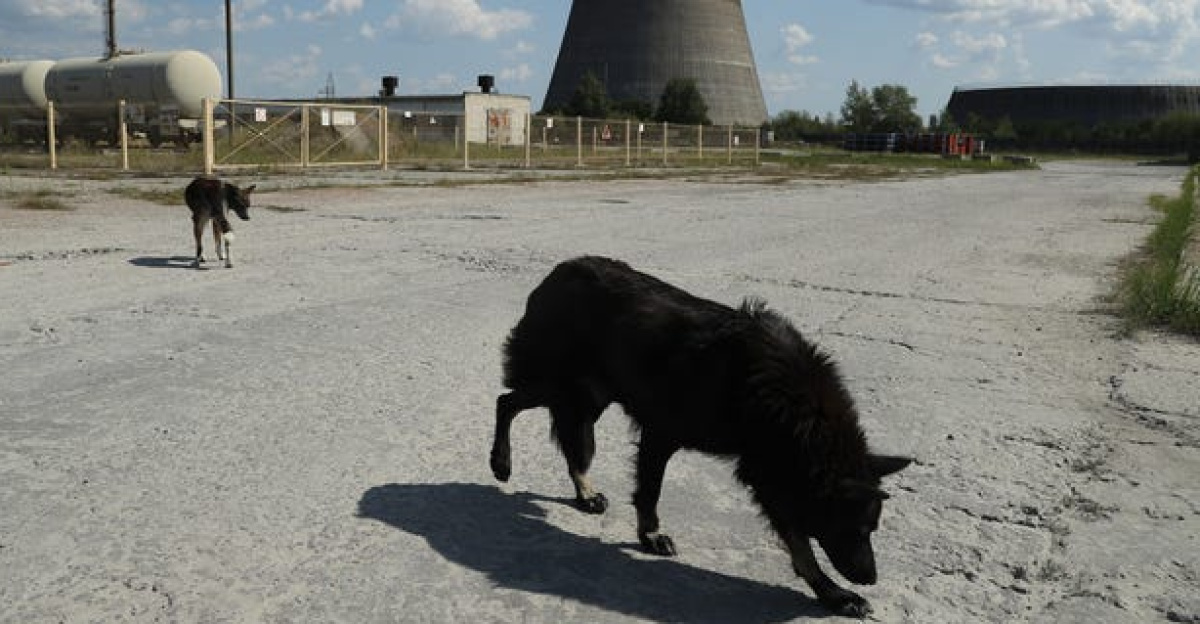
Many of those dogs, cats, and farm animals were later targeted by Soviet soldiers trying to prevent contamination from spreading. Yet the zone’s 1,004 square miles proved too large for complete eradication. Enough animals survived and bred that, nearly four decades later, an estimated 700 dogs now live feral in and around the plant and Chernobyl City. They endure chronic hunger, rabies risk, attacks from wolves, exposure to wildfires, contaminated water, and radiation levels well above typical workplace limits. Few reach old age; average lifespans are around five years.
Since 2017, the Clean Futures Fund’s Dogs of Chernobyl program has tried to stabilize that population. Founded in 2016 by Erik Kambarian and Lucas Hixson, the group coordinates annual missions that bring veterinarians, technicians, and volunteers into the zone to vaccinate, sterilize, treat injuries, and later maintain food and water stations. The October 2024 fieldwork that revealed the blue dogs was part of this ongoing effort.
From Genetic Mystery to Porta-Potty Dye
During their October 5–13, 2024 mission, team members encountered three dogs whose coats were uniformly and intensely blue. Veterinary Medical Director Dr. Jennifer Betz documented the animals and attempted to capture them, but they proved too wary to be sedated and transported. With no immediate explanation, the team released photos and acknowledged their confusion.
The timing coincided with a scientific debate already underway over how Chernobyl’s conditions affect animal genetics. Since 2017, researchers from the University of South Carolina and the U.S. National Human Genome Research Institute have studied DNA from 302 dogs across three groups: those living around the power plant, those in Chernobyl City roughly 10 miles away, and dogs outside the exclusion zone. Early 2023 findings reported clear genetic differences between plant-adjacent dogs and those in town, which some readers interpreted as possible evidence of radiation-driven adaptation.
However, a detailed analysis published in PLOS ONE in December 2024 challenged that conclusion. Examining genetic markers associated with mutation rates, researchers found no signal that radiation exposure was increasing mutations in the Chernobyl dogs. Instead, they concluded that isolation, inbreeding, and founder effects best explained the genetic patterns, not environmental radiation. The blue dogs appeared amid this scientific reappraisal, further encouraging those looking for dramatic proof of mutation.
In late October and early November, Dr. Betz began telling partners and reporters that the team had developed a working hypothesis: a nearby portable toilet had likely tipped over, spilling waste mixed with bright blue disinfectant. Standard chemical treatments used in such facilities contain concentrated dyes designed to color waste and control odor. Dogs are known to roll in strong-smelling substances, including feces, and could easily have coated themselves in the dye. If ingested only in small, dried amounts, Betz said, the chemical was unlikely to pose a serious health hazard.
Fact-Checking the Mutation Myth

By December 2024, biologist Timothy Mousseau of the University of South Carolina, a scientific advisor to Dogs of Chernobyl, addressed the rumors directly. In a public statement for the group’s Facebook page, he said the blue dye most likely came from a knocked-over porta-potty in the area where the dogs had been seen. He compared the behavior to dogs rolling in cat litter boxes or other strong-smelling waste, emphasizing that the phenomenon reflected unsanitary but typical canine habits rather than any remarkable biology.
Mousseau also spoke out against broader claims hitching a ride on the blue dog story. He disputed viral assertions that Chernobyl dogs have unusually high or low cancer rates or that wolves near the Belarus border have evolved “anti-cancer” immune systems. The dogs’ shortened lifespans, he noted, leave little time for many cancers to develop, and proving such sweeping claims would require extremely large datasets that do not exist. The more comprehensive genetic work to date supports the view that these animals are genetically distinct primarily because of isolation and breeding patterns, not because radiation has conferred new abilities.
Misinformation, Memory, and What Comes Next
The blue dogs episode highlights how quickly visually striking images can generate intricate myths, especially in places already associated with catastrophe and secrecy. The Dogs of Chernobyl team’s initial admission that they did not know the cause of the color reflected appropriate scientific caution, but their delay in presenting a plausible mundane explanation allowed more dramatic theories to take hold. Sensational interpretations were amplified by platform algorithms and, in some cases, by advocacy groups that overstated or misread scientific studies, reinforcing the idea of “mutant superpowered dogs” in the public imagination.
Meanwhile, the realities on the ground remain less spectacular and more sobering. The Russo-Ukrainian war has halted new genetic sampling since 2020 and forced the suspension of international adoption programs that once relocated some Chernobyl dogs to homes in North America and Europe. Without clear global standards for acceptable radiation levels in relocated animals, and with conflict complicating logistics, most of the zone’s dogs will likely remain where they are.
As researchers wait for conditions that will allow long-term studies to resume, the blue dogs stand as a reminder of both Chernobyl’s enduring legacy and the modern information environment. Future environmental crises, experts suggest, may demand faster collaboration between field teams and specialists so that plausible explanations accompany striking imagery from the outset. For the dogs themselves, the stakes are more immediate: in a harsh and contaminated landscape, their survival still depends on periodic human intervention, not on mutations or “superpowers,” but on vaccines, food, and the practical care that comes from sustained attention rather than viral fascination.
Sources
Independent, 8 Dec 2025
Fox News, 7 Dec 2025
Popular Mechanics, 3 Dec 2025
PLOS ONE, 26 Dec 2024
Bellona, 23 May 2018
BBC Future, 31 Mar 2022