
The world’s largest asset manager has cut hundreds of positions in the opening weeks of 2026, joining a wave of financial firms trimming workforces amid mounting economic uncertainty. BlackRock confirmed the elimination of approximately 250 jobs, representing about 1 percent of its global workforce of 24,600 employees. The reductions, affecting investment and sales teams across the United States, Europe, and Asia, mark the firm’s third consecutive annual workforce reduction despite managing record assets exceeding $14 trillion.
Economic Headwinds Drive Caution
The cuts arrive as broader labor market conditions weaken substantially. U.S. unemployment stood at 4.4 percent in December 2025, having climbed from lows earlier in the year to near four-year highs. Total employment gains for 2025 reached just 584,000 positions, the weakest non-recession performance in more than two decades. December alone saw payrolls increase by only 50,000 jobs, with retail shedding 25,000 positions and manufacturing losing 8,000 amid tariff-related pressures. Economists project monthly job gains could slow to between 40,000 and 60,000 through 2026, signaling persistent headwinds for firms anticipating revenue growth tied to employment expansion.
Efficiency Takes Priority Over Expansion
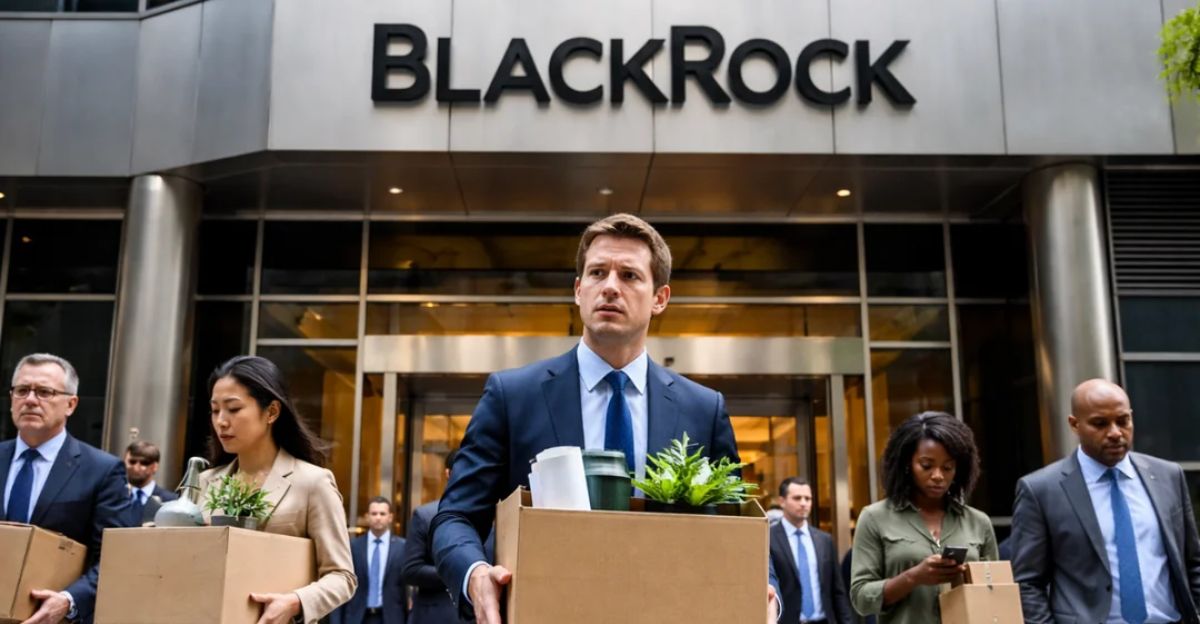
BlackRock framed the layoffs as part of its standard annual review process designed to align resources with strategic priorities. A company spokesperson stated that “improving BlackRock is a constant priority,” emphasizing that workforce decisions are revisited annually to position the firm for future client needs. Yet the pattern reveals more than routine optimization. This marks the third straight year BlackRock has reduced headcount by roughly 1 percent, implementing similar cuts in both 2024 and 2025 even as assets under management climbed from approximately $8.7 trillion in 2020 to $14 trillion by late 2025. The firm reported assets of $13.5 trillion at the end of September before fourth-quarter inflows pushed the total higher.
Redundancies in Investment

The disconnect between shrinking staff and expanding assets reflects a structural shift toward efficiency over headcount growth. BlackRock’s recent acquisitions have reshaped priorities significantly. The firm completed a $12 billion purchase of private credit manager HPS Investment Partners in July 2025, its largest push into alternative investments. Earlier in the year, it closed a $12.5 billion acquisition of Global Infrastructure Partners and a $3.2 billion purchase of data provider Preqin. Integrating these operations has created redundancies in investment and sales functions, prompting management to reallocate resources toward higher-fee private market strategies rather than traditional public offerings.
Wall Street’s Broader Retrenchment
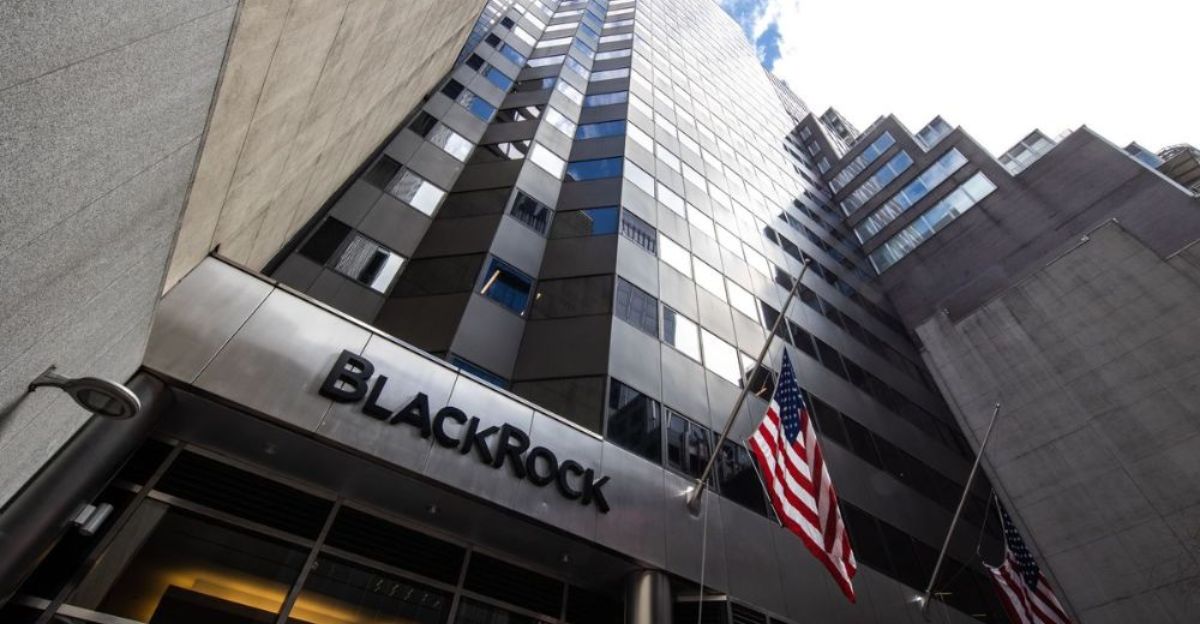
BlackRock’s actions mirror a wider pullback across the financial sector. Citigroup announced approximately 1,000 job cuts this week, part of a broader plan to eliminate 20,000 roles by the end of 2026 under CEO Jane Fraser’s restructuring initiative aimed at generating up to $2.5 billion in annual savings. UBS continues post-merger integration following its acquisition of Credit Suisse, with additional layoffs expected as duplicate roles are eliminated. Across the U.S. economy, layoffs surged roughly 65 percent in 2025 compared with 2024, affecting industries from technology and retail to logistics and government services.
The Labor Market is Losing Momentum

The cumulative effect signals a labor market losing momentum across multiple sectors. Warehousing layoffs quadrupled year-over-year in 2025, while technology firms accelerated workforce reductions. Financial services, long insulated from aggressive cost-cutting, now face similar pressures as artificial intelligence adoption, geopolitical uncertainty, and uneven interest rate expectations force firms to operate with greater discipline. Challenger, Gray & Christmas cautioned that elevated job cuts may persist well into 2026 as companies prioritize margins over expansion.
Implications for Financial Workers
For employees across Wall Street, the environment grows increasingly precarious. Repeated workforce reductions have strained morale within BlackRock, particularly among sales teams questioning the strategic emphasis on alternatives over traditional investment products. Leadership argues that reallocating resources toward private credit and infrastructure is essential for future growth, but the tension between expansion ambitions and cost discipline remains pronounced.
Scale No Longer Guarantees Stability
BlackRock’s fourth-quarter earnings, released in mid-January 2026, revealed record assets and strong inflows totaling $698 billion for the full year. Yet the firm proceeded with layoffs despite these results, underscoring management’s expectation of continued market volatility and restrained hiring through 2026. The message is stark: scale no longer guarantees stability, and even elite firms with industry-leading performance are choosing efficiency and automation over permanent headcount. As Wall Street’s 2026 workforce reductions spread, fewer workers will share in the sector’s ongoing growth.
Sources:
“BlackRock to cut around 250 jobs in latest layoffs.” Reuters, 13 Jan 2026.
“The Employment Situation – December 2025.” U.S. Bureau of Labor Statistics, 9 Jan 2026.
“Citigroup set to cut about 1000 jobs this week, source says.” Reuters, 12 Jan 2026.
“CHALLENGER REPORT – December 2025 Job Cuts.” Challenger, Gray & Christmas, Inc., Jan 2026.