
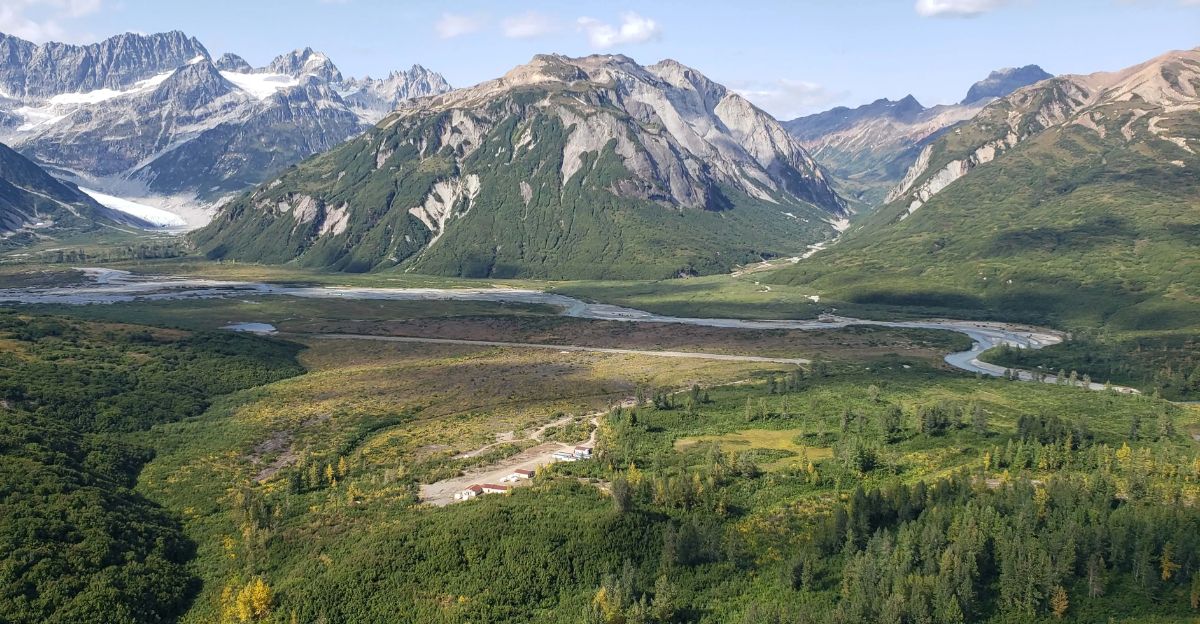
Lake Clark National Park stands at a crossroads. A billion-dollar gold mine proposal now threatens to transform this pristine Alaskan wilderness. Cook Inlet Region, Inc. (CIRI), an Alaska Native corporation, owns the Johnson Tract—a mineral-rich parcel within the park.
For decades, miners left this land alone. Today, the site sparks fierce debate about economic opportunity, environmental protection, and Indigenous rights. The Johnson Tract covers more than 20,000 acres that CIRI acquired in a landmark 1976 land exchange.
This historic deal enabled CIRI to exchange other land claims for this mineral-rich property, carefully balancing Native American land rights with conservation goals. The tract represents the only sizable privately owned land within Lake Clark National Park, which protects over four million acres of mountains, forests, salmon streams, and critical bear habitat.
The region’s remote location has preserved its ecological integrity so far, but mining could change that forever. The Johnson Tract debate now reflects a broader national struggle between economic development and environmental preservation.
Economic Benefits Clash With Environmental Dangers
Geological surveys estimate that the Johnson Tract contains more than $1 billion in mineral wealth, including 1.05 million ounces of gold-equivalent and substantial reserves of copper and zinc. CIRI and mining company Contango Ore anticipate significant financial returns, with royalties and new job opportunities as key benefits.
The project could create hundreds of construction and mining jobs, which would in turn ripple through local businesses, including hunting guides, lodges, and supply vendors. However, critics warn that the mine’s infrastructure—roads, airstrips, and port facilities—would permanently damage the park’s fragile ecosystems.
The proposed mine’s industrial port would sit near the family cabin of fisherman Dustin Solberg, whose livelihood depends on the region’s unspoiled environment. Tourism operators and lodge owners fear that increased noise, traffic, and pollution would deter visitors, threatening the area’s $50.9 million annual tourism economy.
The University of Alaska estimates that regional salmon and sport fishing support more than 9,000 jobs throughout the region. Commercial fishing in Tuxedni Bay employs dozens seasonally, supporting another vital economic sector. For many families, the mine’s job promises conflict directly with the risk of losing their traditional way of life and the sectors that sustain their communities.
Indigenous Alaskans struggle particularly with the tension between economic development and cultural preservation.
Environmental Threats and Recent Federal Approvals Push the Project Forward

Environmental groups highlight serious risks to endangered species, including Cook Inlet beluga whales, whose population declined by 75 percent since 1979. Tuxedni Bay represents the belugas’ only known winter feeding ground in Alaska, making the area critically important for species survival.
Critics argue that mine roads, airstrips, and ore transport ships would further endanger these animals, as well as salmon, seabirds, and bears. The Center for Biological Diversity and Cook Inletkeeper sued the Army Corps of Engineers, challenging its 2024 permit decision through federal court.
CIRI and Contango Ore maintain that their plans prioritize minimal environmental impact, citing extensive exploration data and comprehensive mitigation measures. Recent federal approvals have significantly accelerated the project’s timeline.
On January 15, 2025, the Interior Department granted CIRI two crucial easements, allowing for the transportation of minerals across park lands and opening 2,642 acres for industrial use. The Army Corps of Engineers approved a road and airstrip permit in 2024, despite significant regulatory challenges from environmental organizations.
These federal approvals have set the project on a legal path, though pending court decisions and policy changes could still alter its course. Regional economists caution that while the mine may bring short-term economic gains, long-term environmental damage could undermine the tourism and fishing sectors that sustain the regional economy.
Community leaders urge all stakeholders to carefully weigh immediate benefits against lasting risks. The Johnson Tract debate reflects a broader national struggle to balance economic development with environmental and cultural preservation. As court cases and regulatory reviews continue through 2025 and beyond, the final outcome will set a precedent for how similar conflicts get resolved across the country.