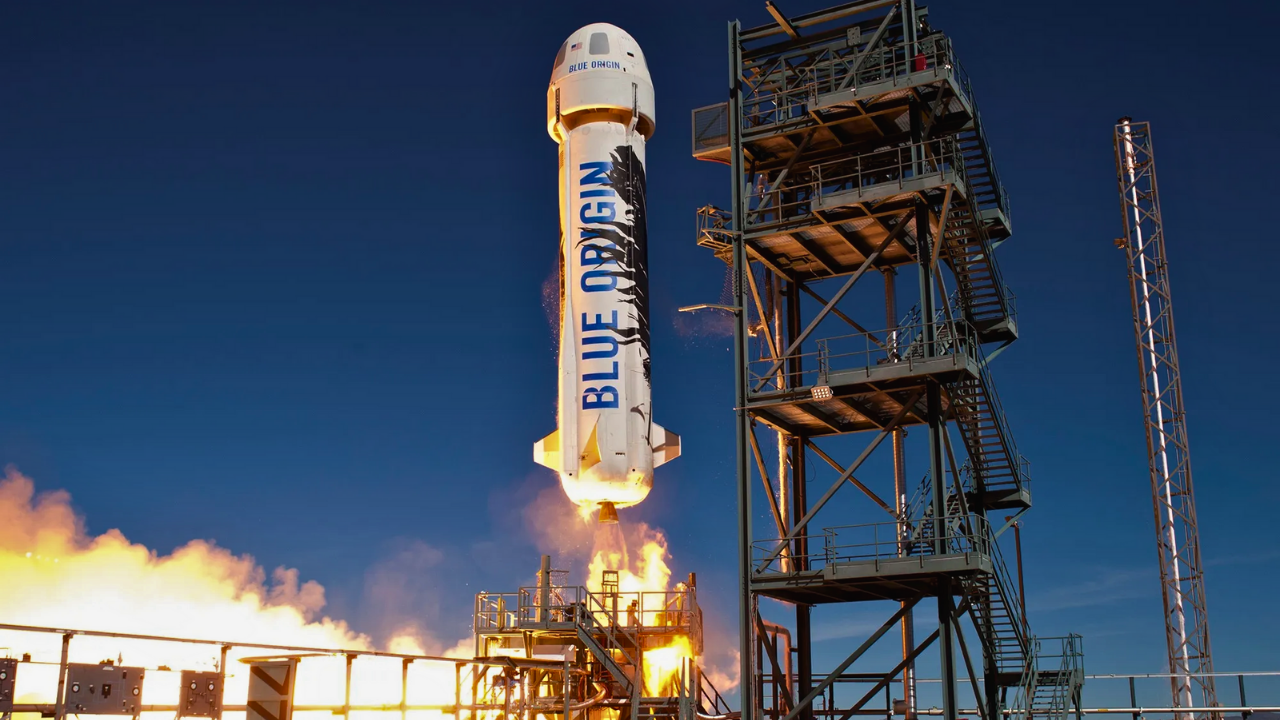
On November 13, Blue Origin prepared for a critical test: launching NASA’s ESCAPADE mission to Mars after two failed attempts, each derailed by unpredictable forces—first by Florida’s volatile weather, then by intense solar storms. The stakes for Blue Origin were high, with the company managing a $10 billion backlog of launch contracts and seeking to prove its reliability in a fiercely competitive commercial space sector.
Mission and Technical Ambitions
ESCAPADE, NASA’s first Mars mission in five years, consists of twin spacecraft built by Rocket Lab to study how solar wind erodes the Martian atmosphere. The project, developed for under $80 million, is scheduled to launch aboard Blue Origin’s New Glenn rocket from Cape Canaveral’s Launch Complex 36. For Blue Origin, this mission marks only the second flight of its heavy-lift New Glenn rocket, following its orbital debut in January 2025.
A successful launch and booster recovery are pivotal for Blue Origin’s business model, which hinges on reusability to compete with industry leader SpaceX. The company aims to land New Glenn’s first-stage booster, “Never Tell Me the Odds,” on the autonomous barge Jacklyn in the Atlantic—a feat it failed to achieve in its first attempt. Demonstrating reliable booster recovery would validate Blue Origin’s cost-saving strategy and strengthen its position in the commercial launch market.
Delays and Solar Storms

The path to launch was fraught with setbacks. The initial attempt on November 9 was scrubbed due to weather violations, specifically the cumulus cloud rule. A second try on November 12 was canceled when powerful solar flares created hazardous radiation conditions, threatening the sensitive electronics aboard ESCAPADE. These solar storms were so intense they produced auroras visible as far south as Florida, underscoring the growing complexity of space missions where space weather can be as disruptive as terrestrial conditions.
By November 13, forecasts improved, allowing the launch team to proceed. The repeated delays highlighted the technical and operational challenges Blue Origin faces as it seeks to ramp up launch frequency and reliability.
Regulatory Hurdles and Launch Window Constraints
Complicating matters, the Federal Aviation Administration (FAA) imposed an indefinite ban on daytime commercial launches during a government shutdown. Blue Origin, however, secured special waivers from both the FAA and Space Launch Delta 45, enabling it to attempt launches within the narrow November window. This coordination between federal agencies and private industry was essential to preserving the opportunity, demonstrating the importance of collaboration during operational disruptions.
Mars launch windows are rare, occurring only every 26 months when planetary alignments are favorable. ESCAPADE was originally slated for October 2024 but postponed to November 2025 to accommodate New Glenn’s development. Missing this window would have delayed the mission until spring 2026, increasing costs for NASA and straining Blue Origin’s schedule.
Industry Pressures and Workforce Changes
Blue Origin’s challenges extend beyond technical and regulatory hurdles. In February 2025, the company announced a 10% workforce reduction, affecting about 1,400 employees across its Washington, Florida, and Texas facilities. The move was part of a strategic pivot from research and development to high-frequency manufacturing and launch operations. CEO Dave Limp emphasized the need to streamline operations and reduce bureaucracy, but the repeated launch delays raised questions about whether a leaner organization could deliver on ambitious goals.
With an estimated 100 future launches on its manifest and only one successful orbital flight to date, Blue Origin faces mounting pressure to accelerate its cadence and prove the reliability of New Glenn. The ESCAPADE delays have become emblematic of the execution challenges confronting the company.
Competitive Landscape and Government Partnerships
Blue Origin continues to trail SpaceX, which has established market dominance through rapid launch frequency and proven reusability. SpaceX’s Falcon rockets have completed hundreds of successful flights, while New Glenn remains in its infancy. The repeated delays for ESCAPADE underscore the competitive gap and threaten Blue Origin’s reputation with government clients, including NASA and the Department of Defense, who prioritize reliability and on-time performance for national security and scientific missions.
The strain on Blue Origin’s relationship with NASA is particularly acute as the company develops lunar landers for the Artemis program and competes for future contracts. The ESCAPADE situation tests NASA’s confidence in Blue Origin’s ability to execute complex missions reliably.
Looking Ahead: Stakes for Blue Origin and the Industry

The November 13 launch attempt represents more than a technical milestone—it is a crucial test of Blue Origin’s operational readiness and its ability to deliver on high-profile contracts. Success would restore credibility with customers and partners, demonstrating progress toward founder Jeff Bezos’ vision of enabling millions to live and work in space. Failure, however, would deepen doubts about Blue Origin’s capacity to compete in an industry where technical complexity, regulatory requirements, and consistent execution are paramount.
As Blue Origin pursues ambitious projects like the Orbital Reef commercial space station and seeks to convert its $10 billion backlog into completed missions, its ability to overcome these challenges will determine its future in the rapidly evolving commercial space market.