
The Bay Area’s semiconductor design sector is living through a painful paradox. Synopsys completed its $35 billion acquisition of Ansys in July 2025, instantly becoming the dominant force in a $31 billion silicon-to-systems market. Yet only months later, the company announced 2,000 layoffs—10% of its combined 26,500-person workforce—including 175 cuts in Sunnyvale effective January 2026.
For an industry supposedly booming from AI demand, the message is stark: human chip designers are becoming expendable in pursuit of post-merger “efficiencies,” with $300–350 million in restructuring charges signaling engineering talent has become a disposable cost center.
The Deal That Promised Everything, Then Delivered Pink Slips

When Synopsys unveiled its planned Ansys acquisition in January 2024, CEO Sassine Ghazi sold it as a breakthrough that would empower “engineering teams broadly.” The rationale appeared compelling: uniting Synopsys’s EDA dominance with Ansys’s 42% CAE simulation share would create an unparalleled, end-to-end design powerhouse. Analysts cheered the deal, predicting a 1.5× expansion in Synopsys’s addressable market.
But once the merger closed in July 2025, WARN notices followed by November. Instead of enabling engineers, Synopsys eliminated them—revealing the hard truth that mega-mergers consolidate tools, not jobs.
September’s $74 Billion Shock: The Crash Before the Cuts
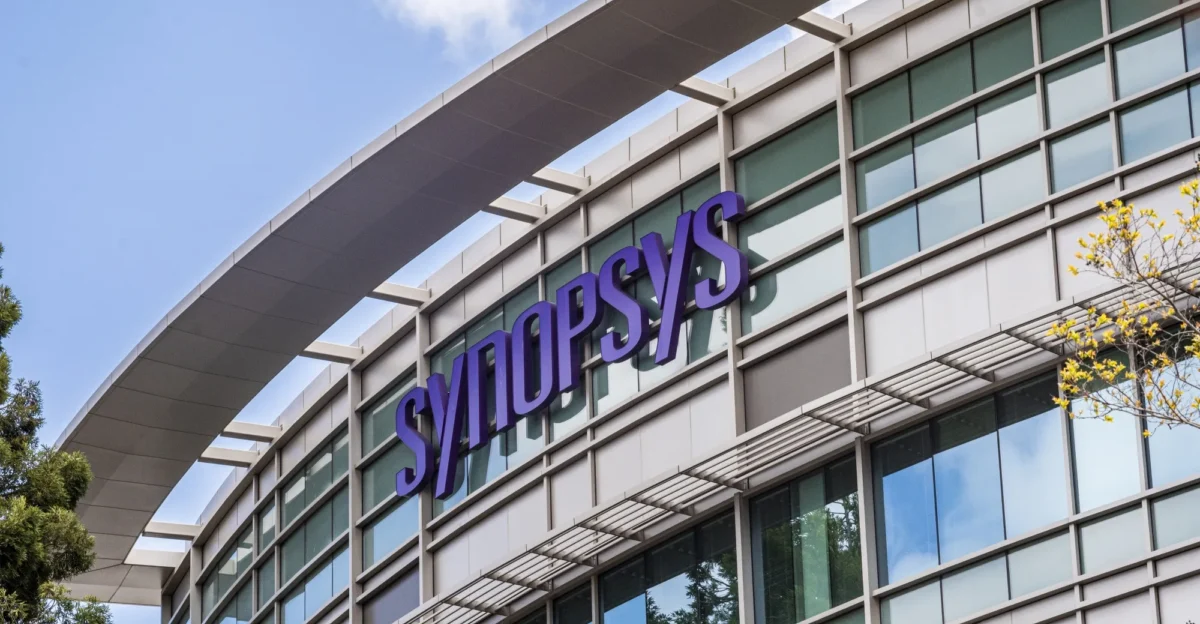
On September 10, 2025, Synopsys suffered its worst single-day stock collapse ever, plunging roughly 35% and losing over $216 per share. A disastrous Q3 earnings report showed an 8% drop in IP revenue driven by China-related disruptions.
Ghazi blamed “challenges at a major foundry customer,” while the company slashed full-year earnings guidance from $15.11–$15.15 to $12.76–$12.80. Wall Street recoiled, pushing Synopsys’s valuation down to about $74 billion. In the unforgiving logic of public markets, such value destruction demands cuts—workers ultimately paid the price.
The Oligopoly Tightens: When Three Giants Become One
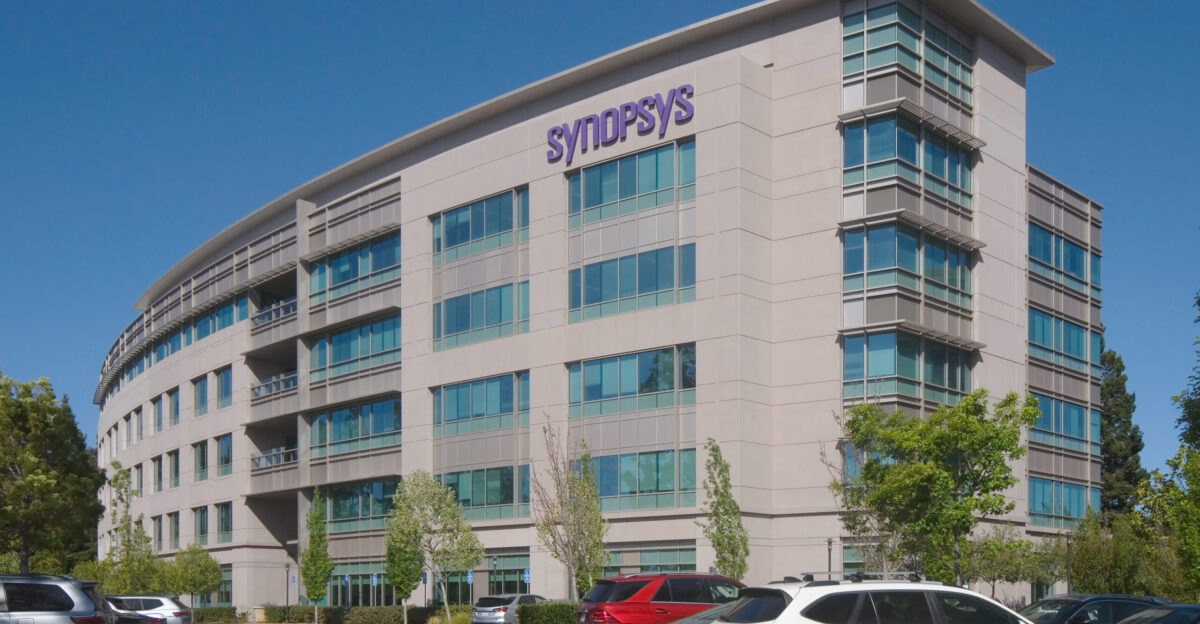
EDA is already a tightly held oligopoly dominated by Synopsys, Cadence, and Siemens EDA. Post-acquisition, Synopsys’s merger with Ansys pushes market concentration even further, with the top players controlling up to 90% of combined EDA and simulation revenues.
Tool switching is nearly impossible mid-project due to certifications and learning curves, giving Synopsys immense pricing power. But for employees, this consolidation is a trap: fewer employers mean weaker bargaining power, and workforce reductions become low-risk decisions for companies shielded by near-total market dominance.
The AI Boom’s Cruel Joke: Automation Devours Its Creators
The semiconductor industry faces a brutal contradiction: AI fuels unprecedented chip demand while simultaneously replacing human chip designers. Synopsys’s DSO.ai and Cadence’s Cerebrus now automate tasks once requiring large verification teams, reducing design labor needs by an estimated 25–30% by 2027.
Nearly half of the EDA market adopted AI capabilities by 2025, enabling 20–30% annual design cost reductions largely achieved through workforce cuts. The irony is biting—engineers who built these AI tools are among the first to be displaced by them, including 55 R&D roles in Sunnyvale alone.
Post-Merger Reality: Where 70% of Deals Fail
Research shows 70–90% of mergers fail due to integration breakdowns—conflicting cultures, redundant systems, duplicated roles. Synopsys and Ansys together employed 26,500 people pre-layoffs, with Synopsys contributing 20,000 and Ansys 6,500.
Cutting 2,000–2,800 roles reflects typical post-merger consolidation, disproportionately affecting legacy Ansys staff caught in “winner-loser” dynamics. Large layoffs introduce morale problems, slow productivity, and erode institutional knowledge. While Synopsys targets $400 million in synergies by year three, the human cost may undermine long-term innovation capacity.
The Talent Shortage That Makes Layoffs Absurd

Despite eliminating 2,000 jobs, Synopsys operates in an industry facing a dire talent shortage. By 2030, the U.S. semiconductor sector needs more than 100,000 new skilled workers annually, with projected shortages of 67,000 engineers and technical professionals.
McKinsey estimates 88,000 additional engineers will be required by 2029. Europe faces a similar 100,000-engineer deficit, and Asia-Pacific (outside China) requires 200,000 more. Companies like Synopsys are betting on smaller, AI-enhanced teams—but risk losing irreplaceable expertise as seasoned engineers exit the field entirely.
Bay Area Meltdown: A Regional Economy Under Stress
The Bay Area shed 8,700 net tech jobs in January–February 2025 alone, representing 88% of total regional employment losses. The South Bay lost 4,100 roles, while San Francisco-San Mateo and the East Bay together dropped 4,400. With tech accounting for roughly 21% of regional employment, every high-salary job cut reverberates widely.
Synopsys’s 175 local layoffs will amplify these effects. Research shows each tech job supports 4–5 service positions, meaning Synopsys’s global cuts could trigger the loss of 8,000–10,000 additional jobs across local economies.
China’s Shadow: The Geopolitical Trap Snapping Shut
Synopsys’s Q3 revenue decline stemmed largely from escalating Sino-U.S. tensions. Export restrictions hammered its intellectual property segment, cutting revenue by 8% due to disruptions in China and issues with a major foundry customer. Broader U.S. restrictions—including the April 2025 AI chip export ban—sent shockwaves through the industry, with companies like Nvidia absorbing multibillion-dollar write-downs.
China represents a $50 billion annual opportunity for U.S. chip firms, yet access is increasingly constrained. After spending 18 months securing Chinese approval for the Ansys acquisition, Synopsys watched China-related revenues collapse almost immediately.
The $175,000 Severance: A Clue to Who Was Cut
Synopsys expects $300–350 million in severance costs for 2,000 layoffs—an average payout of roughly $175,000 per worker. This unusually high figure reveals the cuts targeted senior engineers, architects, and long-tenured employees with substantial compensation packages. These individuals carry deep institutional knowledge critical to advanced chip-design workflows.
Targeting them maximizes short-term savings but sacrifices long-term capability. Sunnyvale’s WARN notice confirmed 55 R&D layoffs alone, making it clear that high-skill technical talent was on the chopping block despite the company’s emphasis on innovation.
The WARN Notice Gambit: Sixty Days to Ruin the Holidays

On November 12, 2025, Synopsys filed a WARN notice announcing 175 Sunnyvale layoffs effective January 2026. California law requires 60 days’ notice, conveniently placing the countdown across Thanksgiving, Christmas, and New Year’s.
Workers now face holiday stress layered with mortgage worries, health-insurance uncertainty, and a job search during tech’s slowest hiring period. Legal firms quickly began examining whether Synopsys met all WARN requirements, as violations can trigger penalties and back pay. The timing underscores a cold calculus: layoffs land when workers have the least leverage.
Fiscal 2026: The Year the Ax Falls Harder
Synopsys signaled clearly that layoffs are “concentrated in fiscal year 2026,” meaning the 2,000 announced cuts may be only the beginning. Post-merger integration typically spans 24–36 months, and the largest reductions occur early, labeled as “restructuring” rather than operational underperformance.
With 26,500 employees and Bay Area compensation averaging $184,000–$252,000, eliminating each 1,000 roles saves $200–250 million annually. Synopsys already recorded $300–350 million in restructuring charges, but long-term headcount reductions will deliver far larger savings at the expense of workforce stability
Geography of Pain: Why U.S. Engineers Were First to Go

Before the merger, about 80% of Synopsys’s 20,000 employees worked outside the U.S., primarily in lower-cost markets such as India, China, and Eastern Europe. Yet the first major WARN notice hit Sunnyvale, home to some of the company’s highest-paid engineers.
This reflects a longstanding economic logic: cutting U.S. staff yields larger dollar savings than trimming offshore teams paid 40–60% less. But Bay Area workers suffer disproportionately—facing extreme housing costs, lost healthcare, and a saturated job market already hit by massive layoffs.
The Stock Price Lie: Shareholders Lose, Executives Win

Synopsys’s 35% stock crash erased $20–25 billion in shareholder value, yet executive compensation remains intact. The company’s market cap now sits around $74 billion—far below its pre-acquisition highs—raising questions about whether the $35 billion Ansys deal delivered meaningful returns. Executive incentive plans often reward acquisition completion, not integration success.
Ghazi, who rose through Synopsys over decades before becoming CEO in 2024, faces no penalties for miscalculations that prompted layoffs. Workers absorb the entire downside, while leadership remains insulated.
The AI Hype Cycle’s Growing Body Count

Despite relentless hype, AI has coincided with sweeping layoffs across tech. Microsoft cut 9,000 roles, Salesforce removed 4,000 support positions, Meta trimmed 600 jobs from its Superintelligence Labs, and Google reduced management ranks—all during record AI investment.
Analyst Brad Gastwirth notes these cuts aren’t tied to weak demand but to AI’s restructuring of cost models. Productivity gains become justification for eliminating workers rather than reinvesting in people. In semiconductors, AI-powered design tools eliminate engineering roles even as AI chips surge in demand, reinforcing a cycle where workers create tools that replace them.
Concentration Risk: The Threat Nobody Prices In

The Synopsys-Ansys merger concentrates enormous power in a single vendor supporting nearly every advanced chip project worldwide. If the merged company encounters operational disruptions, security failures, or integration missteps, the entire semiconductor ecosystem could be affected.
Post-merger layoffs—including R&D and support staff—intensify the risk by thinning teams responsible for mission-critical tools. Academic studies show companies endure 18–36 months of reduced performance after major mergers. For an industry with 3–5-year chip development cycles, instability at a key vendor can derail entire product roadmaps.
The Second-Order Effects: When Engineers Stop Spending

Cutting 2,000 highly paid workers removes roughly $300 million in annual income from the economy. This spending supported mortgages, childcare, retail, and local services.
Each tech job typically supports 4–5 additional roles, meaning Synopsys’s layoffs could eliminate 8,000–10,000 secondary jobs globally, with the Bay Area especially vulnerable. Commercial real estate weakens as office occupancy declines, restaurants lose business, and housing markets soften as displaced workers leave the region. Combined with widespread 2025 tech layoffs, these effects accelerate regional economic erosion.
The Third-Order Effects: Brain Drain and Innovation Stall

Layoffs trigger long-term consequences that unfold over years. Many experienced engineers retire early or shift industries rather than endure continued instability, taking decades of expertise with them. Students witnessing these cycles increasingly avoid semiconductor fields, deepening talent shortages. Research consistently shows that layoffs degrade innovation by reducing R&D output and slowing time-to-market.
As engineers exit and educational pipelines shrink, companies lose the human capital essential for pushing semiconductor design forward. Short-term savings today may cripple innovation capacity tomorrow.
The Alternative Path Synopsys Never Chos

Synopsys could have invested its $35 billion acquisition budget in organic growth—funding 23,000 senior engineering roles at $150,000 annually for a decade. It could have expanded R&D, retrained existing staff for AI-augmented workflows, or acquired smaller complementary companies. Instead, it pursued a massive merger followed by layoffs to justify its cost.
Capital markets reward this approach because it produces immediate financial metrics, even as it undermines long-term capability. The result: an industry optimizing for short-term shareholder value at the expense of human capital and innovation.
A Reckoning Postponed, Not Prevented
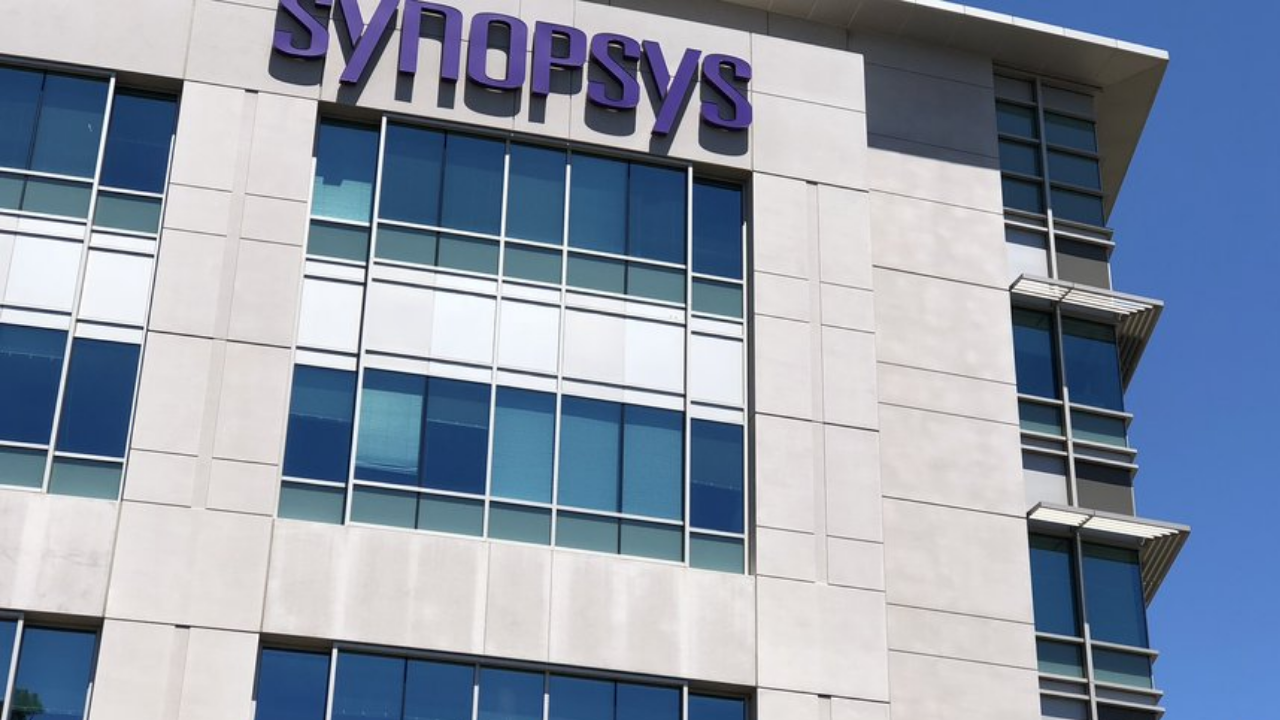
Synopsys’s 2,000+ layoffs following its $35 billion Ansys acquisition reveal deep structural contradictions in the tech industry. Companies proclaim AI-powered growth while eliminating the engineers who enable it. They lament talent shortages while firing experienced staff. They consolidate power in oligopolies that squeeze workers and customers alike.
The 175 Sunnyvale employees receiving WARN notices before the holidays symbolize a broader crisis: collapsing regional economies, eroding innovation, and long-term risks masked by short-term financial engineering. The reckoning has only been delayed—and the bill for these decisions will arrive in the years ahead.