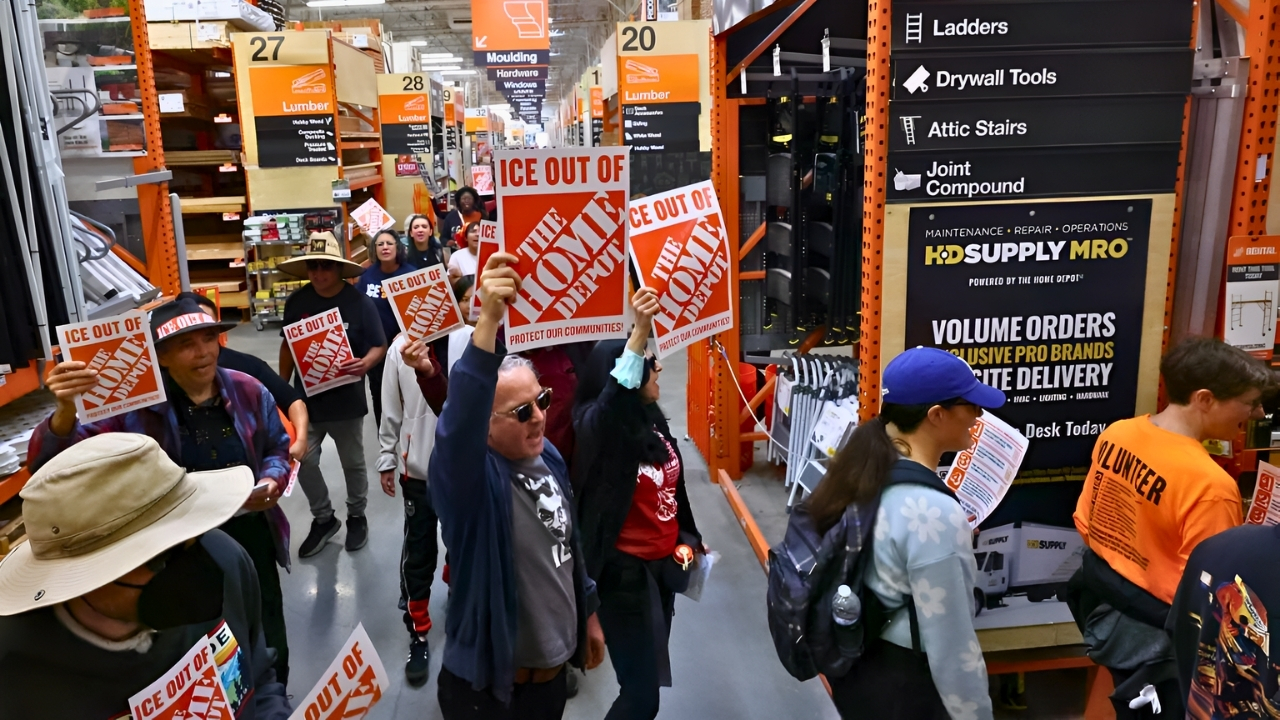
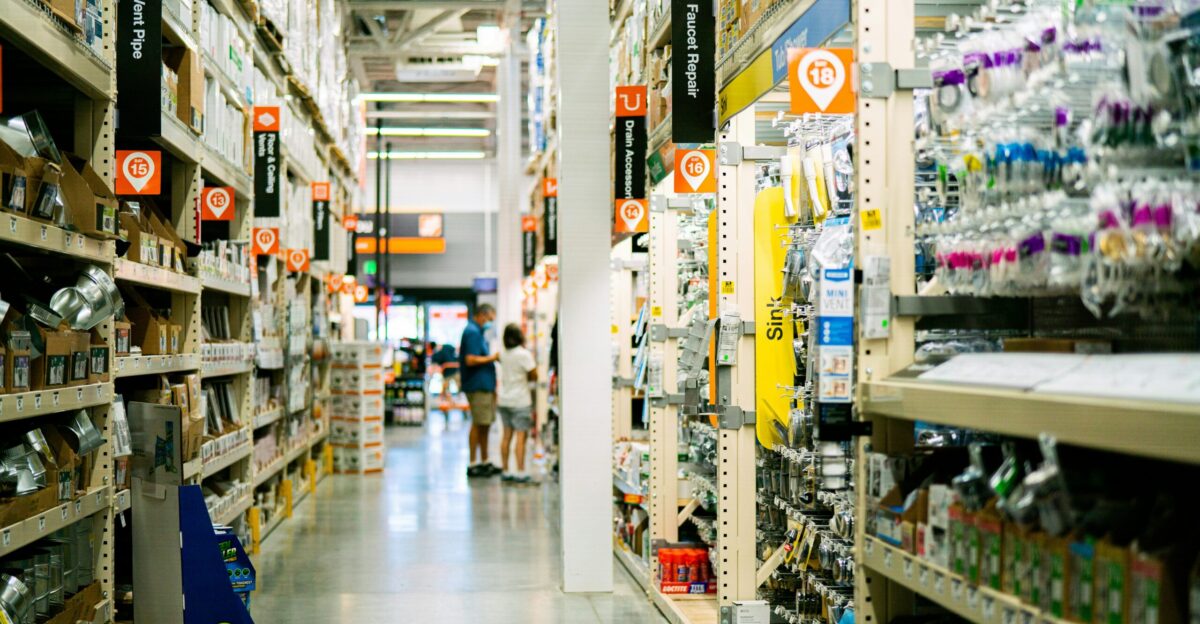
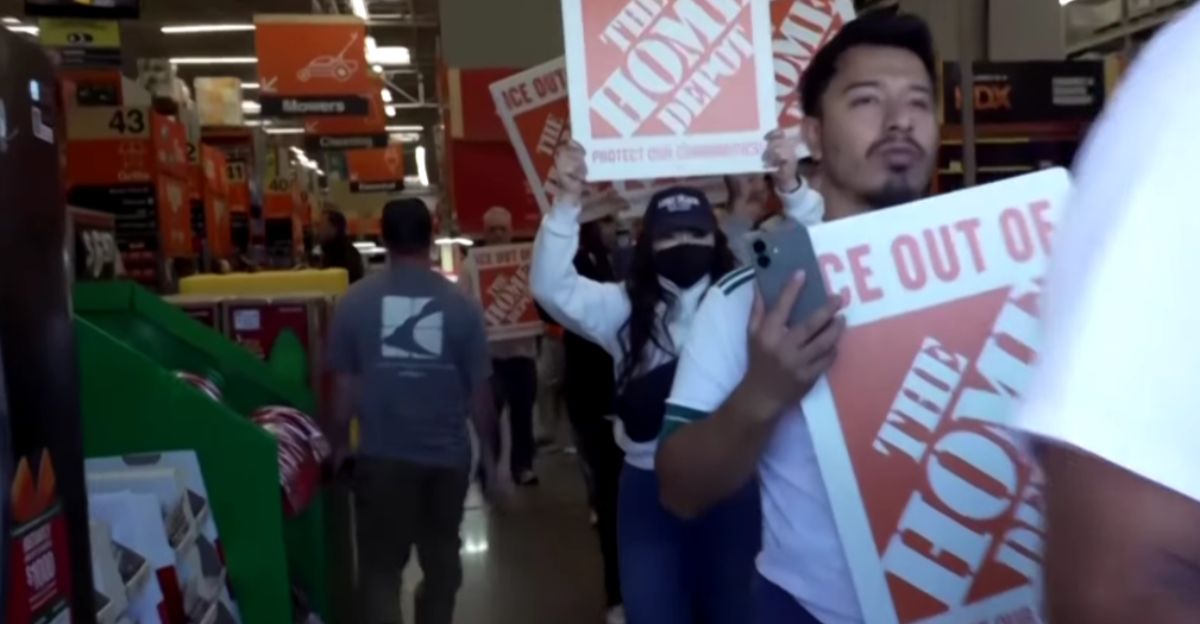
Picture this: nearly 100 people flood a Monrovia, California, Home Depot on Saturday morning, each clutching a 17-cent ice scraper. They buy it, walk outside, then circle back to return it. Again and again. Checkout lines snarl. Operations grind to a crawl.
This isn’t shoplifting—it’s a “buy-in,” a protest designed to send one message: scrape ICE out of their stores. What unfolded wasn’t just politics—it was grief, resistance, and a community at its breaking point.
Three Cities, One Defiant Act
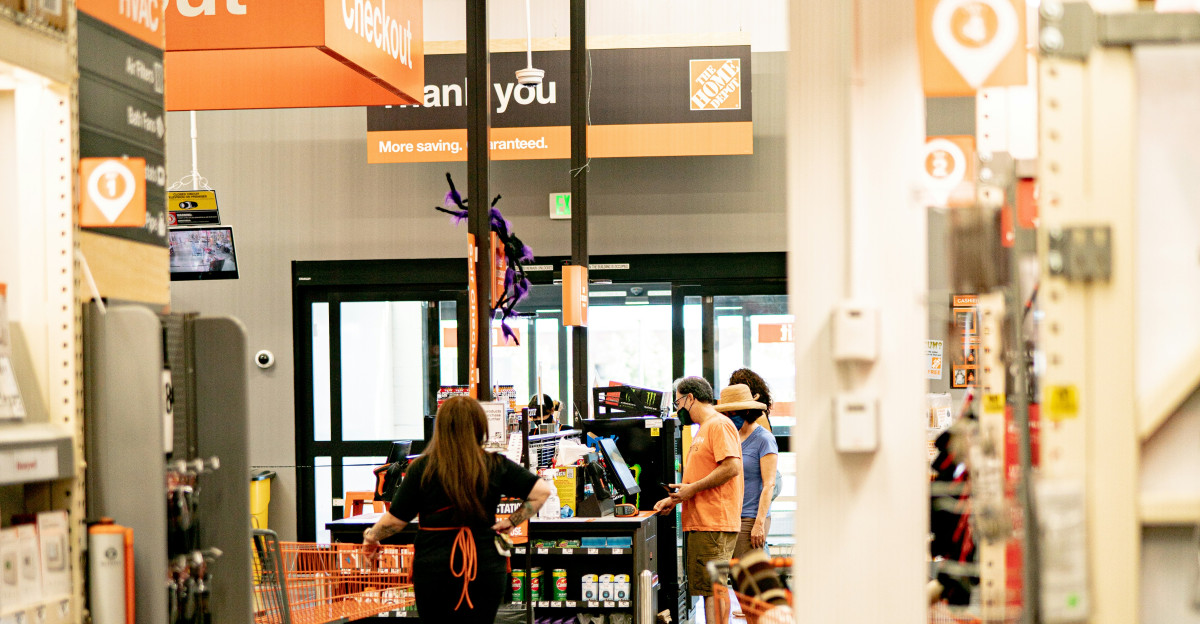
The protests erupted simultaneously in Monrovia and Charlotte, North Carolina. Protesters wore makeshift orange aprons reading “ICE out of Home Depot,” mimicking employee uniforms. They grabbed orange buckets and turned them into drums, pounding rhythms through the aisles as they marched.
For nearly an hour, the buy-in caused operations to freeze, forcing management to close an entrance. Employees watched, unsure how to respond to a protest that followed every rule while disrupting everything.
The Genius Behind the 17-Cent Symbol
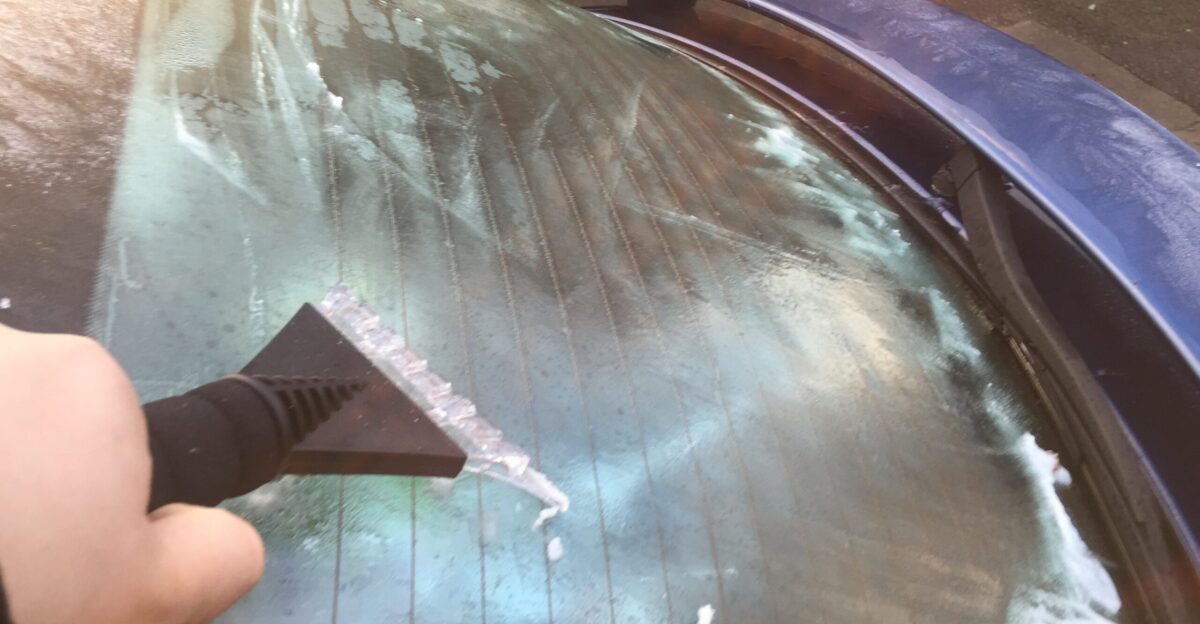
The ice scraper was symbolic brilliance. “We wanted to scrape ICE out of their stores,” explained Erika Andiola, political director of the National Day Laborer Organizing Network. At 17 cents, protesters could buy dozens, maximizing disruption while minimizing cost.
Each transaction became defiance—a financial loop that tied up cashiers. At Monrovia alone, 100 protesters generated roughly $1,700 in churned sales. Money that moved but never stuck. Protest as performance art.
Orange Buckets as Drums

The scene felt surreal. Nearly 100 demonstrators, wearing homemade aprons, moved through the store like a wave. Some beat orange buckets like drums, creating a percussive heartbeat that echoed through lumber aisles and checkout lanes.
When protesters blocked vehicle access during a news conference, management closed one of the entrances. The irony struck hard: Home Depot would shut down for peaceful protest, but never closed during actual ICE raids.
“Ground Zero for Cruel, Vicious Immigration Enforcement”
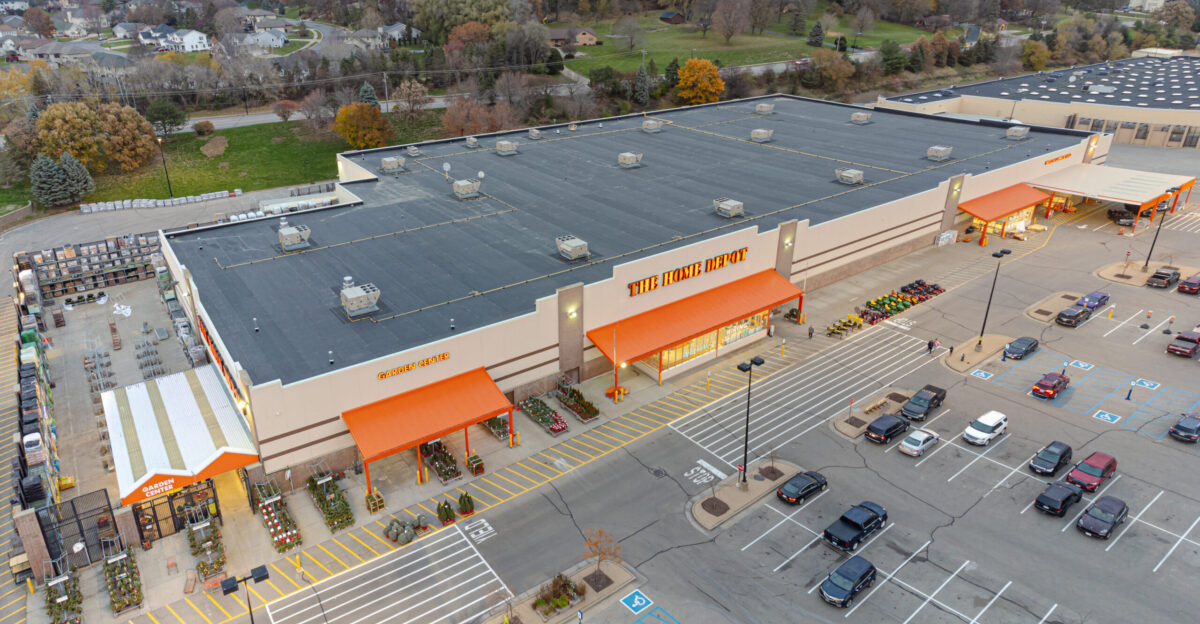
Pablo Alvarado, co-executive director of NDLON, delivered words that cut deep. “Whether the corporation wants to admit it or not, Home Depot has become ground zero for this cruel, vicious immigration enforcement that’s taking place in our country,” he told reporters.
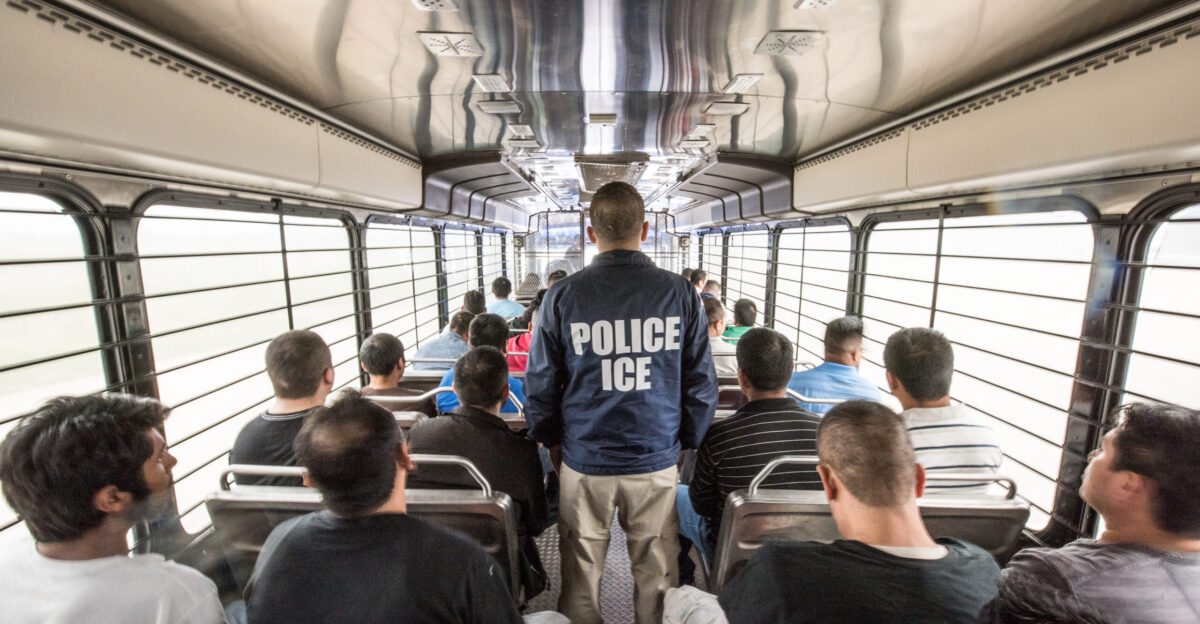
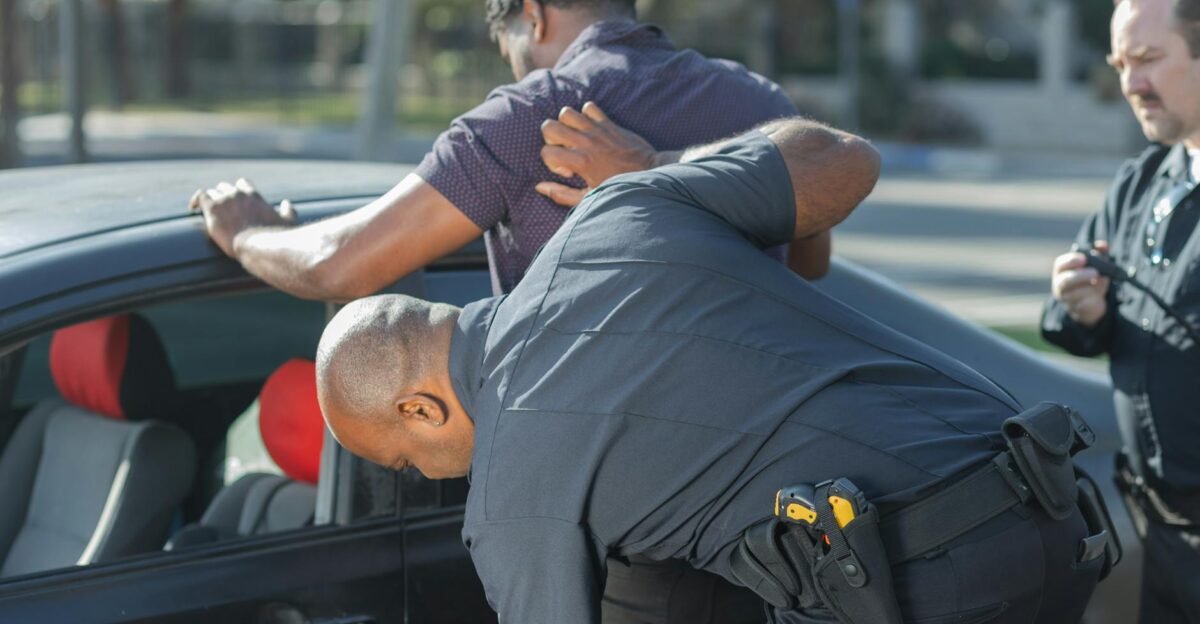
At least a dozen Southern California Home Depot stores have been targeted by ICE raids, some repeatedly, since Trump intensified enforcement this summer. Parking lots became hunting grounds.
August 14: The Death That Ignited Everything

The protests were rooted in tragedy. On August 14, Carlos Roberto Montoya Valdez, a 52-year-old Guatemalan day laborer, was killed by an SUV after running onto the 210 Freeway while fleeing immigration agents at the Monrovia Home Depot. He’d lived in the U.S. three years, supporting his wife, four daughters, and grandchildren.
DHS said agents weren’t pursuing him. Witnesses say terror drove him to the freeway. His death “destabilized the entire community,” said school board member Michael Ocon.
A Memorial in the Parking Lot
Organizers set up two altars near the store, each holding 24 white crosses—48 total—representing people who died this year during immigration raids or in ICE detention. The crosses stood silent, memorializing lives that were fathers, sons, brothers to someone.
About a dozen clergy attended. Pastor Mayra Macedo-Nolan spoke about the devastation caused by the Eaton fire, noting that rebuilding requires the labor of workers ICE targets. “This is where they come to look for work,” she said.
Home Depot’s Carefully Worded Response
George Lane, Home Depot’s corporate communications manager, issued a statement: the company doesn’t “coordinate with ICE or Border Patrol”. It is “not involved in the operations,” often unaware that raids are happening until they’re over.
Home Depot is “required to follow all federal and local rules and regulations,” he explained. To protesters, it felt like a legal shield masquerading as morality—technically accurate but ethically hollow. The company’s silence felt like complicity.
Why Home Depot Became the Target
The focus on Home Depot was engineered from the top. Stephen Miller, White House deputy chief of staff and architect of Trump’s immigration policy, reportedly mentioned Home Depot as a potential target for a raid earlier this year. According to the Associated Press, Miller asked ICE officials, “Why aren’t you at Home Depot?”
At least a dozen Southern California stores have been targeted since, with some experiencing repeated attacks. Miller turned parking lots into immigration dragnet zones by design.
When Instagram Met ICE

The issue exploded on social media when influencer Bobbi Althoff—8.2 million TikTok followers, 3.7 million Instagram followers—revealed ICE arrested her lifelong family friend. In October, Felix Morales Gomez, 62, was detained in a Corona Home Depot parking lot.
He’d arrived in 2004, had no criminal record, and was waiting for construction work. Althoff visited him at the Adelanto ICE facility, then spoke out despite warnings that it could hurt her income. She gave millions of followers a human face.
How Parking Lots Became Job Hubs
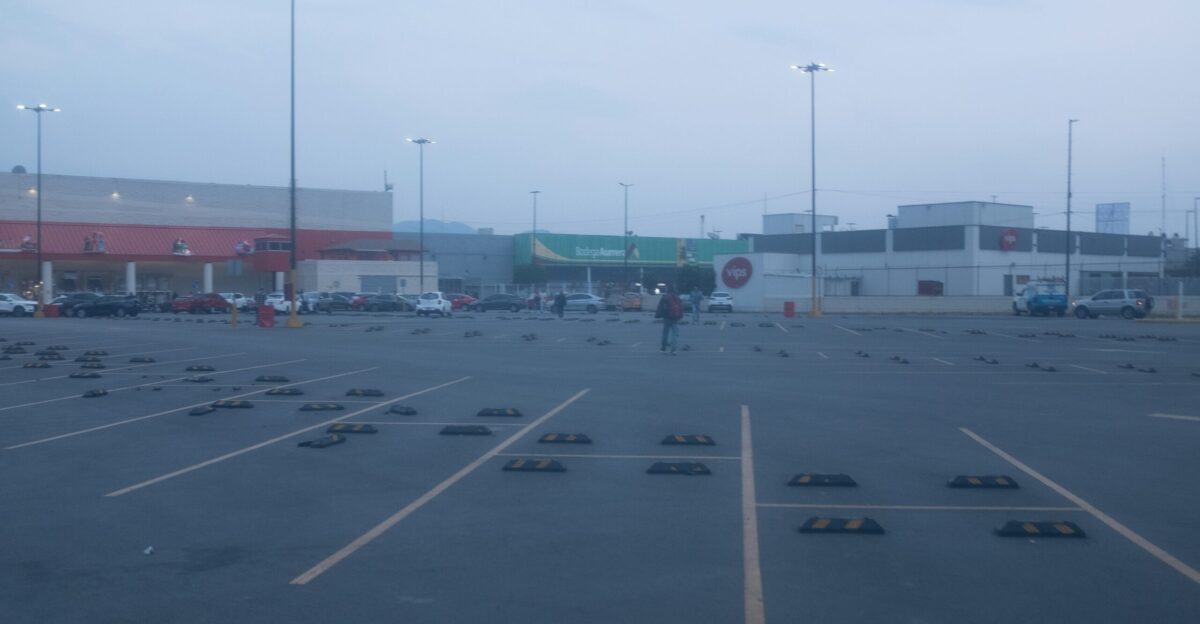
For decades, Southern California Home Depot parking lots have served as informal job-seeking hubs for day laborers, many of whom are immigrants in the construction and landscaping industries. The stores attract contractors who need workers, with tools and materials all in one location. Home Depot relies on contractors for half its business—far more than Lowe’s at 30%.
This ecosystem supports day laborers but makes stores attractive ICE targets for mass arrests. “Home Depot is not an innocent bystander,” said University of Illinois Chicago professor Nik Theodore.
The Numbers Behind Trump’s Deportation Machine
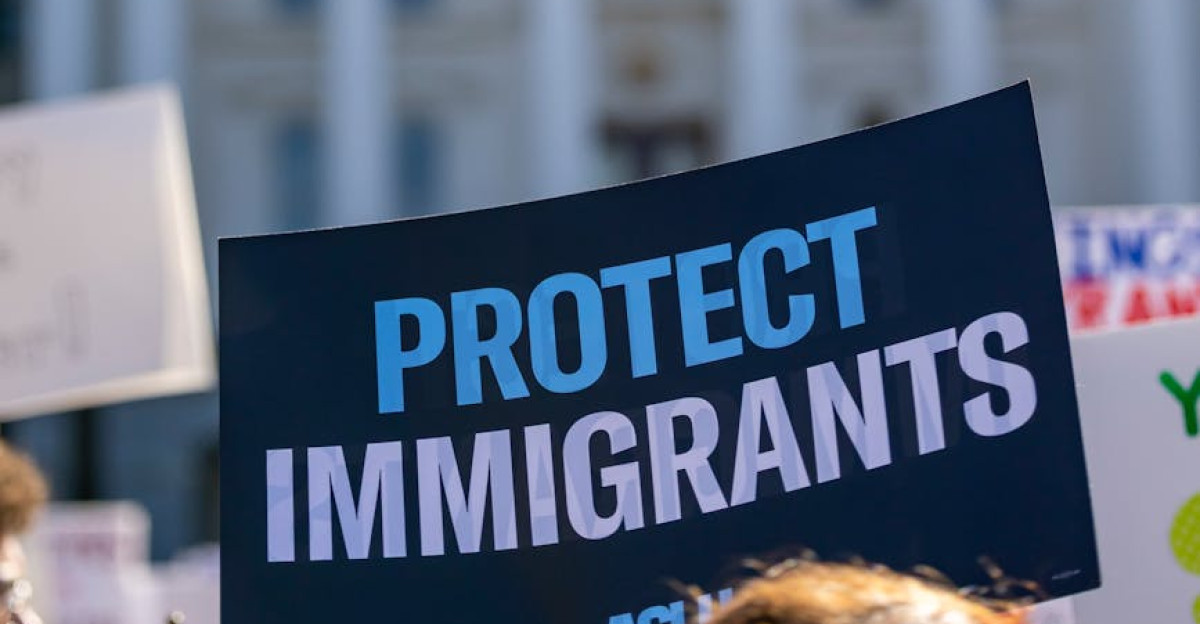
Since Trump returned to office in January 2025, as many as 2 million undocumented immigrants have been removed or self-deported, per DHS statistics. Approximately 400,000 were forcibly deported, while 1.6 million left voluntarily. Trump vowed to remove 1,500 per day, driving ICE to increase arrests dramatically.
Critics warn that the focus on quotas has shifted enforcement from targeting criminals to arresting anyone without status, including day laborers seeking honest work.
The ICE Leadership Battle You Haven’t Heard About

Behind the scenes, a bitter power struggle is unfolding. Border Czar Tom Homan and ICE Director Todd Lyons reportedly clash with DHS Secretary Kristi Noem over deportation tactics. Homan’s faction wants to target criminals and those with final deportation orders. Noem’s group advocates for aggressive enforcement to achieve 3,000 deportations per day.
Two senior DHS officials described the environment as “tense” and “combative”. The infighting threatens Trump’s mass deportation campaign as community resistance grows.
Why Buy-In, Not Boycott? The Strategy Behind the Tactic
The buy-in choice was deliberate. Erika Andiola explained that the community didn’t want a boycott because “day laborers do want people to come out to shop so they can get work.” A boycott would hurt the very workers they aimed to protect. The buy-in temporarily disrupted operations while keeping doors open for job seekers.
It impacted Home Depot’s bottom line, sent an unmistakable message—”scrape ICE out”—and protected the livelihoods of workers gathering there each morning.
What 17 Cents Really Means
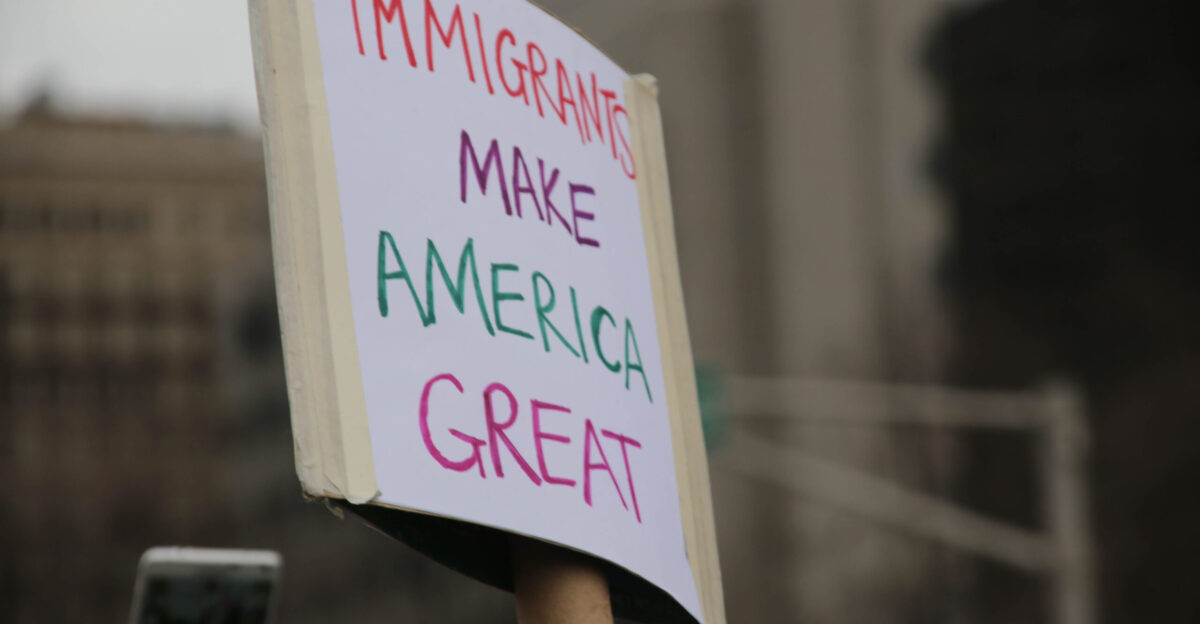
Saturday’s protests signal a turning point. By targeting a corporation with a symbolic action that followed rules while breaking norms, organizers forced America to reckon with an uncomfortable truth: parking lots where we shop have become sites of terror for our neighbors.
S.J. Denning, a volunteer with the East Pasadena Community Defense Corner, captured it: “It’s not OK to kidnap our neighbors off the streets. This is a moral moment, and we should meet it with courage.” The 17-cent ice scraper protests may be just the opening act.