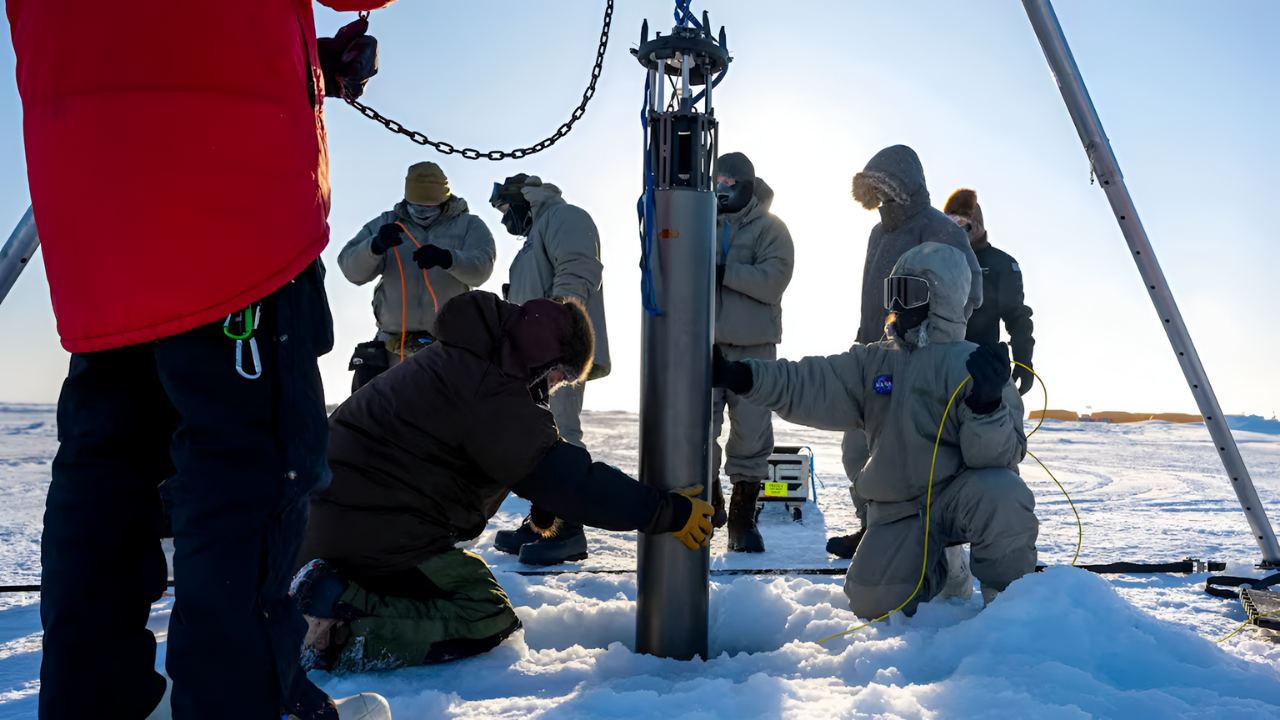
About 190 million years ago, a large plant-eating dinosaur roamed the ancient forests of Antarctica. Its bones remained buried for ages beneath the Beardmore Glacier in the Transantarctic Mountains until scientists discovered them frozen in rock. This six-ton creature now has a name: Glacialisaurus hammeri. The find gives researchers a fresh look at how early dinosaurs survived and thrived in what is now Earth’s coldest continent.
The name Glacialisaurus hammeri honors Dr. William Hammer, an American paleontologist who led expeditions to the region in the early 1990s. Hammer’s team collected leg and ankle bones from the slopes of Mount Kirkpatrick, more than 13,000 feet above sea level. The fossils came from rocks known as the Hanson Formation, dating back to the Early Jurassic Period.
For years, the bones sat in storage as scientists debated whether they belonged to a known species. Detailed comparisons finally showed they represented something completely new. In 2007, researchers officially named and described the dinosaur in the journal Acta Palaeontologica Polonica, recognizing it as one of the few dinosaurs ever found in Antarctica and an important clue to how early giant plant-eaters evolved.
Unearthing the Bones in Extreme Conditions
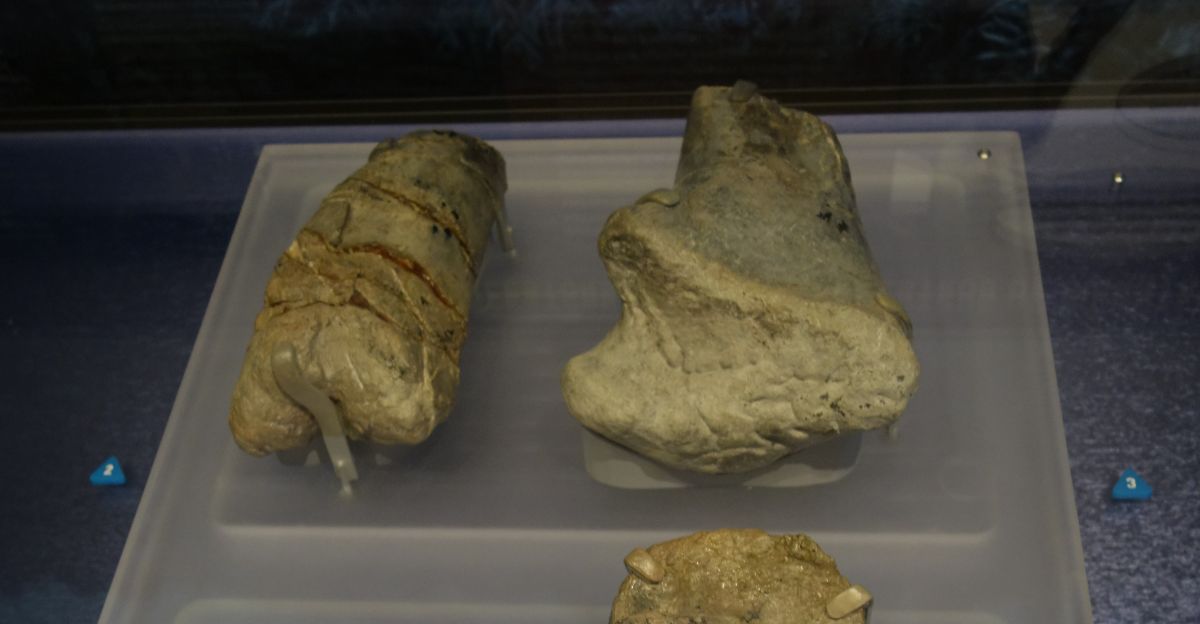
Recovering the fossils of Glacialisaurus was no simple task. Mount Kirkpatrick is one of the most challenging places on Earth to work. Even during the Antarctic summer, temperatures stay below freezing, and fierce winds whip across the peaks. To reach the site, Hammer’s team used a mix of climbing and heavy equipment, lugging rock saws, jackhammers, and hand tools up the steep slopes.
Working long hours in thin air and subzero conditions, they carefully cut fossil-rich rock out of the mountainside, packed it for transport, and hauled it back to base camp. Every step took immense physical effort just to avoid frostbite or exhaustion. Scientists who later examined the project called it one of the toughest dinosaur digs ever attempted, due to both its extreme altitude and brutal weather.
Back at research labs like Chicago’s Field Museum, technicians spent years freeing the bones from the stone that encased them. Each fossil had to be cleaned, stabilized, and studied in detail. Comparing the leg and ankle bones with those of other early dinosaurs helped researchers understand how Glacialisaurus moved and where it fit on the dinosaur family tree.
The Life of Glacialisaurus hammeri
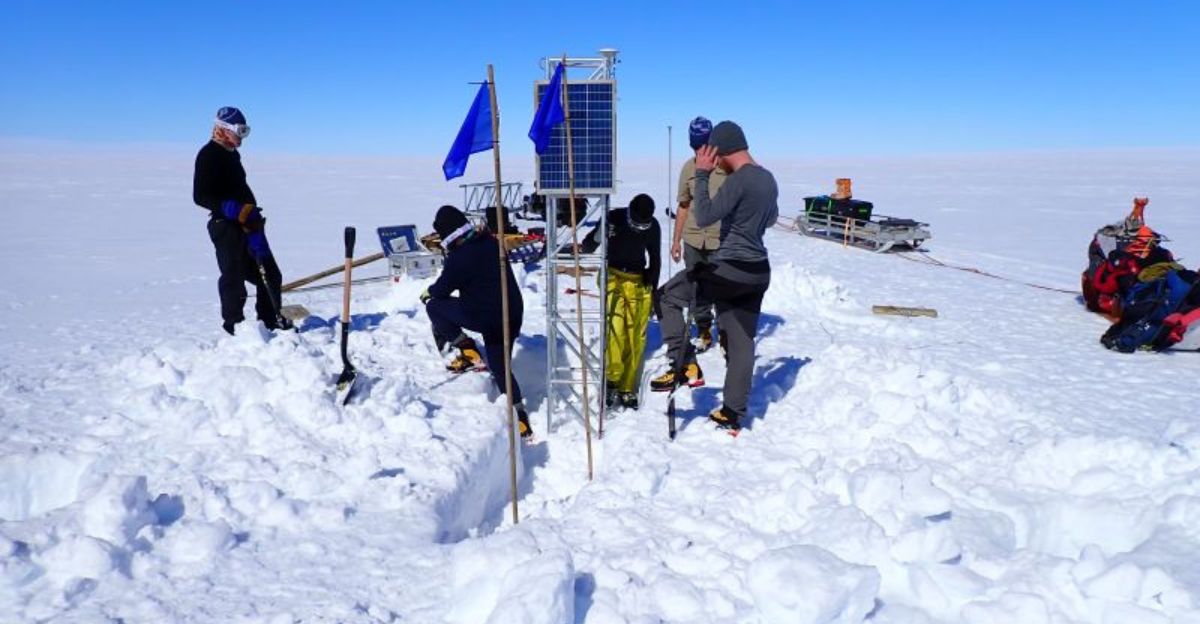
The rocks that preserved Glacialisaurus are about 190 million years old. This places the dinosaur in the Early Jurassic Period, a time when dinosaurs were spreading across the world. Glacialisaurus belonged to a group called sauropodomorphs, the early relatives of famous long-necked giants like Apatosaurus and Diplodocus.
Scientists estimate Glacialisaurus was around seven meters long (about 23 feet) and weighed roughly six tons. Its body was sturdy and its hind legs especially strong, suggesting it could move efficiently despite its size. The shape of its ankle bones helped distinguish it from related species, indicating an evolutionary step toward the massive, four-legged sauropods that came later.
This dinosaur fed on plants that grew in forests and wetlands. Back then, Antarctica was much warmer and covered in ferns, conifers, and other vegetation. Glacialisaurus likely used its size and strength to graze on tough plants, contributing to the slow transformation of early plant-eating dinosaurs into the colossal herbivores that would later dominate the planet.
Antarctica’s Ancient Green World
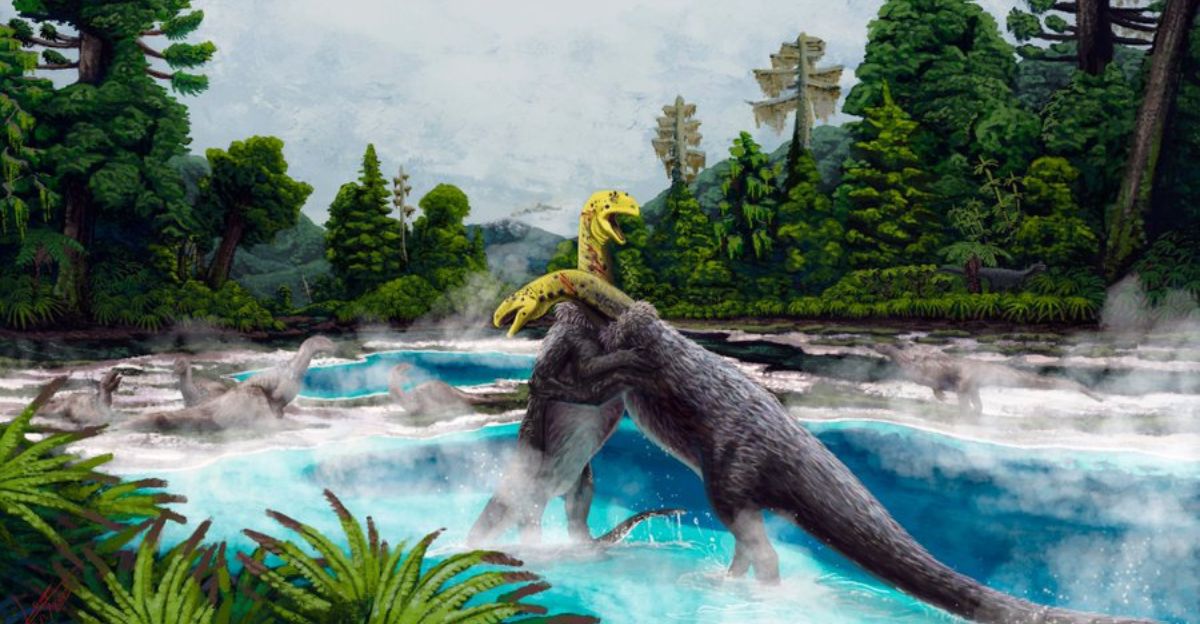
The Antarctica that Glacialisaurus knew was very different from the icy desert we recognize today. Nearly 200 million years ago, the continent sat farther north and had a mild, forested environment with rivers and seasonal changes. Evidence from ancient rocks and fossil plants shows that temperate forests of conifers and ferns likely stretched across much of the land.
The same region that yielded Glacialisaurus also produced fossils of other fascinating creatures. These include Cryolophosaurus ellioti, a large meat-eating dinosaur with a distinct crest on its head, as well as fragments of flying reptiles called pterosaurs and early relatives of mammals. Together, they paint a vivid picture of a thriving ecosystem filled with predators, plant-eaters, and diverse species living in a lush landscape.
Traces of fossilized wood and leaves reinforce this image of a green Antarctica. Far from being isolated, the continent was part of the massive southern supercontinent Gondwana, linking what are now South America, Africa, and Australia. Animals like Glacialisaurus could roam across these connected lands, spreading species and shaping early ecosystems on a global scale.
What Glacialisaurus Tells Us About Change
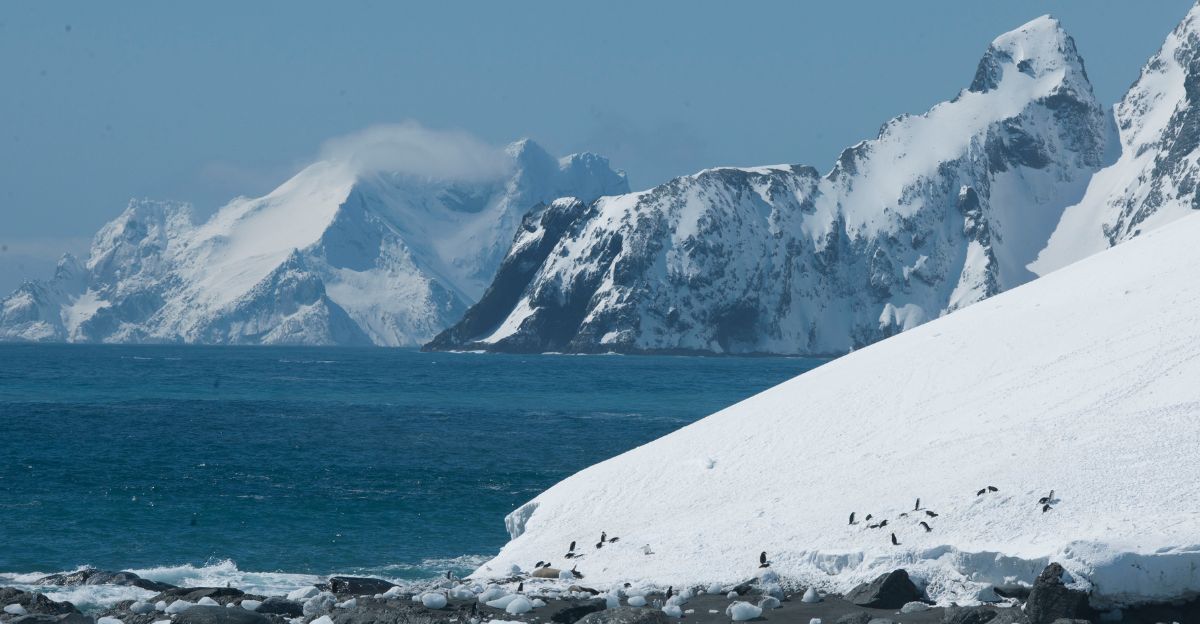
Beyond its impressive story of survival in Antarctica, Glacialisaurus hammeri has deep scientific value. It helps fill a key gap in the fossil record, showing how the earliest large herbivorous dinosaurs evolved stronger limbs and more efficient ways of moving as they grew in size. Each Antarctic discovery adds an important piece to the puzzle of how dinosaurs diversified across different climates and continents.
The long gap between the discovery of the fossils in the 1990s and their naming in 2007 highlights how slow and careful scientific work can be. Preparing fossils, comparing them to others, and studying their anatomy takes years of patience. As new research tools and imaging methods develop, scientists expect Antarctica to reveal even more hidden species, as long as fragile sites can be protected.
Today, melting glaciers are uncovering new rock outcrops that may contain more fossils, but they are also eroding ancient layers faster than before. This creates both opportunities and challenges. The story of Glacialisaurus hammeri reminds us that Antarctica, though frozen now, was once alive with forests and dinosaurs, and that its rocks still hold many secrets about life’s adaptability in a changing world.
Sources:
Acta Palaeontologica Polonica, Anatomy of a basal sauropodomorph dinosaur from the Early Jurassic Hanson Formation of Antarctica, 2007
ScienceDaily, Massive Dinosaur Discovered In Antarctica Sheds Light On Life, Distribution Of Sauropodomorphs, 2007-12-12
LiveScience, New Dinosaur Discovered in Antarctica, 2007-12-10
NBC News, New dinosaur discovered in Antarctica, 2007-12-11