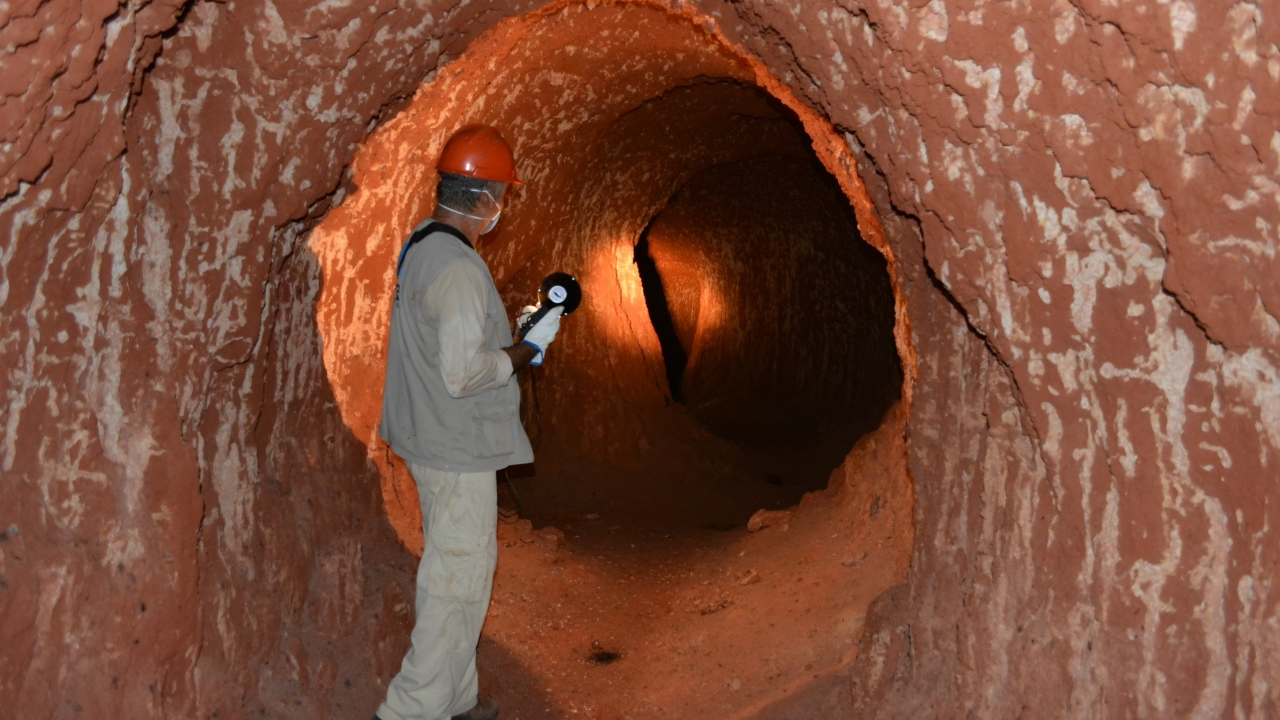
Microscopic tunnels hidden inside desert rock are forcing scientists to rethink how ancient life spread across Earth. These tiny, deliberate structures appear in stone formations separated by thousands of miles and date back up to 2 million years.
Their creator remains unidentified, leaving researchers with evidence of biological activity but no organism to name. Found deep inside marble and limestone, the tunnels challenge long-held assumptions about endolithic life and its limits. The mystery has sparked a global scientific effort to understand what made them and why.
Here’s what researchers have uncovered so far.
A Hidden Network Beneath Desert Stone
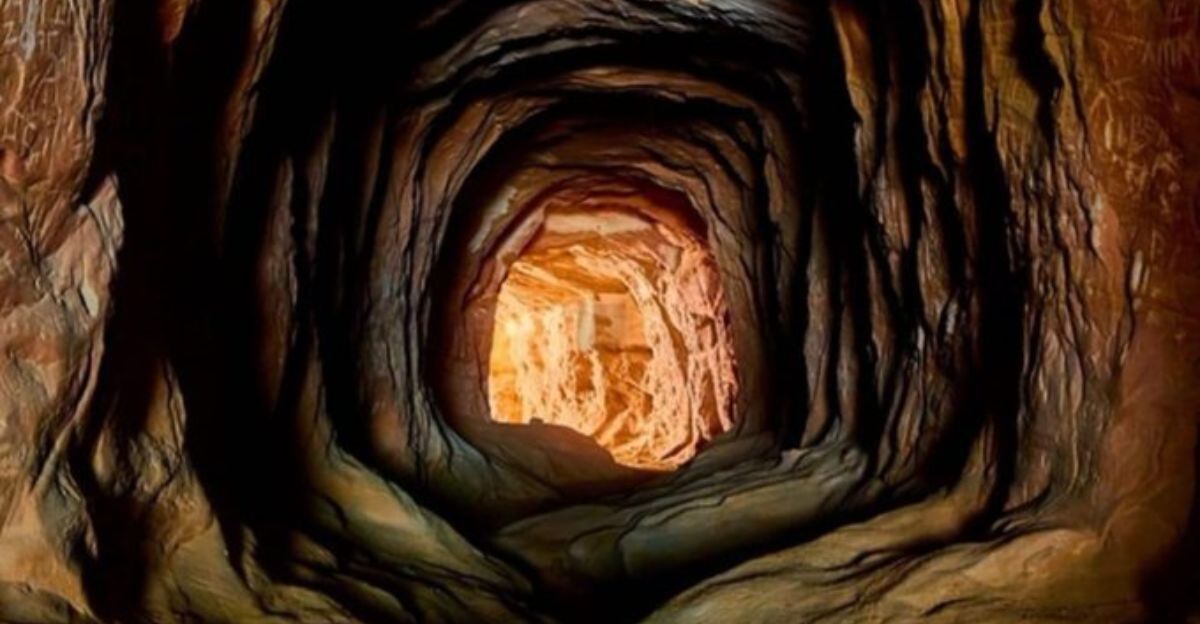
Across vast desert landscapes, researchers uncovered a pattern that stretches far beyond a single site. Identical tube-like structures appear in Namibia, Oman, and Saudi Arabia, linking Southern Africa and the Arabian Peninsula through ancient rock.
These tunnels are extremely small, measuring about 0.5 millimeters wide, yet they appear repeatedly across formations separated by thousands of miles. Their presence in multiple deserts suggests a biological phenomenon that once operated on a continental scale.
Such geographic reach raises a fundamental question. How could the same life form survive, spread, and leave identical traces across environments so distant and extreme long before modern ecosystems existed?
What Geologists Missed for Decades
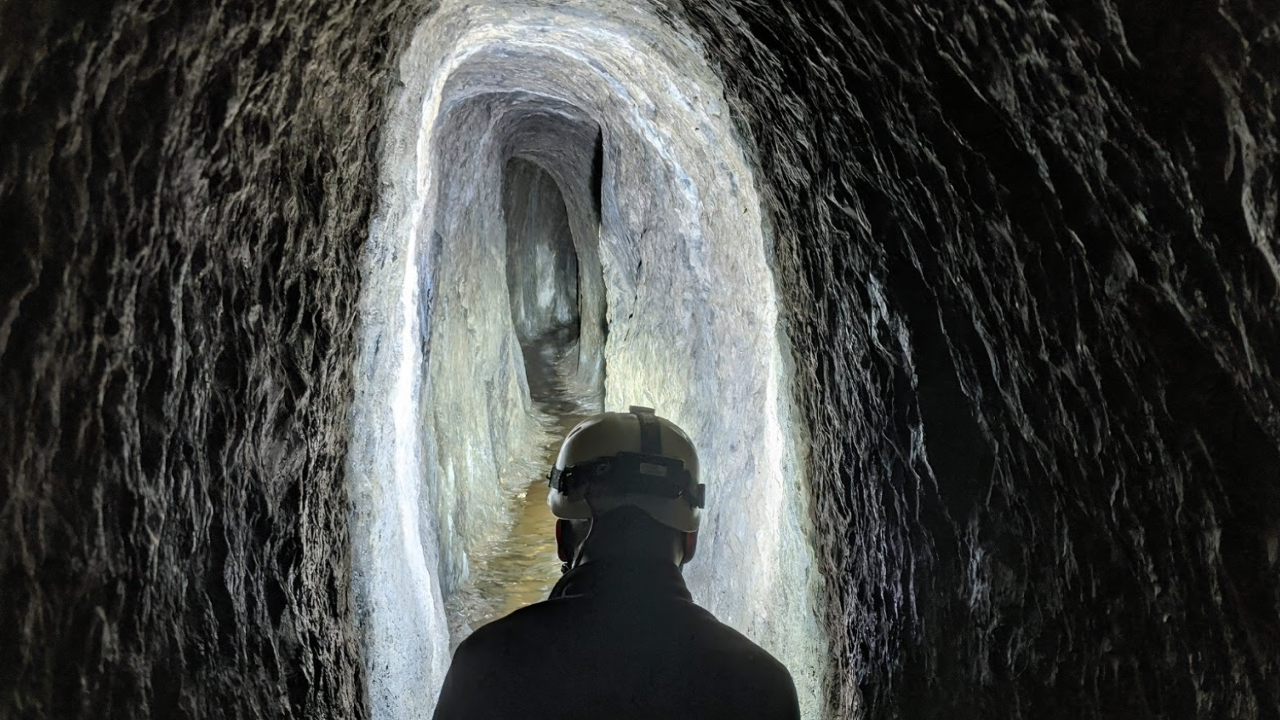
For years, these structures escaped notice despite extensive geological surveys. Traditional studies focused on mineral composition, erosion patterns, and large-scale formations rather than microscopic features embedded inside rock.
While modern endolithic organisms are well documented, ancient examples remained largely overlooked. The tunnels blend seamlessly into marble and limestone, making them easy to dismiss as natural fractures.
Only systematic microscopic analysis revealed that the formations were neither random nor purely geological. That oversight left one of Earth’s oldest biological records hidden in plain sight until recently.
Evidence of an Unknown Microorganism
In March 2025, Professor Cees Passchier of Johannes Gutenberg University Mainz formally announced the discovery. His team identified tube-like structures inside million-year-old marble and limestone, created by an unknown endolithic microorganism.
The tunnels extend up to 3 centimeters long and form parallel bands stretching as far as 10 meters. The findings were published in Geomicrobiology Journal, confirming their biological origin.
Despite detecting biological material inside the tunnels, researchers recovered no DNA. Without genetic evidence, the organism responsible cannot be classified, leaving its identity completely unknown.
Namibia as the First Clue
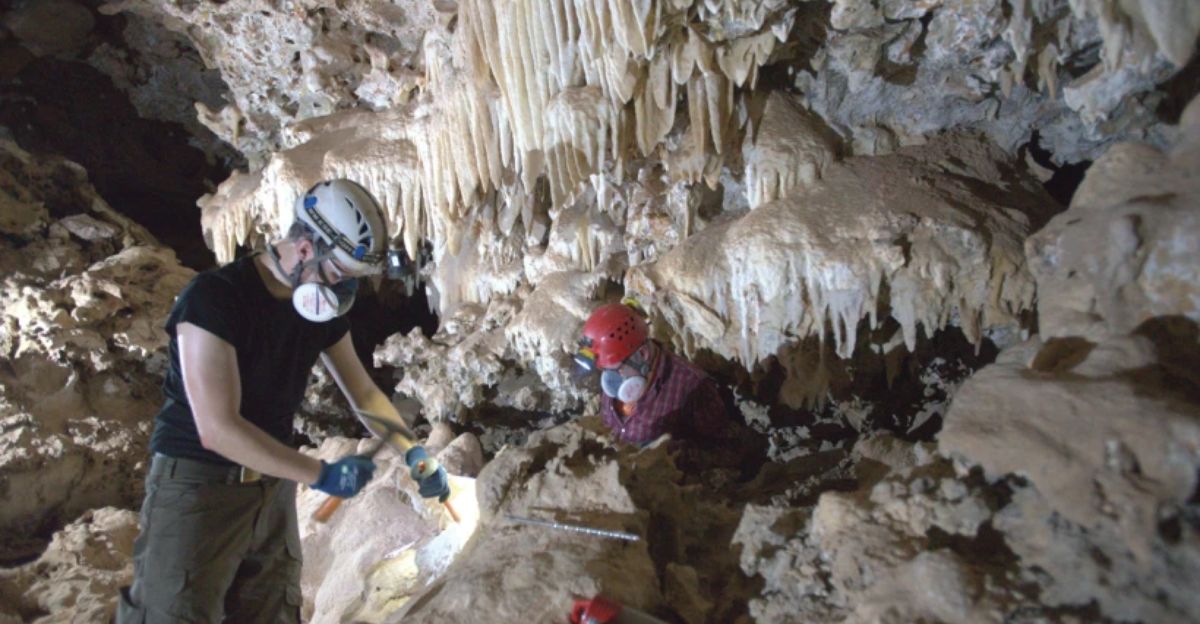
The Namib Desert provided the earliest evidence nearly 15 years ago. During long-term fieldwork, Passchier encountered strange borings embedded in ancient marble formations.
Namibia’s arid climate plays a key role. Minimal erosion preserves rock structures with exceptional clarity, effectively turning the desert into a geological archive.
Once the Namibian tunnels were identified as biological, they became a reference point. Matching structures were later recognized in Oman and Saudi Arabia, confirming the phenomenon was far larger than a single desert.
Dating a Mystery Millions of Years Old
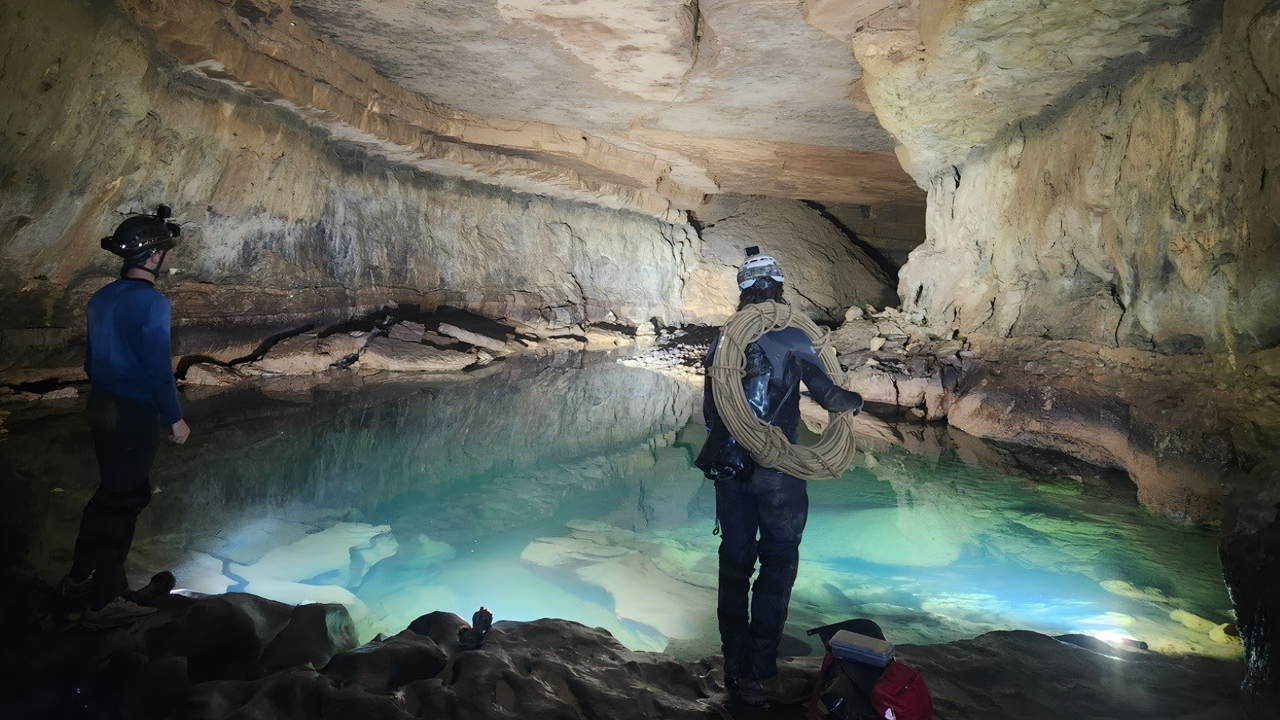
Determining when the tunnels formed proved challenging. Researchers applied multiple dating methods to the surrounding marble and limestone to build a reliable timeline.
All evidence converges on the same window: between 1 and 2 million years ago, during the Pleistocene era. That places the structures alongside early human ancestors.
The tunnels now rank among the oldest known microbial fossil records in arid environments. Their age deepens the mystery, suggesting a long-extinct or radically altered form of life once thrived inside solid rock.
No DNA, But Chemical Clues Remain
Perhaps the most puzzling detail is what scientists did not find. No recoverable DNA or genetic material remains inside the tunnels.
Yet biological signatures are unmistakable. The tunnel walls show enrichment in phosphorus and sulfur, indicating metabolic activity rather than inorganic processes.
This absence could mean the organism died millions of years ago, or that extreme desert conditions destroyed its DNA. Another possibility is unfamiliar biochemistry that standard extraction methods cannot detect.
Conclusion: A Discovery Without an Owner
These ancient tunnels reshape understanding of how life once interacted with Earth’s subsurface. Spanning 2 continents and surviving for millions of years, the structures suggest a biological influence far greater than previously imagined.
Their implications reach beyond geology. Endolithic organisms play roles in bioweathering and the global carbon cycle, and understanding a long-lived example could refine climate and planetary models.
The mystery also extends into astrobiology. If life can thrive inside rock without sunlight on Earth, similar niches could exist elsewhere. For now, the tunnels stand as rare evidence of a life form science has found, but not yet met.
Sources:
Subfossil Fracture-Related Euendolithic Micro-burrows in Marble and Limestone. Geomicrobiology Journal, March 18, 2025
Unknown microorganisms used marble and limestone as a habitat. Johannes Gutenberg University Mainz Press Release, March 18, 2025
Unusual desert rocks suggest unknown microorganism that lived inside marble and limestone. Phys.org, March 19, 2025
Unknown microorganisms used marble and limestone as a habitat. Science Daily, March 19, 2025
Endolithic Microbial Carbon Cycling in East Antarctica. PNAS/Nature Scientific Reports, February 27, 2021
Astounding geological discovery in the Namib. Namibian Sun, April 7, 2025