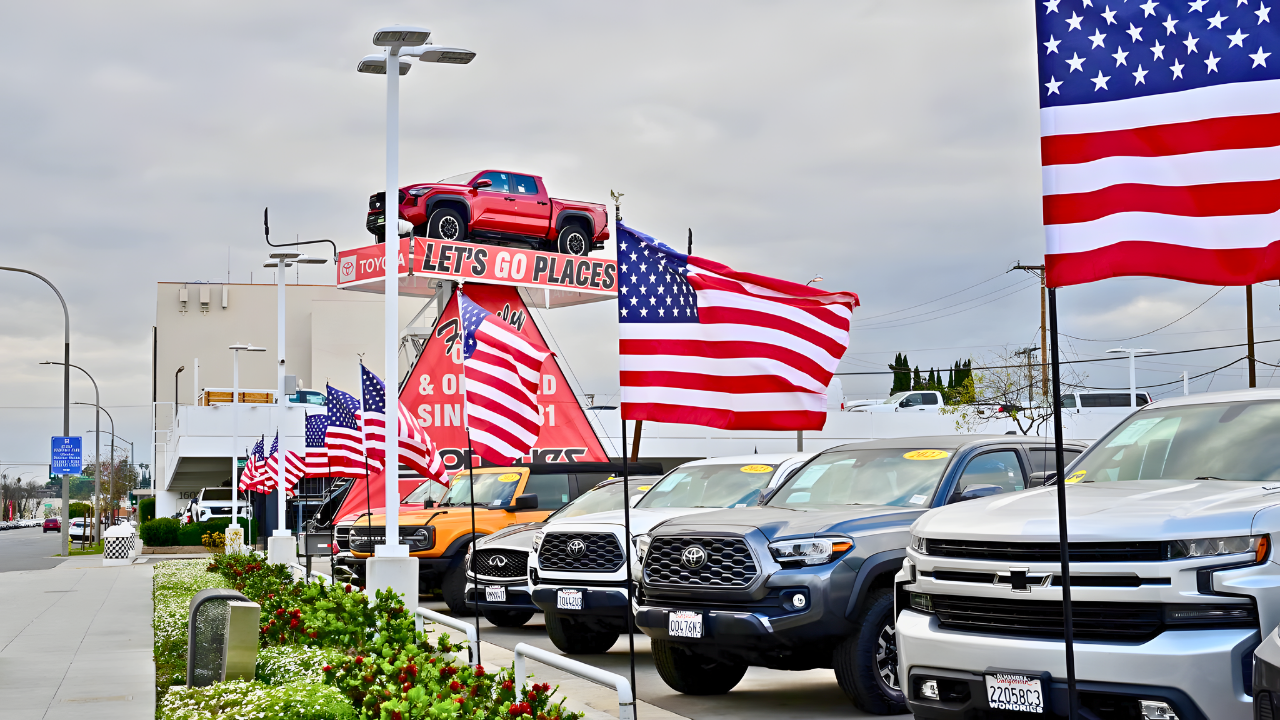
The $20,000 barrier for affordable new cars has vanished, leaving first-time buyers and families facing sticker prices that once seemed unthinkable. Entry-level models like the Mitsubishi Mirage and Nissan Versa are gone from U.S. showrooms, replaced by pricier crossovers and SUVs as automakers chase higher margins.
President Trump’s 25% tariffs on imported vehicles and parts act as a built-in cost at every production stage. Officials cite job protection and national security as goals, but the duties inflate prices for engines, batteries, electronics, and other components. A Reuters analysis covers more than $460 billion in imports, from whole cars to parts, pressuring automakers to absorb or pass on expenses. J.P. Morgan Global Research projects $41 billion in first-year industry costs, driving new-vehicle price inflation up by about 3%.
The average transaction price for a new U.S. vehicle hit a record $50,080 in September 2025, up over 3% from the prior year and well above the $40,000 mark from five years earlier, according to Kelley Blue Book. Luxury models and high-end electrics skew the average, while mainstream pickups often exceed $60,000. Monthly payments have reached around $749, straining household finances far beyond past norms.
When Car Prices Outgrow Paychecks

In many cities, typical new-car prices now match or surpass median annual incomes, transforming a routine purchase into a major burden. Prices have risen faster than wages, forcing larger income shares toward transportation or reliance on aging used cars. Young families and low- to middle-income workers bear the brunt, choosing between steep debt, a competitive used market, or forgoing ownership.
Elevated interest rates compound high prices, with borrowers facing some of the highest auto loan rates in years. Lenders extend terms to six, seven, or eight years to ease monthly payments, but vehicles depreciate faster than loans pay down. Payments over $700 are common, with many topping $1,000 on trucks and SUVs; about one in four owners owes more than their car’s value.
Rising costs from safety regulations, emissions rules, technology, and tariffs make low-margin small cars unprofitable. Factories shift to SUVs, pickups, and premium trims, thinning budget options. Basic crossovers now start above the old $20,000 threshold, as consumers gravitate toward larger vehicles—though many budget shoppers are sidelined.
How Tariffs Reshape What Gets Built

Tariffs hit imported small cars and parts hardest, favoring larger, U.S.-assembled SUVs and trucks with bigger margins. The U.S. International Trade Commission warned such duties could slash imports by nearly 75% and lift average prices by 5%, altering market dynamics without broad consumer input.
Compact sedans once available in the high teens or low twenties have disappeared or jumped in price, pushing entry-level buyers higher. Young adults now delay purchases, keep old cars longer, or accept risky long-term loans. This erodes mobility for new workers, complicating job access beyond transit and adding pressure amid student debt.
Fewer cheap new cars mean fewer affordable three- to five-year-old used options under $20,000. Models that once had half their inventory in that range now offer single-digit shares, sparking bidding wars and sustaining high prices despite some new-car discounts.
Family Budgets Under Severe Stress
Car payments in the high $700s rival rent or mortgages for many, especially renters. Families cut savings, delay care, or deplete emergency funds amid rising groceries, insurance, and utilities. Financial experts note such commitments risk tipping fragile budgets into distress.
Commuters, rural dwellers, and suburbanites in car-dependent areas suffer most, lacking transit alternatives. Reliable vehicles are essential for work, school, and health care; pricier trucks for jobs amplify the hit, functioning like a mobility surcharge.
Who Really Pays the Tariff Tab

Carmakers absorb some costs initially, but slim margins and investor demands shift much to consumers via higher prices and fewer deals. Analysts predict buyers shoulder about half the burden, adding to post-pandemic inflation.
As prices top $50,000, loans extend near a decade, and budget cars fade, car ownership strains the path to independence. Buyers can counter by shopping multiple dealers, eyeing certified pre-owned options, and boosting credit for better rates—yet broader policy and market shifts will determine if relief arrives or pressures mount further.
Sources:
ABC News, Average new car price hits $50,000, a record high, data shows, 2025-10-15
Kelley Blue Book / Cox Automotive, New-Vehicle Average Transaction Price Hits Record High, 2025-10-15
Kelley Blue Book, The Sub-$20,000 Car Will Disappear This Summer, 2025-07-14
Nasdaq (via Money), New Cars Under $20000 Are About to ‘Go Extinct’, 2025-07-18
The Independent, Last remaining new car below $20000 in U.S. to disappear by end of summer, 2025-07-15
Cox Automotive / Kelley Blue Book, As America Spends a Record $15 Billion on New Vehicles in December, Average Transaction Price Hits All-Time High, 2026-01-11