A wave of white-collar layoffs is sweeping through some of the nation’s largest employers, with Amazon, UPS, and Target collectively cutting 63,800 jobs in 2025. These reductions, spanning management, operations, and corporate headquarters, signal a dramatic shift in the professional job market. While companies have pointed to artificial intelligence as a driver, a closer look reveals that tariff complexity and economic uncertainty are at the heart of this upheaval.
UPS: Strategic Shifts and Deep Cuts

UPS has led the charge, announcing 48,000 job cuts this year—by far the largest among the three companies. The logistics giant eliminated 34,000 operational roles and 14,000 management positions, a move CEO Carol Tomé described as a strategic pivot away from Amazon shipments, which previously accounted for 12% of UPS revenue. Instead, the company is focusing on higher-margin healthcare and business-to-business services that require fewer employees. This transition has resulted in the closure of 93 facilities and a downsizing of both vehicle and aircraft fleets.
Local impact has been significant. In Atlanta, where UPS is headquartered, longtime employee Marcus Hill described the mood as “somber and uncertain,” adding, “We’ve never seen cuts on this scale in my 20 years here.” The company’s decision to reduce its workforce is closely tied to the operational challenges posed by shifting trade flows and the loss of major clients.
Amazon and Target: Trimming Corporate Layers

Amazon’s 14,000 corporate job cuts represent about 4% of its white-collar workforce, with internal documents suggesting the total could reach 30,000—its largest layoff since 2022. CEO Andy Jassy has framed the move as an effort to eliminate bureaucracy and transform Amazon into “the world’s largest startup.” The cuts began in late October, with more expected in the new year.
Target, meanwhile, is reducing its headquarters staff by 1,800 positions, or 8%, marking its first major layoff in a decade. Incoming CEO Michael Fiddelke cited “complexity that’s been holding us back” and “too many layers and overlapping work” as reasons for the cuts. The retailer’s announcement follows four years of stagnant or declining revenue, despite a 6% increase in its workforce.
Tariffs and Supply Chain Turmoil
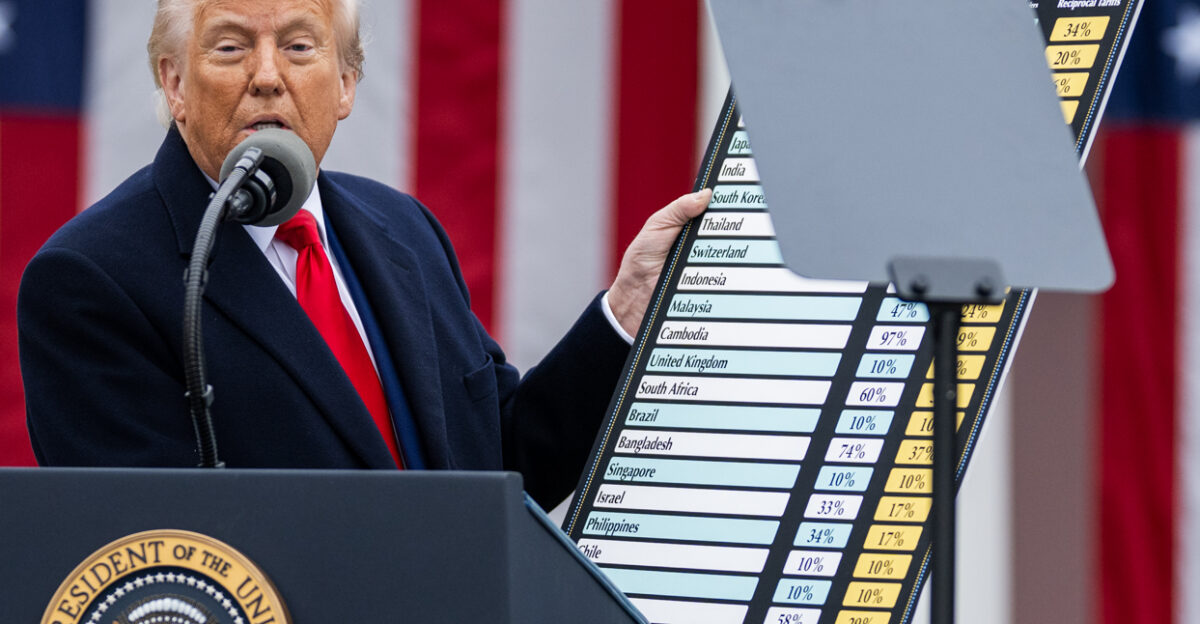
Beneath the surface, tariff policy has emerged as a major force behind these layoffs. The Trump administration’s tariffs have introduced unprecedented complexity, with duties fluctuating between 10% and 30% on goods from various countries. Companies now face a maze of changing regulations, customs documentation, and country-of-origin rules, all of which require significant administrative resources—resources many are now eliminating.
UPS, for example, cited the impact of tariffs as a key factor in its workforce reductions. The company has had to close facilities and reduce shipping capacity to adapt to disrupted trade flows. Many firms are shifting to “nearshoring” in Mexico and diversifying suppliers across Asia, but these changes come with steep costs. A CNBC survey found that 57% of companies cite cost as the primary barrier to supply chain restructuring, with many estimating expenses would double.
The ripple effects extend beyond logistics. Baby apparel retailer Carter’s is cutting 300 corporate jobs and closing 150 stores over three years, directly attributing the move to soaring tariff costs. Import duties on Carter’s products jumped from $110 million in 2024 to a projected $200–$250 million annually.
AI: Scapegoat or Solution?
While companies highlight investments in artificial intelligence, experts question whether technology is truly driving the layoffs. Amazon spent $31.4 billion in the second quarter of 2025 on capital expenditures, much of it for AI and cloud infrastructure. Yet, analysts note that AI still struggles with many real-world office tasks. MIT research found that 95% of companies adopting AI saw no meaningful revenue growth.
Matthew Bidwell, a professor at the University of Pennsylvania, argues, “This is corporate America’s mass layoffs disguised as innovation.” He suggests that AI is being used as a convenient cover for cost-cutting measures driven by tariffs and economic pressures.
White-collar employment at U.S. public companies has dropped 3.5% over three years, with administrative and coordination roles—once considered stable—now among the most vulnerable. Amazon’s Beth Galetti said the cuts are intended to “reduce bureaucracy” as generative AI takes over some coordination functions.
Economic Uncertainty and Worker Fallout
The job market, once described as “no-hire, no-fire,” has shifted dramatically. Andrew Challenger of Challenger, Gray & Christmas reports that retail job losses are occurring at triple last year’s pace. “We are moving into a time where job security might be more precarious,” Challenger warned. Federal Reserve Chair Jerome Powell has cited concerns about slower hiring as a factor in recent interest rate cuts.
Tariff volatility has made corporate planning nearly impossible. Yann Fier, an executive at Electrolux, described the environment as one where “every single prediction has proven incorrect.” Globally, about 40 companies withdrew or downgraded their financial guidance in the first two weeks of the year due to tariff uncertainty.
Layoffs are concentrated in corporate hubs like Seattle, Atlanta, and Minneapolis, disproportionately affecting white and Hispanic men without college degrees. Nearly two million Americans have been unemployed for more than 27 weeks, the highest figure since 2022. “It’s a particularly challenging time to be unemployed,” said Michele Evermore of the National Academy of Social Insurance.
Looking Ahead: Structural Change or Temporary Shock?
Industry analysts warn that these layoffs may signal a permanent shift rather than a temporary downturn. White-collar employment has declined steadily, and companies are investing billions in AI while eliminating coordination roles. Columbia Business School’s Daniel Keum explains, “If you can’t increase price, you have to reduce cost. How operationally do I manage cost? Let’s lay off white-collar people.”
As companies restructure, the American workforce faces a new reality: fewer traditional corporate jobs, greater reliance on technology, and a labor market shaped as much by global policy as by innovation. The stakes are high, with job security, consumer confidence, and the future of work all hanging in the balance.