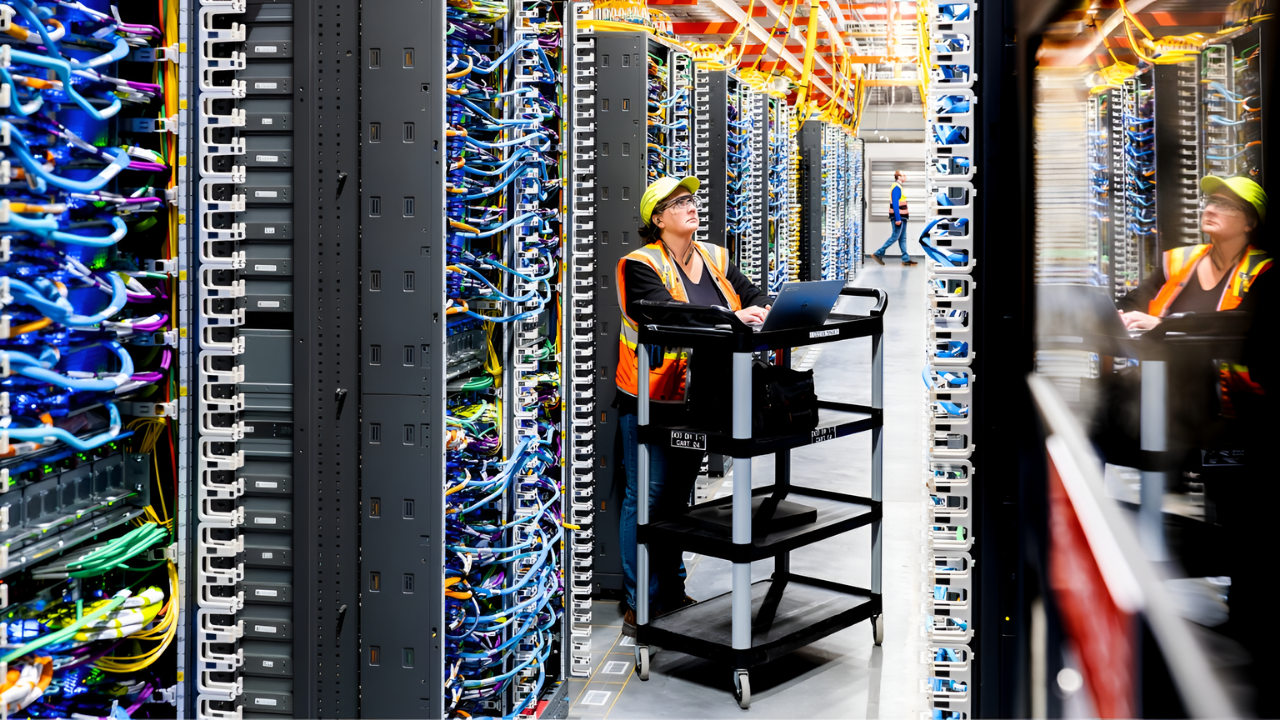
Inside secure government facilities across the United States, intelligence analysts navigate mountains of classified data—satellite imagery, intercepted communications, archived records—struggling to process information fast enough for real-time decision-making. For years, infrastructure limitations have slowed critical analysis from days to weeks. On November 23, 2025, Amazon announced a solution that could fundamentally alter this equation: a $50 billion commitment to build artificial intelligence supercomputing infrastructure exclusively for U.S. government agencies.
Strategic Competition Accelerates

The announcement arrives amid intensifying technological rivalry with China. The Pentagon’s December 2025 report to Congress reveals that Beijing has narrowed the performance gap in large language models and continues integrating AI across military applications, from cyber operations to command support and influence campaigns. Chinese military researchers are leveraging commercial AI breakthroughs for defense systems through military-civil fusion mechanisms, compressing decision timelines that could reshape future conflicts. Washington recognizes the urgency: this competition is unfolding now, and infrastructure capacity has become a strategic weapon.
Amazon’s move directly addresses this challenge. The investment will add nearly 1.3 gigawatts of computing capacity across AWS Top Secret, Secret, and GovCloud regions, with construction beginning in 2026. This represents the largest single infrastructure commitment ever made by a commercial cloud provider to the federal government. The expansion builds on a decade-long foundation—AWS launched its first air-gapped Top Secret cloud region in 2014, followed by a Secret Region in 2017 and a second Top Secret Region in 2021. Together, these environments form the backbone of classified U.S. cloud operations, handling data that never touches the public internet.
Transforming Government Capabilities
The new infrastructure fundamentally changes what agencies can accomplish. Intelligence analysts who previously spent months correlating financial data across disconnected databases will query unified datasets instantly, detecting suspicious patterns in minutes rather than weeks. Defense planners gain access to faster battlefield simulations, while researchers can analyze massive pharmacological datasets securely to accelerate drug discovery. AWS CEO Matt Garman stated the investment “removes the technology barriers that have held government back and further positions America to lead in the AI era”.
Federal agencies will access AWS’s comprehensive AI toolkit, including Amazon SageMaker for model training, Amazon Bedrock for deployment, and foundation models from Anthropic’s Claude to Amazon Nova. Critically, the infrastructure incorporates both Amazon’s custom Trainium AI chips and NVIDIA accelerators, giving agencies flexibility while reducing costs. This strategic combination of cloud services and proprietary silicon positions Amazon to compete on both performance and economics—an advantage few rivals can replicate.
Execution Challenges Loom

The ambitious timeline faces significant hurdles. Federal data center projects typically encounter permitting delays, environmental reviews, and grid connection waits stretching five years. Amazon’s 1.3-gigawatt expansion likely requires one massive facility per region, each demanding complex power sourcing, cooling systems, and classified networking—all while maintaining strict compliance with intelligence community standards. A July 2025 executive order aims to accelerate approvals, but any delay could push capacity delivery into 2027, narrowing the strategic window as agency demand continues rising.
The competitive landscape intensifies pressure. Amazon’s announcement escalates rivalry under the Pentagon’s Joint Warfighting Cloud Capability contract, awarded in December 2022 to AWS, Microsoft, Google, and Oracle with a ceiling of $9 billion through 2028. While competitors may match software features, replicating this scale of classified, purpose-built infrastructure presents formidable challenges.
Redefining Government Technology

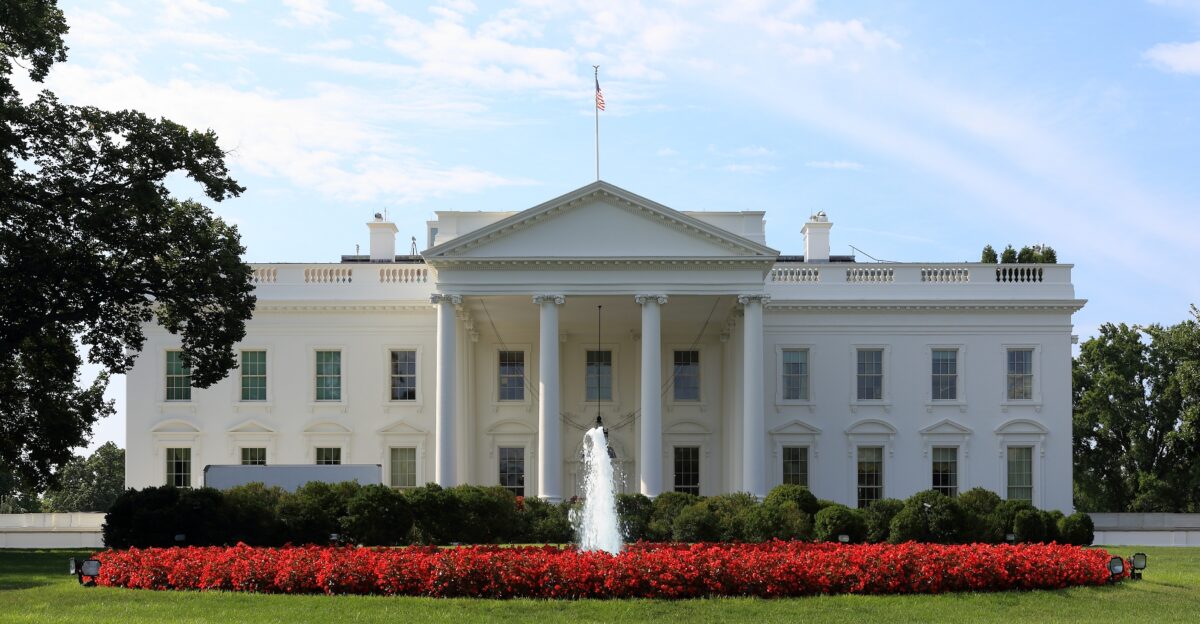
This investment aligns precisely with the White House’s July 2025 AI Action Plan, which emphasized accelerating innovation, building AI infrastructure, and leading globally on security. The plan identified infrastructure as critical for enabling federal AI adoption, yet agencies faced bottlenecks despite mounting pressure to deploy AI across defense, intelligence, and civilian missions.
Amazon’s commitment signals a generational shift in government technology partnerships. Federal IT once evolved slowly, with systems lasting decades. AI has compressed that rhythm dramatically. Agencies now expect vendors to deliver sovereign-scale, mission-specific infrastructure at unprecedented speed. The relationship transforms from contract fulfillment to outcome velocity—a benchmark that will soon become standard across the federal ecosystem.
Allied nations are watching closely. Australia has already committed AU$2 billion over ten years for an AWS top-secret cloud, while the United Kingdom and Canada explore similar models. Amazon’s U.S. investment suggests sovereign AI infrastructure is becoming essential for modern defense, potentially triggering a global market worth tens of billions in government-exclusive computing capacity.
The real test arrives when capacity comes online in 2027 and 2028. Technology alone cannot change doctrine—organizational culture, training, and institutional trust determine whether agencies use these tools effectively. Amazon is wagering that the U.S. government will act faster once infrastructure barriers fall. That assumption, more than the hardware itself, represents the true gamble.
Sources:
AWS Official Announcement, “Amazon to invest up to $50 billion to expand AI and supercomputing infrastructure for U.S. government agencies,” November 23, 2025
U.S. Department of Defense, “Military and Security Developments Involving the People’s Republic of China 2025 – Annual Report to Congress,” December 25, 2025
The White House, “Winning the AI Race: America’s AI Action Plan,” July 22, 2025
AWS Public Sector Blog, “Announcing the New AWS Secret Region,” November 19, 2017
AWS Public Sector Blog, “Announcing second AWS Top Secret Region, extending support for U.S. government classified mission workloads,” December 5, 2021
U.S. Department of Defense, “Pentagon Awards JWCC Cloud Computing Contracts to Amazon, Google, Microsoft, and Oracle,” December 7, 2022