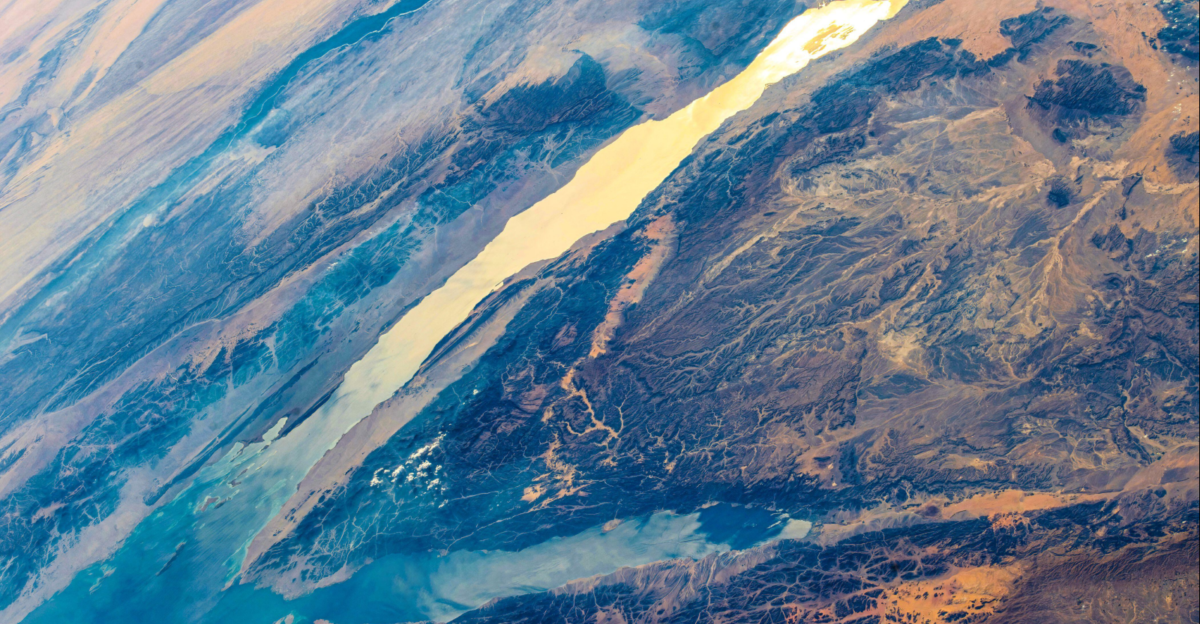
Across East Africa, from Ethiopia’s coasts on the Red Sea down to Mozambique, a long line on the map shows where the continent is slowly tearing apart. This 3,000‑kilometer stretch is called the East African Rift, where the Earth’s crust is thinning and stretching. Two massive plates that make up Africa’s crust, the Nubian Plate to the west and the Somali Plate to the east, are slowly drifting away from each other. Over millions of years, their movement has carved deep valleys, created chains of volcanoes, and formed many large lakes. Scientists believe that if this continues, Africa could eventually split into two separate pieces of land, with a new ocean forming between them.
In northern Ethiopia, the Afar Depression shows this process most clearly. Geologists often describe it as watching the planet’s open heart surgery. Three tectonic plates, the Nubian, Somali, and Arabian, meet here, and the crust is already thin and stretched out. In some places, it has even sunk below sea level. Molten rock, or magma, lies close beneath the surface, but the nearby highlands block the Red Sea from flooding in. Standing on the ground there gives an idea of what the birthplace of a new ocean might look like.
Sudden Cracks in a Slow Process
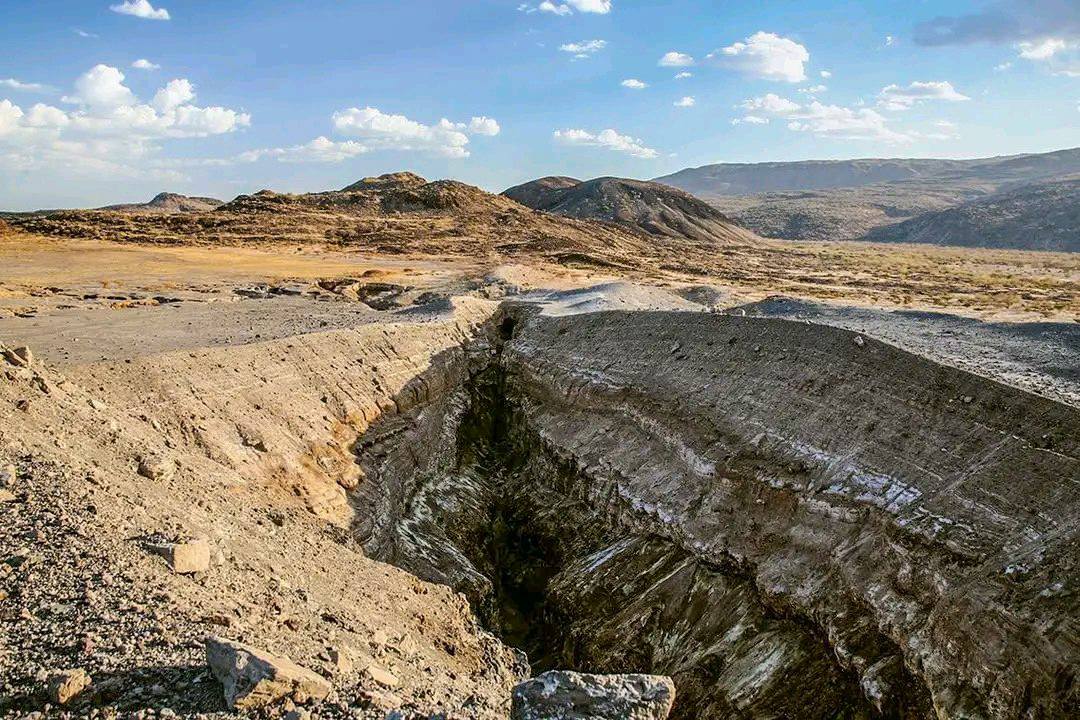
Most of the time, the East African Rift changes so slowly that people can’t feel it. But in 2005, a dramatic event near Ethiopia’s Dabbahu volcano showed how quickly the Earth can move. In just under two weeks, the ground split open along a 35‑mile‑long crack that widened by several feet. Using satellites and GPS, scientists discovered that magma had surged upward from deep below, forcing the crust to break apart. Such events often happen quietly beneath the ocean floor where new crust forms, but this one took place in full view on land.
Though the rift usually moves only a few millimeters each year, about 0.2 to 0.5 inches, tension builds up over decades. When that pressure is released, the ground can shift suddenly, creating wide fissures and altering the land within days. Scientists have also found evidence that new oceanic crust is already forming deep beneath parts of Ethiopia and Kenya. Seismic studies and rock samples show that the material underground is becoming more like that of the ocean floor. A 2018 study in Nature Geoscience called the East African Rift the only known place on Earth where a continent is currently breaking apart in a way that will likely create a new ocean basin in the distant future.
Life on a Shifting Landscape
Even though the changes are happening over millions of years, scientists have tried to estimate when seawater might finally flood the rift. They predict that in about 5 to 10 million years, a narrow sea could form and connect with the Red Sea and the Gulf of Aden. Over more time, that sea would widen into an ocean, leaving parts of today’s East Africa on a newly separate landmass. As one researcher, Christopher Moore, described it, this is “continental drift in action.” It’s the same process that once shaped the landscape where early humans evolved.
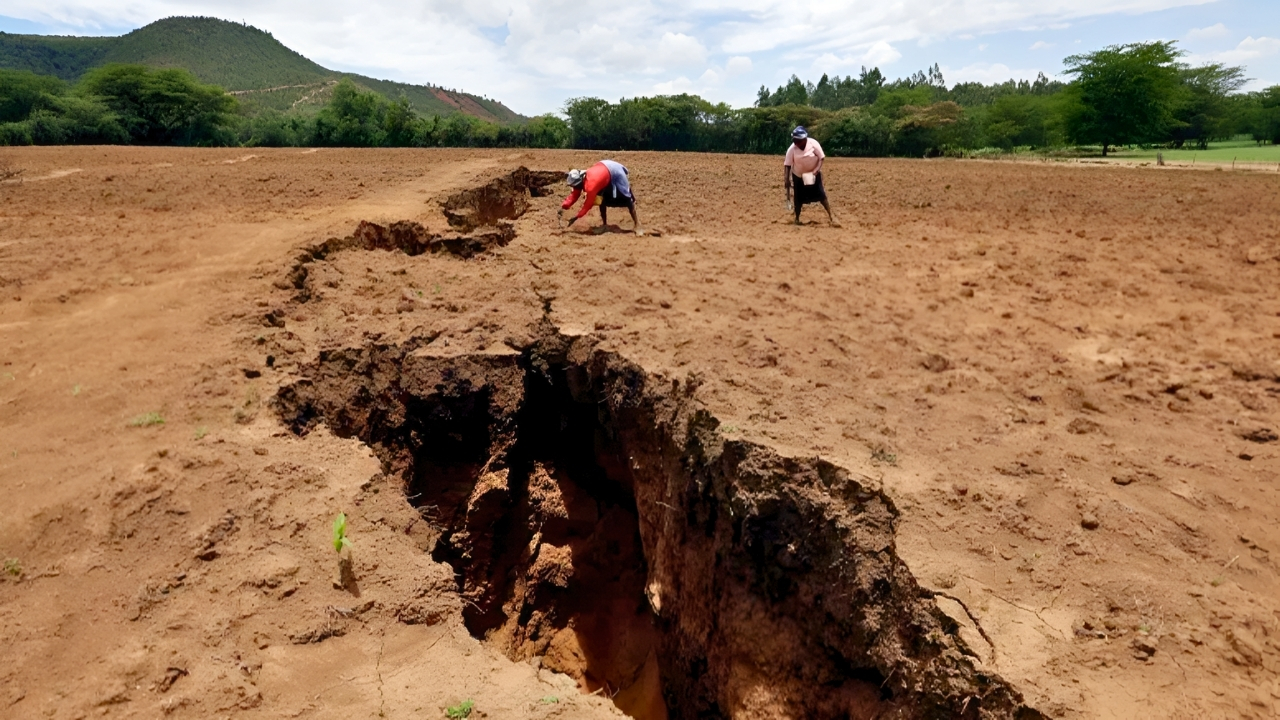
For now, the rift appears on the surface as steep cliffs, deep valleys, and long lakes that trace its path. Many towns, farms, and roads follow these natural corridors. In Kenya’s Narok County, for instance, cracks sometimes open after heavy rains seep into underground fractures, weakening the soil and damaging roads. People living in the region experience the rift’s progress not through one large event but through a series of smaller tremors, shifting ground, and subtle changes over time.
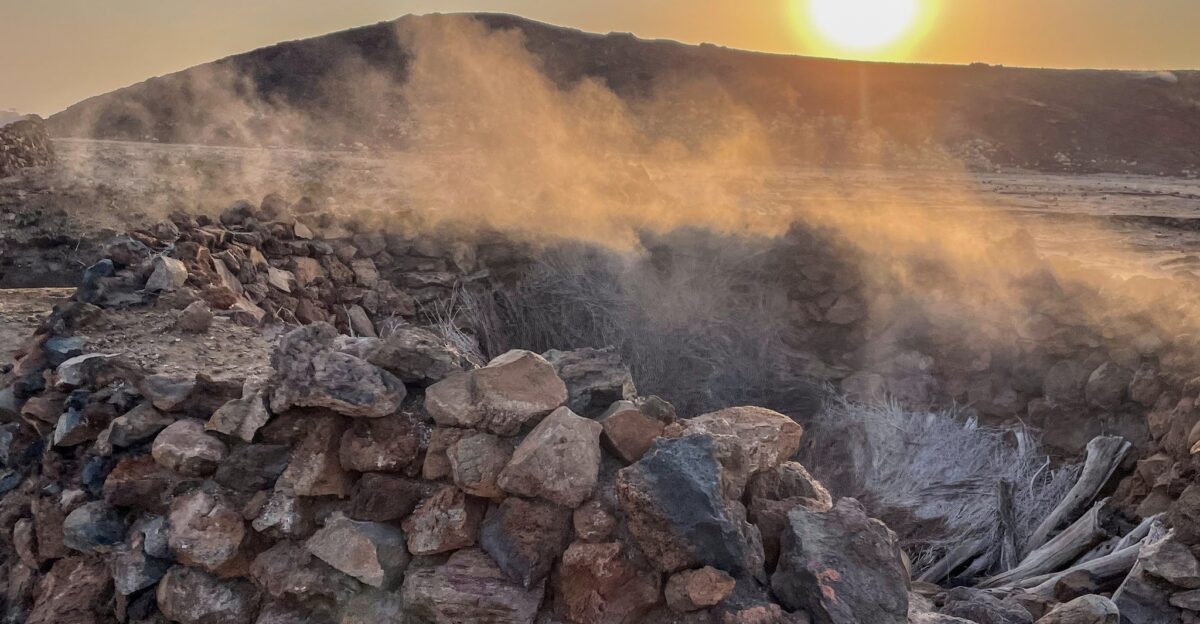
The Afar region in particular is one of the harshest places on Earth but still supports tens of thousands of people. With daytime temperatures reaching up to 54°C (130°F), the area is prone to volcanoes, earthquakes, and unstable soils. Though the conditions are extreme, communities survive by herding animals and mining salt, following traditions that have lasted for centuries. Across the larger East African Rift more than 22 million people live in areas affected by volcanic and seismic activity. These natural dangers mix with modern challenges like flash floods and food shortages brought on by climate change, making everyday life difficult but resilient.
A Window into Earth’s Future
The East African Rift is not only a place of danger but also of great scientific and economic value. Usually, the process of continents breaking apart happens deep under the ocean, hidden from view. Here, though, scientists can observe it on land. Using satellites and precise GPS instruments, they can measure the ground’s movement down to a few millimeters. Programs such as NASA’s RiftVolc project track where the land is stretching or where pressure is building up, helping researchers better predict volcanic activity and earthquakes.
Beneath East Africa, a vast plume of superheated rock slowly rises from deep inside the Earth. This plume acts like a torch, warming and softening the crust above it. It feeds the region’s many volcanoes and helps form new layers of crust. That same underground heat also provides an important source of renewable energy. In Kenya, geothermal power plants along the Rift Valley now supply around 45 percent of the country’s electricity. Ethiopia is also investing in geothermal energy to create dependable and clean power. The challenge lies in building systems strong enough to handle the earthquakes and shifting ground that come with living above an active rift.
The East African Rift will keep evolving through many small changes and occasional dramatic shifts. Rather than one large breakup, the continent’s future will be shaped by countless gradual events over millions of years. For governments and local communities today, the focus is on adapting, building stronger roads and buildings, managing resources wisely, and preparing for natural hazards. While a new ocean may take ages to form, the decisions people make now will determine how safely life can continue along Africa’s slowly splitting heart.
Sources
- East African Rift overview (tectonics, length, evolution): – Wikipedia
- 35‑mile crack and “new ocean forming in Africa” – Earthly Mission
- Africa’s new ocean: – How Stuff Works