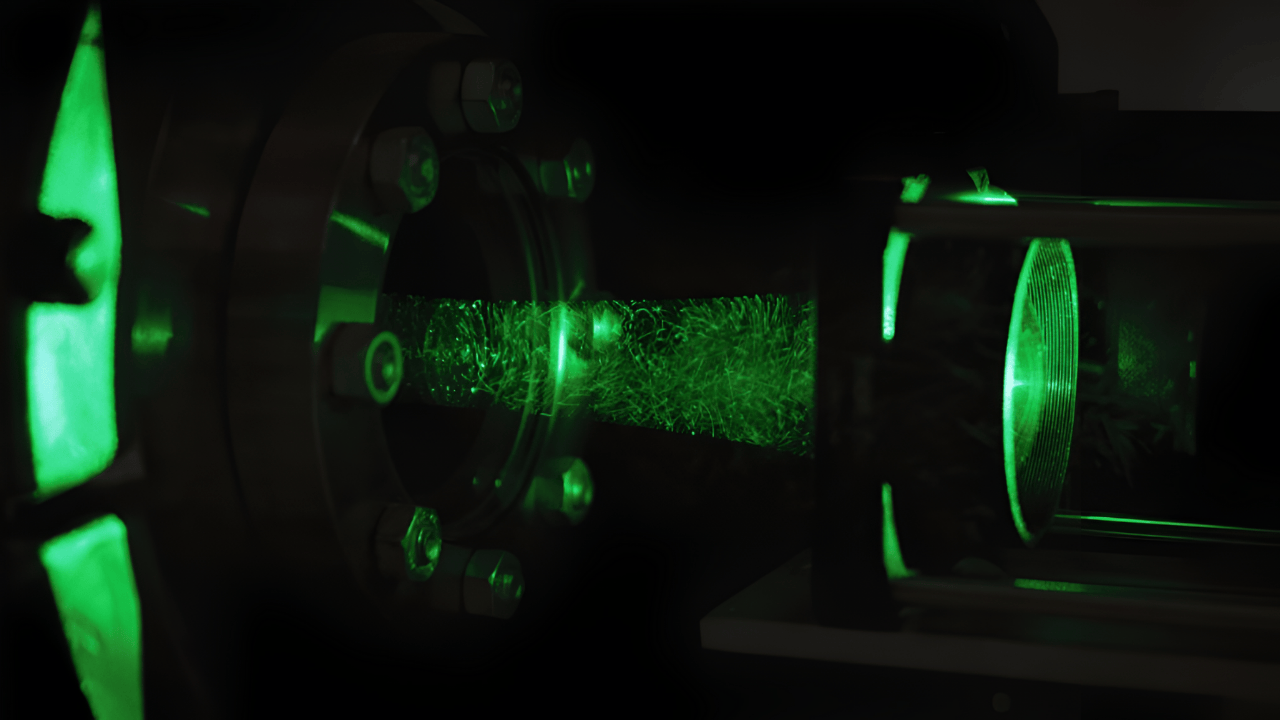
CERN’s Large Hadron Collider broke the world record for collision data in 2025. The particle physics facility produced more data in one year than any other collider in history.
International physics organizations recognized this achievement as historic.
CERN announced the milestone globally, marking a major moment for science.
Researchers now anticipate breakthrough discoveries from this unprecedented data collection.
The Collider
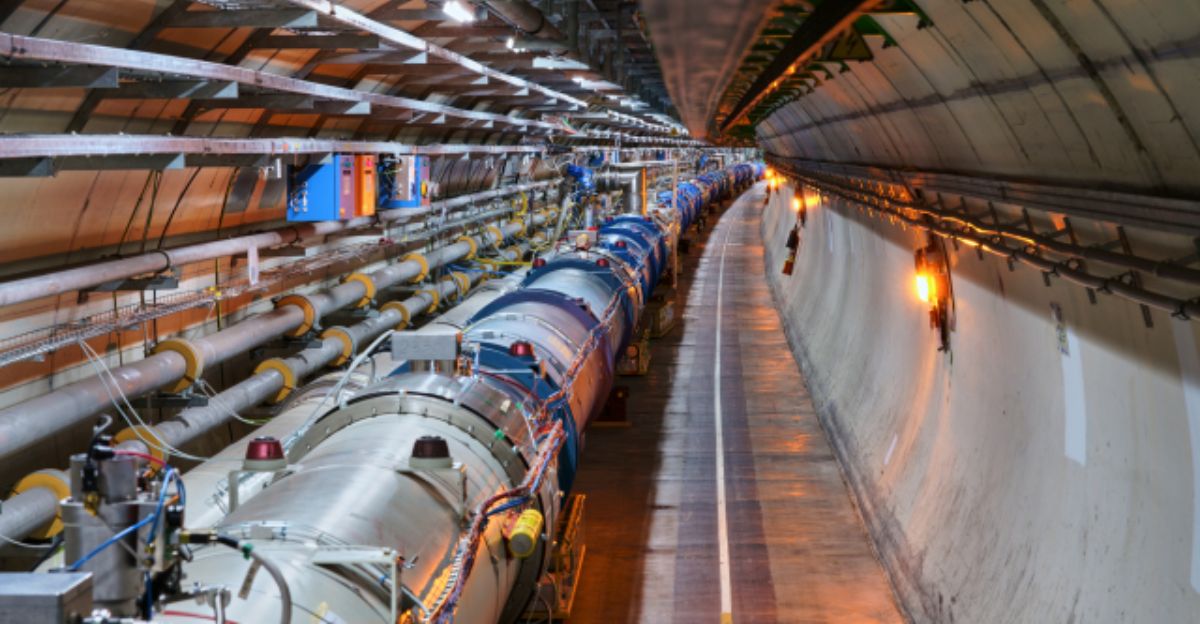
CERN’s Large Hadron Collider, located near Geneva, Switzerland, is the world’s most powerful particle accelerator.
The European Organization for Nuclear Research operates this 27-kilometer underground ring.
Thousands of superconducting magnets propel protons to nearly light speeds.
The LHC has delivered record-breaking experiments since 2010, supporting researchers from many nations worldwide.
Record Luminosity
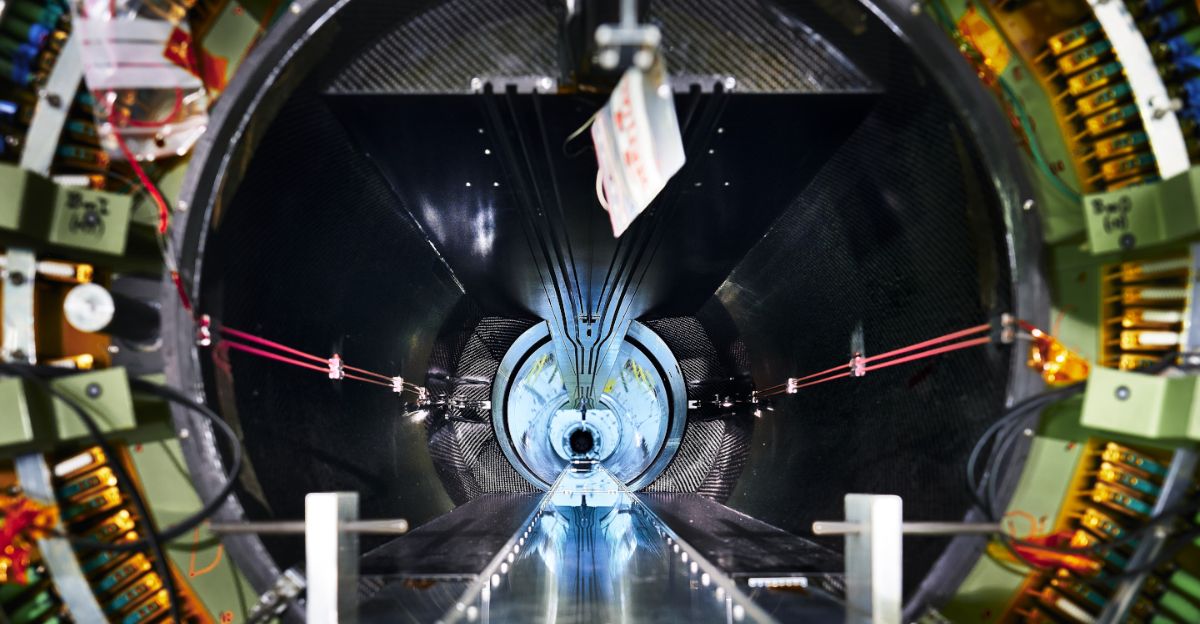
Luminosity measures the total particle collisions delivered to experiments—essential for discovering subatomic phenomena.
In 2025, the LHC delivered 125.4 inverse femtobarns to its ATLAS and CMS detectors.
This shattered every previous record and exceeded CERN’s targets by over 5 inverse femtobarns.
Scientists called the achievement the “gold standard” for collider performance worldwide.
Raising the Bar
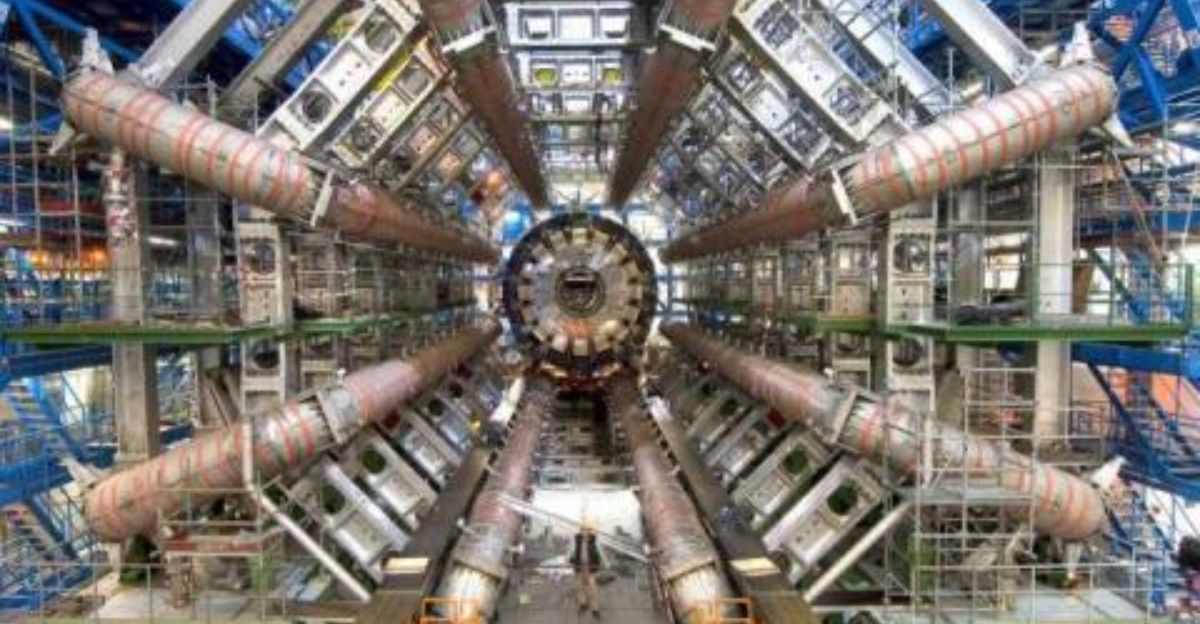
The 2025 achievement beat the 2024 record by 1.5 inverse femtobarns—a significant advance for physics.
Experts said the increase transformed the field, pushing capabilities beyond the previous Tevatron collider.
The LHC produced ten times more collision data in one year than the Tevatron generated in its entire lifetime, setting a new benchmark.
Seven Million Particles
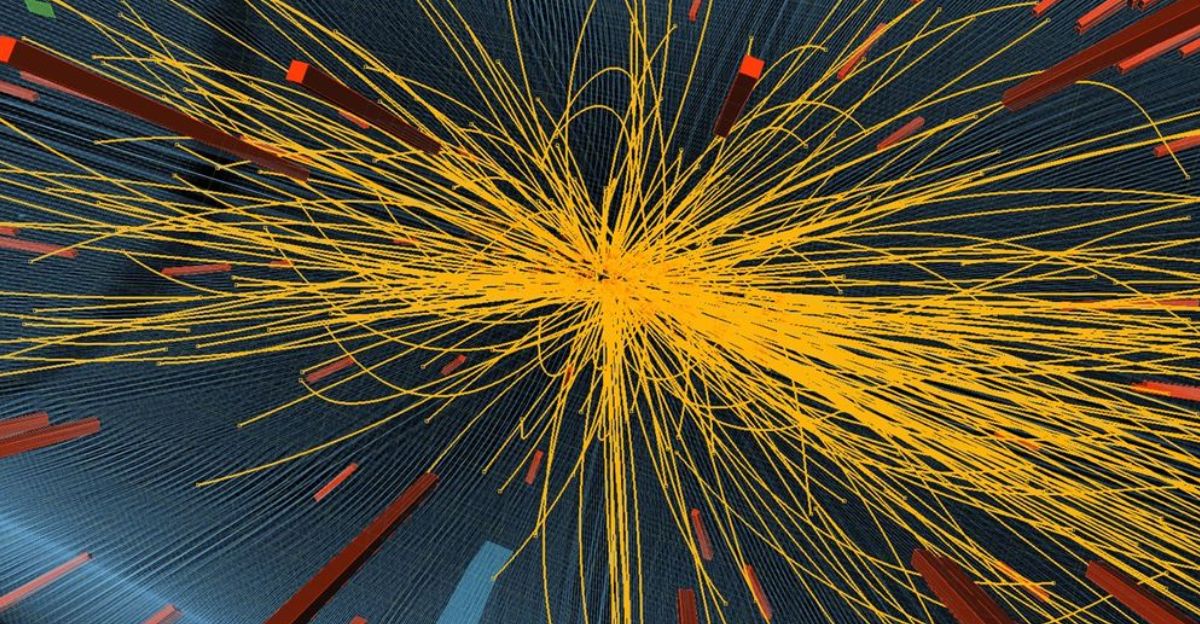
On November 4, 2025, CERN scientists celebrated the production of nearly 7 million Higgs bosons—the “God particle”—for the ATLAS and CMS experiments.
They calculated this figure from the integrated luminosity and expected production rates. CERN officials verified the numbers in official statements and videos.
The results demonstrate the LHC’s extraordinary power to study the fundamental structure of matter.
Human Impact
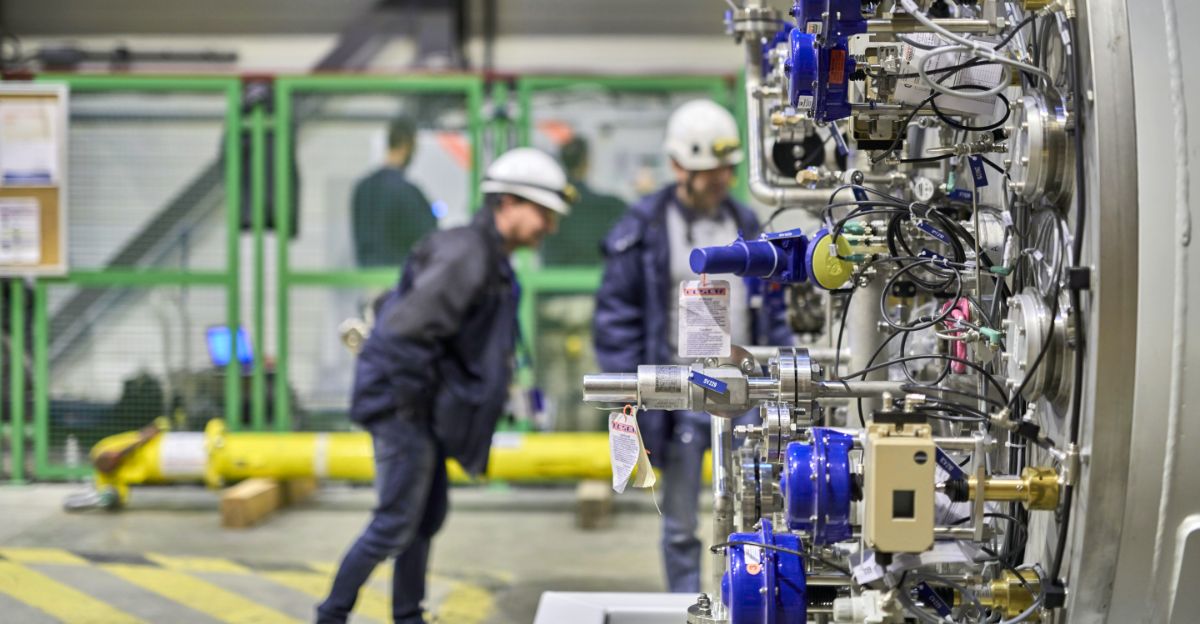
The record-breaking run represents a career highlight for hundreds of scientists and engineers at CERN and partner laboratories.
“It’s an emotional moment,” the LHC Engineer in Charge said on the achievement night.
Researchers praised the success as proof that years of upgrades, planning, and teamwork paid off, creating unity across the global scientific community.
Global Lens

The impact extends far beyond Europe. Researchers from the U.S., China, India, and over thirty countries collaborate on LHC experiments.
The massive data volume from record luminosity enables broader participation in analysis and enriches student involvement, technology transfer, and future discoveries.
“The world benefits from every collision,” one ATLAS physicist said.
Technology Transfer

Industry experts say that CERN’s advances regularly benefit the technology sector.
The LHC’s beam power and energy storage upgrades have improved superconducting materials, medical imaging, and big data processing.
The 2025 breakthrough has already inspired next-generation accelerator designs in national laboratories worldwide, demonstrating the collider’s broad influence on innovation.
Scientific Analysis
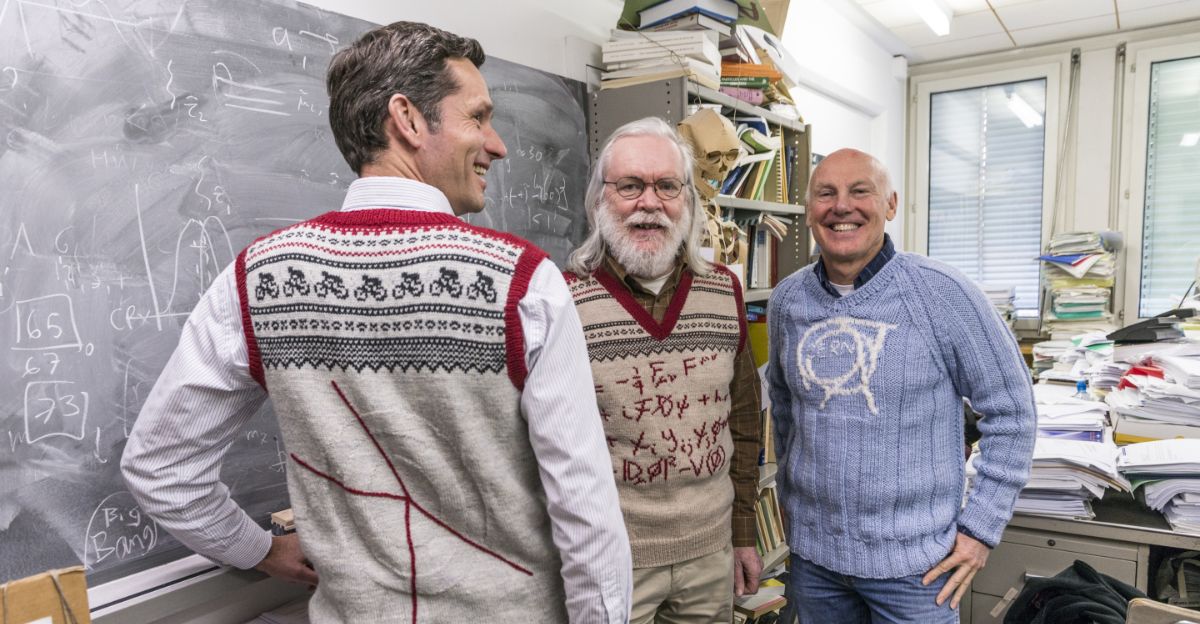
The unprecedented luminosity allowed physicists to gather more collision data in one year than the Tevatron had collected over decades.
This volume helps confirm rare particle processes and test predictions of the Standard Model.
The 2025 run will drive new analyses in Higgs physics, dark matter searches, and beyond-Standard Model theories for years ahead.
Controversial Nickname

Nobel laureate Leon Lederman coined the phrase “God particle,” which remains a controversial yet widely used term in the media.
CERN physicists rely on the Higgs boson’s discovery and mass measurement as critical benchmarks for the success of each proton run.
In 2025, the facility’s exceptional performance reinforced this iconic particle’s status in physics.
Technical Triumph
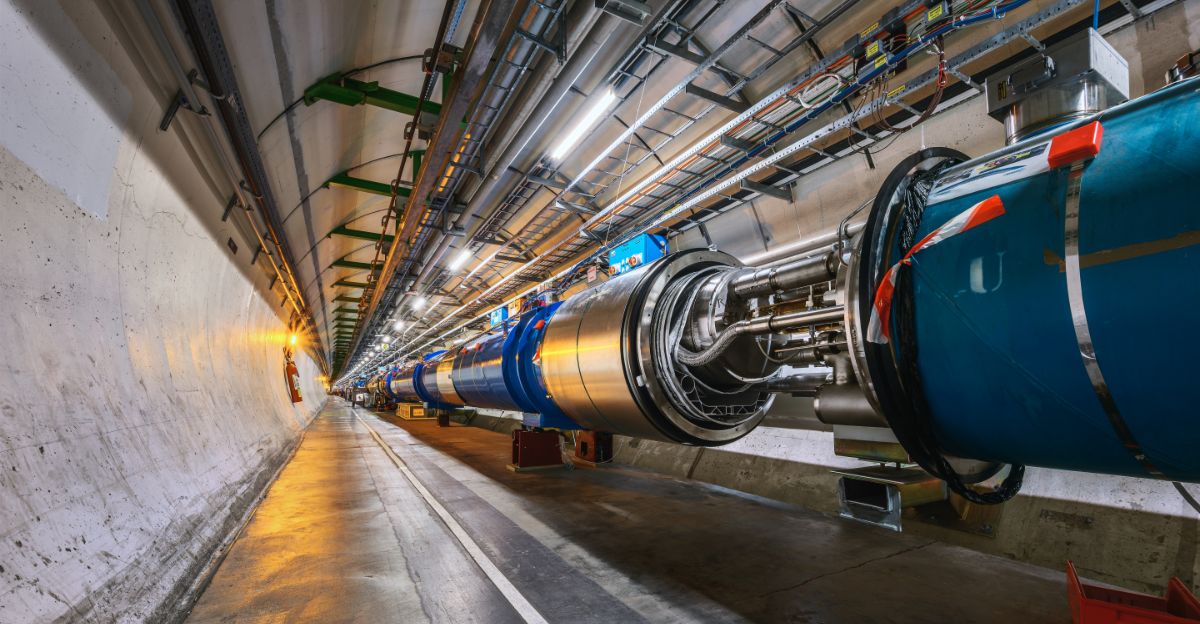
Achieving this record required major upgrades to the LHC’s magnets, injectors, and detectors during scheduled shutdowns.
The collider operated at an energy of 13.6 TeV, with 2,460 bunches per beam, storing 362 megajoules each.
This high-energy environment demanded precision maintenance and innovative solutions from global technical teams to reach peak performance.
Beam Dump
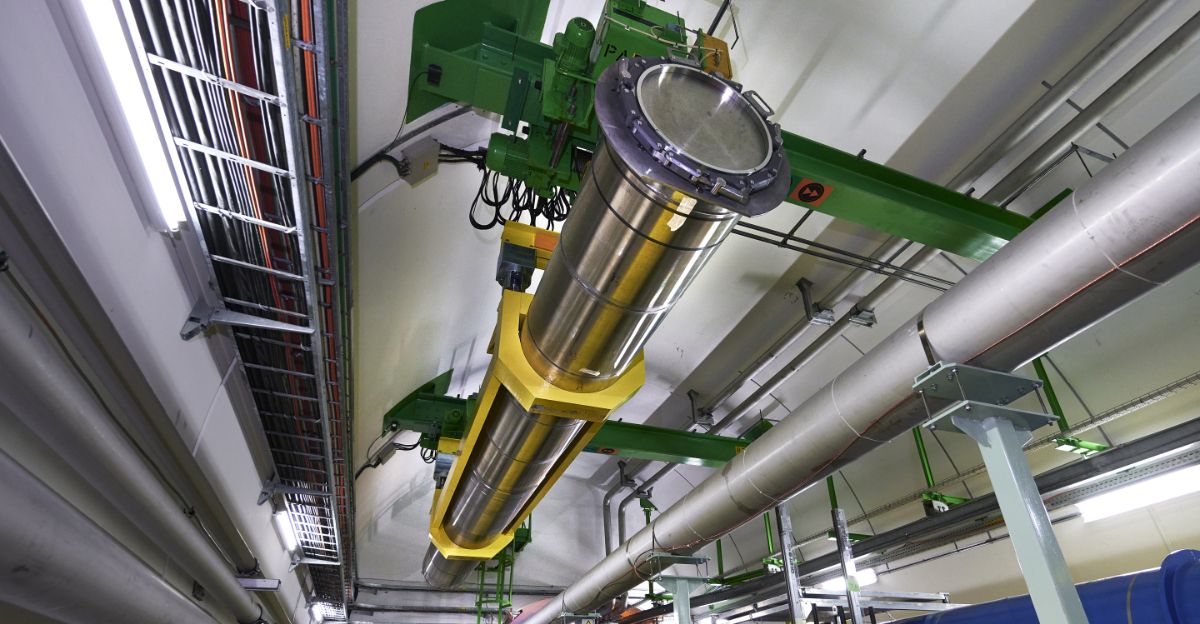
The 2025 proton run ended with a carefully controlled “beam dump” into graphite absorbers.
This process safely stops particle collisions and prevents equipment damage as the facility switches between experimental programs.
The November 4 beam dump marked a smooth transition to lead-ion physics operations, maintaining the facility’s operational schedule.
Next Steps
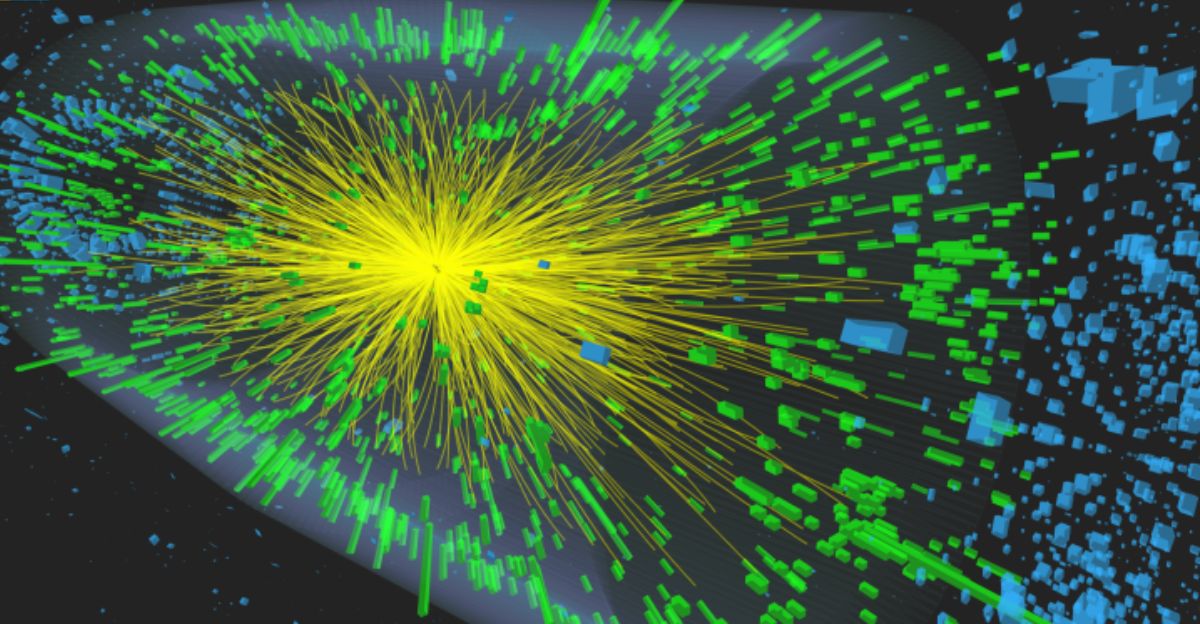
After the proton run, CERN immediately started its heavy-ion program.
These experiments utilize nuclei instead of protons, studying matter under extreme conditions similar to those found in the early universe.
The lead-ion campaign began on November 15, 2025, promising fresh insights into quantum chromodynamics and nuclear structure for researchers to analyze.
Shutdown Schedule
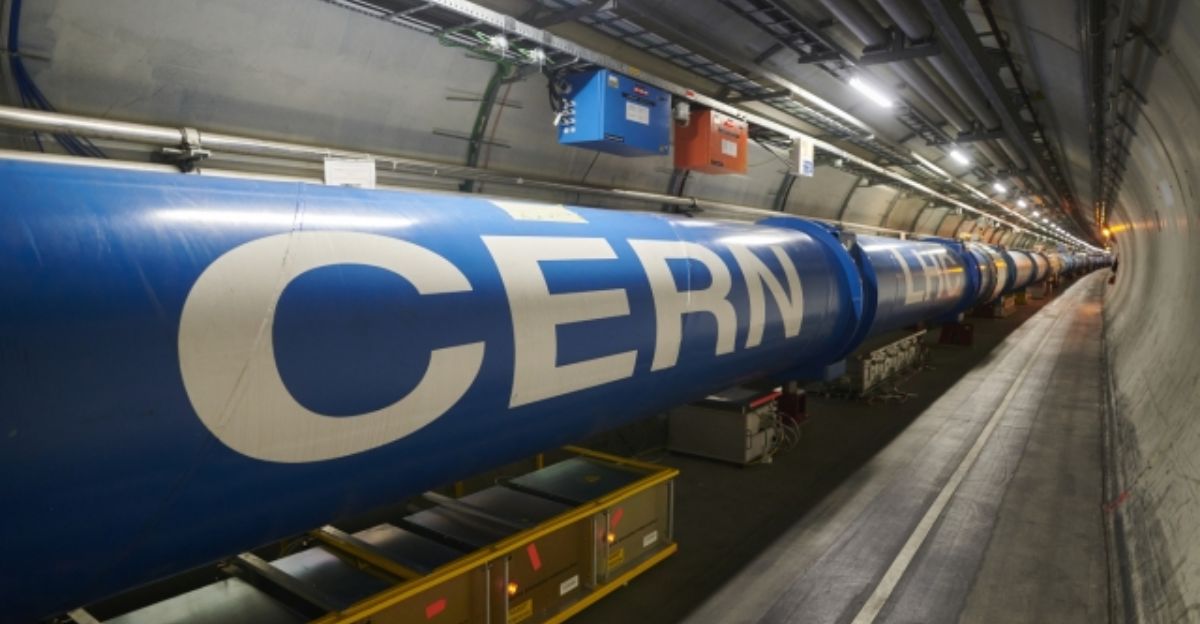
Researchers are preparing for “Long Shutdown 3,” scheduled to start in July 2026.
This multi-year pause allows systematic machine upgrades, detector refurbishments, and further research and development on future experiments.
The shutdown represents a normal part of the LHC’s operational cycle, ensuring CERN maintains continued global leadership in particle physics.
Looking Forward
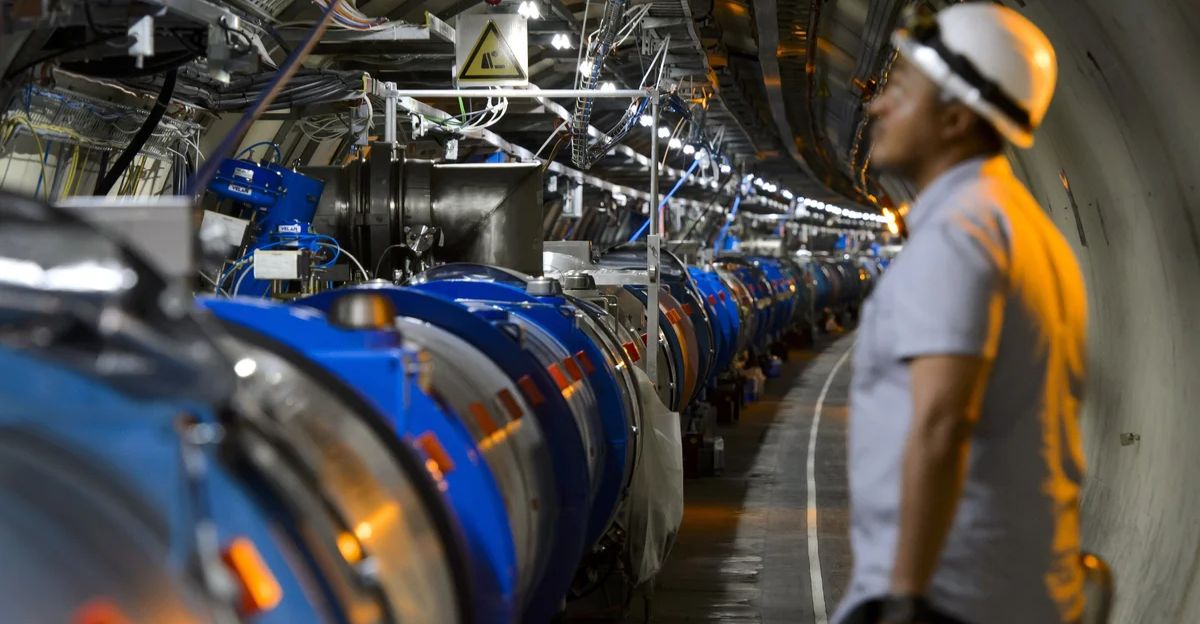
The flood of high-quality data from 2025 will feed research projects for years.
Physicists anticipate that analyses during the next shutdown may yield surprises, offering discovery opportunities and a deeper understanding.
Many scientists say the latest achievement represents only the beginning of a new era in particle physics.
Regulatory Oversight

Regulatory bodies will review the results for compliance with international safety and transparency standards.
New oversight hearings are scheduled to start in early 2026, focusing on data-sharing protocols and the environmental impacts of advanced collider operations.
This scrutiny may shape future upgrades and collaborative policies across participating nations.
Industry Relevance
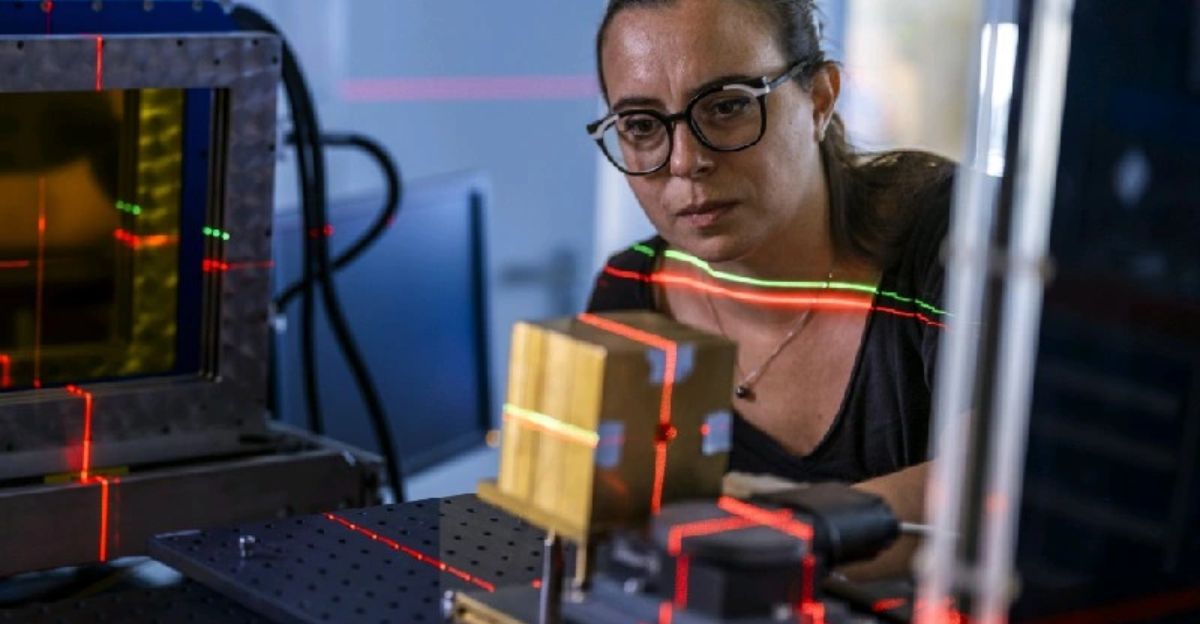
Parallel sectors—including space science, materials engineering, and quantum computing—closely monitor CERN’s progress.
Advances in high-energy beam control from the LHC already influence experimental designs in space propulsion and diagnostic technologies.
The world’s top laboratories leverage these insights to advance their own research capabilities.
Public Reaction

Public reaction to CERN’s record has been strong, but it also includes confusion. Viral claims about the “God particle” have flooded social media, prompting scientists to clarify that the nickname isn’t a religious assertion but refers to the particle’s fundamental role in physics. Experts stress the importance of accuracy and urge caution in interpreting online rumors.
Historical Comparisons
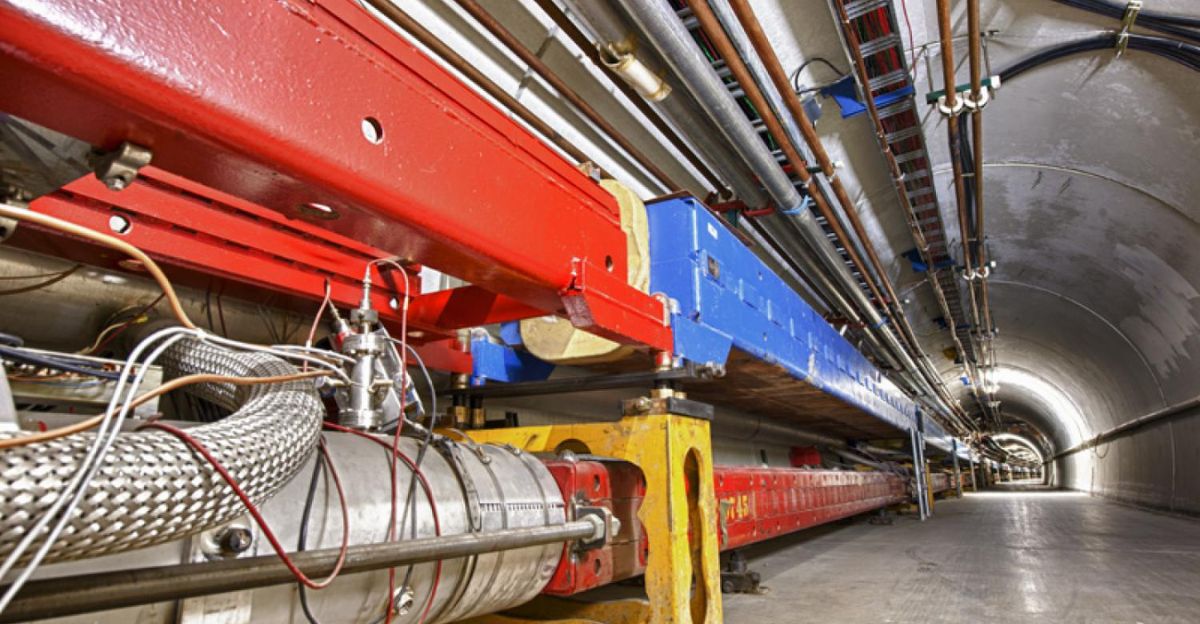
The LHC’s achievements contrast with those of older colliders, such as the Tevatron in the United States, which are facing decommissioning.
Past campaigns struggled with lower luminosity and more limited technology.
CERN’s ability to multiply output tenfold within one year signals an enduring legacy and sets the standard for future projects worldwide.
Collaborative Success
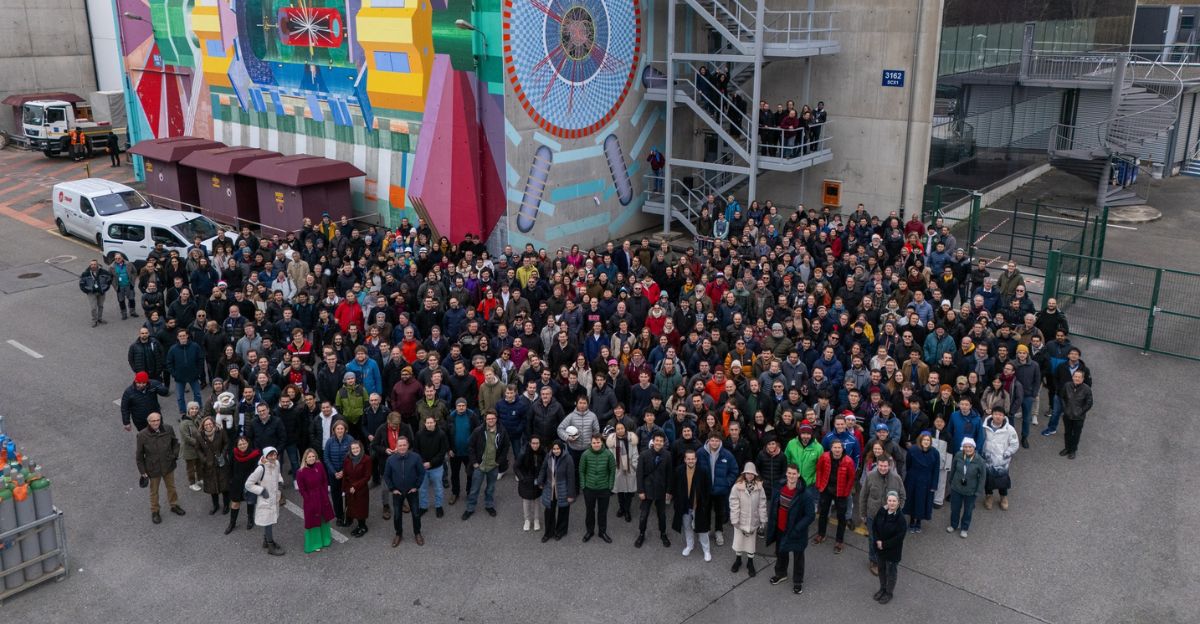
CERN’s record-setting 2025 demonstrates relentless innovation and effective international collaboration.
Decades of work culminated in a historic explosion of data powering the search for new physics.
As the community looks ahead to fresh discoveries, CERN’s achievements will remain a touchstone for progress in science and technology.