
On July 1, 2025, something remarkable zipped through our solar system, a mysterious object named 3I/ATLAS. Space experts quickly recognized it as an interstellar visitor, only the third one ever seen after ‘Oumuamua (2017) and 2I/Borisov (2019). This odd comet has become a hot topic for astronomers worldwide, sparking curiosity and debate.
Harvard’s Dr. Avi Loeb has highlighted 12 bizarre features that could mean 3I/ATLAS isn’t just a regular space rock. He believes it might even be an artificial spacecraft built by beings from outside our solar system. As astronomers look closer at 3I/ATLAS during its December 2025 flyby, the mystery deepens and we might be on the verge of learning something never seen before.
Dr. Avi Loeb, The Unconventional Thinker

Dr. Avi Loeb is a well-known astrophysicist from Harvard, unafraid to challenge mainstream ideas. In 2017, he suggested the first interstellar object, ‘Oumuamua, could be linked to advanced alien technology, a claim met with doubt by many scientists.
Now, Loeb is back with bold new claims about 3I/ATLAS. He urges researchers not to dismiss strange data too quickly. “Mainstream science is routinely wrong,” Loeb has asserted, encouraging others to rigorously question what we think we know. According to Loeb, that’s how real scientific progress happens.
Why 3I/ATLAS Is Unique

Unlike any regular asteroid or comet, 3I/ATLAS stands out as the third confirmed interstellar object. ‘Oumuamua, with its unusual pancake shape, got scientists buzzing, while 2I/Borisov seemed more like a normal comet.
But 3I/ATLAS is taking the excitement to new heights. Estimates suggest its core might be millions of times larger than ‘Oumuamua and acts in ways scientists have never seen before. All eyes are on its December 2025 close approach, hoping detailed observation will shed light on its origins.
Anomaly #1: Extreme Velocity
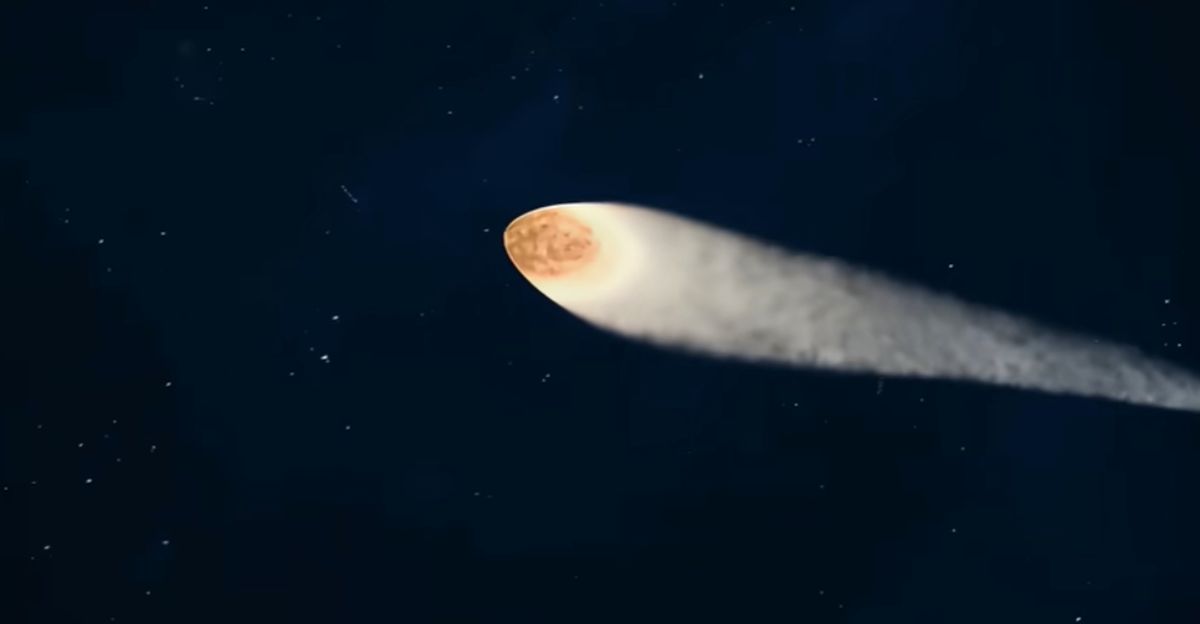
3I/ATLAS moves at a blinding speed, about 130,000 miles per hour, zooming past planets in our solar system. For comparison, that’s much faster than either ‘Oumuamua or 2I/Borisov. Such velocity not only confirms it’s from outside our solar system but also makes experts wonder.
Is its path random, or could it have been guided on purpose? The route it takes is so exact that astronomers find it hard to chalk it up to mere coincidence.
Anomaly #2: Minimal Water Content
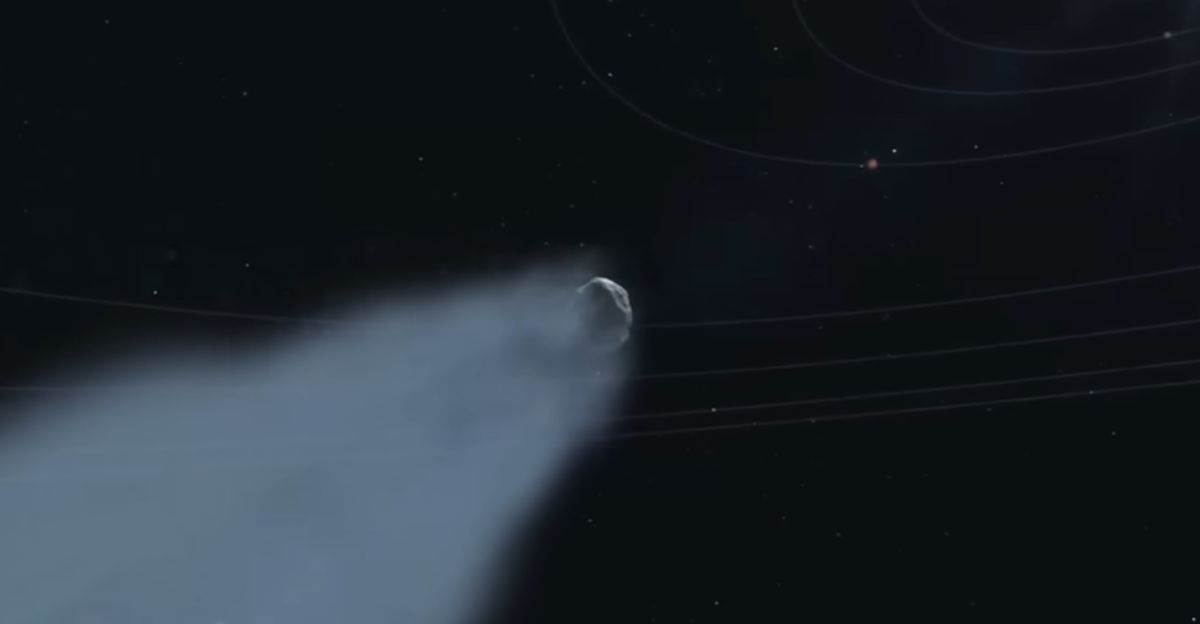
Most comets are famous for their icy makeup, brimming with water, sometimes more than 80% of the material found in their tails. Yet, 3I/ATLAS is different: only 4% of its plume is water.
Instead, it’s made mostly of carbon dioxide and carbon monoxide, giving it a distinct signature rarely found in comets. This chemical oddity prompts questions, was it formed in a strange environment, or is it not natural at all?.
Anomaly #3: Nickel-Dominant Gas Plume
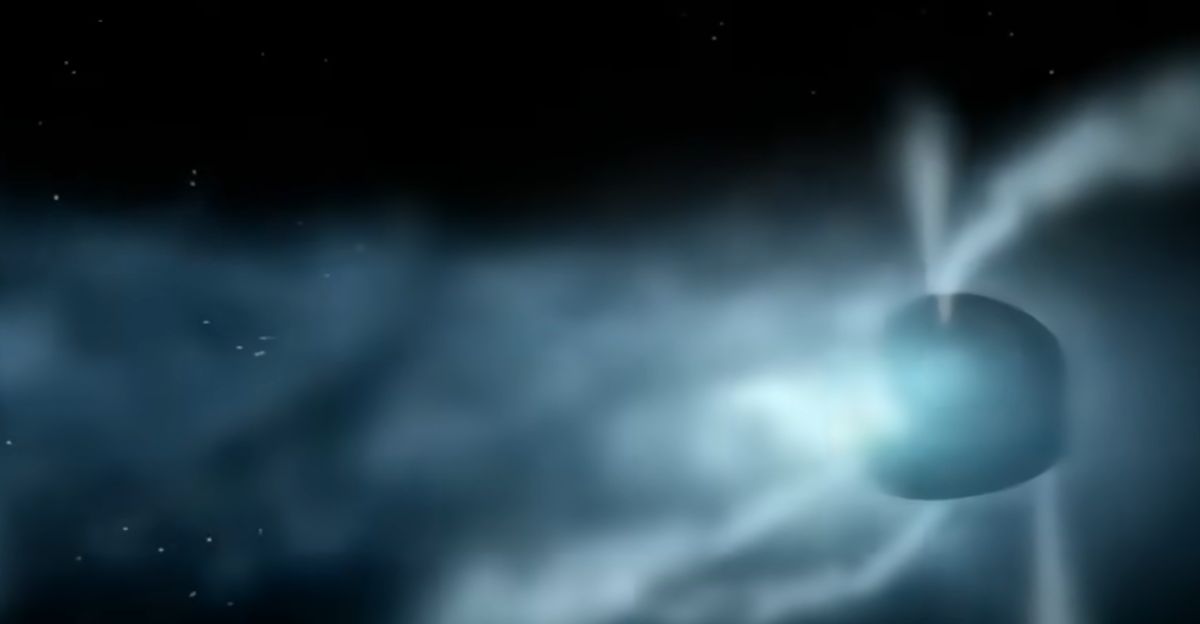
Scientists found nickel tetracarbonyl gas in 3I/ATLAS’s plume, a compound richer in nickel than iron. Normally, cosmic bodies contain way more iron than nickel. Nickel tetracarbonyl is even used in making things on Earth, but has never been seen naturally in comets.
Its presence is a puzzle because nickel usually doesn’t vaporize in cold space, but appears to be coming off the comet’s surface in active jets.
Anomaly #4: Wow Signal Connection
Back in 1977, astronomers caught a mysterious radio burst from space called the “Wow! Signal.” Loeb mapped 3I/ATLAS’s path and found it aligns surprisingly close to the spot where the signal came from, a chance of just 0.6%.
At the time of the signal, the object would have been about three light-days away. Is this just a cosmic coincidence, or could 3I/ATLAS’s journey be connected to that signal?.
Anomaly #5: Retrograde Ecliptic Alignment

While planets orbit in one direction around the Sun, 3I/ATLAS travels backwards, called retrograde motion, yet sticks closely to the flat plane where planets move.
Interstellar visitors could arrive from anywhere, so seeing this kind of alignment is incredibly rare. Astronomers say the odds are less than 0.2%. Was this route chosen deliberately? It’s a question scientists keep asking.
Anomaly #6: Precise Planetary Navigation
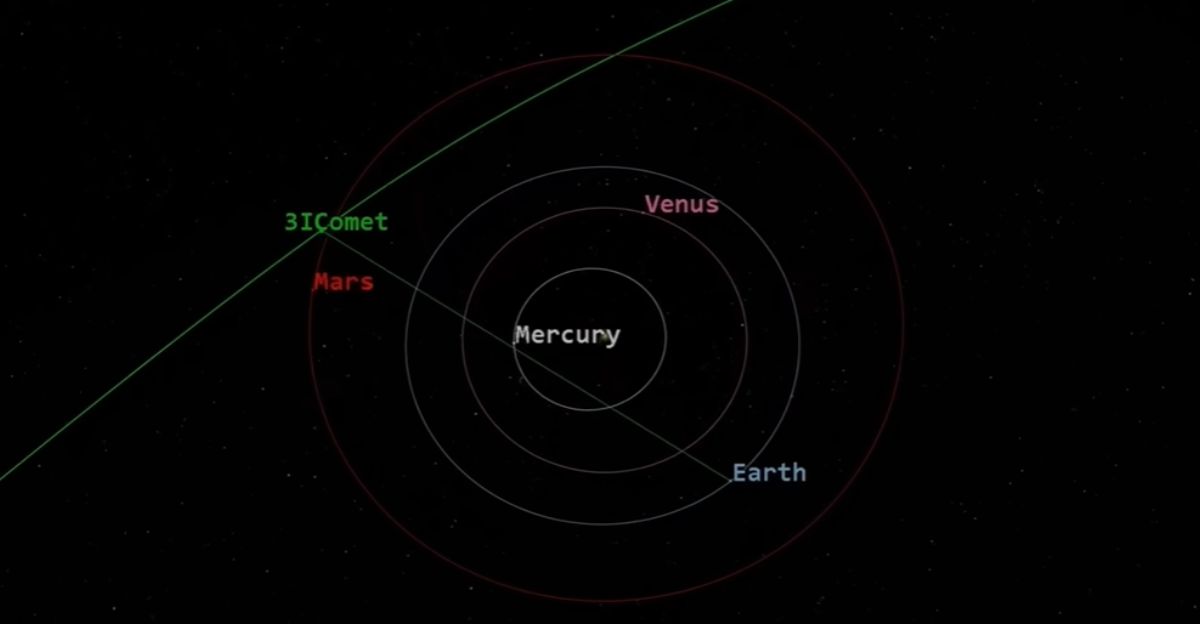
As 3I/ATLAS zips through space, its path brings it oddly close to Mars, Venus, and Jupiter. This tightly woven route across our solar system isn’t normal for interstellar objects, which would just pass through on a straight line.
The comet’s behavior feels almost choreographed, as if it’s conducting a cosmic survey of our planetary neighbors. Loeb suggests it might be conducting a reconnaissance mission.
Anomaly #7: Unprecedented Size
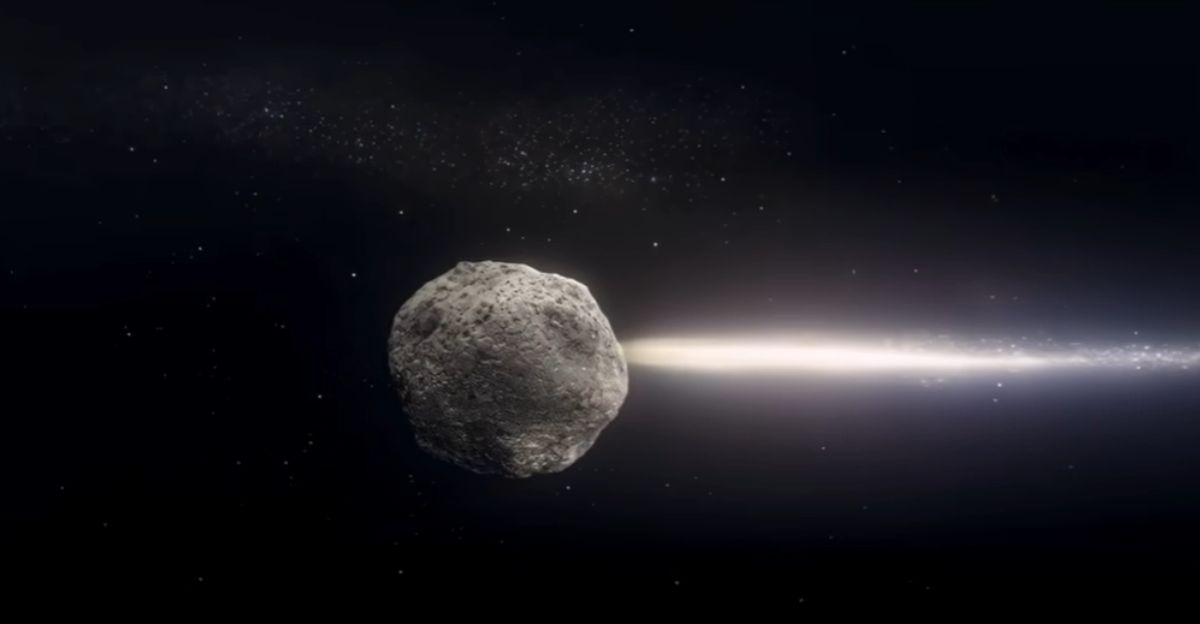
Estimates say 3I/ATLAS could be several kilometers wide, making it the largest interstellar object ever seen. That’s far bigger than ‘Oumuamua and 2I/Borisov.
It’s not just size that matters, the energy of such a fast-moving, massive object is staggering. If it’s natural, it’s an extremely rare phenomenon. And if it’s something else, its scale could mean it was designed for a purpose.
Anomaly #8: Forward-Pointing Jet
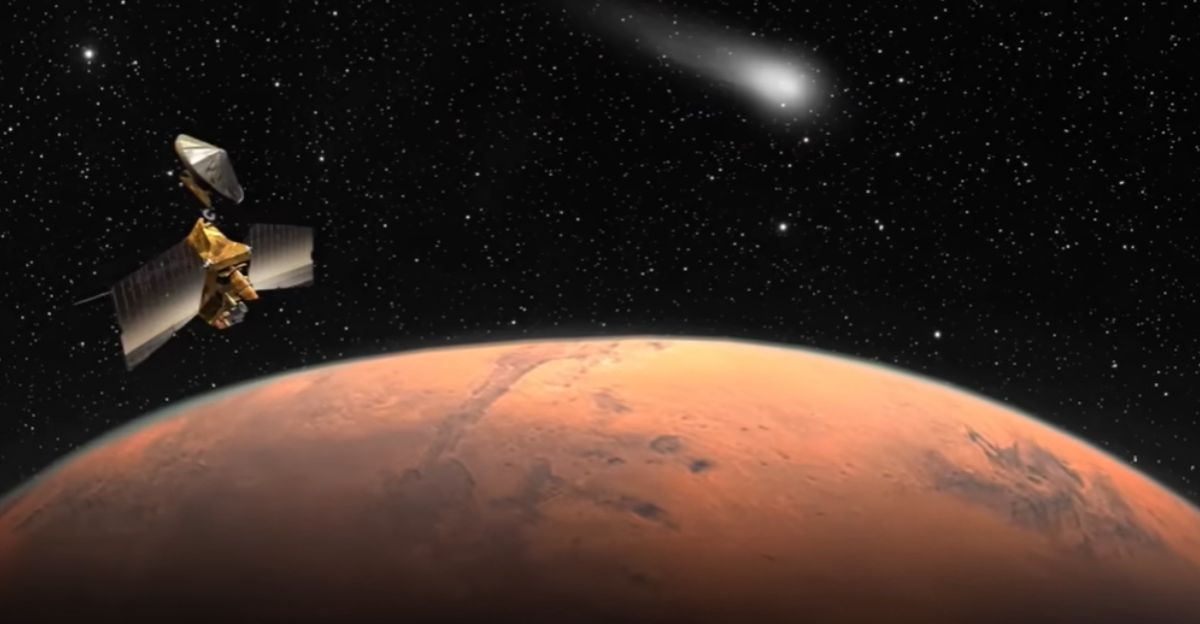
Normally, comet tails point away from the Sun. But 3I/ATLAS has a strange jet that points towards it, a real head-scratcher. While some comets can briefly show this anti-tail effect, 3I/ATLAS’s sunward plume looks persistent and doesn’t match what scientists expect.
After swinging by the Sun, observers saw at least seven different jets blasting from its surface, creating a peculiar and complex pattern.
Anomaly #9: Unusual Blue Coloration
When 3I/ATLAS got closest to the Sun, it turned bright blue, much bluer than the Sun itself, and got suddenly brighter. Most comets reflect sunlight and usually look white or red, so this shift is very unusual.
Scientists think this blue color and the comet’s odd brightening could mean its surface is made from unique materials or it reflects light in an unexpected way.
Anomaly #10: Missing Cometary Tail

Using powerful telescopes, experts saw no sign of a dusty tail at perihelion (when the comet was nearest to the Sun). Normally, comets that pass close to the Sun sprout vivid tails as ice turns to gas and dust spews into space.
The absence of this feature is surprising and makes 3I/ATLAS behave less like any comet seen before. Instead of a fuzzy cloud, it shows up as a compact pinpoint of light.
Anomaly #11: Course Correction
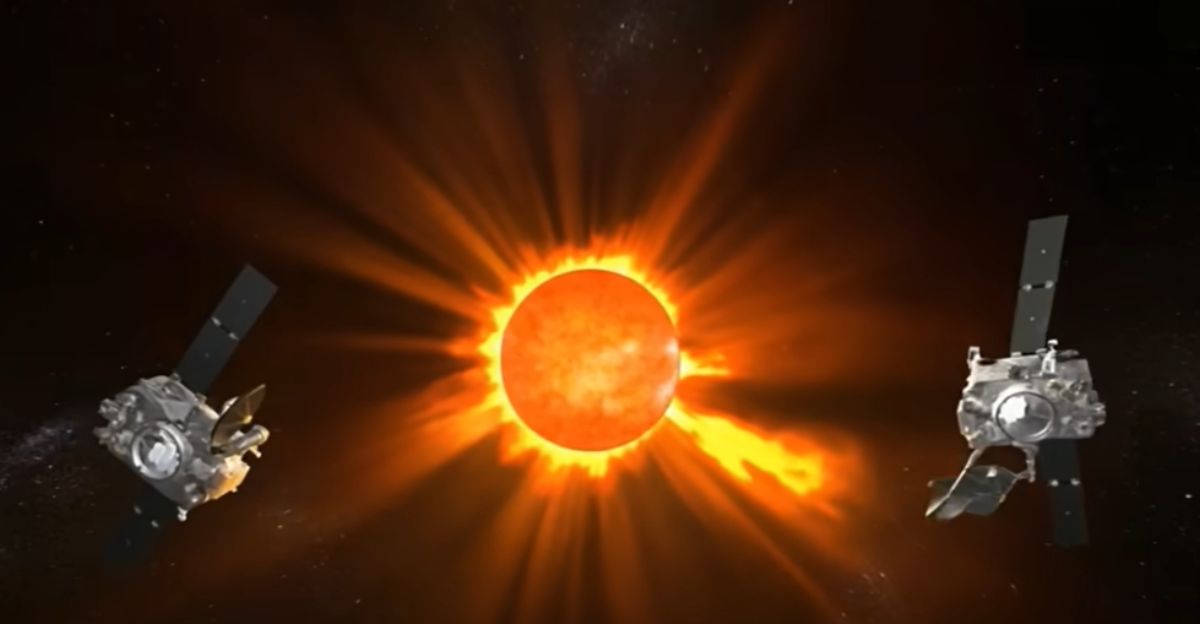
Researchers noticed 3I/ATLAS changed speed and direction slightly when near the Sun. Outgassing could cause this, but the changes were so precise that it looked almost like a planned maneuver.
Its closest approach lined up perfectly with Jupiter’s gravitational zone. Such accuracy makes experts wonder if something was steering it for observation or data collection.
Anomaly #12: Abnormal Light Polarization
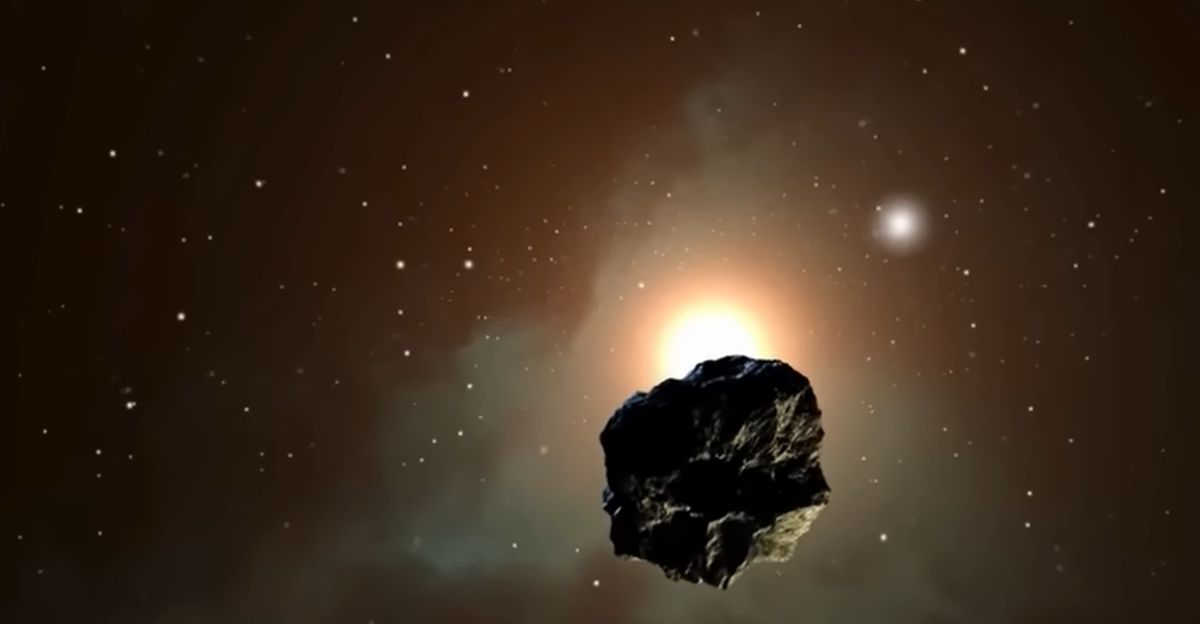
Polarization studies, how the comet scatters sunlight, showed totally unexpected results. The unique pattern of polarized light doesn’t match any known comet or asteroid.
This may mean the object has a surface or atmosphere made from materials not seen in our solar system, adding to the evidence that this is no ordinary rock.
The Science Community Responds

Dr. Loeb’s ideas have met lots of pushback from other scientists. Most say that while 3I/ATLAS’s oddities are worth studying, natural origins are still more likely.
NASA and others stress that unusual features could just be from a rare birth environment and that extraordinary claims need extraordinary proof.
December 2025, The Big Moment

On December 19, 2025, 3I/ATLAS will breeze by Earth at a safe distance, about 270 million kilometers away. This close pass gives astronomers a perfect chance to collect data and answer big questions.
Dr. Loeb believes, “We should know the answer by the time 3I/ATLAS is closest to Earth,” and calls it a gift of new interstellar knowledge for the holidays. All over the world, observatories will watch its final orbit and search for clues.
Why Is It Important?

Proving 3I/ATLAS is artificial would be world-changing, solid proof that life and technology exist beyond Earth. Dr. Loeb insists, “It’s something we should all know about. It would change everything.”
Even if it turns out to be natural, the comet will still teach us a lot about how space objects form and behave.
Open Minds, Careful Eyes
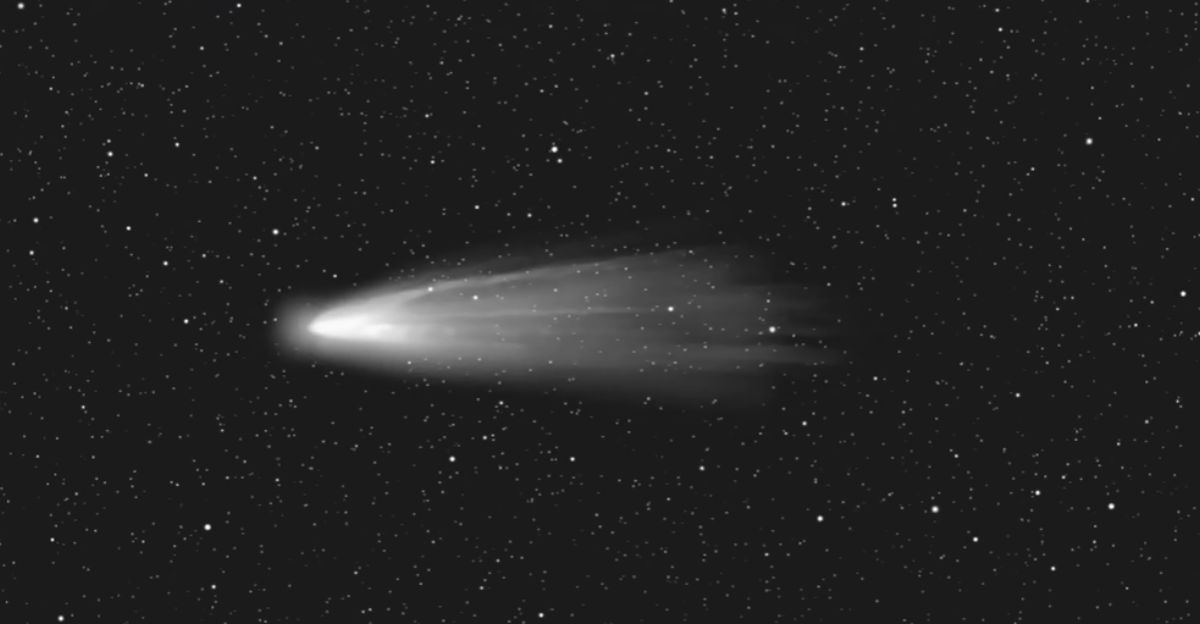
The debate around 3I/ATLAS shows how important it is for scientists to remain open to surprise and careful with evidence. Whether a comet or spaceship, everyone agrees it deserves close study before anyone jumps to conclusions.
Awaiting Discovery
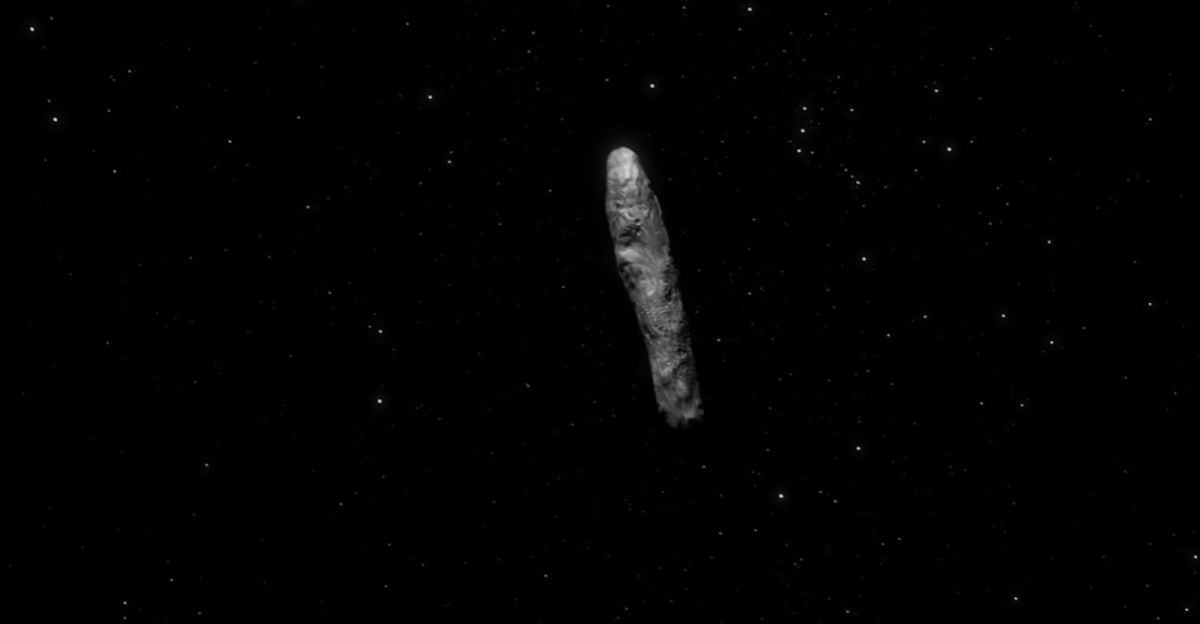
As hundreds of millions of people watch the skies with wonder, the world waits to see what secrets 3I/ATLAS will reveal. Whether it’s a quirky comet or something more, its journey through our solar system is a reminder that in space, the possibilities are truly endless. December 2025 promises to unveil more answers, and perhaps new mysteries as well.