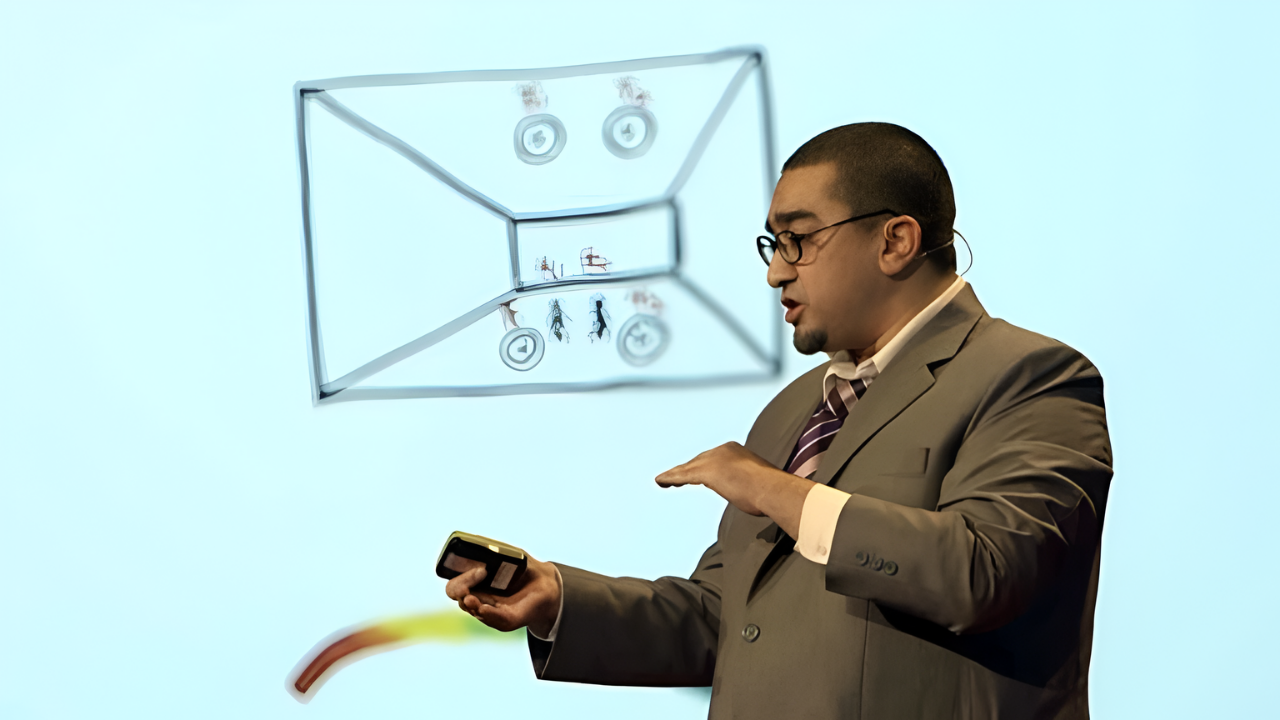
A team of international physicists has delivered a striking challenge to one of the most provocative ideas in modern science: the notion that our universe might be a computer simulation. Their research, led by Dr. Mir Faizal, an Adjunct Professor at UBC Okanagan’s Irving K. Barber Faculty of Science, asserts that the universe operates on principles fundamentally beyond the reach of computation.
This upends decades of speculation and debate over the nature of reality. According to Dr. Faizal, the findings suggest that reality “cannot be described by a computational theory of quantum gravity.” Here’s what’s happening as this research reshapes our understanding of the universe.
The Scientists Behind the Breakthrough

The study represents a collaboration among leading figures in theoretical physics and cosmology. Dr. Mir Faizal collaborated with Dr. Lawrence M. Krauss, Dr. Arshid Shabir, and Dr. Francesco Marino, leveraging their expertise in quantum mechanics, string theory, and quantum gravity. Institutions across Canada, Italy, and the United States contributed, including the Canadian Quantum Research Center, the Origins Project Foundation, and Italy’s National Institute of Optics (CNR-INO).
Published in the Journal of Holography Applications in Physics this year and available on arXiv, the research is already sparking discussion in scientific circles. The collaboration brings together rigorous theoretical work and practical applications, offering a new lens through which to examine long-standing questions about the nature of reality.
Mathematical Proof Against Simulation
At the heart of the team’s claim is a rigorous mathematical argument. The researchers contend that any simulation must be algorithmic, following a set of programmed rules. Yet they argue that the universe operates on non-algorithmic principles, making full computational simulation impossible. Their proof relies on three foundational theorems: Gödel’s incompleteness theorem, Tarski’s undefinability theorem, and Chaitin’s information-theoretic incompleteness.
According to the team: “Consider the statement, ‘This true statement is not provable.’ If it were provable, it would be false, making logic inconsistent. If it’s not provable, then it is true, but that makes any system trying to prove it incomplete. Either way, pure computation fails.” These “Gödelian truths” illustrate phenomena that exist yet cannot be computed.
Implications for Technology and Science

The findings have far-reaching consequences for technology and science. Companies such as IBM, Google, and Microsoft have invested heavily in AI and quantum computing, with the goal of simulating aspects of reality. The global AI market is projected to reach $294 billion by end 2025 and potentially $1.77 trillion by 2032, while the quantum computing market is valued at $3.52 billion.
If the universe cannot be simulated, creating perfect digital replicas of reality faces fundamental mathematical barriers. This could prompt technology leaders and governments to reconsider strategies for AI development, scientific modeling, and virtual reality, where the assumption of a computable universe has long guided research and investment.
Philosophical and Scientific Stakes
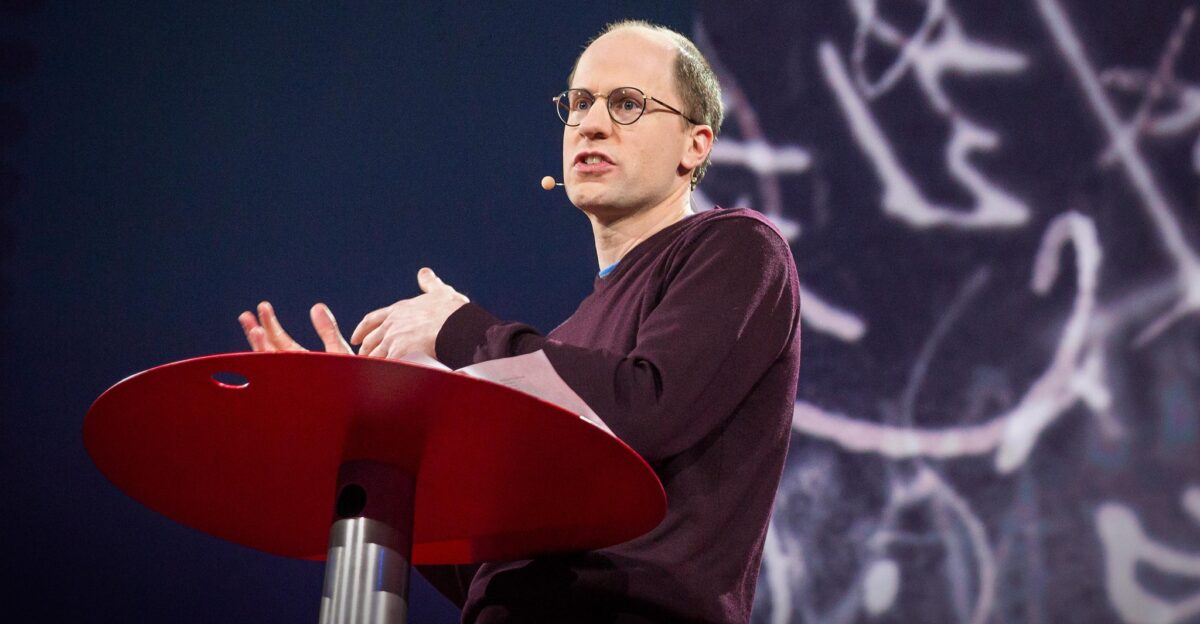
The study directly addresses the “simulation hypothesis,” popularized by philosopher Nick Bostrom in 2003 and echoed by figures like Elon Musk. Bostrom suggested that advanced civilizations could create simulations indistinguishable from reality, making it likely we are in one. Dr. Faizal and colleagues counter that the universe’s non-algorithmic foundation makes such simulations impossible, even recursively.
As Dr. Lawrence M. Krauss notes: “The fundamental laws of physics cannot be contained within space and time, because they generate them. A complete and consistent description of reality requires something deeper—a form of understanding known as non-algorithmic understanding.” This challenges the pursuit of purely computational “theories of everything.”
Debate and Future Directions
The research shifts the simulation hypothesis from philosophy to formal mathematics and physics, establishing clear logical barriers to fully computational models. Critics question whether applying Gödel’s theorems to physical reality is fully valid, but the team argues that their framework addresses these concerns within quantum gravity.
Further exploration of quantum gravity models will be crucial to verify or refine these findings. The study represents a major contribution to foundational physics, with implications for technology, science, and humanity’s understanding of existence. As the dialogue continues, these insights highlight the profound complexity of the universe.
Rethinking Reality
This research fundamentally challenges the idea that reality can be replicated by computation. By demonstrating the limits of algorithmic simulation, the study reshapes both scientific and philosophical discussions about the universe. Technologies relying on complete simulations, including AI, virtual reality, and quantum computing, may face inherent boundaries.
The findings also highlight a broader lesson: understanding reality requires approaches beyond computation alone. As Dr. Faizal emphasizes, “no physically complete and consistent theory of everything can be derived from computation alone.” For scientists, technologists, and philosophers, this discovery invites deeper exploration into the non-algorithmic foundations of existence and the true nature of the cosmos.