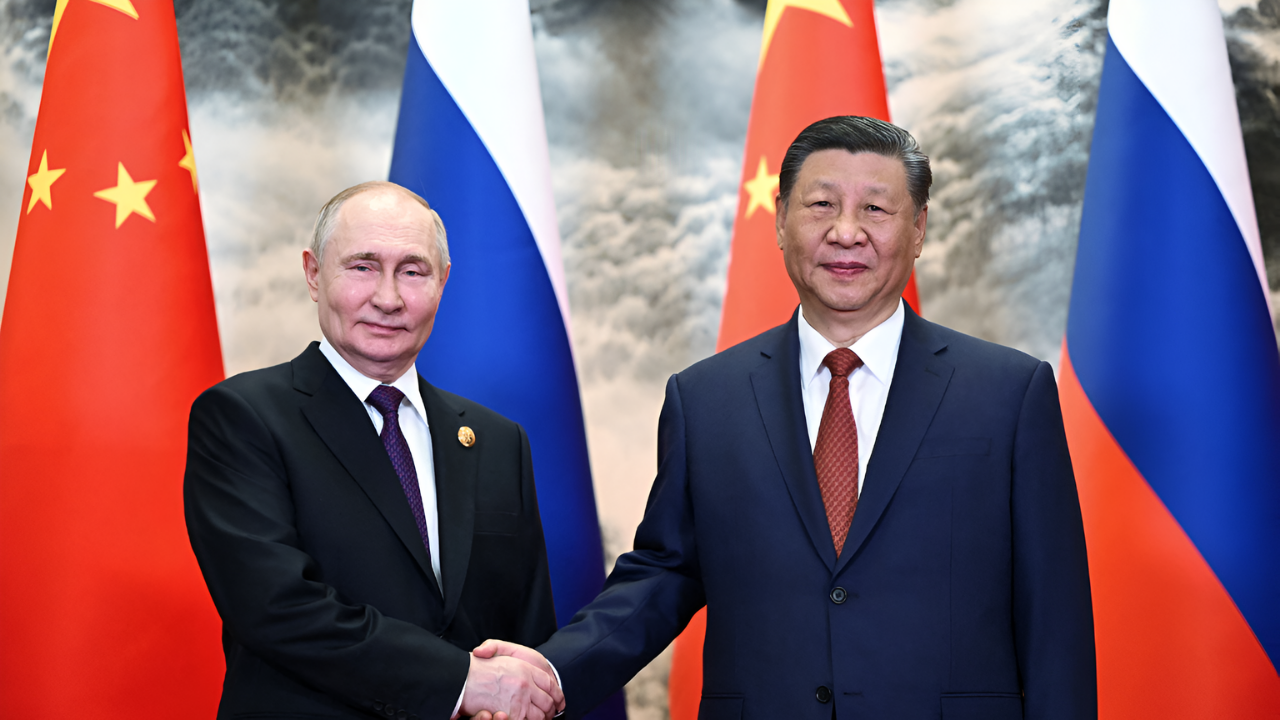
A secret trove of leaked documents has exposed a deepening military partnership between Russia and China, revealing Moscow’s direct role in arming and training Chinese forces for potential operations against Taiwan. The cache, totaling approximately 800 classified pages and authenticated by the Royal United Services Institute (RUSI), details a sweeping transfer of advanced Russian airborne equipment, technology, and expertise to China—marking a pivotal shift in the balance of power in East Asia.
A New Axis of Military Cooperation
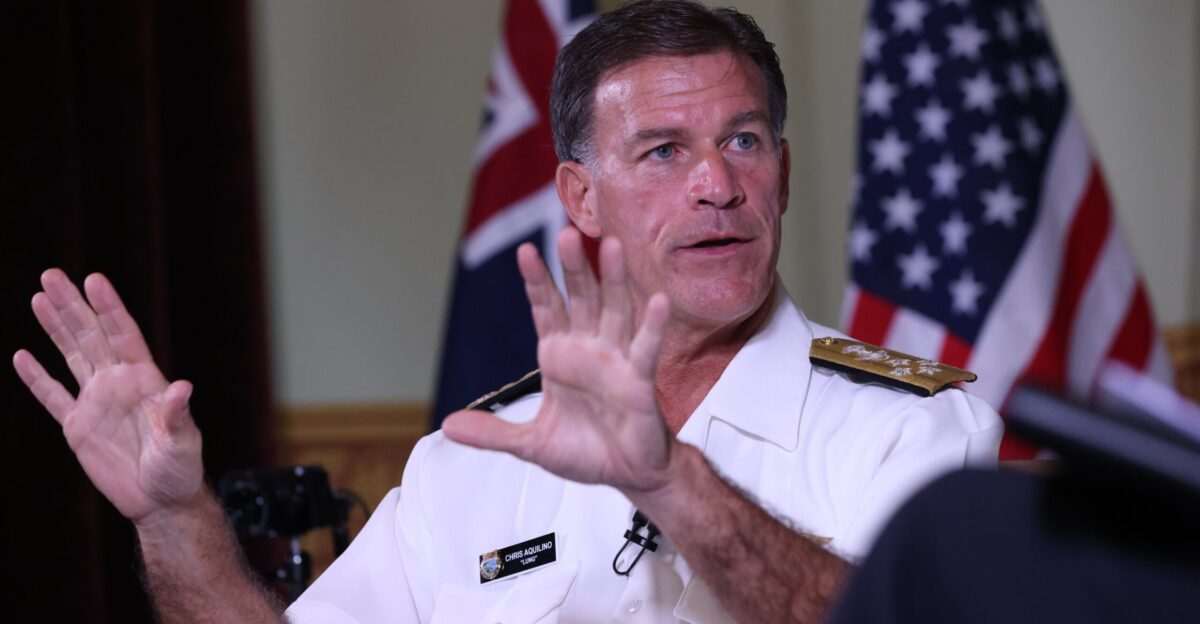
The documents, obtained by the Black Moon hacktivist group and verified in late September 2025, outline a formal agreement signed in 2023 for Russia to supply China with a complete airborne battalion package. The agreement includes 37 BMD-4M amphibious assault vehicles, 11 Sprut-SDM1 anti-tank guns, 11 BTR-MDM armored personnel carriers, command vehicles, drone systems, and specialized parachute equipment. Russia is also providing access to its combat experience in airborne operations—a domain where China has historically lagged. Russian instructors are actively training Chinese paratroopers in tactics, fire control, and operational coordination.
Leap in Airborne Firepower
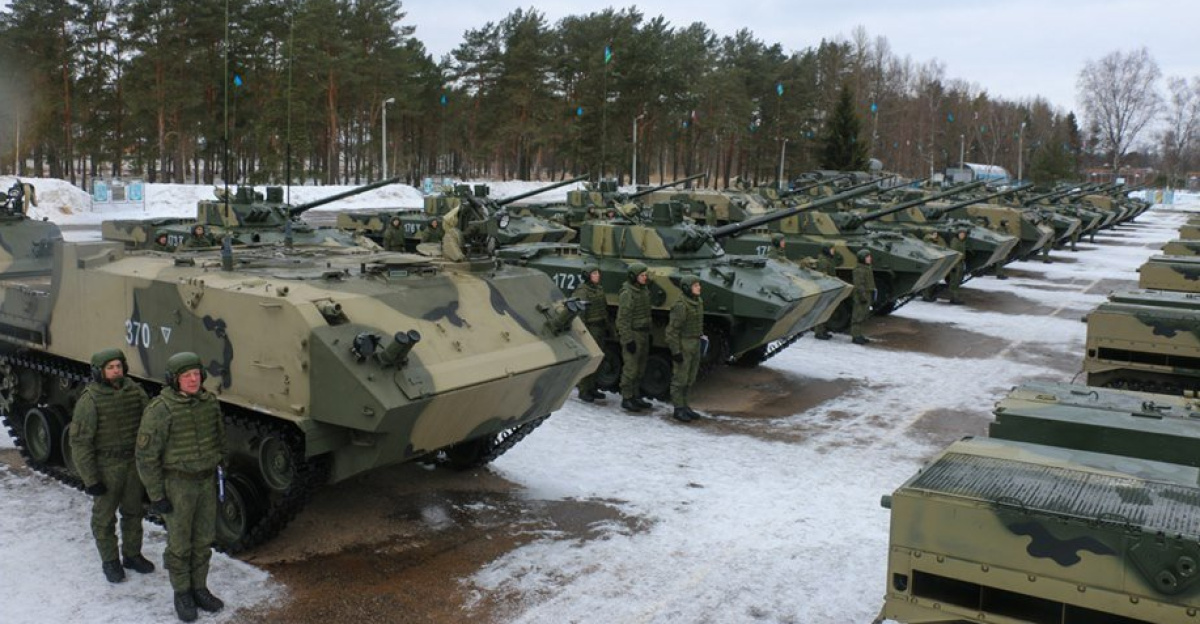
At the heart of the agreement are the BMD-4M vehicles, designed to be airdropped directly onto target zones using advanced parachute systems. Each vehicle is equipped with a 100mm gun and a 30mm cannon, offering Chinese airborne troops a level of firepower previously unavailable to them. The addition of Sprut-SDM1 anti-tank guns, armed with 125mm cannons, further enhances the battalion’s ability to counter armored threats on the ground.
This technological leap is intended to give China’s airborne forces the means to seize and hold key terrain rapidly—particularly open areas near Taiwan’s ports and airfields. According to RUSI’s analysis, the capacity to airdrop armored vehicles onto golf courses or other areas of open and firm ground near Taiwan’s ports and airfields could allow air assault troops to capture critical infrastructure before defenders can fully mobilize, clearing the way for follow-on invasion forces.
Training and Technology Transfer
The agreements specify a comprehensive training program spanning both Russia and China. Chinese drivers are trained at the Kurganmashzavod base in Russia, while crews of command and observation vehicles and anti-tank guns receive training in Penza. After simulator instruction, full battalion-level exercises are conducted on Chinese soil with Russian instructors overseeing operations.
The agreement includes the transfer of technology and the establishment of a centre for technical maintenance and repair of Russian equipment in China. This enables Beijing to undertake production and modernization of these capabilities in the future and ensures long-term independence from Russian supply chains.
Strategic Implications for Taiwan and Beyond
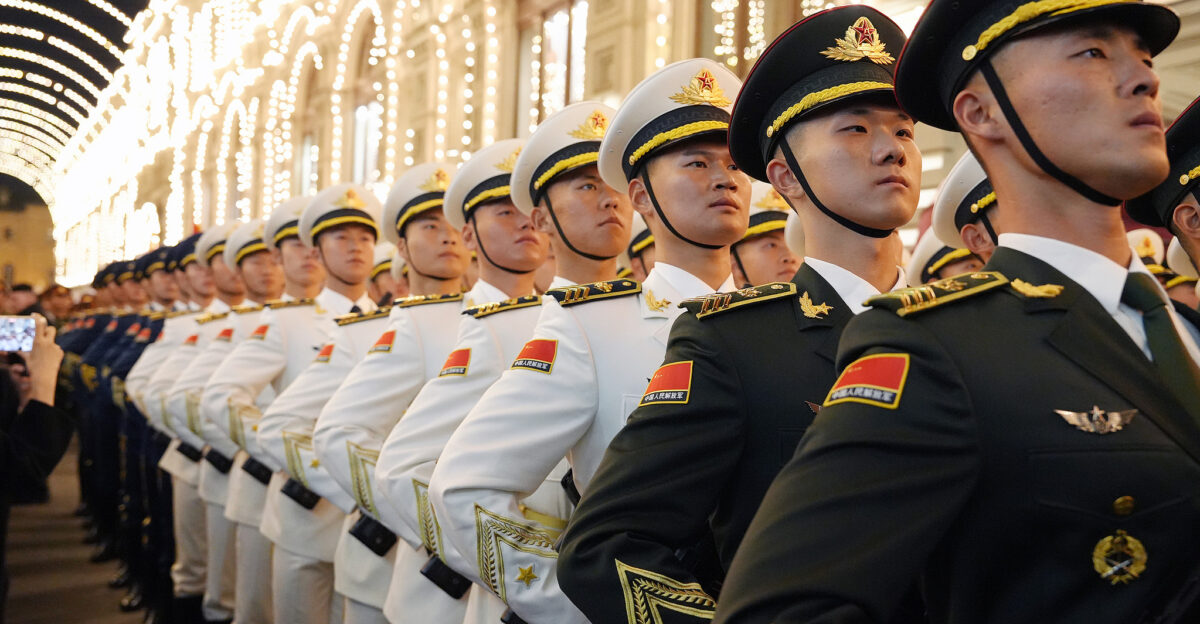
The operational concept emerging from these documents is clear: Chinese airborne forces, equipped with Russian vehicles and trained in Russian tactics, would aim to seize Taiwan’s ports and airfields in the opening hours of a conflict. By landing on open terrain and quickly capturing key infrastructure, China could establish secure footholds for additional invasion forces, making rapid defensive response by Taiwan exponentially more difficult.
Military analysts note that Taiwan’s geography—limited suitable beaches for amphibious landings and a population of 23 million—makes airborne operations an attractive alternative for Beijing. Speed and surprise would be China’s main advantages, with the goal of overwhelming defenses before they can be organized.
The agreements also provide for the transfer of special-purpose parachute systems and training of Chinese special forces groups to penetrate other territories without being noticed, offering offensive options against Taiwan, the Philippines, and other island states in the region. The expanded air maneuver capacity gives China new options for rapid power projection across contested areas.
A Calculated Shift in Russian Policy
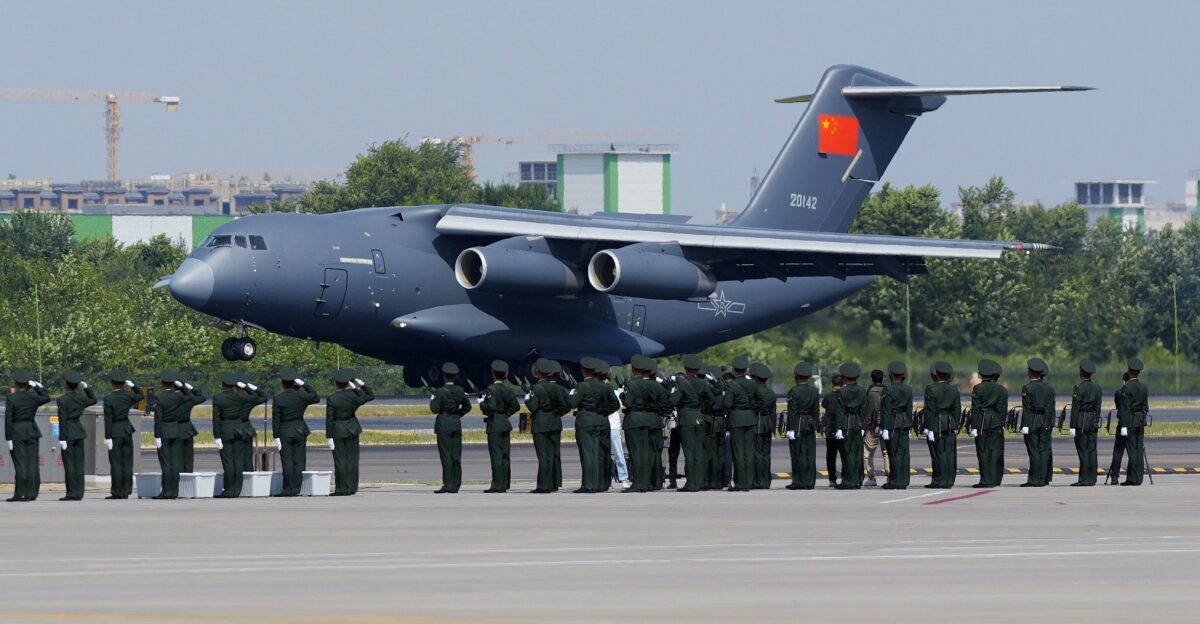
Historically, Russia has been wary of exporting its areas of military-technical advantage to China out of fears of intellectual property theft. The current agreement marks a significant policy reversal, driven by Moscow’s desire to cement a long-term strategic partnership with Beijing. By supplying critical military capabilities and enabling local production, Russia aims to foster deeper defense collaboration and align both nations’ interests against Western influence in Asia.
Looking Ahead
As the 2027 timeline for Chinese military readiness approaches—a date aligned with President Xi Jinping’s directive to the PLA to prepare for potential Taiwan operations—the stakes for regional security are rising. The leaked documents confirm that Russia is actively assisting China in preparing advanced military capabilities, though the ultimate decision to use them remains uncertain and subject to broader geopolitical developments.
The revelations underscore a new era of military-industrial cooperation between Moscow and Beijing, one that could reshape the strategic landscape of the Asia-Pacific for years to come.