
An accidental frequency scan by a Canadian amateur astronomer in October 2025 revealed what government agencies and SpaceX had never disclosed: nearly 170 classified U.S. spy satellites were transmitting powerful radio signals using frequencies reserved for the opposite direction—potentially interfering with NASA, NOAA, and weather satellites worldwide.
The $1.8 billion Starshield constellation, built by SpaceX under a secret contract with the National Reconnaissance Office of America, has been operating in violation of international radio regulations. Scott Tilley’s discovery, published October 17, 2025, reveals no public coordination with the International Telecommunication Union.
Identifying the Source: Starshield Satellites
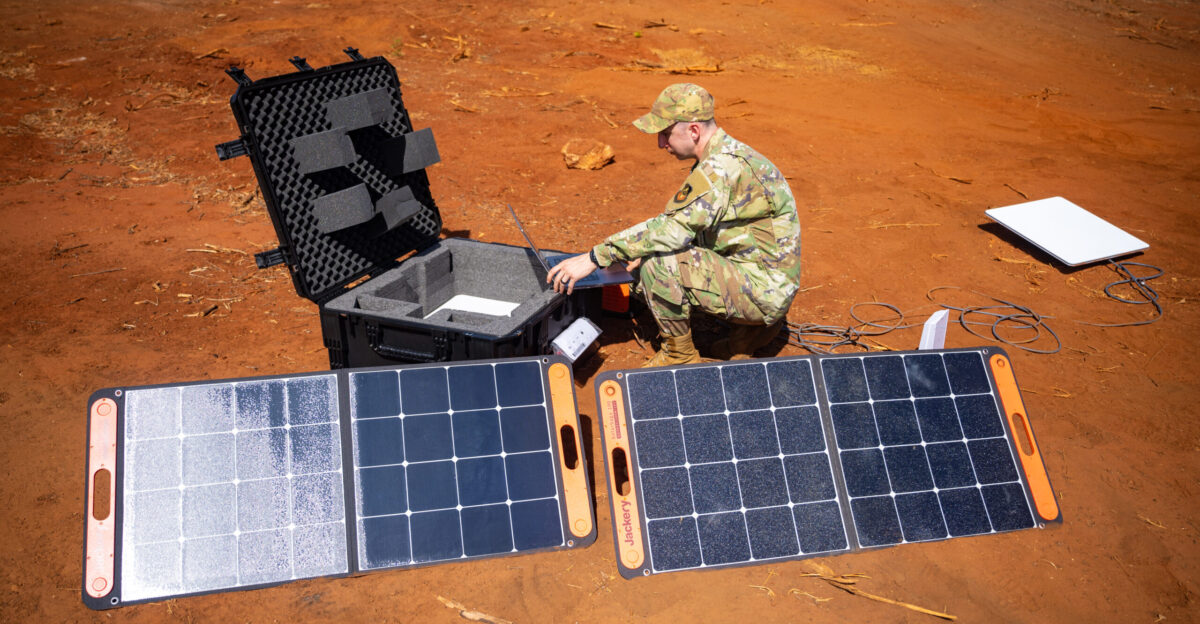
After recording the mysterious signals, Tilley cross-referenced his observations with databases maintained by fellow amateur astronomers worldwide. The results revealed an unexpected culprit: Starshield, a classified satellite constellation built by SpaceX and operated by U.S. government intelligence agencies.
Through careful analysis, matching Doppler shifts to known orbital data, Tilley confirmed that approximately 170 out of 193 catalogued Starshield satellites were transmitting these signals.
What Is Starshield?
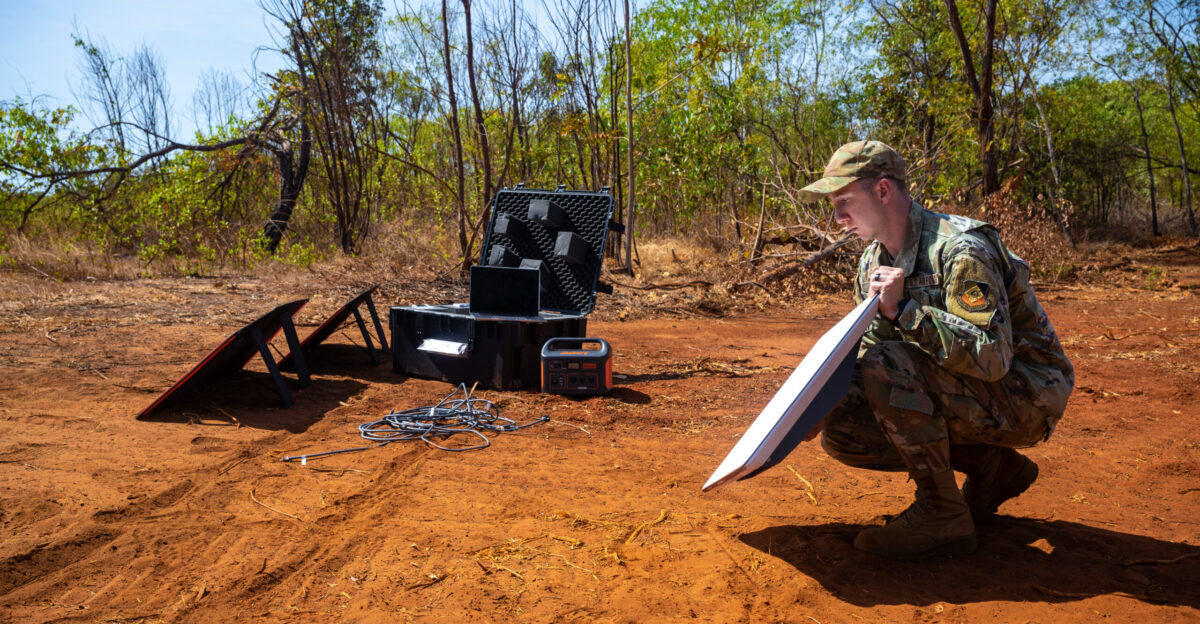
Starshield represents a secretive government offshoot of SpaceX’s commercial Starlink broadband internet constellation, specifically designed for U.S. national security purposes.
The program was officially announced in 2023; however, very little public information is available about its capabilities or mission parameters. Unlike the civilian Starlink network that provides high-speed internet, Starshield supports military Earth observation and classified communications for U.S. intelligence agencies.
The $1.8 Billion Government Contract
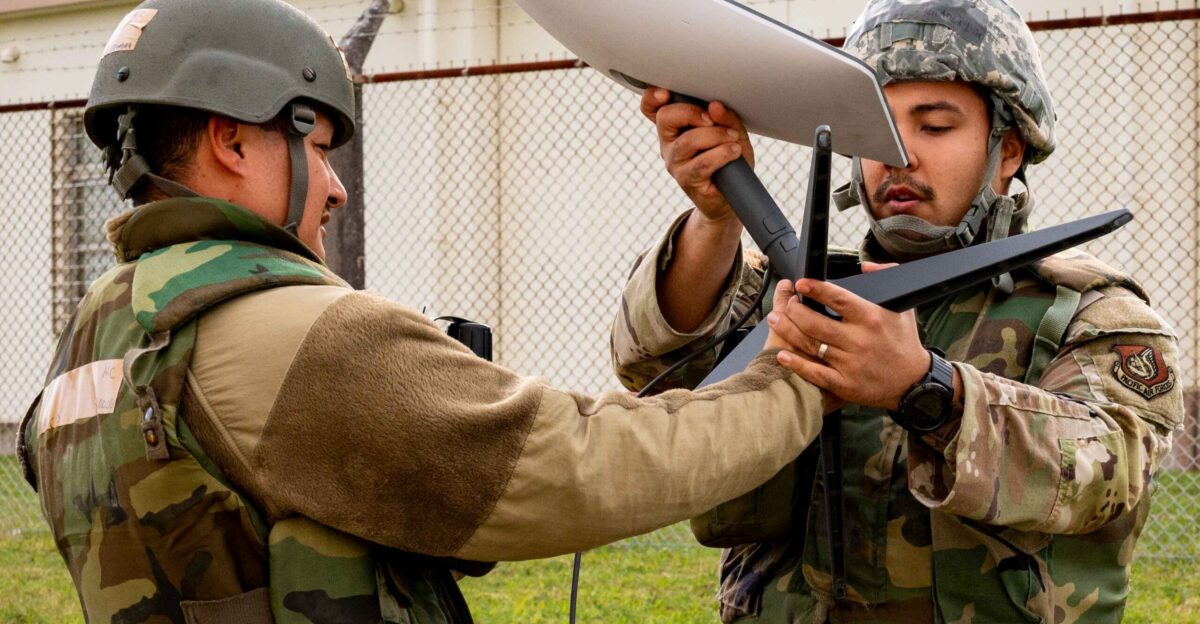
The Starshield network is being developed under a $1.8 billion contract signed in 2021 between SpaceX and the National Reconnaissance Office, the agency responsible for managing America’s spy satellites.
This contract was first reported by Reuters in March 2024 and represents one of the largest known agreements between SpaceX and national security agencies. The NRO characterizes this initiative as building “the most capable, diverse, and resilient space-based intelligence, surveillance, and reconnaissance system the world has ever seen.”
Understanding the Frequency Violation
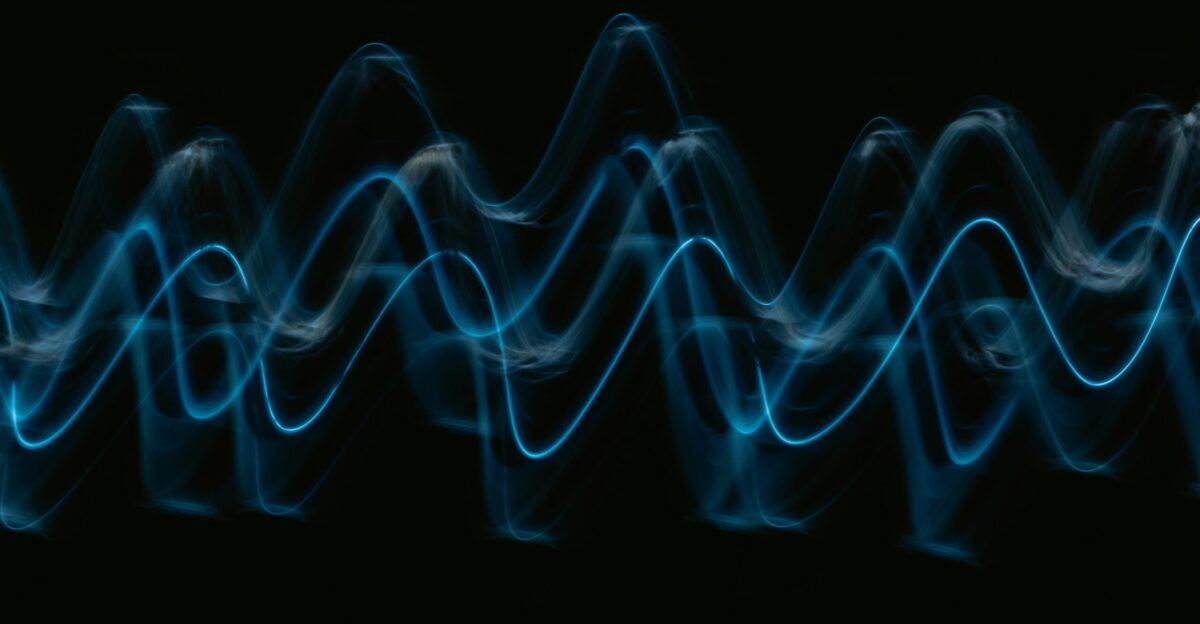
The core regulatory issue centers on how these satellites are using radio spectrum. Tilley detected strong emissions in the 2025-2110 MHz S-band frequency range, which is internationally allocated by the International Telecommunication Union as an uplink band.
This designation means the spectrum is reserved for transmissions from Earth to space, not for downlink transmissions from satellites to ground stations. The signals Tilley measured were up to 9 MHz wide, with signal-to-noise ratios of 10 to 20 decibels, meaning the received signal power was ten to one hundred times stronger than the background noise.
Why This Frequency Range Matters
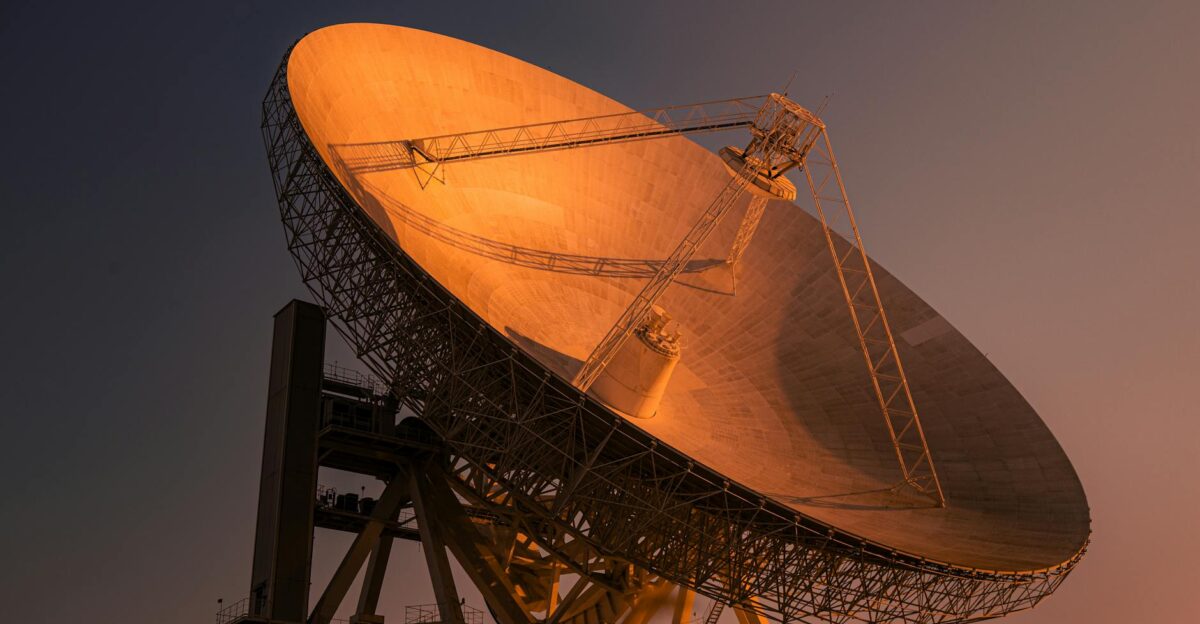
In the United States, the 2025-2110 MHz band serves critical civilian space operations. NASA uses these frequencies for satellite tracking and command operations, NOAA employs them for weather satellites, and private organizations, including television news networks, utilize the band for satellite uplink vehicles.
According to the National Telecommunications and Information Administration, earth stations providing primary command and control for U.S. civil space programs operate in this band.
Potential Interference Risks
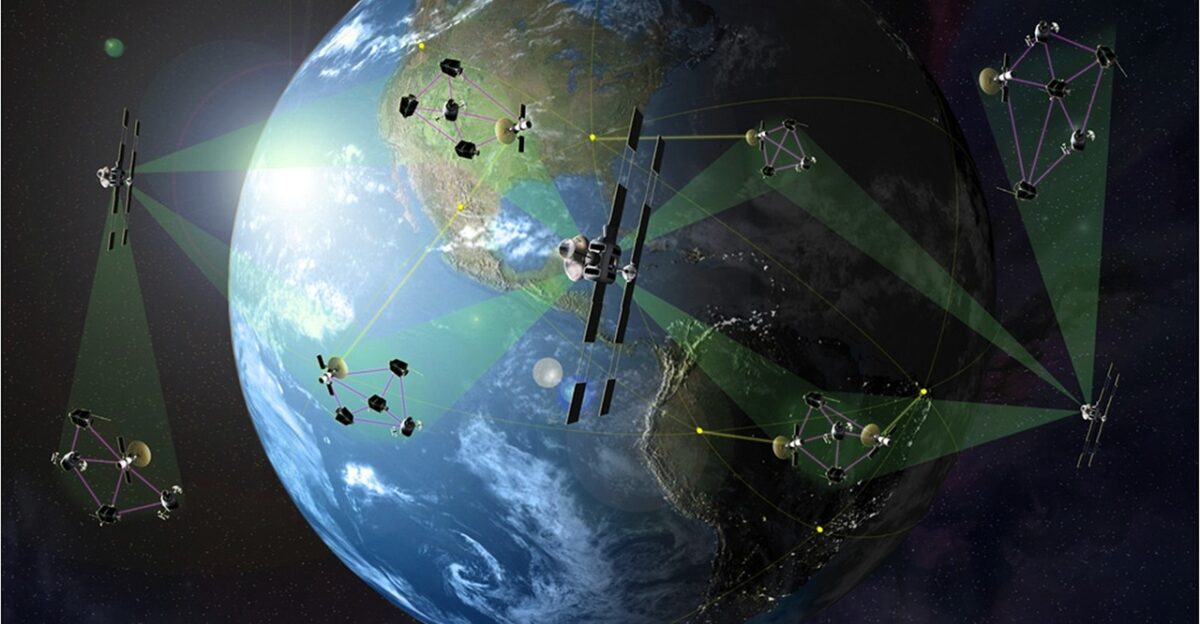
Tilley warns that using this band for downlink transmissions poses serious interference risks. “If you’ve got a loud constellation of signals blasting away on the same frequencies, it has the potential to interfere with the reception of ground station signals being directed at satellites in orbit,” he explained.
Nearby satellites could receive radio-frequency interference and might not respond properly to commands from Earth. Kevin Gifford, a University of Colorado computer science professor specializing in spacecraft radio interference, confirmed that Starshield’s signals could lead to operational disruptions for other satellite systems.
Lack of International Coordination
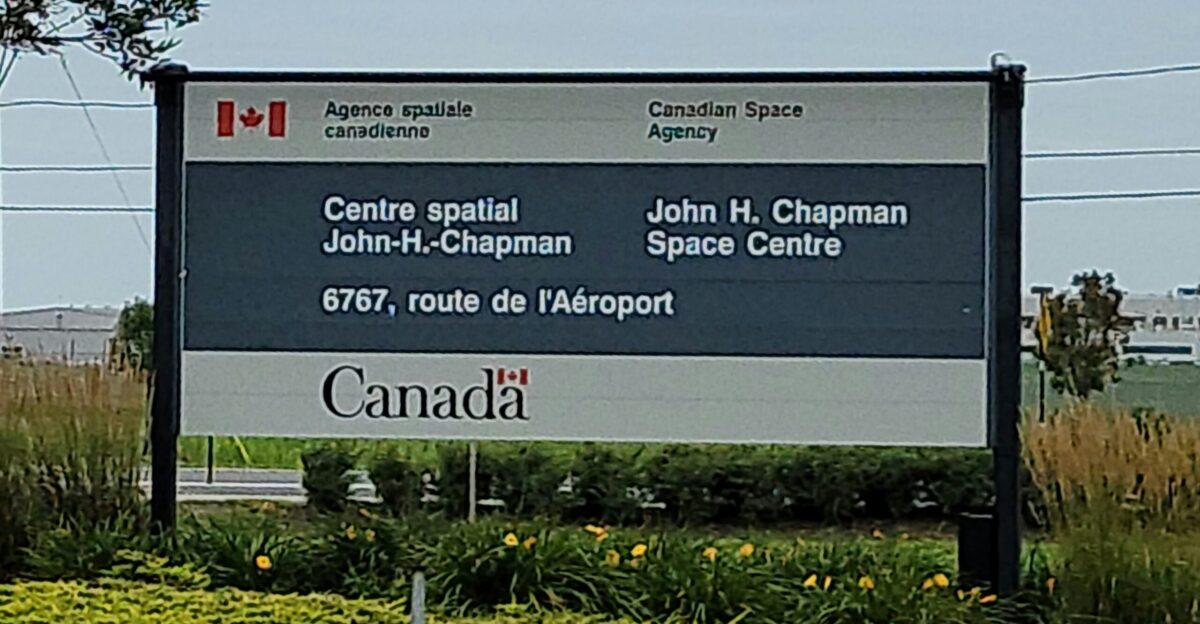
Tilley’s investigation found no public record in the ITU Master International Frequency Register authorizing Starshield downlink transmissions in this range. The Canadian Space Agency confirmed that no coordination process has been initiated with the ITU or the United States regarding this satellite network.
This absence of coordination is particularly concerning given that Starshield’s global coverage extends over many nations beyond North America.
Possible Reasons for Unconventional Spectrum Use
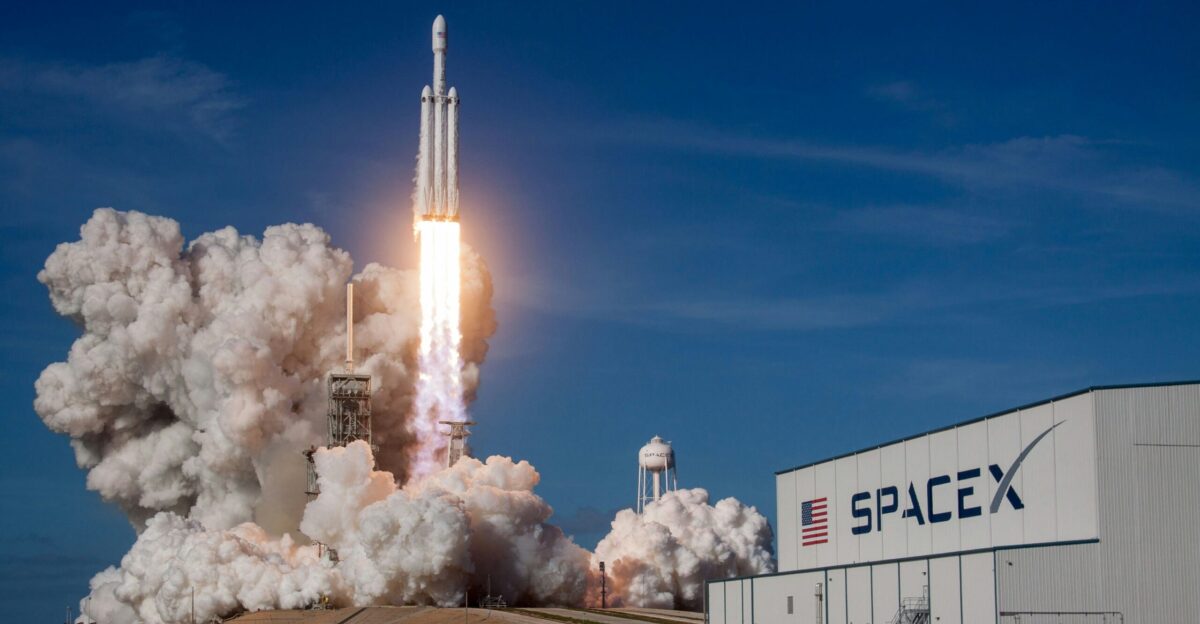
Experts have speculated about several possible motivations for SpaceX and the NRO’s choice of this unconventional frequency allocation. Tilley suggested the decision could be designed to hide Starshield’s operations, as using a band where downlink activity is unexpected might make the satellites harder for adversaries to track or identify.
Gifford offered an alternative theory: SpaceX might simply be taking advantage of a relatively quiet spectrum band, perhaps planning to address regulatory permissions later.
The NRO’s Proliferated Architecture Program
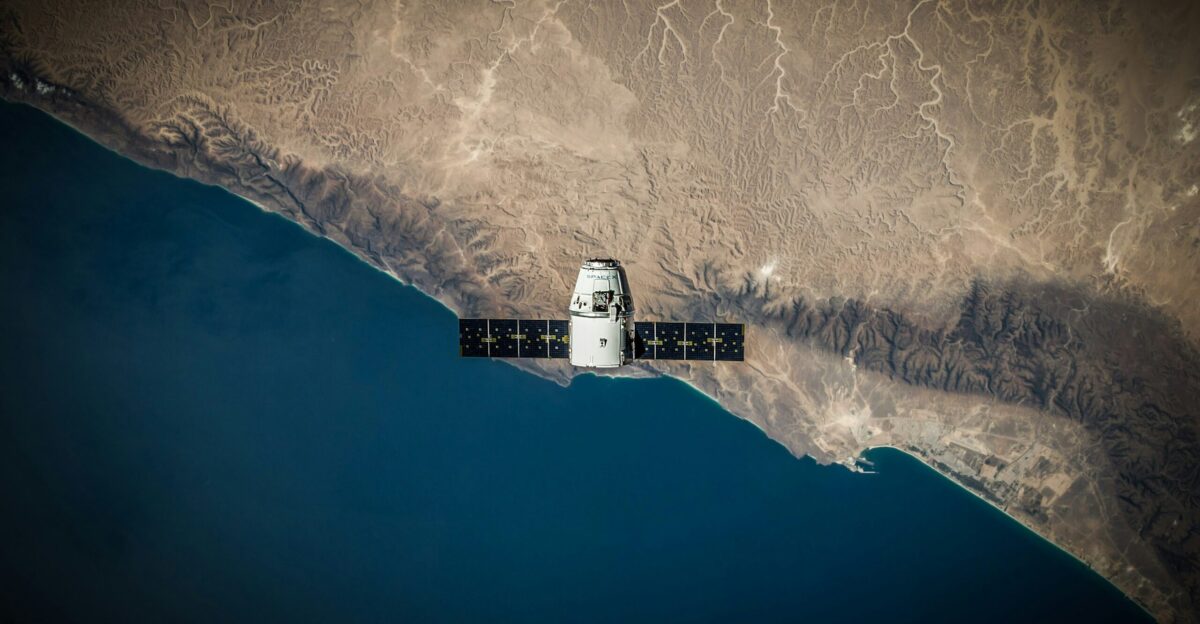
The Starshield satellites form part of the NRO’s broader “proliferated architecture” strategy, representing a transformational approach to satellite-based intelligence gathering. Unlike traditional NRO programs that relied on a few large, complex satellites, this new architecture employs hundreds of smaller, cost-effective satellites deployed across multiple orbital planes.
The NRO began launching these satellites in 2024, with six missions completed by December of that year, and additional launches planned through 2028.
Operational Advantages of the New System
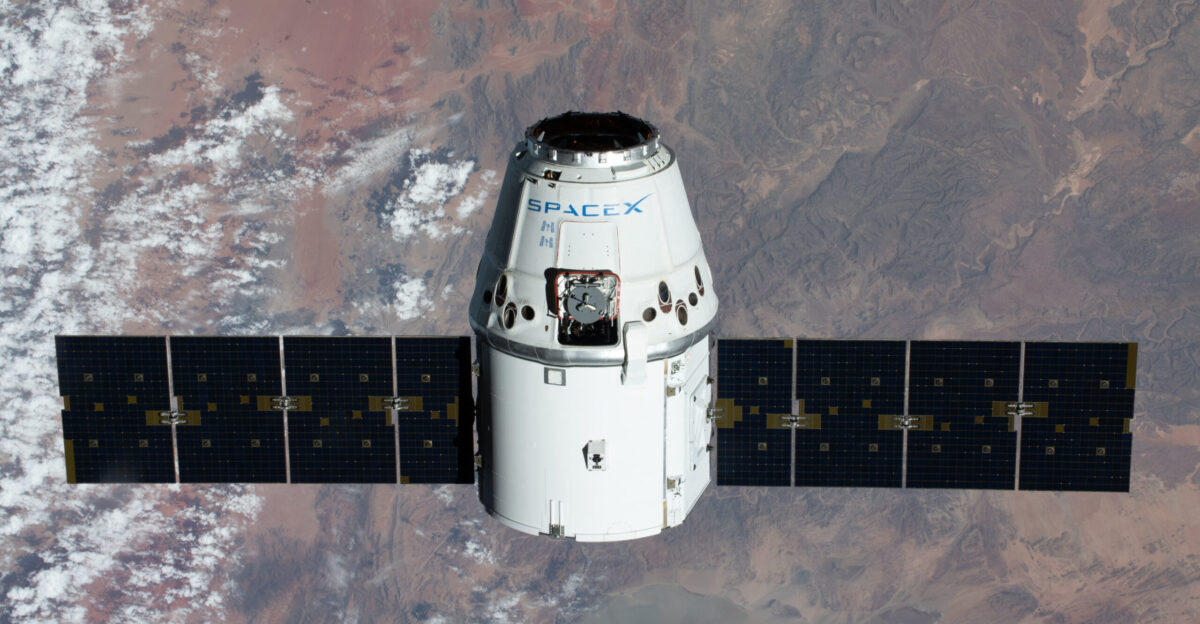
According to NRO officials, the proliferated architecture will provide unprecedented surveillance capabilities. “You can’t hide” from the system’s reach, one source told Reuters, emphasizing its extensive global coverage.
The network is designed to deliver data in minutes or even seconds rather than hours, providing near-real-time intelligence to users, including the Intelligence Community, Department of Defense, and allied partners.
Growing Concerns About Starlink Radio Interference
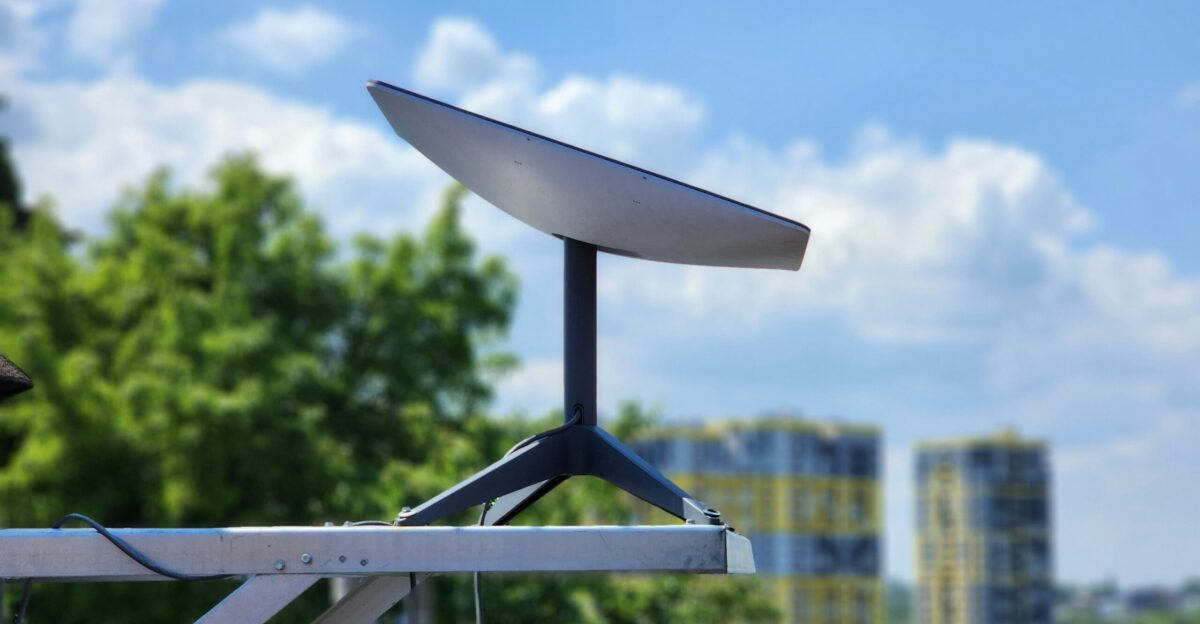
The Starshield frequency issue adds to mounting concerns about the impact of satellite mega-constellations on astronomy. Previous studies using the LOFAR radio telescope in Europe detected unintended electromagnetic radiation from SpaceX’s commercial Starlink satellites.
The second-generation V2-mini Starlink satellites emit significantly more unintended radio waves than first-generation satellites, emanating from onboard electronics between 110 and 188 MHz.
Impact on Radio Astronomy Research

Astronomers warn that these unintended emissions from satellite constellations pose serious challenges to ground-based radio astronomy. LOFAR lead researcher Cees Bassa noted that Starlink satellites are substantially brighter in radio waves than the faintest objects the telescope can detect.
The contrast demonstrates the intensity of satellite signals relative to deep-space observations.
SpaceX’s Cooperation on Some Issues
SpaceX has demonstrated a willingness to address certain astronomical concerns. The company developed an Operational Data Sharing system in collaboration with the National Radio Astronomy Observatory that coordinates Starlink satellites to minimize interference with scheduled radio telescope observations.
The system can redirect beams or adjust operations when satellites approach sensitive antenna arrays.
Regulatory Gaps in Satellite Emissions

Unlike terrestrial equipment, the unintended electromagnetic radiation from satellites is not currently covered by comprehensive international regulation, leaving radio astronomy vulnerable as constellations expand.
The ITU allocates radio frequencies and satellite orbits to prevent interference and ensure efficient resource sharing, but current frameworks primarily focus on intentional transmissions rather than unintended emissions from onboard electronics.
ITU Article 4.4 and Non-Interference Basis

According to the ITU Radio Regulations, using frequencies in a manner that conflicts with the Table of Frequency Allocations is only permitted if stations operate on a “non-interference basis” and cannot claim protection against interference. However, without transparency about Starshield’s emissions, other nations cannot adequately assess potential interference or implement protective measures.
The ITU can only investigate if a national administration files a formal complaint of interference.
Comparison with International Practices

Tilley noted that some other satellite operators, including those operating non-standard spectrum allocations, have filed advance notices with the ITU, suggesting some level of international consultation.
The absence of public ITU filings for Starshield’s unconventional spectrum use appears to diverge from certain international practices. Even classified satellite systems typically require some level of frequency coordination to prevent harmful interference between nations.
Continued Expansion of the Constellation
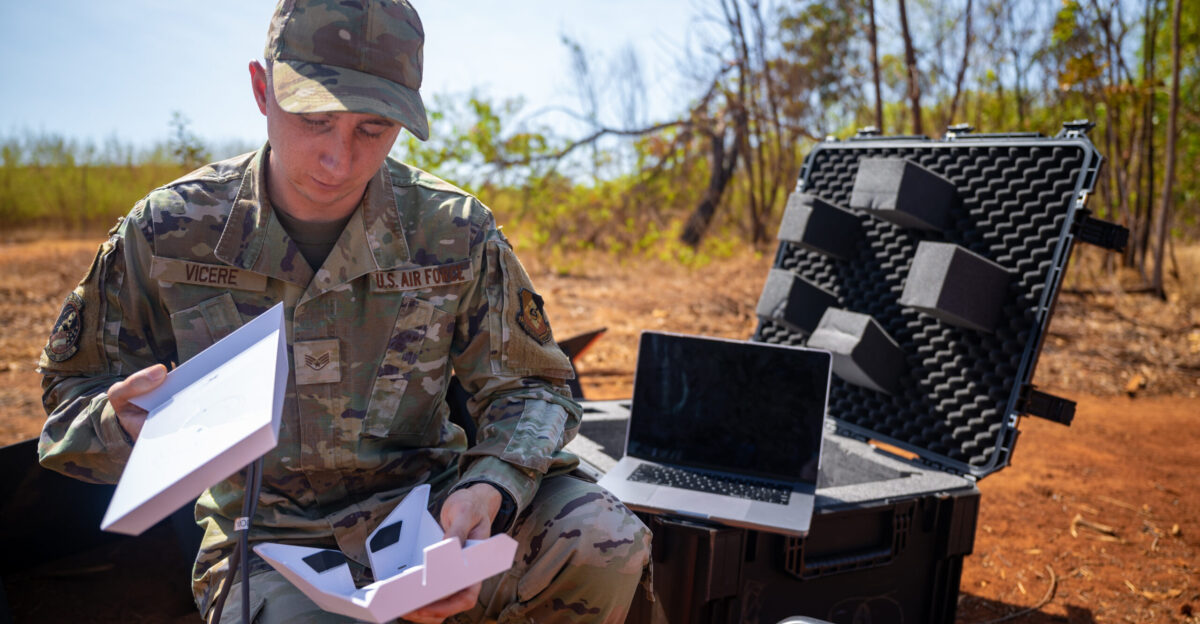
As of late 2024 and early 2025, the NRO continues launching Starshield satellites at a regular pace. The sixth proliferated architecture mission (NROL-149) was successfully completed in December 2024, and the seventh mission (NROL-153) launched in January 2025 from Vandenberg Space Force Base in California.
The agency has confirmed that additional launches are planned through 2028. With approximately 80-100 satellites already in orbit after six months of operational deployments and potentially hundreds more planned, the scale of this constellation and its unconventional spectrum use continues to expand.
Automation Requirements for Large Constellations
NRO officials acknowledge that managing hundreds of satellites requires fundamental operational changes. Dr. T.J. Lincoln, director of the NRO’s Mission Operations Directorate, stated that automation is being built into the system from the beginning because traditional operational methods cannot scale to this constellation size.
Mission management, duty cycle tasking, and re-tasking must happen automatically, with humans monitoring to ensure operational needs are met.
Space Governance and Future Challenges

The Starshield emissions case highlights challenges in spectrum coordination as satellite constellations proliferate. With potentially 100,000 satellites in orbit by the end of the decade, balancing national security, commercial expansion, and scientific research becomes critical.
Astronomers hope measurements like Tilley’s will help operators address problematic emissions collaboratively.