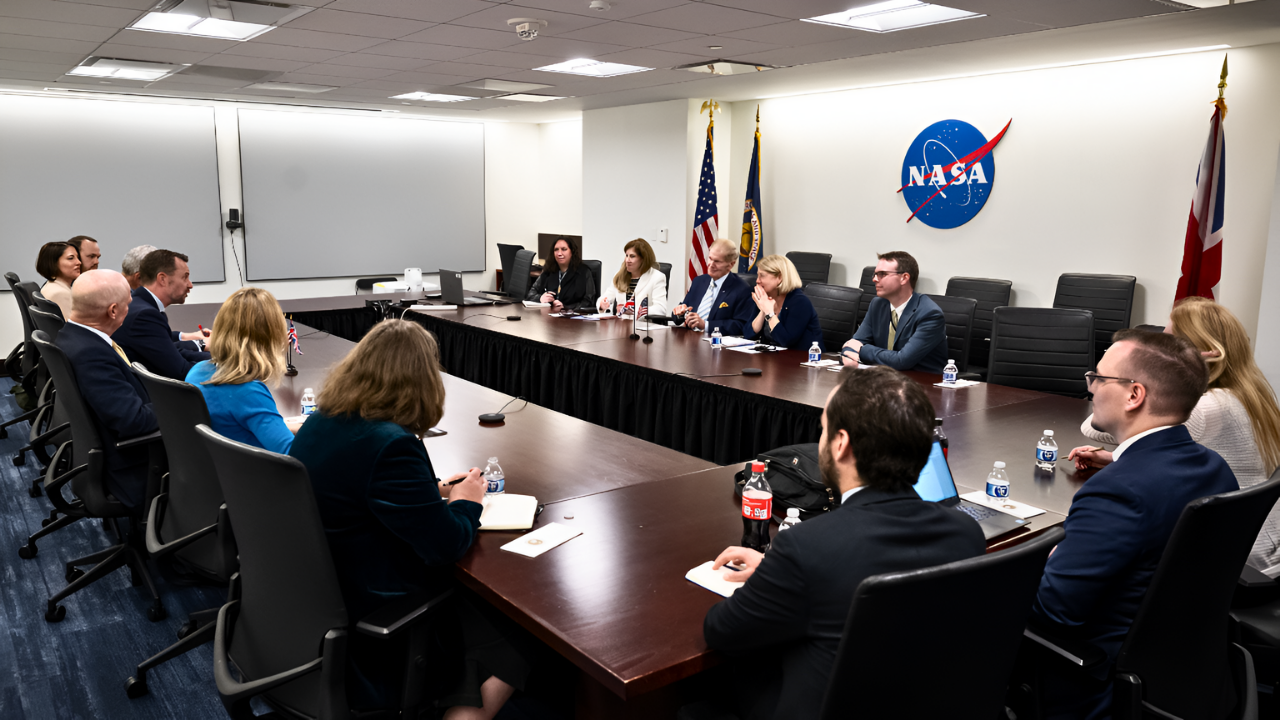
A NASA-funded telescope in Chile spotted something racing toward us at over 130,000 miles per hour on July 1, 2025.
Astronomers quickly confirmed 3I/ATLAS—only the third interstellar object ever found, after ‘Oumuamua in 2017 and 2I/Borisov in 2019.
The Asteroid Terrestrial-impact Last Alert System made the discovery, providing scientists with a rare opportunity to study material formed around a distant star billions of years ago.
Mounting Pressure
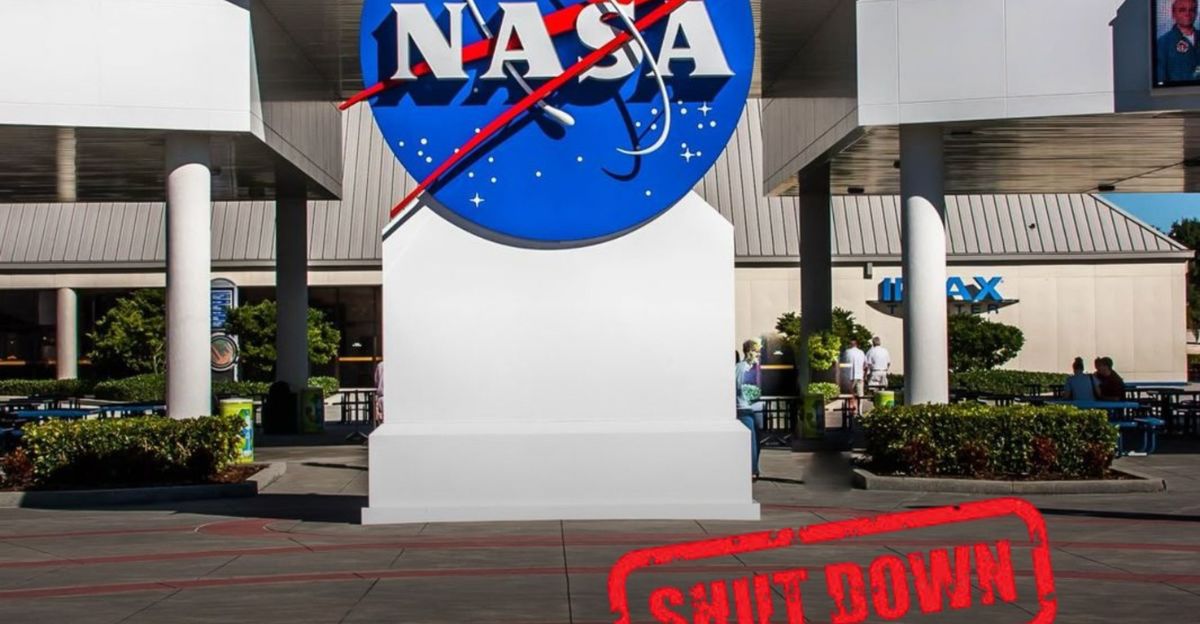
The 43-day government shutdown, starting October 1, 2025, forced 95 percent of NASA’s workforce into furlough, right as 3I/ATLAS reached its most active period.
NASA was unable to release observation data or communicate with the public, creating a vacuum that allowed speculation to explode on social media.
Meanwhile, the European Space Agency published detailed Mars orbiter observations on September 30, improving trajectory predictions tenfold while NASA stayed silent.
Unprecedented Observation
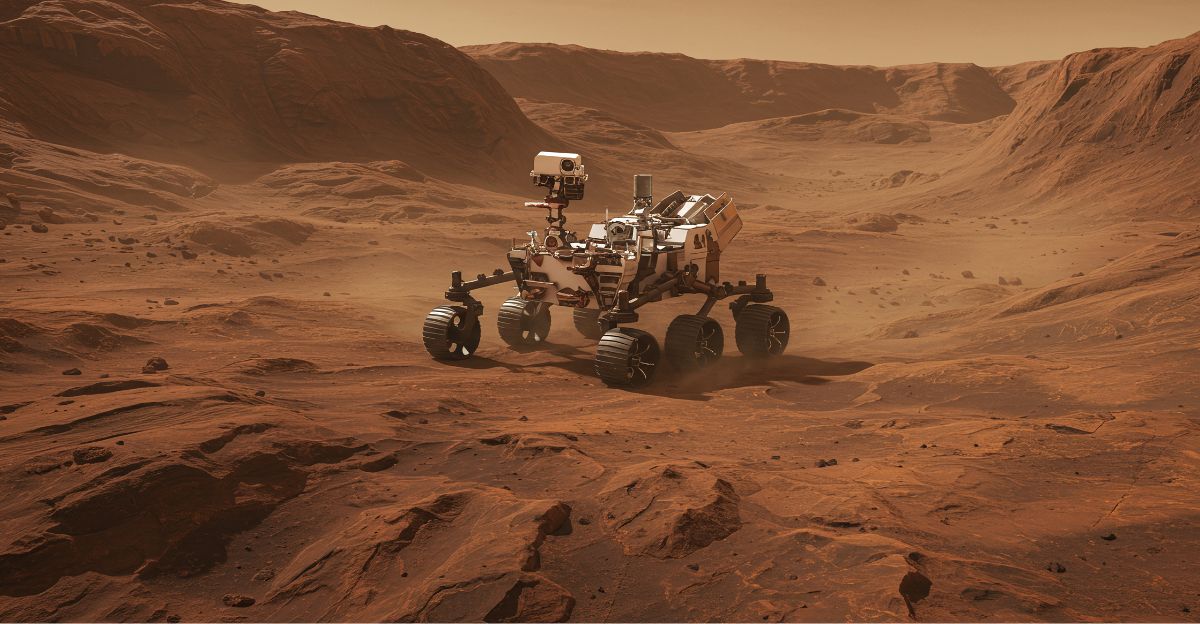
Twelve spacecraft watched 3I/ATLAS between July and November 2025, creating the biggest observational campaign for any interstellar visitor.
Hubble captured stunning images on July 21, while the James Webb Space Telescope analyzed the comet’s chemistry on August 6.
The Mars Reconnaissance Orbiter got the closest view ever of an interstellar object—just 19 million miles on October 3. MAVEN, Perseverance, Lucy, Psyche, and ground telescopes all tracked it simultaneously.
Unusual Characteristics
Scientists noticed 3I/ATLAS behaved strangely. It accelerated in ways that gravity couldn’t explain and contained unusually high carbon dioxide levels with very little water, compared to regular comets.
Size estimates ranged wildly from 320 meters to 5.6 kilometers before Hubble refined it to probably under one kilometer.
The comet’s weird chemistry suggested it formed around a star with very different conditions than our Sun, offering a glimpse into alien worlds.
Breaking Silence

NASA held a press briefing at 3:00 PM EST on November 19, 2025, at the Goddard Space Flight Center to share 3I/ATLAS images after the shutdown ended.
The event, broadcast on NASA+, YouTube, and Amazon Prime, featured key officials including Nicky Fox and Tom Statler.
The briefing answered weeks of public curiosity that had built up during NASA’s forced silence, with officials stressing the purely scientific nature of their observations.
Safe Distance
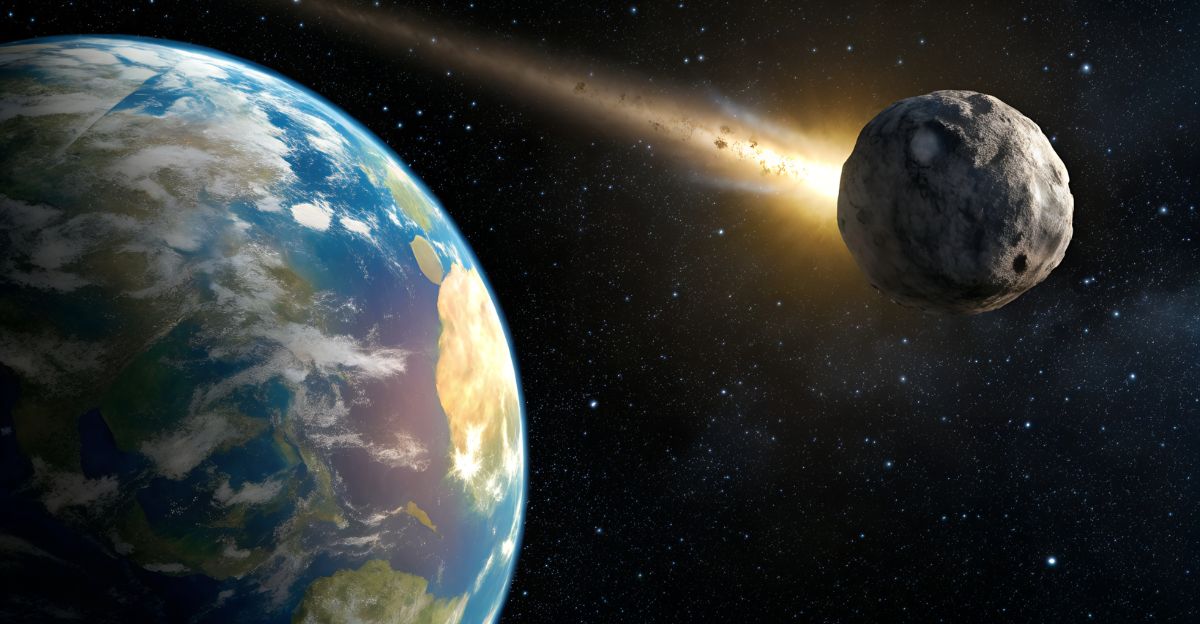
The comet never threatened Earth. It passed closest to the Sun on October 29 at 126 million miles, positioned between Earth’s and Mars’s orbits.
On December 19, 2025, 3I/ATLAS will pass Earth at 167 million miles—roughly 700 times farther than the Moon.
Powerful telescopes in the northern hemisphere will get good views before the comet exits our solar system forever, speeding away at 68 kilometers per second.
Scientific Consensus

The vast majority of astronomers agree that 3I/ATLAS is a natural comet from another star system.
British physicist Brian Cox stated bluntly in November: “Just to be clear—given recent drivel online—Comet 3I/ATLAS is a comet, made of carbon dioxide and water ices.”
Imperial College London’s Dr. Matthew Genge said the unusual chemistry fits “a comet from another planetary system.”
UCLA astronomer David Jewitt told the New York Times that everything fits standard comet behavior.
Natural Explanation
A November 2025 scientific paper by Florian Neukart at Leiden University explained the comet’s strange acceleration using normal physics.
His research showed “a purely physical volatile-driven mechanism suffices to explain non-gravitational acceleration,” eliminating any need for “non-natural hypotheses.”
The acceleration comes from frozen carbon dioxide vaporizing as the comet heats up, creating jets like tiny rocket engines. MeerKAT radio telescope detected normal water breakdown signals on October 24.
Market Impact
The interstellar visitor drove record traffic to NASA’s websites and science news outlets during November 2025.
Virtual Telescope Project announced livestreams for 3I/ATLAS’s December closest approach, while schools worldwide used the comet as a teaching opportunity.
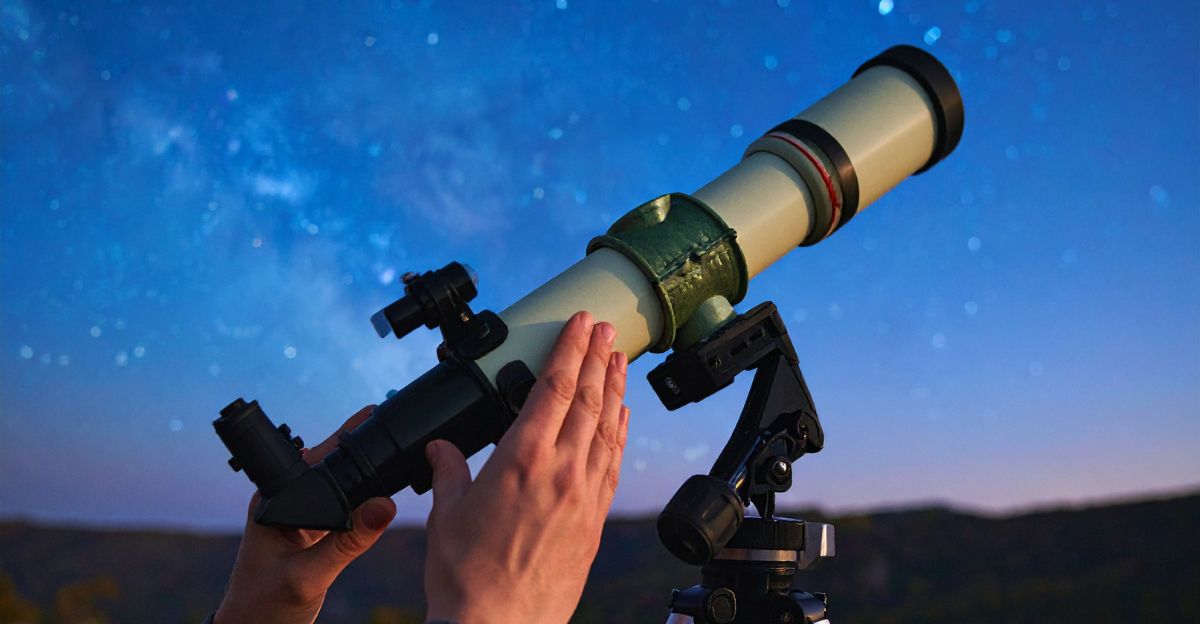
Telescope makers reported increased equipment sales as people prepared for December viewing, although the comet requires powerful magnification at a magnitude of 10-12.
The event showed strong public interest in space science despite competing misinformation on social media.
Outlier Theory
Harvard astrophysicist Avi Loeb stands nearly alone in suggesting 3I/ATLAS could be alien technology rather than a natural comet, rating it 4 out of 10 on his “technological origin scale.”
Loeb proposed that the acceleration patterns might reveal a “technological signature of an internal engine” and speculated about possible “hostile” alien intentions.
His ideas gained traction on social media despite rejection by mainstream astronomy.
A prominent researcher’s suggestion of alien spacecraft versus hundreds of confirmations of a natural comet illustrates how single outliers fuel public speculation.
Official Denial

NASA Acting Administrator Sean Duffy made his position clear: “No aliens. No threat to life here on Earth.”
His November 2025 statement aimed to counter viral social media claims that had circulated during the shutdown when NASA was unable to share data publicly.
Physicist Michio Kaku told NewsNation the odds of an alien object are “non-zero” but “very small,” adding, “So far, it looks like an ordinary comet.”
Scientists expressed frustration that speculation about aliens overshadowed the comet’s genuine scientific value.
Fabricated Claims

The shutdown’s information vacuum allowed false claims to spread online, including viral videos claiming that NASA held crisis meetings with the Space Force and SETI, that mathematical signal patterns existed, and that Mars orbiters experienced mysterious blackouts on October 3.
NASA, the European Space Agency, the SETI Institute, and the U.S. Space Force confirmed that none of this happened.
Social media posts claiming that 3I/ATLAS sent “Fibonacci-pattern pulse signals” at 1420 MHz were debunked as misinformation, although millions had seen them before corrections appeared.
Delayed Response

The 43-day shutdown prevented NASA from correcting misinformation in real-time, letting false narratives take root before official data emerged.
Goddard Space Flight Center, where the November 19 briefing happened, faced major turmoil as it closed one-third of its buildings and 100 laboratories during the shutdown.
Physics World reported cuts eliminated 42 percent of Goddard’s workforce by March 2026.
The organizational chaos made clear scientific communication nearly impossible when the public needed it most.
Continuing Study

The James Webb Space Telescope will observe 3I/ATLAS again in December 2025 during its closest Earth approach, while Hubble will continue measuring sulfur-to-oxygen ratios as the comet exits our solar system.
India’s PRL observatory conducted infrared observations from Mount Abu’s 1.2-meter telescope in mid-November, contributing to international collaboration.
The comet will move through constellations Virgo and Leo in December, fading below magnitude 12 by early 2026.
Scientists emphasize that the collected data represents irreplaceable insight into planetary formation across the galaxy.
Lasting Questions

The 3I/ATLAS episode raises challenging questions about scientific communication during government shutdowns and the rapid spread of misinformation.
How should space agencies balance transparency with limited resources when forced offline during critical observations?
Can one researcher’s contrarian views shift public perception despite overwhelming scientific consensus?
As astronomers predict detecting several interstellar visitors per year with next-generation telescopes, the challenge isn’t just observing these ancient travelers, but ensuring accurate information reaches people before speculation takes over.