California’s skyline once symbolized opportunity, innovation, and corporate dominance. Now, its corporate corridors are echoing differently—major companies are packing up, moving their headquarters, and staking claims in Texas.
From Silicon Valley tech giants to long-established industrial players, these departures are reshaping economic power, talent flows, and real estate markets. The story of who left, why, and what it means for California and Texas unfolds next—here’s what’s really happening behind the move.
California Corporate Exodus Numbers

California’s corporate exodus has surged over the past several years. In 2018, 46 companies left the state. That number rose slightly in 2019, then jumped to 75 in 2020 and exploded to 153 in 2021. Over 200 companies have relocated to Texas alone between 2018 and 2024.
Pandemic restrictions, the adoption of remote work, and reassessments of California’s business value drove the acceleration. This isn’t temporary—it signals a permanent structural shift in where companies see growth, opportunity, and financial advantage.
Why Companies Are Leaving California

Corporate departures from California aren’t random—they follow clear patterns driven by cost, regulation, tax policy, and cultural shifts. Companies are evaluating where operations, talent, and growth are most sustainable.
Here are the top reasons why companies are relocating, each shaping the great exodus in its own way.
#1 Tax Incentives – Zero vs. 12 Percent

Texas has no state income tax, while California taxes top earners at rates ranging from 12.3% to 13.3%. Capital gains are taxed as ordinary income in California but are exempt in Texas. Elon Musk’s Tesla move alone saved $2.5 billion in personal capital gains taxes.
For executives and corporations, these differences compound over time. Even $100 million in capital gains generates over $ 12 million annually in tax savings. Tax policy alone can justify moving entire headquarters, making it the primary measurable driver behind the exodus.
#2 Operational Costs – Housing, Labor, Real Estate

California’s median home prices often exceed $800,000; commercial rents range $40 to $60/sq ft. Texas offers homes at 25–30% lower cost and commercial space at $15–25/sq ft. Minimum wages are lower, and the overall cost of living is dramatically reduced.
Relocating to Texas allows companies to reduce operational expenses by 30–50% without changing productivity. Lower costs improve profit margins, enabling companies to offer competitive compensation while maintaining efficiency.
#3 Regulatory Environment – Predictability Matters

California’s labor, environmental, and permitting regulations often result in lengthy delays and substantial compliance costs. Permitting may take 12–24 months, employment litigation is common, and ecological mandates add uncertainty. Texas permits projects in 2–6 months and offers predictable business rules.
CEOs increasingly value regulatory stability alongside cost. The ability to forecast expenses accurately and avoid unexpected legal or operational hurdles creates a competitive advantage that Texas delivers—and California cannot.
#4 Pandemic & Cultural Factors

COVID-19 shutdowns, school closures, and capacity limits disrupted California’s operations in 2020–2021, while Texas reopened more quickly. Remote work, hybrid policies, and flexible business culture in Texas attracted both talent and executives seeking stability.
Elon Musk cited California restrictions as excessive and highlighted specific laws as a “final straw.” Pandemic-era policies crystallized perceptions that California was less hospitable to business, accelerating departures that might have occurred more gradually otherwise.
#1 Tesla

In December 2021, Elon Musk moved Tesla’s headquarters from Palo Alto to Austin. He cited California’s high housing costs, long commutes, and regulatory hurdles that limited expansion. About 10,000 headquarters employees relocated, saving Musk an estimated $2.5 billion in personal capital gains taxes.
The move highlighted Silicon Valley’s diminishing hold on innovation. Despite maintaining Fremont’s massive manufacturing operations, Tesla ($1.12 trillion) opted for Texas’s business-friendly environment over California’s restrictive policies. This departure signaled a shift in where tech leaders see opportunity and financial freedom.
#2 Charles Schwab

Charles Schwab relocated from San Francisco to Westlake, Texas, in January 2021. The move included a campus for 6,000–7,000 employees and coincided with the TD Ameritrade acquisition, which added approximately 4,500 staff members in the Dallas-Fort Worth area. Schwab ($164 billion market cap) cited cost efficiency, operational effectiveness, and a better work environment.
Although San Francisco operations continue, the headquarters shift symbolized a rejection of California’s high-tax, high-cost business climate. Texas’s zero income tax and lower expenses provided a more competitive base, showing how even financial services giants are prioritizing cost and flexibility.
#3 HPE

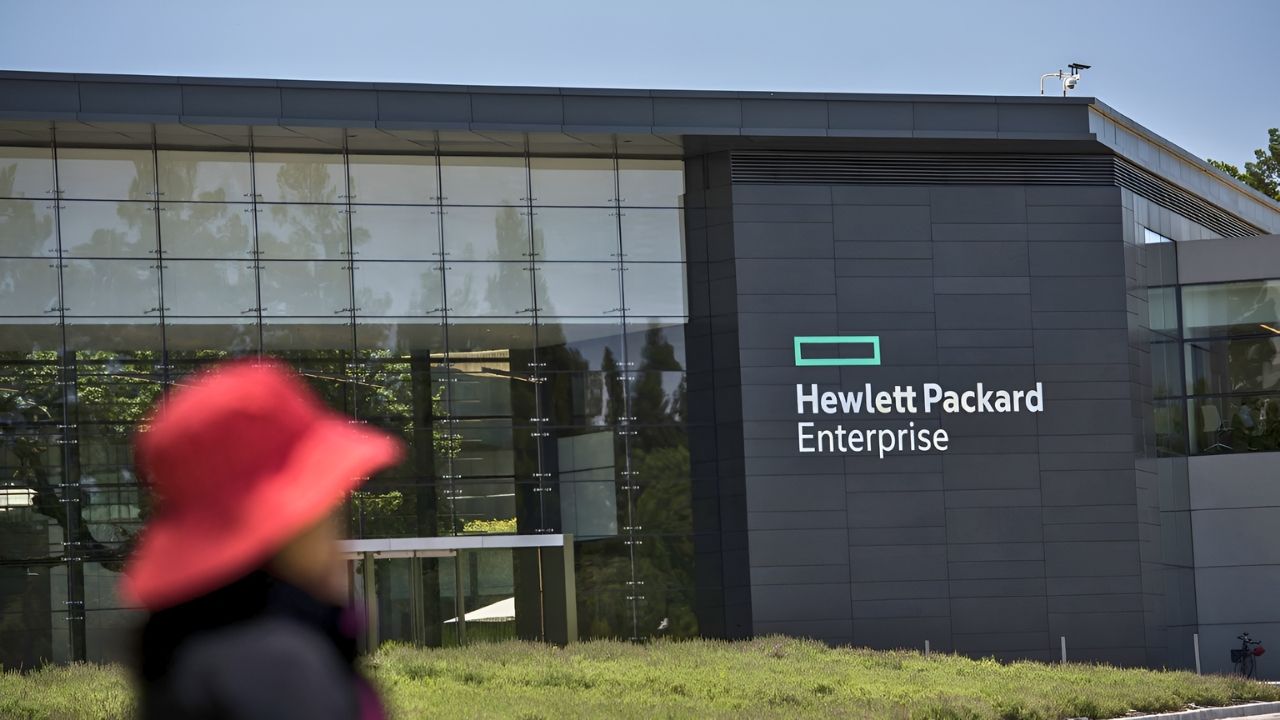
Hewlett-Packard Enterprise relocated from San Jose to Spring, Texas, in 2022, marking a significant symbolic loss for Silicon Valley. Founded in a Palo Alto garage in 1939, HPE consolidated where 2,600 employees already worked, aiming for cost savings and operational efficiency.
Even founding tech giants ($20–25 billion market cap) face pressure from California’s taxes, regulations, and real estate costs. HPE’s departure demonstrates that historical roots are no longer enough to justify remaining in an increasingly expensive and restrictive business climate.
#4 Chevron
In August 2024, Chevron shifted its headquarters from San Ramon to Houston, consolidating functions where 7,000 employees were already based, compared with 2,000 in California. The energy giant ($309 billion market cap) said California’s policies made the state “unappealing.”
The move reflects broader consolidation in Houston’s energy corridor and highlights California’s inability to retain legacy corporations. Chevron continues some San Ramon operations, but the shift underscores how regulatory pressure and rising costs are reshaping where even deeply-rooted companies choose to operate.
#5 Digital Realty

Digital Realty relocated its headquarters from San Francisco to Austin in January 2021, consolidating nearly 30 Texas data centers that host approximately 20% of its North American workforce. The company ($115–130 billion estimated market cap) cited lower living costs, a skilled workforce, and a supportive business climate.
With 280 facilities across 24 countries, the relocation shows that technology infrastructure companies value operational efficiency and talent retention over California’s rising costs. The decision underscores a broader trend of tech firms following both workforce and favorable regulatory environments to more competitive states.
More Major Companies Follow Suit

California’s exodus trend isn’t limited to tech and energy giants. A growing wave of Fortune 500 and multinational corporations have relocated headquarters in recent years, citing operational costs, regulatory challenges, and talent retention as key drivers.
#6 X (Twitter)

Elon Musk relocated X (formerly Twitter) headquarters from San Francisco to Bastrop, Texas, in September 2024, citing California legislation as the “final straw.” The move aligned with Musk’s consolidation strategy alongside Tesla and SpaceX.
The relocation created uncertainty for Bay Area employees as it centralized operations near Austin. Musk’s high-profile exit from multiple California industries accelerated broader corporate migration trends, highlighting how political and regulatory pressures can drive even social media giants out of the state.
#7 McKesson Corp.

McKesson moved its headquarters from San Francisco to Las Colinas, Texas, in 2019, marking one of the highest-ranking Fortune 500 exits from the Bay Area. The pharmaceutical distributor ($90–100 billion market cap) cited efficiency, collaboration, cost competitiveness, and improved work environment as key reasons for relocating.
About 330 employees declined the move, highlighting the human impact of corporate migration. McKesson’s relocation foreshadowed the 2020–2021 exodus wave, proving that even deeply established, non-tech companies found California’s costs and regulations increasingly untenable compared with Texas alternatives.
#8 CBRE Group

CBRE Group, America’s largest commercial real estate services company ($100+ billion market cap), moved its headquarters from Los Angeles to Dallas in 2020. The company already operated extensively from Dallas, making the city the “de facto headquarters.”
The relocation emphasized Texas’s central location, logistics advantages, and business-friendly policies. Even real estate experts have recognized California’s shrinking value proposition, highlighting how high costs and over-regulation have driven corporate decisions. This move foreshadowed similar departures across multiple sectors.
#9 Toyota North America
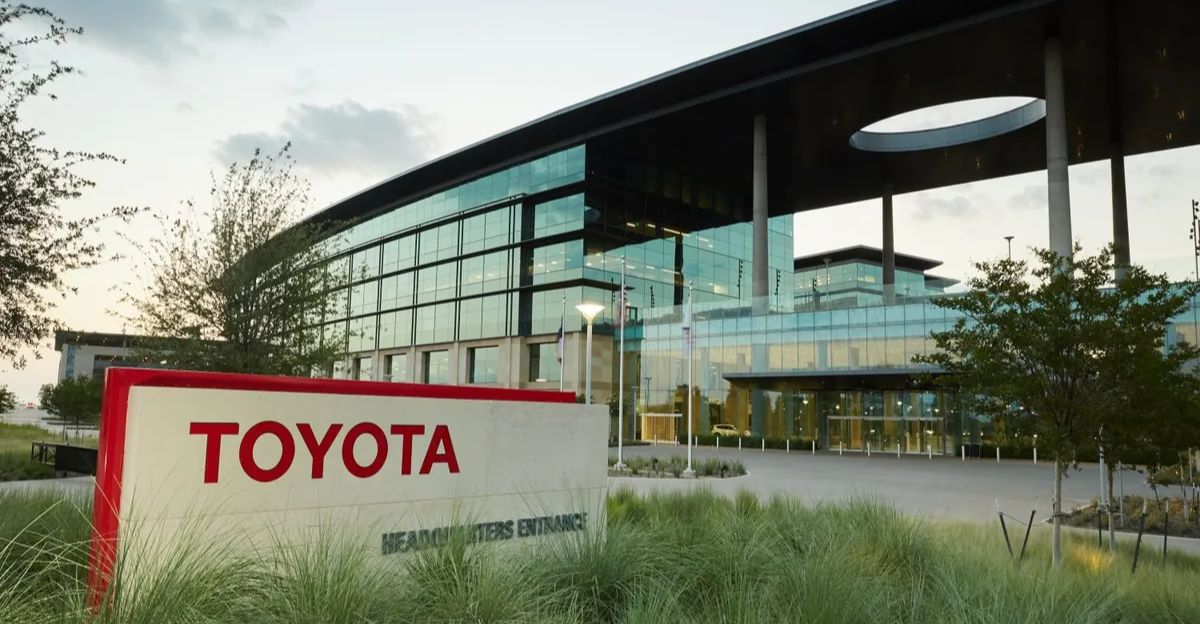
Toyota announced its relocation from Torrance, California, to Plano, Texas, in 2014, with the new headquarters opening in 2017. Approximately 4,000 employees relocated to consolidate North American operations. The company cited Texas’s central location, business climate, and affordable talent recruitment as primary drivers.
The move set a precedent for large-scale corporate relocations, demonstrating the feasibility for major multinationals. Toyota’s success encouraged other companies to consider Texas, shaping the wave of departures that would accelerate in 2020–2021.
Economic Impact

The largest relocated companies alone—Tesla, Chevron, Schwab, HPE, Digital Realty—represent $2.1-2.4 trillion in market capitalization. Including McKesson, CBRE, and Toyota, the total surpasses $2.5 trillion.
Direct employee relocations range from 15,000 to 30,000, with indirect impacts on an additional 30,000 to 90,000 jobs. California loses tens of billions in taxes; Texas gains business, talent, and capital. This isn’t marginal—it’s transformational.
Broader Economic Effects

Corporate relocations drive multiplier impacts. For every relocated headquarters job, 2-3 indirect positions are affected, including those in legal, accounting, commercial real estate, and services. California’s supplier networks contract, while Texas experiences increased business demand.
The ripple effects ensure that corporate moves reshape regional economies. Even companies that didn’t move see strategic consequences, making the migration more than just a physical relocation—it’s an ecosystem shift.
Real Estate Market Shifts

California office vacancies soared—San Francisco exceeds 30%, Palo Alto and San Jose are facing similar declines. Valuations drop 20-40%. In contrast, Austin and the Dallas-Fort Worth area experience full occupancy and rising commercial values.
The exodus shifts billions in commercial real estate wealth from California to Texas. These shifts affect institutional investors, pension funds, and the broader economy, making relocation impacts both corporate and financial.
Key Takeaways

The corporate exodus signals permanent geographic rebalancing. Tax policy, regulatory stability, operational costs, and network effects now favor Texas. California’s cost structures and policy choices accelerated the migration.
As companies cluster in Texas, network effects strengthen, creating a self-reinforcing cycle. This shift reshapes wealth, innovation, and corporate influence. The implications extend far beyond headquarters, marking a potential permanent reordering of American business geography.