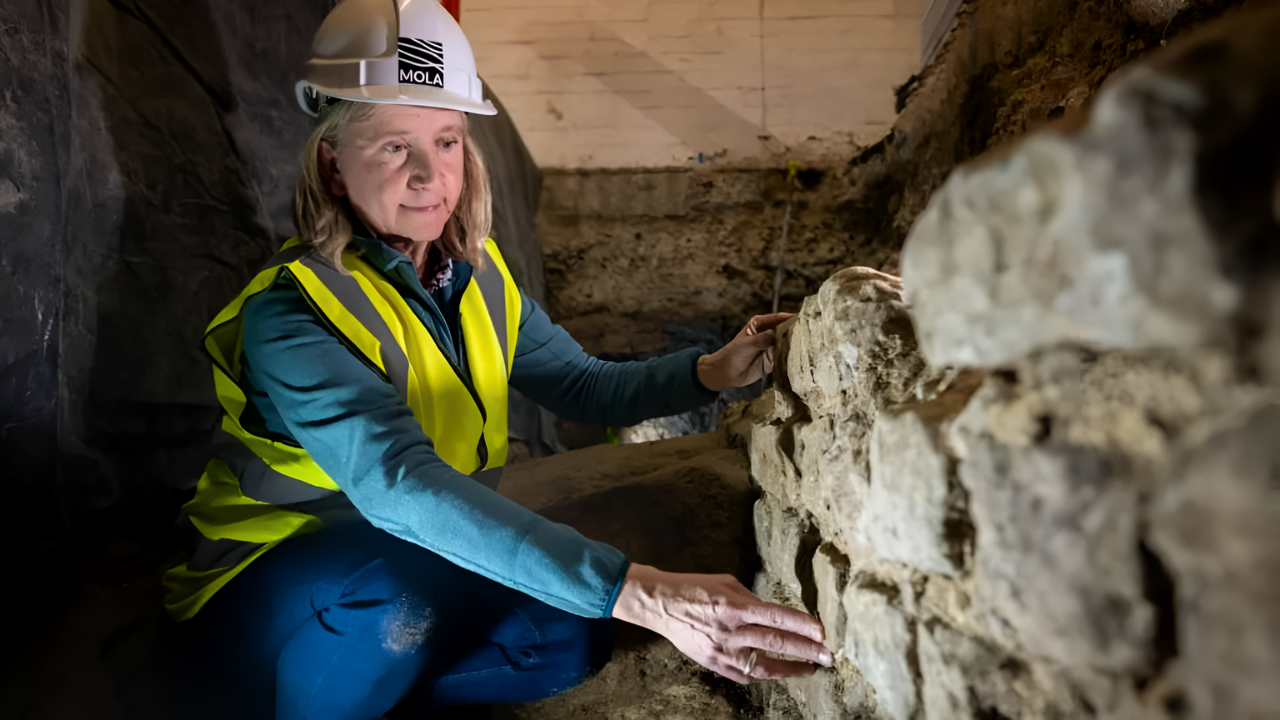
Workers digging for a new road near Perth, Scotland, uncovered a 2,500-year-old underground stone chamber that ancient people had sealed for over 2,000 years. The discovery at Broxy Kennels Fort occurred because archaeologists found old aerial photographs from the 1960s that showed a faint shadow in a farmer’s field.
Nobody would have noticed this shadow without those photos—ploughing had almost completely erased it. Aerial photography has revealed approximately 8,000 ancient Scottish sites since the 1940s, and each one tells part of Scotland’s previously unknown story.
The Cross Tay Link Road project provided archaeologists with a rare opportunity to excavate this site before construction equipment destroyed it forever. Teams raced against time, working frantically because every day they spent excavating risked delaying the road project and incurring additional costs.
Experts from GUARD Archaeology, National Museums Scotland, and local universities joined forces to uncover secrets buried in the earth. Without these old photographs and the road construction project, this Iron Age treasure would still lie hidden beneath crops.
What the Underground Chamber Reveals
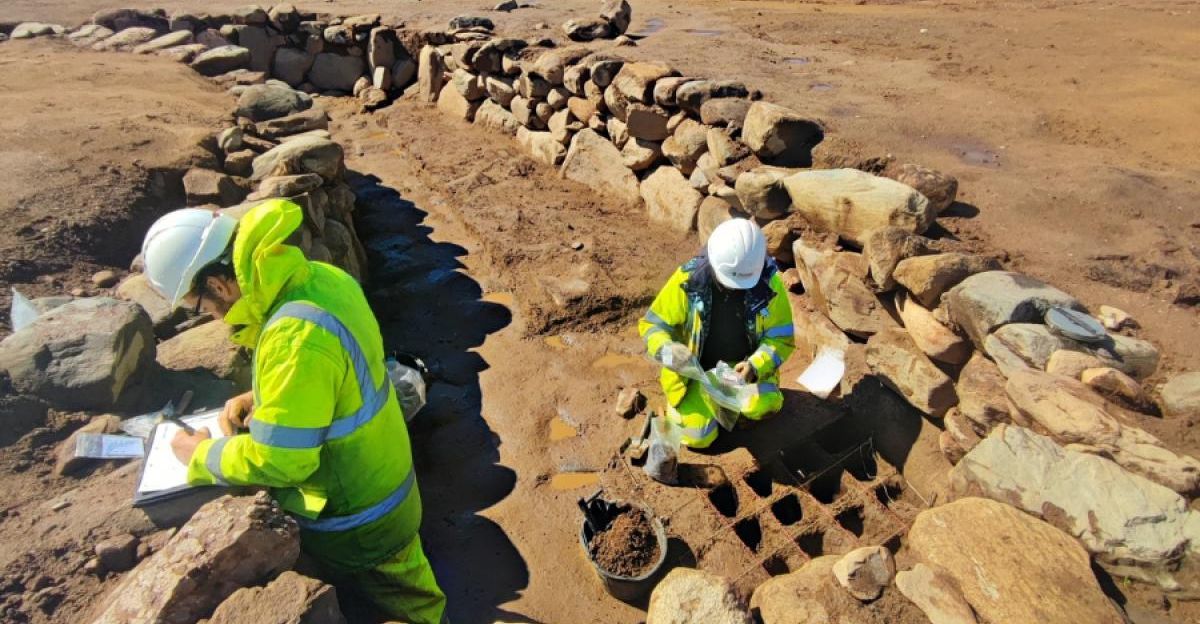
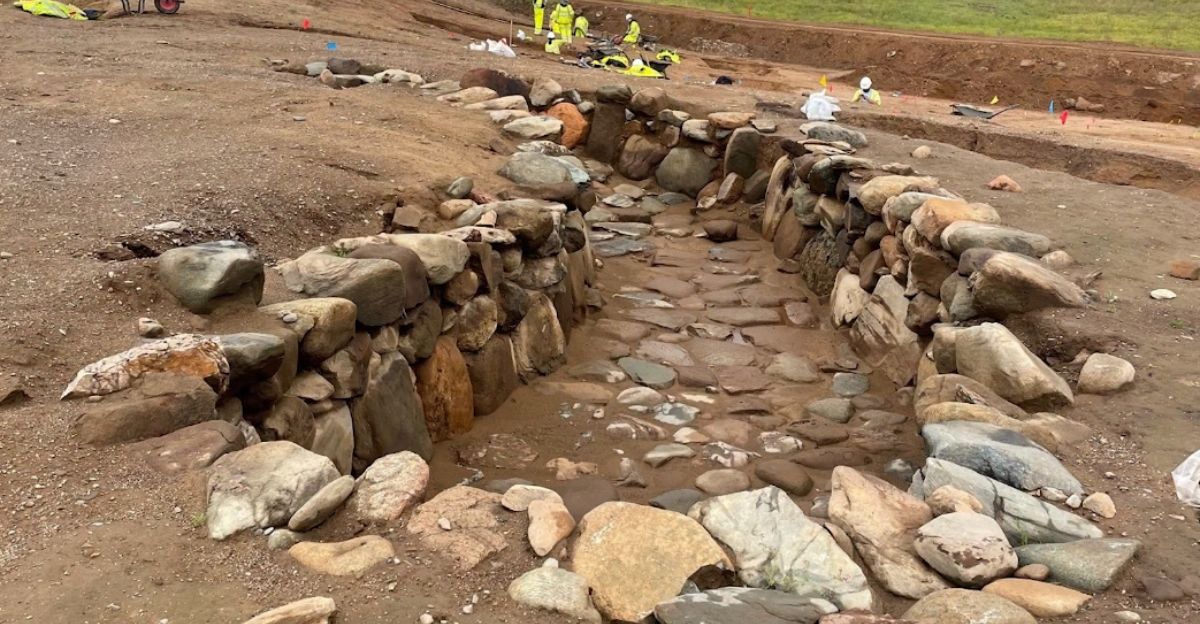
The chamber itself amazes archaeologists with its size and craftsmanship. Diggers discovered a nine-meter-long stone structure measuring four meters wide and over one meter deep. Ancient builders had hauled roughly 400 to 500 tons of river rocks from the nearby Tay River and stacked them without using any mortar.
Radiocarbon dating indicates that this underground room was constructed around 400 BC, making it one of only about 200 known souterrains in Scotland. Inside the chamber, excavators discovered fragments of bog ore, metal slag, and a vitrified clay tuyère (part of an ancient furnace bellows), proving that metalworkers used this site.
These findings connect Broxy Kennels to a wider tradition of Iron Age metalworking across Scotland. However, the chamber’s true purpose remains a mystery. Archaeologists tested soil samples and found grain residue, suggesting that people used it for storage; however, the quantities were far too small to feed a community.
Moisture problems would have ruined grain anyway, so storage theories don’t hold up. Other theories suggest that the chamber served as a security vault, a ritual space, or storage for perishables like cheese—but nobody has found proof to support any of these ideas. The site exhibits signs of habitation spanning centuries, with the settlement initially established around 550 BC and subsequently modified.
Around 400 BC, occupants added the underground chamber, possibly reflecting changes in how the community organised itself. The settlement abruptly ceased to be used around the first century AD, roughly when Roman forces advanced into southern Scotland, although experts cannot confirm that the Romans directly caused the abandonment.
Why This Discovery Matters for Scotland’s Future
Broxy Kennels represents a crucial win for heritage preservation in Scotland. Most similar ancient sites have vanished beneath farm fields and modern development, taking their stories with them forever.
This discovery survived because aerial photographs revealed its location, and the road project provided funding for proper excavation. The project was completed on schedule and within budget, while also preserving important cultural treasures. Archaeologists estimate that thousands of souterrains once dotted the Scottish landscape, but only about 700 remain documented today.
Many lie hidden, visible only under perfect aerial conditions, while others have completely disappeared. Modern technology now enables archaeologists to protect these sites in innovative ways.
Laser scanning and special mapping techniques create detailed three-dimensional records of fragile ancient places, making them accessible for study and even virtual visits worldwide. The Broxy Kennels discovery has captured the public imagination and sparked important debates about preserving Scotland’s past.
While online speculation sometimes ventures into fantasy, experts emphasise the need for evidence-based interpretation of ancient mysteries. The site stands as proof that ancient builders possessed remarkable skill and ingenuity, yet it reminds us that some of their secrets may never fully emerge, no matter how advanced our tools become.
This excavation shows how partnering archaeology with infrastructure projects can save irreplaceable cultural heritage while serving modern communities.