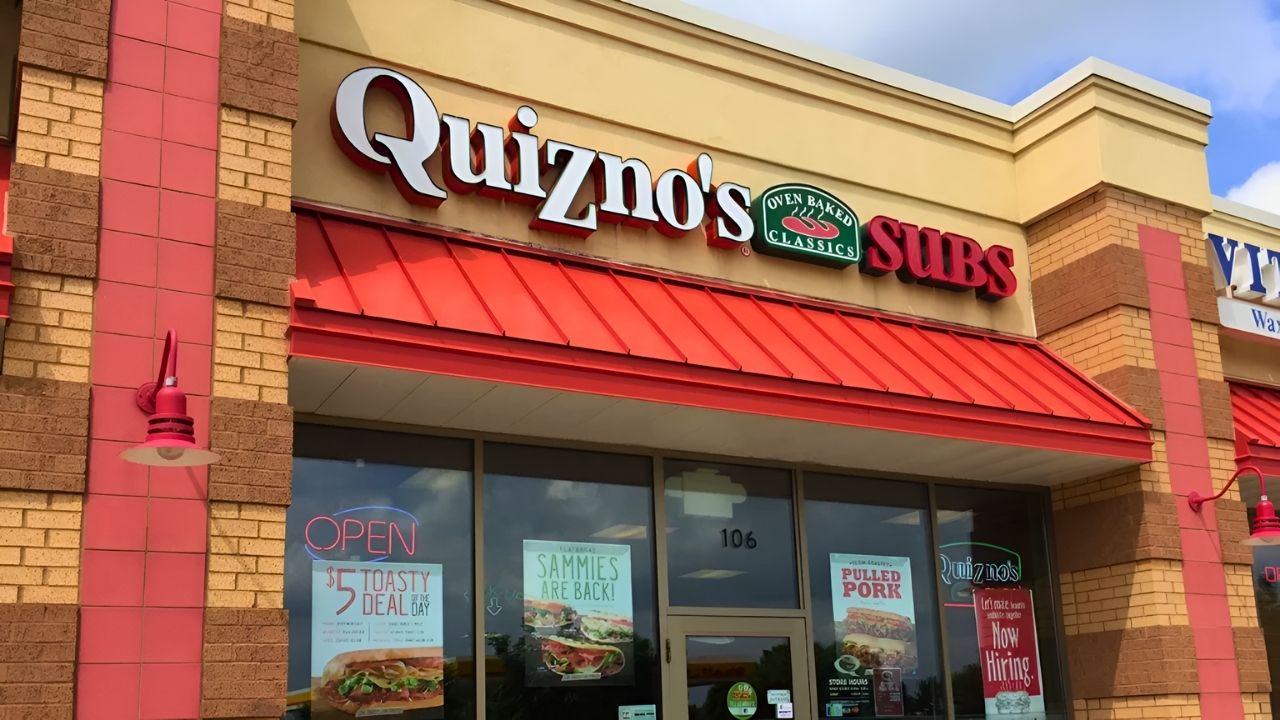
America’s second-largest sandwich chain once competed with Subway at nearly 5,000 locations across the nation. Between 2007 and the present, thousands of toasted-sub restaurants have disappeared.
Across the country, former Quiznos stores sit empty or are occupied by other businesses. What happened to this chain? Why did so few people notice?
The story begins with rapid growth and concludes with one of retail’s most severe collapses.
A Second-Place Death Sentence
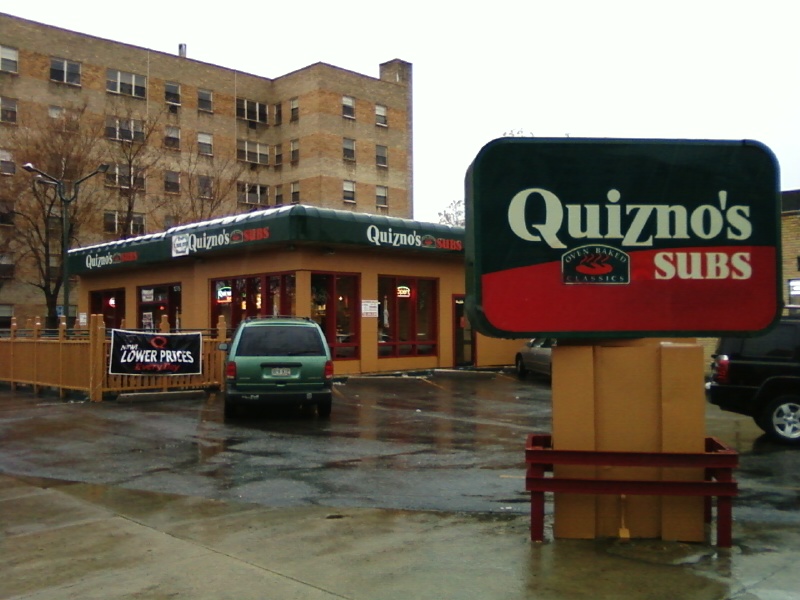
Quiznos reached its peak of 4,700 to 5,000 U.S. locations in 2007, trailing only Subway. The chain sold toasted sandwiches as its main product.
But Subway launched a $5 footlong campaign that cut Quiznos’ prices by 40 percent or more.
Customers chose cheap subs over quality. Price beats taste every time. This destroyed Quiznos’ premium brand.
The Franchise Model Trap
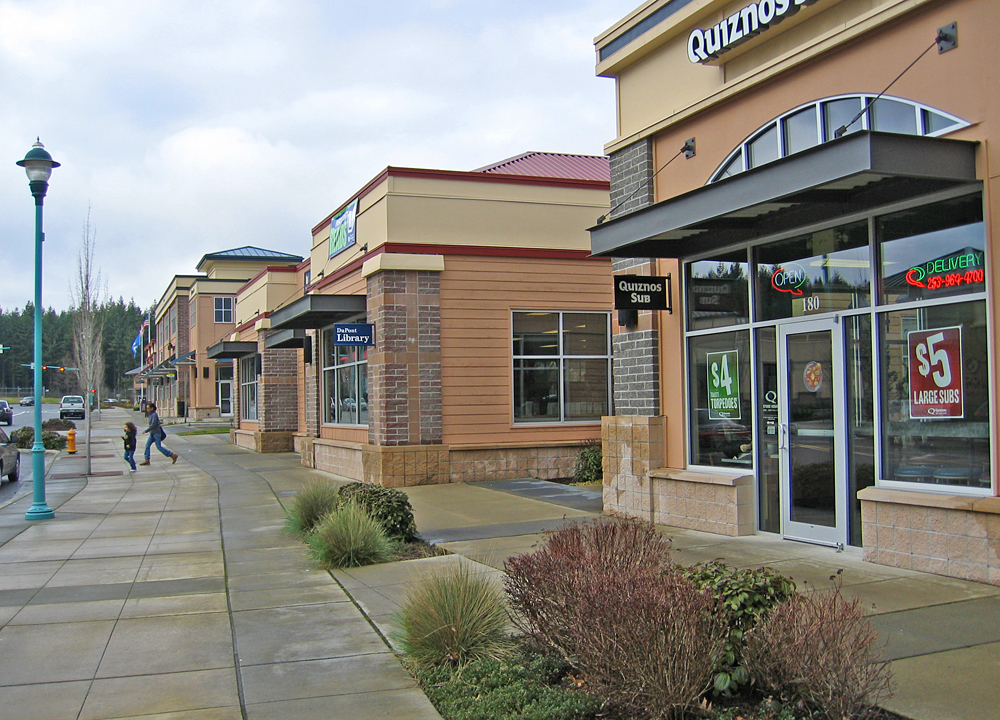
Quiznos built a franchise system that ultimately led to the company’s demise.
The corporation required franchisees to purchase supplies exclusively from American Food Distributors. This system generated $500 million for the corporation in 2006, but harmed franchise owners.
A typical Quiznos franchisee earned just $400,000 per year, while Subway owners earned significantly more. The corporation took profits while franchisees struggled to survive.
The Perfect Storm
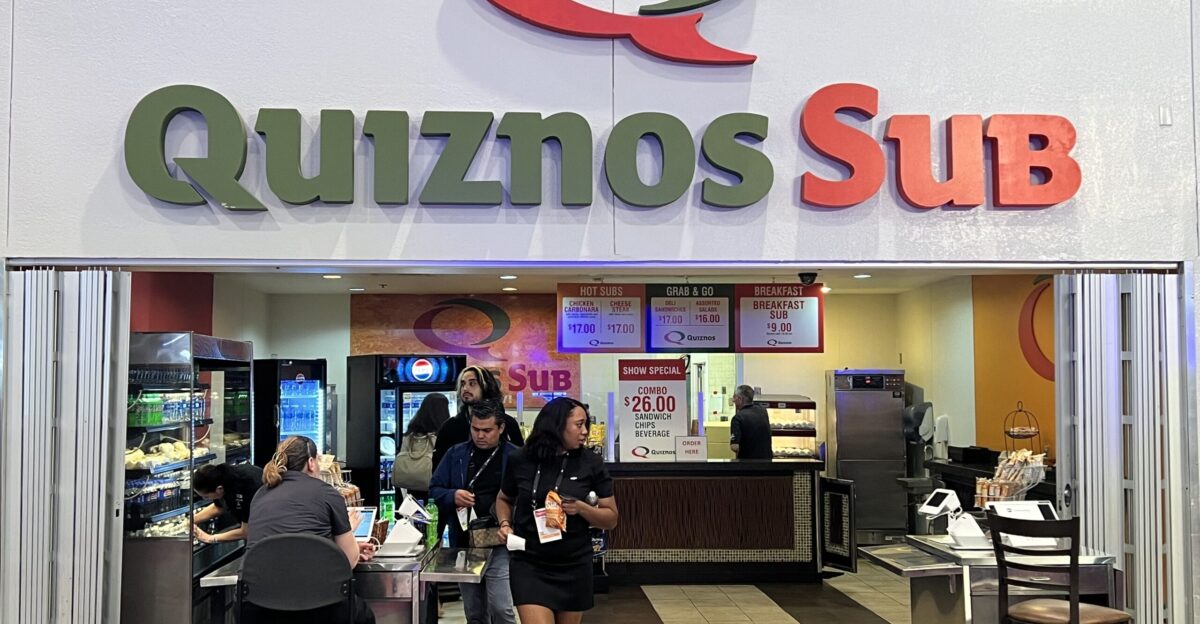
By 2008, three disasters struck simultaneously. Subway’s $5 deal crushed sales. The financial crisis hurt customer spending.
A 2003 buyout left Quiznos with $875 million in debt. Franchisees closed stores in waves—700 in 2009, 800 in 2010. Lawsuits piled up.
The corporation was unable to fix the problems. The death spiral started.
The Bankruptcy Moment
On March 14, 2014, Quiznos filed for bankruptcy with $875 million in debt. The company still ran 2,100 restaurants.
This wasn’t a comeback—it managed the decline. Already, 2,900 locations had closed since 2007. The bankruptcy sped up the collapse.
Stores dropped to 400 by 2017, then under 150 by 2025. Recovery never happened.
Franchisee Devastation Across the Map
The closures hit regions differently. Some areas lost 90 percent of stores in ten years. California, Texas, and Florida—once Quiznos’ strongholds—became ghost networks.
Markets with 50+ locations sometimes kept only 2 or 3 by 2020. Franchisees who invested life savings lost everything.
Owners filed for bankruptcy. Families lost retirement money.
The Human Cost Nobody Counted
Each Quiznos employed 15 to 25 workers. With 4,850 stores closed, experts estimate 67,500 to 112,500 jobs disappeared.
Many were first-time workers—teens gaining experience. Others had worked there for years. Quiznos offered no severance pay.
When stores closed, workers just stopped coming. No warning. No final check. Just unemployed.
Subway’s Parallel Collapse
Quiznos fell harder, but Subway struggled as well. Between 2016 and 2024, Subway closed 7,600 U.S. locations—more than Quiznos’ total.
But Subway dropped from 27,100 to 19,500 stores (28 percent loss). Quiznos fell from 5,000 to 148 (97 percent loss).
Subway still dominates sandwiches. Quiznos became irrelevant. The difference shows everything.
The Regulatory Investigation
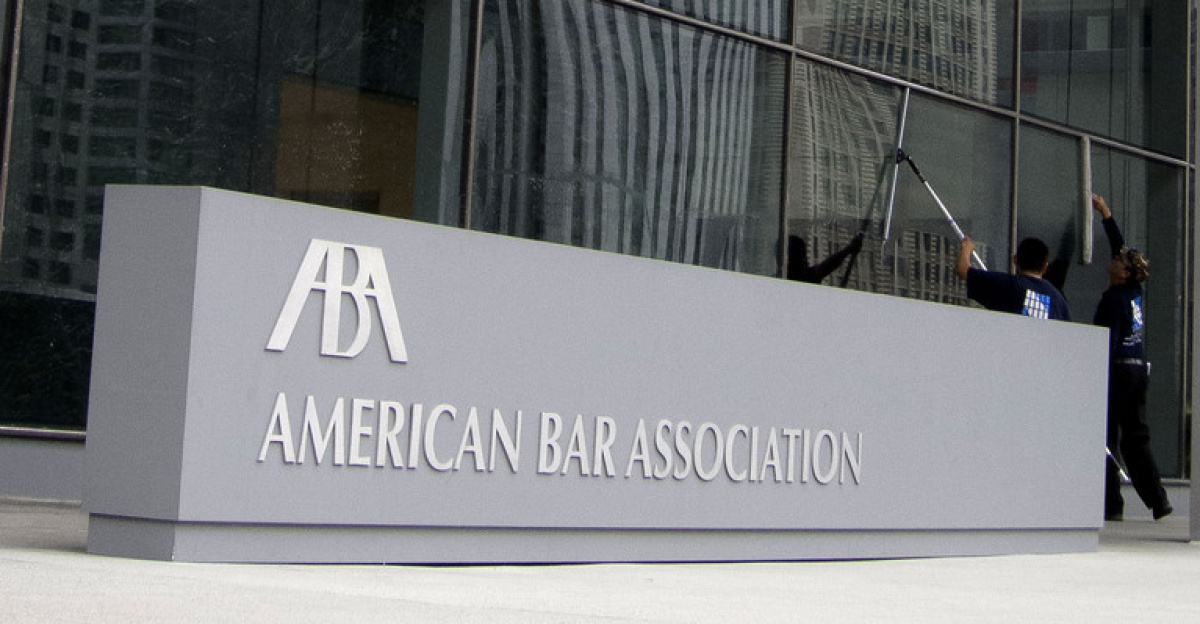
In 2014–2015, the American Bar Association investigated Quiznos’ practices. The findings revealed exploitation, including unfair franchise terms and forced supply rules.
The ABA referred to it as “systemic mismanagement of franchisee relationships.” In 2025, the ABA labeled Quiznos “a cautionary tale for the franchising industry.”
Unlike other bankruptcies, Quiznos’ collapse came from corporate greed, not market forces.
The Hidden Consequence
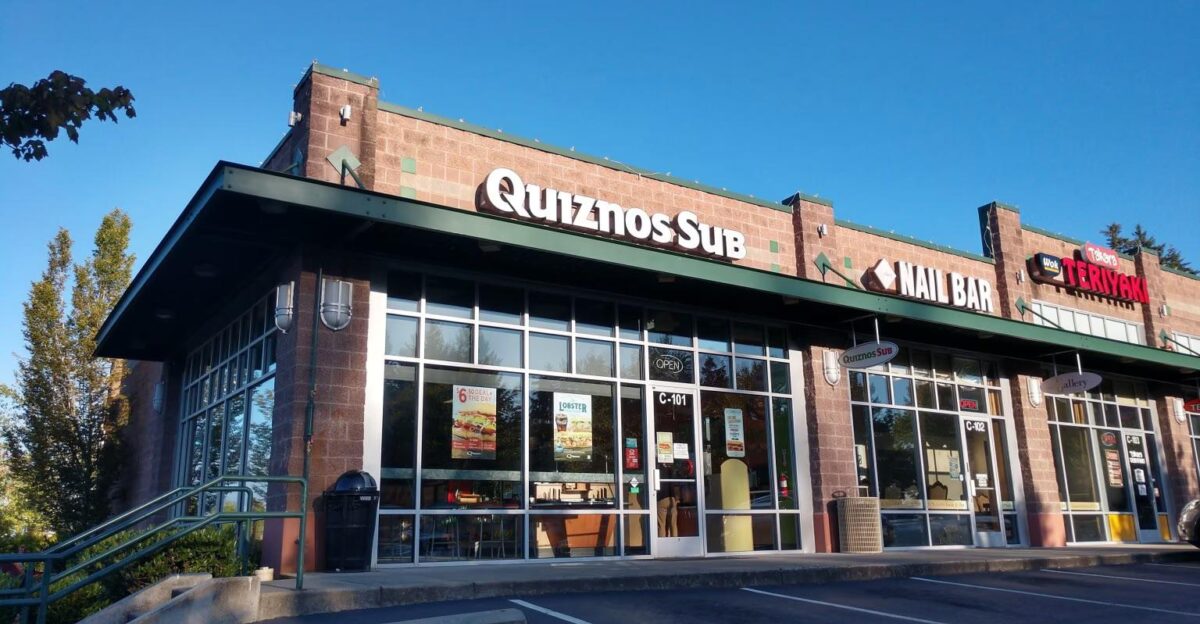
Almost no one discusses this: Quiznos’ collapse changed how franchisees view the sandwich chain industry.
After 2014, franchise applications for sandwich concepts dropped 35 percent across the industry. New franchisees stopped trusting the fast-casual sandwich sector.
This hurt Jimmy John’s, Jersey Mike’s, and regional chains. Quiznos didn’t just wreck itself—it poisoned franchising for an entire category.
The Franchisee Revolt
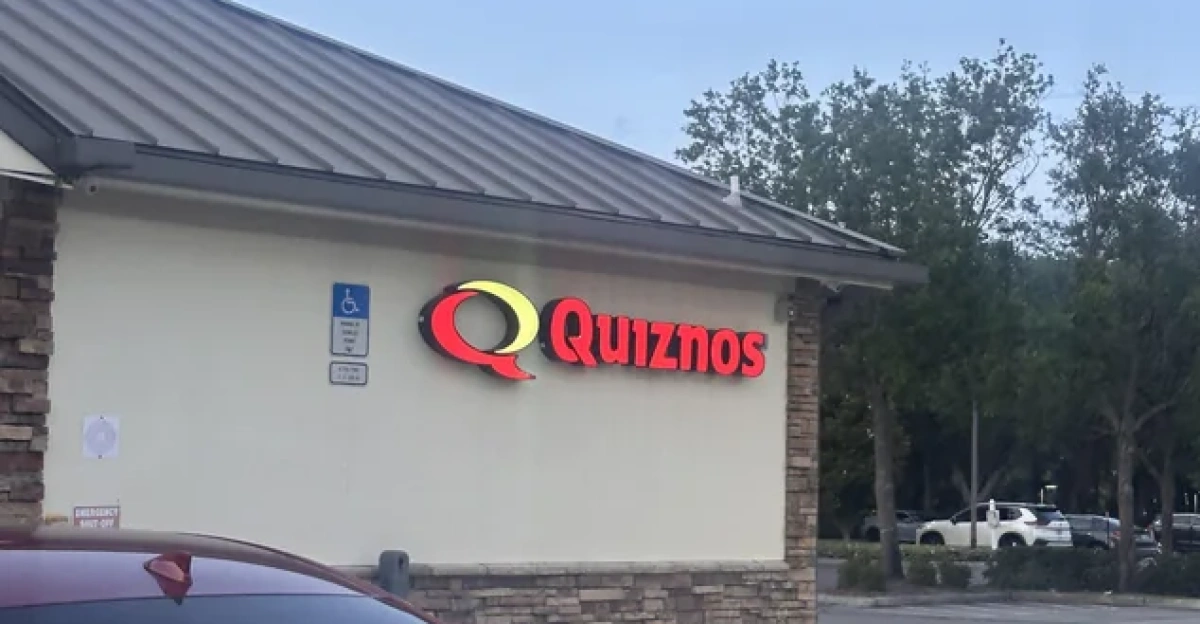
In 2011, Kevin Tackett—Quiznos’ largest franchisee—told Nation’s Restaurant News: “My hope is that management will shift to a model more profitable to individual stores.”
Management ignored him. Franchisees formed groups and repeatedly sued the corporation. Some settlements cut supply costs, but it’s too late. Franchisees had lost faith.
Closures increased from dozens per month to hundreds by 2015.
Corporate Ownership Chaos

Quiznos changed owners multiple times during the collapse. A 2003 buyout by Cerberus Capital loaded the chain with debt.
Later, Grill Concepts and Aqillon Capital took control. By 2014, ownership had become so fragmented that no one could execute a clear strategy.
Leadership shuffled constantly. CEOs came and went. Each new owner planned an exit, not growth.
The Comeback That Never Was
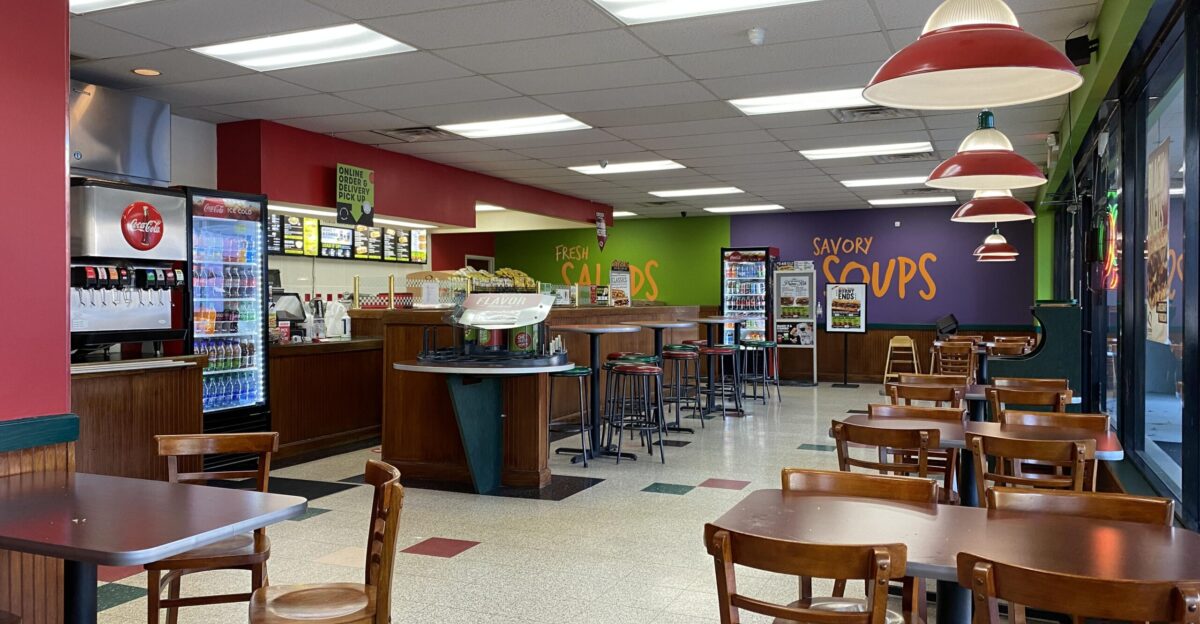
Starting in 2020, Quiznos tried to rebrand. New packaging. Simpler menus. “Premium” positioning for higher prices. Nothing worked.
The brand became toxic. Customers remembered the 4,500-store collapse. Former franchisees stayed bitter.
Landlords avoided Quiznos. By 2024, the company partnered with convenience stores for kiosks—a huge step down from full restaurants.
Expert Skepticism Remains

Industry analysts doubt any real recovery. Franchise consultant David Henkes said in 2024: “Quiznos destroyed its brand equity.
Rebuilding requires not just new stores but restoring franchisee confidence—which will take decades, if ever.”
The chain runs just 148 locations in 2025, down 97 percent from peak. Researchers refer to Quiznos as a “zombie chain”—alive but meaningless.
The Cautionary Close
Quiznos’ collapse raises a tough question: How many other franchise chains are secretly failing? The chain looked stable until it wasn’t.
American Bar Association officials say Quiznos proves franchise regulation remains weak.
The 4,850 closed restaurants and 67,500+ lost jobs show a systemic failure—corporate design that valued extraction over survival. The business model itself failed.