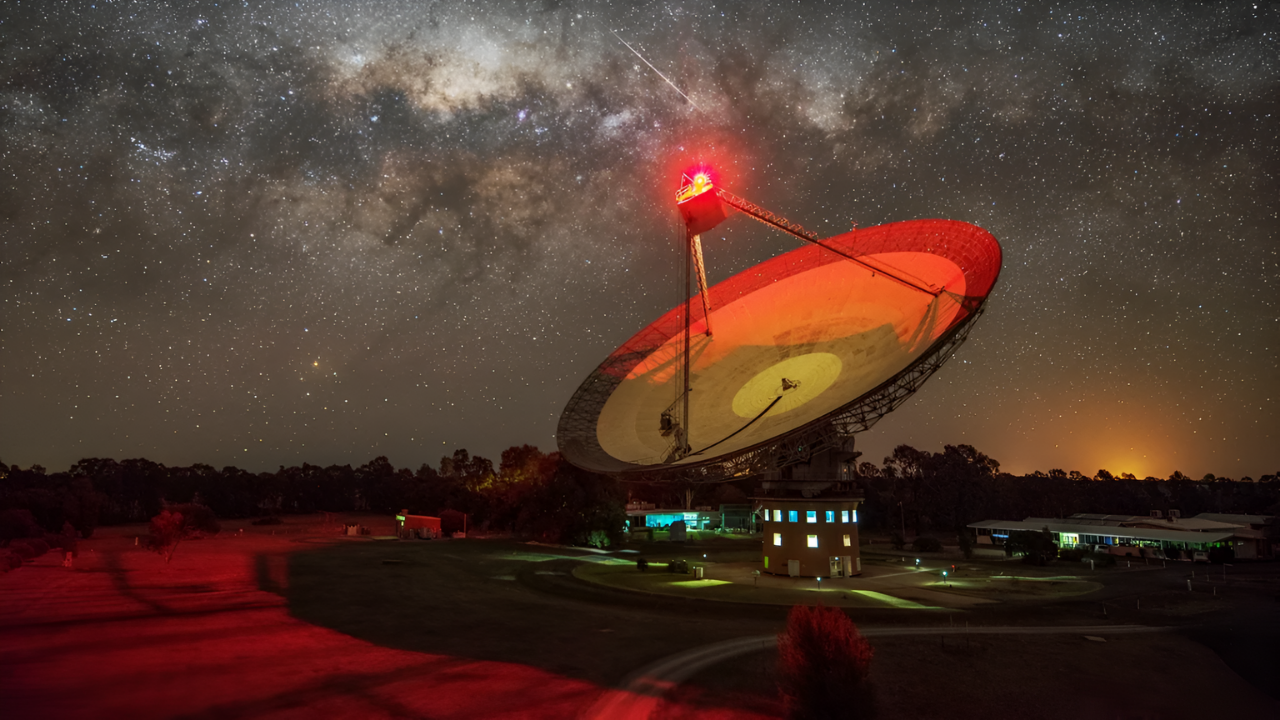
In July 2025, astronomers reached an exciting milestone in their hunt to understand how planets and life begin. For the first time ever, they caught a radio signal coming from an interstellar object, something that traveled to our solar system from another star. This object, called 3I/ATLAS, wasn’t like any comet or asteroid seen before. It carried the chemical traces of a distant star system, making it a messenger from beyond the Sun’s neighborhood.
The breakthrough brought scientists one step closer to answering big questions about where water, planets, and possibly life itself come from. By detecting the faint signal from ATLAS, astronomers opened a brand-new chapter in exploring the building blocks of the universe.
Discovery in the Karoo Desert
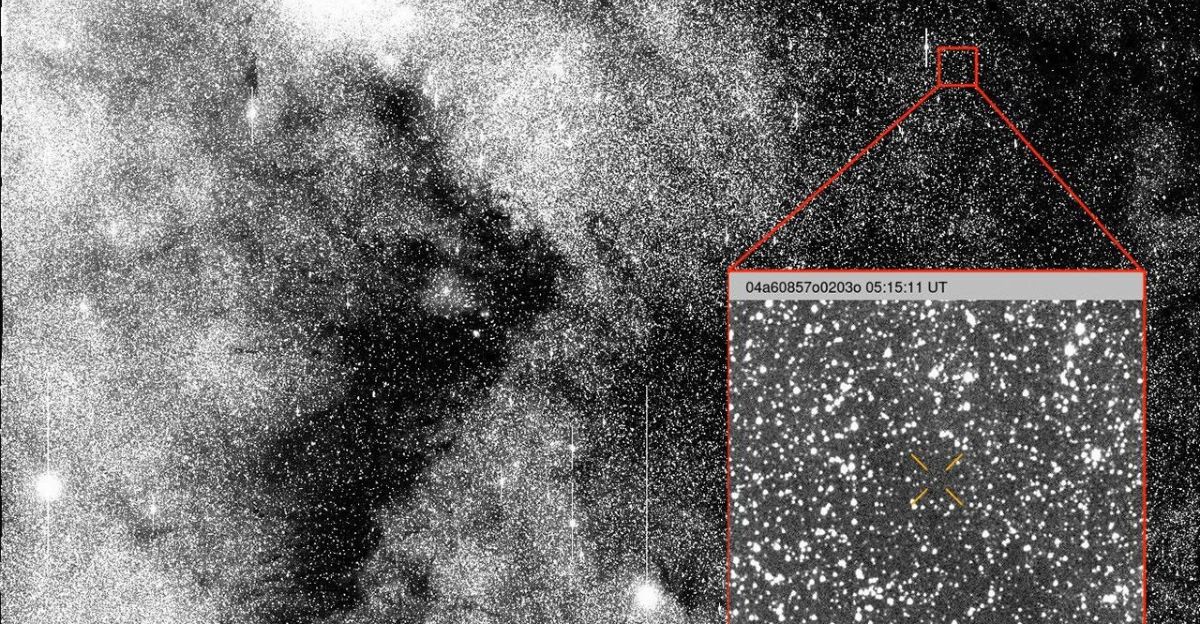
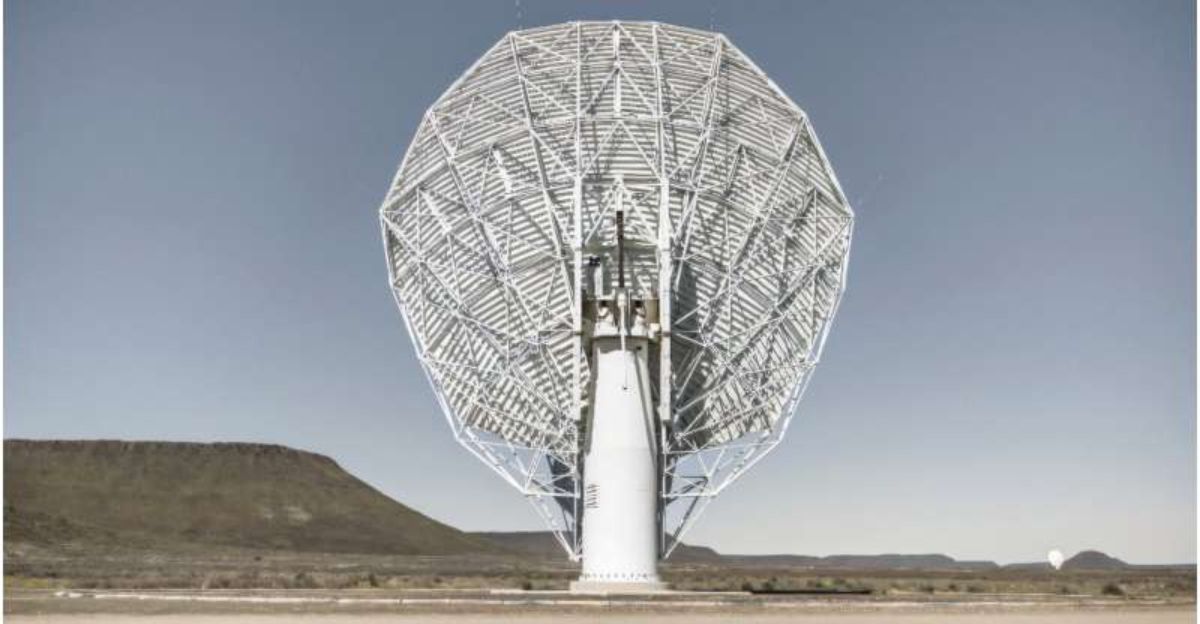
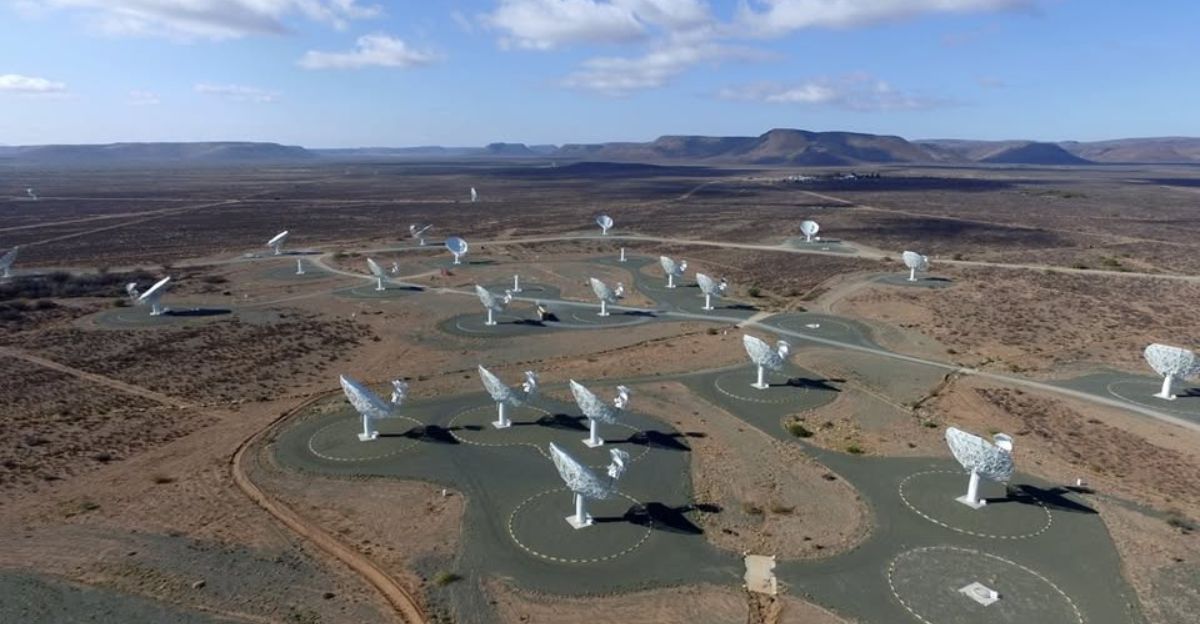
The major breakthrough came on October 24, 2025, when South Africa’s MeerKAT radio telescope picked up a faint signal from 3I/ATLAS. The telescope, located in the quiet Karoo Desert, detected small dips in radio waves known as hydroxyl, or OH, absorption lines. These lines appear when sunlight breaks apart water molecules, showing that ATLAS carried water ice that was being released as it got closer to the Sun.
This was the first time scientists had received a direct radio signal from an object that came from outside our solar system. Earlier in September, teams had tried twice to detect ATLAS, but it was still too far away and too cold for its ices to react to sunlight. By late October, though, it had moved close enough, within 3.76 degrees of the Sun, for heat to trigger gas and dust activity.
When astronomers saw the hydroxyl signal, they realized they were witnessing a defining moment in space science. The detection proved that radio telescopes could study interstellar chemistry directly, revealing what these objects are made of without needing to send spacecraft.
Revealing the True Nature of ATLAS
The radio signal didn’t just prove ATLAS was real, it also showed that it behaved like a comet. The hydroxyl signature perfectly matched the kind seen when comets in our solar system release water vapor. As the sunlight struck ATLAS, the water turned to gas, forming a bright, cloudy shell called a coma.
This discovery settled earlier debates about whether ATLAS was a rocky asteroid or an icy comet. The pattern of OH emissions clearly pointed to the second option. For scientists, these emissions are incredibly valuable. They make it possible to measure how sunlight breaks down water and to estimate the comet’s temperature and gas release rate.
Being able to decode a comet’s chemistry from so far away gives researchers a new window into how planetary systems build up water and organic materials, the same ingredients that helped form Earth and life billions of years ago. The MeerKAT detection showed how much we can learn just by listening to the universe’s natural radio signals.
The Rise and Fading of an Interstellar Visitor
This major discovery didn’t happen overnight. Scientists first tried to detect ATLAS on September 20 and 28, but found nothing. At the time, the object was still too cold, its surface ices were frozen solid and inactive. As ATLAS drifted closer to the Sun, though, its temperature climbed to about 230 Kelvin (−43°C). That warming woke the comet up, causing it to release water vapor that could finally be detected.
On October 29, 2025, ATLAS reached its closest point to the Sun, a stage called perihelion. It came within 1.38 astronomical units, or about 207 million kilometers, still outside Earth’s orbit but close enough for sunlight to set off a brief outburst of gas and dust. For a few days, telescopes across the world watched the comet shine before it faded again as it moved away from the Sun.
Although the encounter was short, the data collected offered priceless clues about how objects from other star systems behave when passing through ours. It also showed how persistence, timing, and improved technology allow astronomers to catch rare events that might never happen again in a lifetime.
What ATLAS Teaches Us About the Universe
What makes ATLAS truly special is what it tells us about the history of water and life in the cosmos. Scientists believe ATLAS formed more than 10 billion years ago, long before Earth or even the Sun existed. Its frozen materials act like a time capsule, preserving the chemistry of the early universe.
The confirmation that ATLAS contains hydroxyl, and therefore water, proves that ice exists on bodies born around other stars. That discovery strengthens the idea that water, and perhaps the seeds of life, are not limited to our solar system. If water is common across the galaxy, life itself might be as well.
As ATLAS now continues its endless journey back into interstellar space, it leaves behind valuable insights and new questions. The echo of its radio signal reminds astronomers how much there is still to learn about where we come from. Thanks to powerful telescopes like MeerKAT, scientists can now read the chemistry of distant worlds without ever leaving Earth. Each signal, no matter how faint, might be the next clue to understanding how life could arise among the stars.