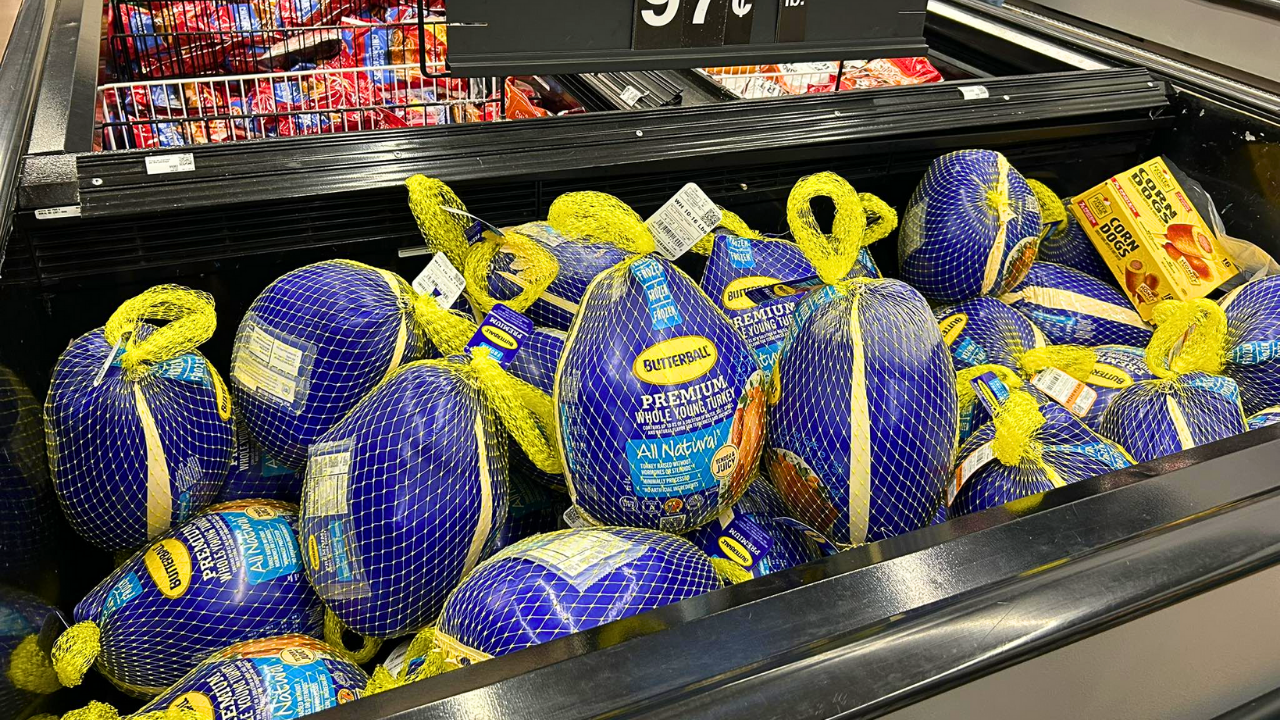
Walmart announces a stunning 25% price reduction on its 2025 Thanksgiving meal basket, dropping from approximately $55 to under $40.
President Trump touted this as proof of improved affordability. But beneath this attention-grabbing discount lies a calculated industry practice that few shoppers notice—and retailers desperately hope you won’t investigate further.
The Missing Items
This year’s basket contains 15 different product types (22 individual packages) compared to 29 packages (21 product types) in 2024—a 24% reduction in items. Missing are pecan pie, sweet potatoes, miniature marshmallows, corn muffin mix, fresh onions, celery, and poultry seasoning.
Walmart conveniently omitted these details when announcing the “savings,” banking on shoppers comparing only price tags rather than contents.
The Shrinking Products
Beyond the removed items, Walmart downsized existing products. Fresh cranberries were maintained at 12 ounces, but the type changed from canned to fresh. Cream of mushroom soup reduced from two cans to one can.
Crispy fried onions changed from French’s brand (6 ounces) to Kinder’s brand (4.5 ounces). The turkey size remained consistent at 13.5 pounds, though this represents a specific reduction within the 2024’s 10-16 pound range.
Welcome to Shrinkflation
This tactic has a name: shrinkflation. Rather than raising prices, companies reduce the quantity of products while maintaining—or even lowering—prices. It’s the grocery industry’s documented practice, allowing retailers to claim affordability while delivering less value.
According to 2024 reports, shrinkflation averaged 11.2% among national grocery brands in 2023, and surveys indicate that consumers are increasingly aware of this practice.
Why Shrinkflation Works

Consumer psychology research reveals shoppers are more sensitive to price increases than size reductions. A $1 price hike triggers immediate switching to store brands, but removing 20% of product content often goes unnoticed.
Retailers exploit this cognitive blind spot strategically. It’s not accidental—it’s calculated marketing based on behavioral economics research about consumer decision-making patterns.
The Brand Swap Deception
Walmart’s 2025 basket contains a higher percentage of its “Great Value” store brand compared to 2024’s more name-brand-heavy selection. Sweet Hawaiian rolls became a generic term for dinner rolls.
French’s crispy fried onions became Kinder’s. Ocean Spray cranberry sauce was replaced with fresh cranberries. Lower-cost brand substitutions enable Walmart to reduce its costs while maintaining its marketing claims about affordability.
The Real Math

When accounting for removed items (pecan pie, sweet potatoes, marshmallows, muffin mix, onions, celery, seasoning) and downsized quantities (one soup can instead of two; 4.5-ounce onions instead of 6 ounces), the basket’s actual value declined significantly. The $15 price reduction masks the reduction in food volume.
Shoppers aren’t necessarily saving money; they’re receiving substantially less food while Walmart manages cost pressures through carefully orchestrated product changes.
Not Apples to Apples

David Anderson, livestock economist at Texas A&M University, stated directly: “It’s not apples to apples, right? What this does highlight is individual retailers’ strategies for getting customers in the door.”
The 25% savings claim misleads consumers by comparing fundamentally different product bundles. It’s a marketing tactic disguised as inflation relief, designed to generate headlines and drive foot traffic.
Industry-Wide Practice
Walmart isn’t alone. Target’s four-person meal maintained its $20 price point by substituting French bread and frozen corn for green beans and mushroom soup. Aldi and Lidl offer competing Thanksgiving meals at similar price points while employing identical tactics—swapping ingredient brands and reducing quantities.
This coordinated approach reveals industry-wide strategy rather than competitive pricing innovation.
The Transparency Crisis

According to Purdue University’s October 2024 Consumer Food Insights report, 77% of consumers reported noticing shrinkflation within the previous 30 days. Despite this awareness, 74% agree that mandatory transparency requirements should exist for product size reductions.
Currently, no federal regulations require prominent labeling when products shrink. Retailers operate in a regulatory vacuum that prioritizes corporate flexibility over consumer disclosure.
France Fights Back

France introduced regulations effective July 1, 2024, requiring retailers to flag products reduced in size without corresponding price cuts. This legislative response acknowledges shrinkflation as a deceptive practice requiring government intervention.
American consumers enjoy no such protections, leaving them vulnerable to undisclosed product changes. The contrast highlights U.S. regulatory gaps in protecting shoppers from systematic rebranding practices.
The Profit Motive

Food companies cite rising transportation and production costs as justification for shrinkflation. However, major retailers like Walmart reported record profits during recent periods of accelerating shrinkflation.
This pattern suggests shrinkflation serves profit maximization rather than cost survival. Companies claim that rising expenses necessitate changes, yet executive compensation and shareholder returns continued to climb while consumers received fewer products.
The Diesel Distraction

Food companies cite transportation costs as shrinkflation justification. Diesel exceeded $5 per gallon in 2022, impacting delivery expenses. However, grocery chains simultaneously reported margin expansion.
Retailers marketed the “rising costs” narrative prominently while delivering fewer products and maintaining or increasing profit margins. Consumers subsidized corporate profit targets by accepting reduced portions and making product substitutions.
The Political Spin

Trump’s repeated claims about 25% cheaper Thanksgiving meals served as political messaging about economic performance. By citing Walmart’s promotional pricing without mentioning the change in the basket’s composition, he weaponized retail marketing for political gain.
The strategy generated headlines focused on percentage savings, while details about removed items and brand substitutions remained buried in fact-checks most voters never read.
Biden Administration Response
The Biden administration labeled shrinkflation a “corporate rip-off” in February 2024, and Senator Bob Casey introduced the Shrinkflation Prevention Act.
The legislation aimed to regulate deceptive sizing practices, requiring manufacturers to clearly disclose any size reductions. However, the legislation faced opposition from the industry and did not advance in Congress. The political debate revealed fundamental disagreement about regulatory intervention in pricing strategies.
The Innovation in Deception
Companies employ increasingly sophisticated shrinkflation tactics. Adding more air to chip bags maintains package size while reducing content. Increasing jar bottom divots creates an illusion of equal volume. Redesigning packaging emphasizes brand imagery over net weight disclosure.
These innovations in deception require design investment and executive approval—evidence that shrinkflation represents an intentional corporate strategy rather than an accident.
The Turkey Reality

Purdue University’s College of Agriculture reported that wholesale turkey prices rose 75% since October 2024, with retail prices 25% higher year-over-year. The 13.5-pound turkey represents a specific portion within the previous 10-16-pound range.
Walmart secured long-term contracts allowing the chain to offer promotional pricing while wholesale markets experienced severe price increases—a luxury smaller retailers cannot access.
What Consumers Should Do

Compare unit prices, not package prices. Check net weight on every purchase and photograph products to track size changes over time. Buy store brands intentionally rather than accepting forced substitutions through product removal.
Calculate cost per ounce consistently across shopping trips. Voice concerns to retailers and legislators. These strategies empower shoppers to make informed purchasing decisions and resist manipulative practices.
The Future of Shrinkflation
Experts predict shrinkflation will persist across food, beverages, household products, and personal care items as companies normalize the practice. Without regulatory intervention, competitive pressure will accelerate deceptive sizing.
Unless consumers demand transparency legislation that matches France’s approach, American shoppers will continue to experience changing product compositions while marketing emphasizes fictional “value.”
The Bottom Line

Walmart’s 25% Thanksgiving price drop represents strategic product reduction marketed as savings. Shrinkflation transforms inflation management into a profit opportunity through consumer deception about what shoppers actually receive.
Until transparency regulations exist requiring prominent disclosure of product changes, retailers will continue this calculated practice. Real affordability requires honesty about what’s included—not just headlines about prices. Question every deal.