A dramatic warning from former NASA scientist James Hansen has reignited global concern: the “point of no return” for catastrophic climate change may arrive in 20–30 years.
This is far sooner than previous estimates, compressing the expected timeline by 50–60 years, raising urgent questions about Earth’s climate and the millions living in vulnerable regions. What does this mean for the planet’s future?
Stakes Rising Fast
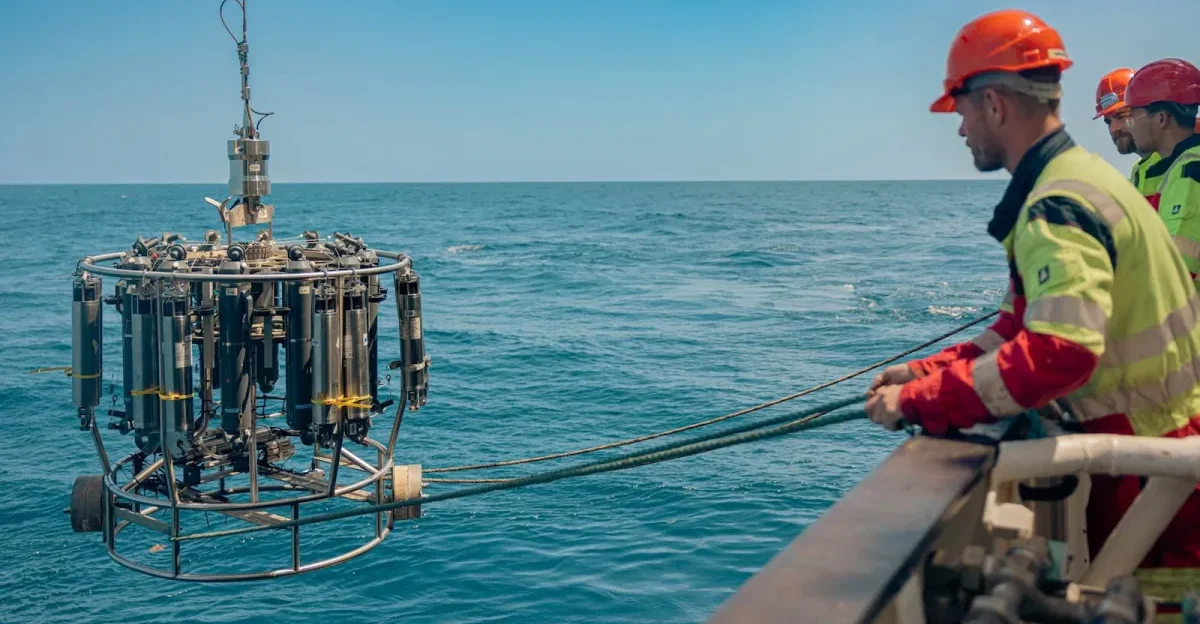
Hansen and 17 international colleagues suggest the Atlantic Meridional Overturning Circulation (AMOC) could fail by mid-century. This vast ocean conveyor belt regulates heat globally, meaning its collapse could trigger rapid sea level rise and extreme weather, threatening cities and agricultural regions worldwide.
Hansen warns, “We have shown that the world is approaching a point of no return in which the overturning ocean circulation may shut down as early as mid-century.” Could these changes arrive sooner than expected?
Climate Science Roots

James Hansen first testified to the U.S. Congress about global warming in 1988, linking fossil fuel emissions to rising temperatures. That moment was a turning point in climate science.
Thirty-seven years later, his early warnings remain urgent, though catastrophic timelines have dramatically shortened. How have these decades of data shaped the current understanding of climate risk?
Mounting Pressures

Global warming has accelerated over the past 15 years, rising more than 50% faster than the prior four decades—from 0.18°C to 0.27°C per decade or more. January 2025 was the warmest on record, defying expected La Niña cooling patterns.
This rapid acceleration validates Hansen’s warnings that climate responses are faster than models predicted. But what pressures are now building in our oceans?
A Tipping Point Comes Into Focus

Hansen’s February 2025 study projects the AMOC could collapse in 20–30 years, not “beyond this century” as the IPCC concluded. This revises collapse predictions by 50–60 years, marking a pivotal moment in climate science.
A shutdown would lock in catastrophic sea level rise and disrupt climate systems irreversibly. Are humanity’s climate safeguards prepared for this shift?
U.S. East Coast at Risk

If the AMOC fails, millions of U.S. East Coast homes face rapid sea level rise, threatening $2–5 trillion in real estate. Cities like Miami, New York, and Boston could see infrastructure inundation within decades.
Economic and social impacts would be severe, displacing millions and triggering insurance crises. How quickly will coastal communities need to adapt?
Human Toll: Europe

Western Europe, home to 500 million people, could experience extreme summers and harsh winters, threatening food security and public health. AMOC moderation has historically stabilized European climate, which may now shift dramatically.
Hansen notes, “The main issue is the sleeping giant, the point of no return, the danger of an AMOC shutdown.” Could Europe face unprecedented extremes in the coming decades?
Scientific Debate
Hansen’s findings challenge the IPCC, which predicted AMOC shutdown as unlikely this century. Independent studies, including Ditlevsen et al., estimate a central collapse around 2050 using different methods.
Some experts, like Michael Mann and Bob Kopp, urge caution on ice melt projections. The debate now centers on timing and severity rather than whether weakening will occur. How do these differences affect public perception?
Global Patterns Shift

The AMOC distributes heat from the tropics to the poles, regulating weather patterns. Its shutdown could alter rainfall, intensify storms, and reduce agricultural productivity worldwide.
Freshwater injections from Arctic melt exceed previous estimates, affecting circulation for centuries. Today’s ice melt has lasting impacts that span generations. What signals are scientists tracking for early warnings?
The Policy Gaps

Hansen criticizes leaders for prioritizing short-term economic gains over long-term stability. He calls for a carbon fee and dividend, direct emission reductions, research, and public awareness initiatives.
Modeling suggests that a $ 15-per-ton carbon fee, rising annually, could reduce U.S. emissions by 50% in 20 years while generating 2.8 million jobs and $1.375 trillion in GDP growth. Could this policy spark meaningful change?
Frustration Grows
Scientists express frustration at decades of delayed action. Hansen’s 1988 warnings were largely ignored, resulting in a loss of 37 years of potential climate intervention.
Accelerating climate impacts leave even less room for delay. Special interests are blamed for obstructing action, intensifying the urgency for policy shifts. Why has global momentum remained so slow?
Leadership in Flux
Hansen retired from the NASA Goddard Institute in 2013 but now leads climate research at Columbia University’s Earth Institute, focusing on actionable policy engagement.
This transition reflects the urgency within the scientific community, which is pushing beyond publications toward political solutions. How will new leadership approaches influence global climate strategies?
Comeback Strategies
Hansen proposes carbon pricing, CO2 removal, expanded research, and public awareness campaigns. The carbon fee and dividend model could benefit 70% of households while driving emission reductions.
These strategies aim to generate public support while addressing concerns about equity. Could these measures turn the tide before irreversible climate impacts occur?
Expert Skepticism
Bob Kopp of Rutgers questions Hansen’s ice melt acceleration, arguing that current data does not yet support exponential trends. Rates of ice loss in Greenland and Antarctica must rise further to match projections.
Despite debate, the weakening of the AMOC consensus remains. The scientific discussion underscores complexity but not the seriousness of the threat. What will the next decade of data reveal?
What’s Next?
Scientists are racing to refine models and monitor ocean currents, freshwater flux, ice melt, and temperatures. Observational networks and satellite tech will offer clearer signs of AMOC destabilization.
Decisions over the next 20–30 years may determine whether major tipping points are triggered. Will these indicators prompt immediate global action?
Policy Implications

Hansen’s study drives calls for stronger international agreements and stricter emissions targets. The European Commission calls it a “serious climate wake-up call.”
Immediate renewable energy transition, a phase-out of fossil fuels, and carbon removal measures are recommended. Achieving net-zero emissions by 2050 is critical to avoid the collapse of the AMOC. How ready are governments to meet these deadlines?
Global Ripple Effects

AMOC collapse could devastate island nations and major economies. Europe would see extreme temperature swings; North Africa faces desertification, and monsoon disruptions threaten billions in Asia.
Nearly one billion coastal residents are at risk. International cooperation is crucial for managing climate migration, food security, and disasters on an unprecedented scale. Could global coordination match the urgency?
Legal and Environmental Fallout

Rising sea levels and extreme weather could trigger legal disputes over property, insurance, and government responsibility. Environmental groups are preparing lawsuits to enforce more decisive climate action.
Climate justice questions—such as responsibility for emissions and funding adaptation—are on the rise. Financial markets are already factoring in these risks, signaling that legal and economic consequences may grow rapidly. Will courts accelerate climate accountability?
Generational Shifts

Youth are increasingly vocal and mobilized, demanding urgent climate action. Hansen notes that generational pressure could accelerate the transition to renewable energy and policy reform.
Those under 30 face the most significant impacts, creating a moral imperative for immediate action. Could this generation overcome political resistance and reshape climate governance?
Why It Matters Now

The revised AMOC timeline signals the urgent need for climate action within a single generation. Choices made in the next 20–30 years could shape civilization for centuries.
Hansen’s warning synthesizes paleoclimate data, current observations, and physics. Act decisively now to cut emissions, fund renewables, and implement carbon pricing—or risk irreversible planetary consequences. Will the world rise to meet the challenge?