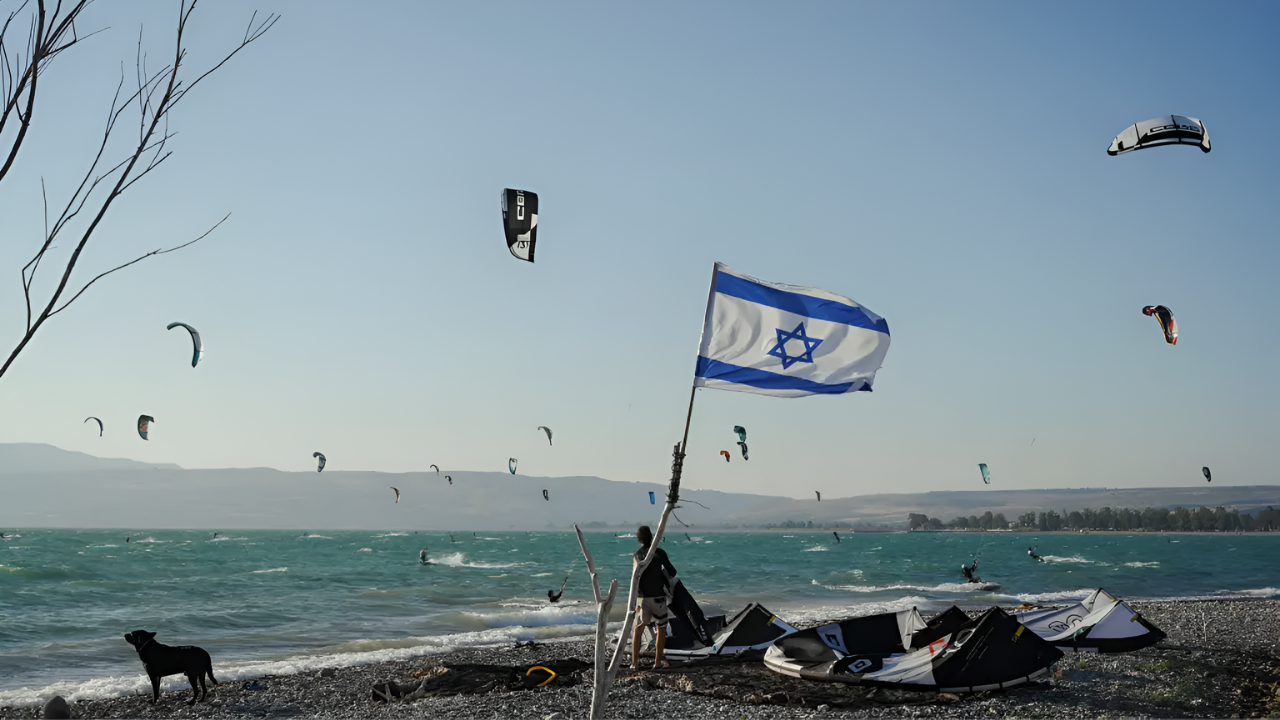
The Sea of Galilee, a lake revered for its biblical history and vital to Israel’s water supply, faces an unprecedented crisis that now requires an extraordinary technological solution. In October 2025, Israel inaugurated the world’s first-ever desalination project designed specifically to revive a natural freshwater lake. By reversing its National Water Carrier, Israel is pumping desalinated Mediterranean seawater into the Sea of Galilee—a landmark intervention that represents humanity’s most ambitious attempt to resurrect a depleting water body through technological innovation.
A Lake on the Brink
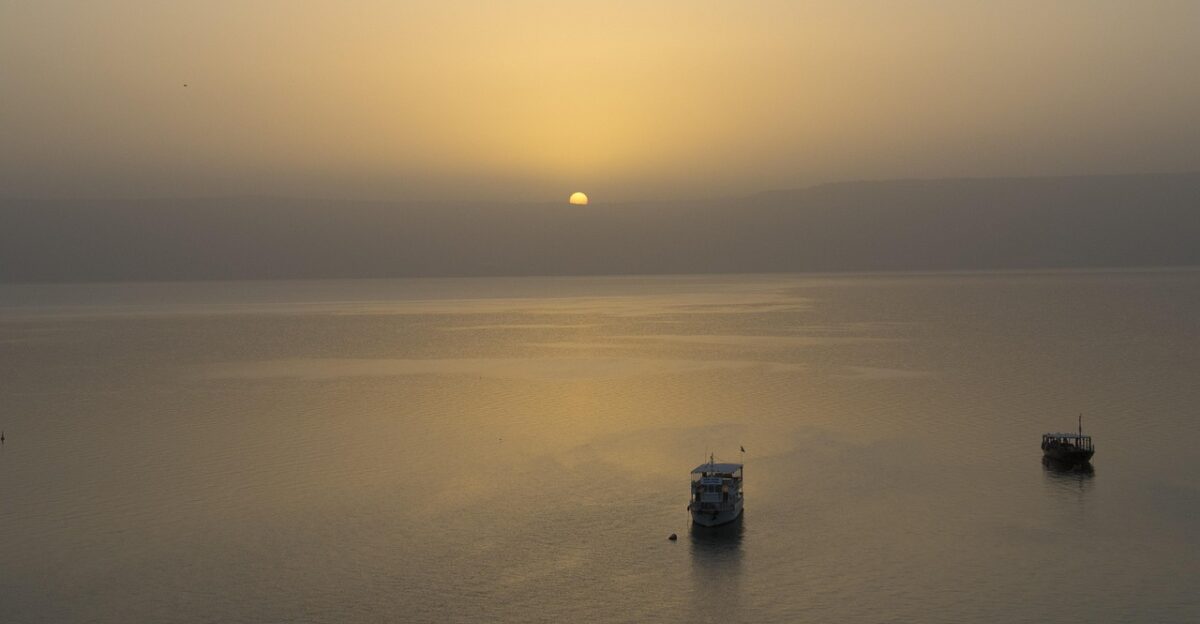
The urgency is acute. By November 2025, the Sea of Galilee’s surface had dropped to 213.33 meters below sea level—just 34.5 centimeters above the “lower red line,” a critical threshold for ecological collapse. The rate of decline is alarming: the lake is losing more than 2.5 meters of water per year, far outpacing previous droughts, which averaged about one meter annually. This rapid descent stems from a combination of severe drought, rising temperatures, and increased water demand across the region.
To counteract this crisis, Israel now pumps 1,000 cubic meters of desalinated water per hour—about 264,000 gallons—into the lake via a pipeline at Ein Ravid. While this currently adds only half a centimeter to the lake’s level each month, the project is designed as a foundational step toward stabilization. Water Authority officials confirm that a second pipeline could double the inflow, with additional capacity planned depending on rainfall and desalination output. “Our goal is to increase inflow to several thousand cubic meters per hour,” said Firas Talhami, director of the Kinneret and Northern Water Sources Division.
The project targets a fundamental shift: reversing decades of unsustainable extraction by transforming the lake from a source being drained to one being actively replenished. This reversal moves beyond emergency response toward systemic restoration.
Faith, History, and Modern Engineering
The Sea of Galilee is not only a natural resource but also a spiritual landmark. For centuries, it has drawn pilgrims to sites like Capernaum and the Mount of Beatitudes, where biblical miracles are said to have occurred. Today, the lake’s survival depends less on nature or faith and more on technology—desalination plants, pumps, and pipelines now perform the work that rainfall once did.
The reversal of the National Water Carrier marks a historic shift in water management philosophy. For sixty years, the system transported water from the Galilee southward to supply cities and farms. Now, after a billion-shekel retrofit, the infrastructure flows northward to sustain the lake itself. This transformation required extensive engineering and political coordination, underscoring the scale of the challenge and the nation’s commitment to preserving its most storied body of water.
Drought, Agriculture, and Hard Choices
The crisis did not emerge overnight. The winter of 2024-2025 brought only half the usual rainfall, with some areas receiving as little as 40 percent of normal levels. Springs and streams that once fed the lake have weakened, leaving the Sea of Galilee almost entirely dependent on artificial inflow.
To protect the lake, Israel slashed water allocations to nearby farmland by 90 percent, leaving about 5,000 acres without irrigation. Crops failed, and farming communities suffered severe losses. Authorities described the decision as a stark trade-off: either sustain agriculture or save the reservoir that supplies millions. The lake took priority, reflecting the project’s commitment to resurrection as the overriding national objective.
Ecological Restoration and the Path Forward
The desalinated water now flowing into the lake has already begun restoring previously dry areas. Project manager Firas Talhami noted that the Tsalmon stream, which once fed the Sea of Galilee, “is now navigable by canoe” as desalinated water flows through it toward the lake. This represents a tangible step toward ecosystem recovery.
Scientists are closely monitoring the effects of desalinated water on the lake’s ecosystem. Experts have confirmed that the process should not significantly disturb the lake’s ecosystem, though they continue to monitor long-term effects from the lower salinity. The ultra-pure water dilutes natural salinity, and researchers are watching for changes in algae, microbial life, and fish populations. Tilapia, known locally as St. Peter’s fish, are particularly vulnerable as shrinking habitats and fluctuating salinity threaten their survival.
The project targets prevention of the “black line” at 214.87 meters below sea level—a point of no return where underground salt springs would contaminate the lake, rendering it unfit for drinking, irrigation, or wildlife. By raising water levels through continuous desalination inflow, Israel seeks to maintain the lake above this threshold indefinitely.
A Global First with Expanding Capacity
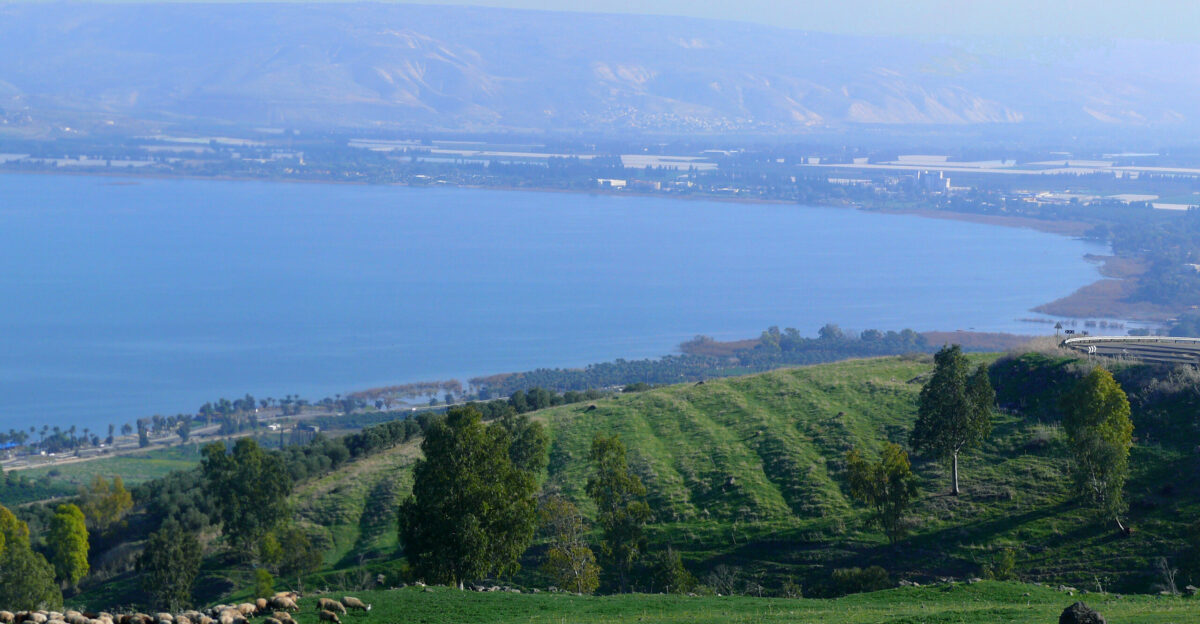
Israel’s intervention is a global first, made possible by its extensive desalination infrastructure. Five major plants produce 600 million cubic meters of water annually, with plans to expand further. The National Carrier Flow Reversal Project leverages this capacity to redirect surplus desalinated water northward, converting a liability into a resource for lake restoration.
The project’s designers envision staged expansion. “In the future, the quantities will increase,” officials stated, explaining that current flows represent “an initial basic streaming” while engineers learn the system and calculate optimal volumes. As desalination output increases and rainfall patterns are monitored, inflow capacity is expected to grow significantly.
Toward Recovery
While the future remains uncertain—meteorologists forecast winter rainfall at about 80 percent of the long-term average—Israel has committed to expanding desalination and reversing the National Water Carrier as core strategies. Project architects acknowledge that full stabilization will require sustained technological capacity and commitment, but view this desalination initiative as a fundamentally new approach to water management that resurrects, rather than simply maintains, the Sea of Galilee.
The Sea of Galilee now stands as a living experiment in climate adaptation and technological restoration. Its fate is watched by scientists, policymakers, and communities worldwide, offering both a warning about environmental vulnerability and a lesson in the power of human ingenuity to resurrect imperiled ecosystems.