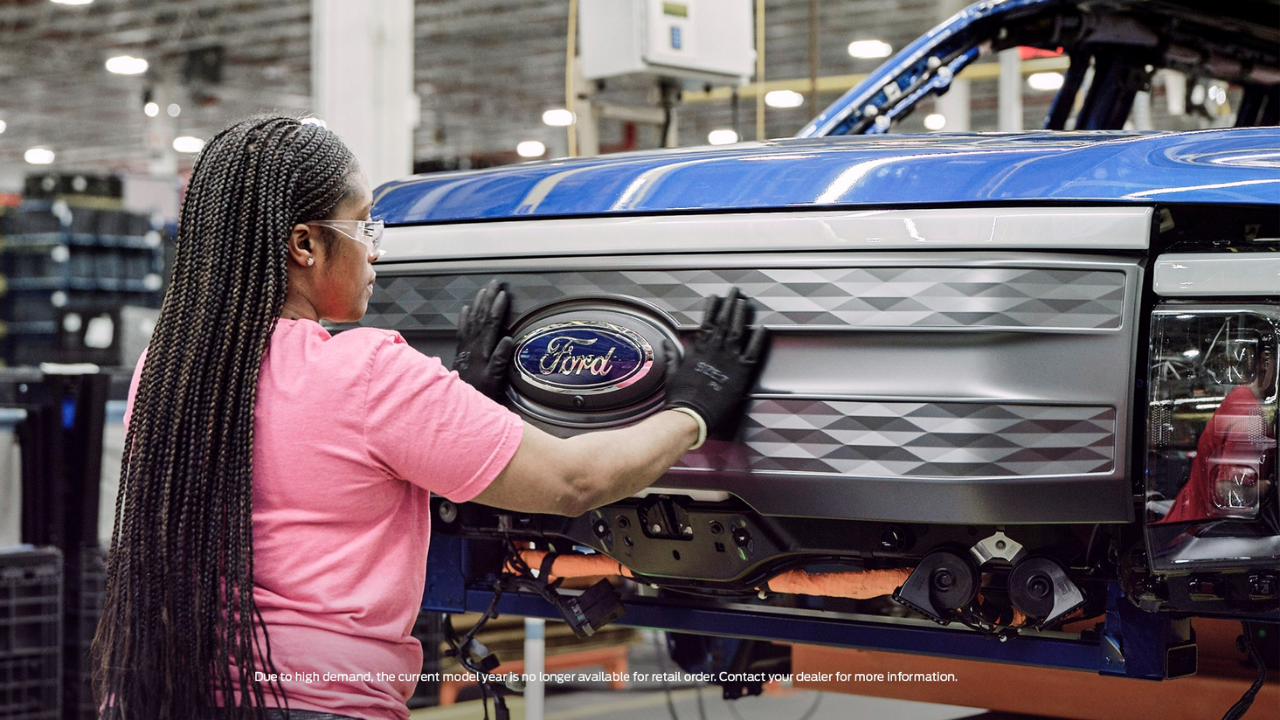
Ford will lay off 2,000 workers at its Louisville Assembly Plant in Kentucky starting in December 2025. The temporary shutdown, lasting at least 10 months, comes as Ford retools the 70-year-old facility to manufacture electric vehicles using revolutionary Tesla-inspired manufacturing techniques.
UAW Local 862 President Todd Dunn insists it will be “a great outcome,” but workers face nearly a year without regular pay.
What Is the ‘Tesla Model’?

Ford is adopting Tesla’s groundbreaking Gigapress technology to transform vehicle manufacturing. These massive machines, with a clamping force exceeding 6,000 tons, stamp entire vehicle subassemblies from single sheets of aluminum.
This replaces traditional assembly methods that required welding together more than 60 separate components. Ford ordered its Gigapress machines from Italian manufacturer Idra, the same supplier Tesla uses.
The $2 Billion Investment Gamble

Ford is committing nearly $2 billion to upgrade the Louisville facility as part of a broader $5 billion U.S. manufacturing investment.
The company plans to completely modernize the plant with cutting-edge digital infrastructure, including WiFi-7 networks and private 5G communications. CEO Jim Farley admitted “there are no guarantees” for the project’s success, calling it a high-stakes gamble.
Revolutionary Assembly Tree System

Ford’s Universal EV Production System replaces the traditional linear assembly line with an “assembly tree” layout. Three separate lines will simultaneously build the front, rear, and structural battery sections, then join them together.
This parallel production approach reduces workstations by 40% and could speed assembly by up to 40% before reinvesting time into quality improvements.
Engineering Innovation

The Universal EV Platform reduces vehicle parts by 20% and uses 25% fewer fasteners compared to traditional vehicles.
The wiring harness is 1.3 kilometers shorter and 10 kilograms lighter than Ford’s first-generation electric SUV. Large unicastings simplify front and rear sub-assemblies, while the structural battery pack serves as the vehicle’s floor.
The $30,000 Electric Pickup Target
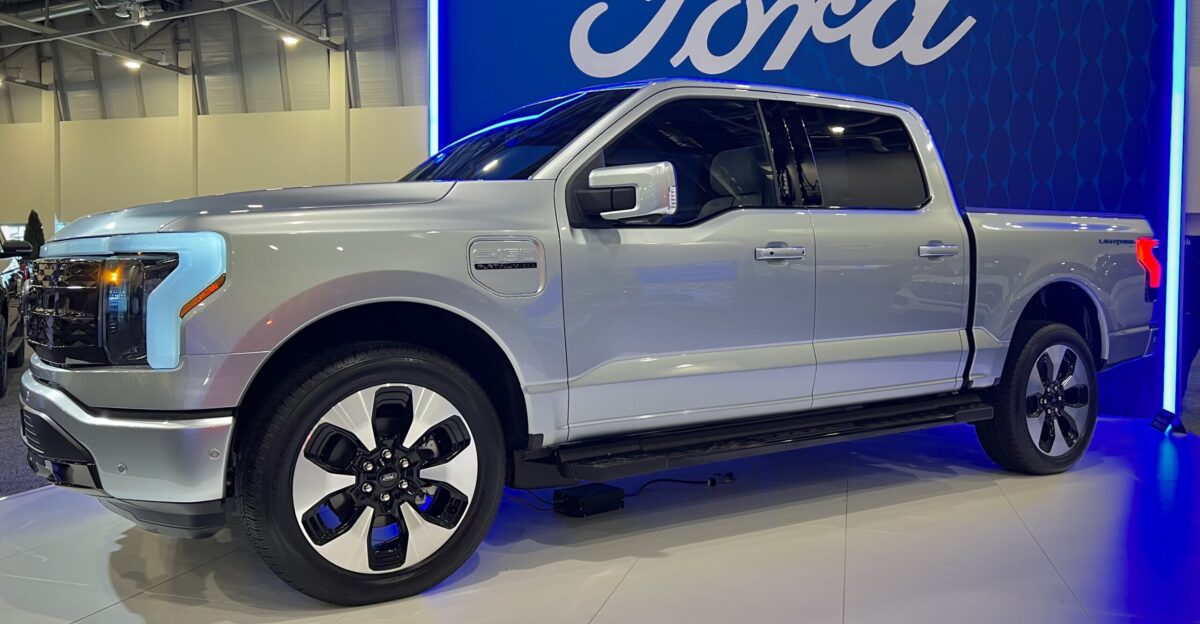
Ford plans to launch a compact, four-door electric pickup truck in 2027 with a targeted starting price of $30,000.
The company aims to make the truck’s five-year purchase and operating costs lower than those of a used Tesla Model Y. This would make it Ford’s most affordable EV, positioned between the Maverick and Ranger in terms of size.
Return of the Ranchero?

Ford recently renewed its trademark for “Ranchero,” sparking speculation that the historic nameplate could return. CEO Jim Farley described the vehicle as “really not a pickup,” but rather “a new silhouette.”
The original Ranchero was a car-based utility vehicle that competed with Chevrolet’s El Camino from 1957-1979.
The Workers’ Painful Reality
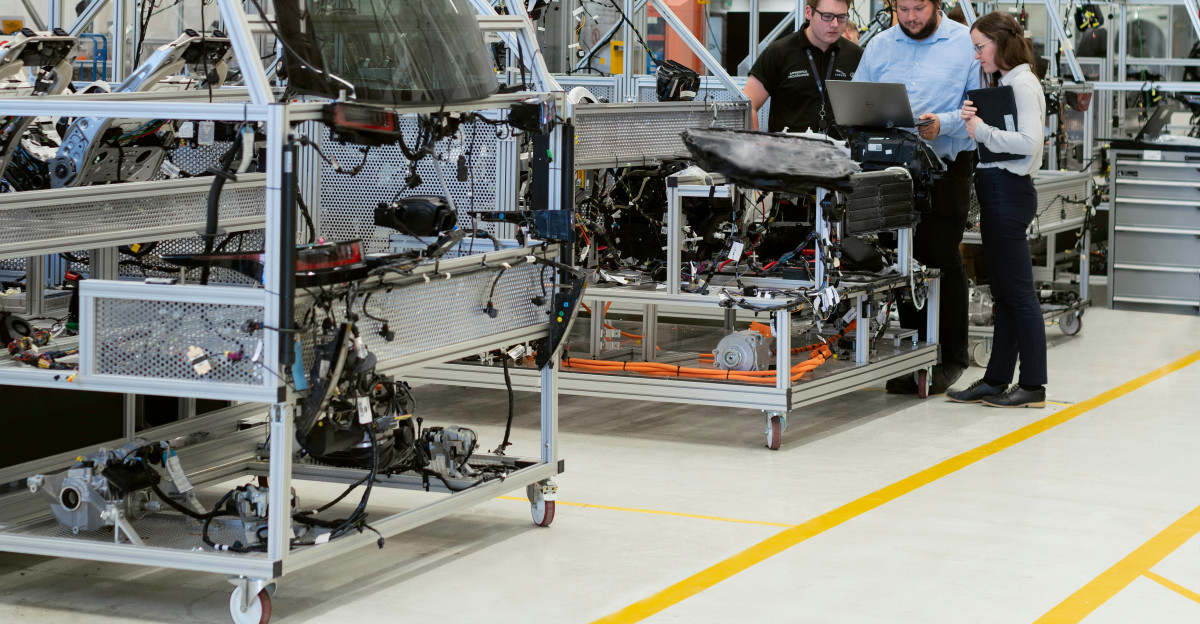
The 2,000 laid-off workers will receive enhanced unemployment benefits for only four months.
After that, they face six additional months with minimal income during the retooling process. Union benefits representative Jim Fisher encouraged members to “go out and get gainfully employed in the community,” but acknowledged the difficulty.
Kentucky’s Limited Job Market

Unlike Detroit, where laid-off auto workers can often find shifts at nearby factories, Kentucky offers far fewer opportunities for this specialized skill set.
The simultaneous influx of 2,000 workers into the local job market creates additional competition for available positions. The situation is further complicated by uncertainty—retooling could run behind schedule or Ford may change its plans.
UAW Local 862’s Complicated History

UAW Local 862 represents approximately 12,000 Ford workers at Louisville’s two plants. Production workers at these facilities voted against Ford’s 2023 national labor agreement by a margin of 55% to 45%, although skilled trades workers supported it.
In 2024, the union threatened strikes over concerns related to health, safety, and skilled trades before reaching a tentative agreement.
The ‘Model T Moment’ Vision

CEO Jim Farley has called the retooling Ford’s second “Model T moment,” comparing it to Henry Ford’s revolutionary 1908 achievement.
Just as the original Model T was priced so Ford’s own factory workers could afford it, the new $30,000 electric truck aims for similar accessibility. Farley believes this could transform affordable EV manufacturing globally.
Advanced Manufacturing Technology

Louisville Assembly Plant will receive the highest level of automation in final assembly across all Ford plants globally. The facility will have the fastest network with the most access points of any Ford plant worldwide.
Tesla’s Gigapress technology can produce over 900 vehicle frames per hour and complete a car body in under four seconds.
Competing With China’s EV Giants

Ford established a California skunkworks team in 2022 specifically to compete with Chinese EV manufacturers like BYD.
CEO Farley drove a Chinese EV for months and openly admired their affordability and quality. Rather than manufacturing abroad for lower costs, Ford chose to “take the challenge to our competitors” in Kentucky.
Ergonomic Improvements for Returning Workers

The new production system significantly enhances worker ergonomics by reducing the need for twisting, reaching, and bending. Workers won’t need to install seats through door openings or sit inside vehicles during the assembly process.
Parts arrive in pre-kitted modules with all required tools, streamlining the process. These improvements aim to reduce workplace injuries and strain.
The Long Wait and Uncertain Future
Workers must endure until at least October 2026 before returning to work, with production launch scheduled for 2027.
The automotive industry has a history of affordable vehicle projects ending in “idle factories, layoffs, and financial losses,” as Farley acknowledged. Whether this gamble succeeds or fails will determine not only these workers’ futures but Ford’s competitiveness in the global EV market.