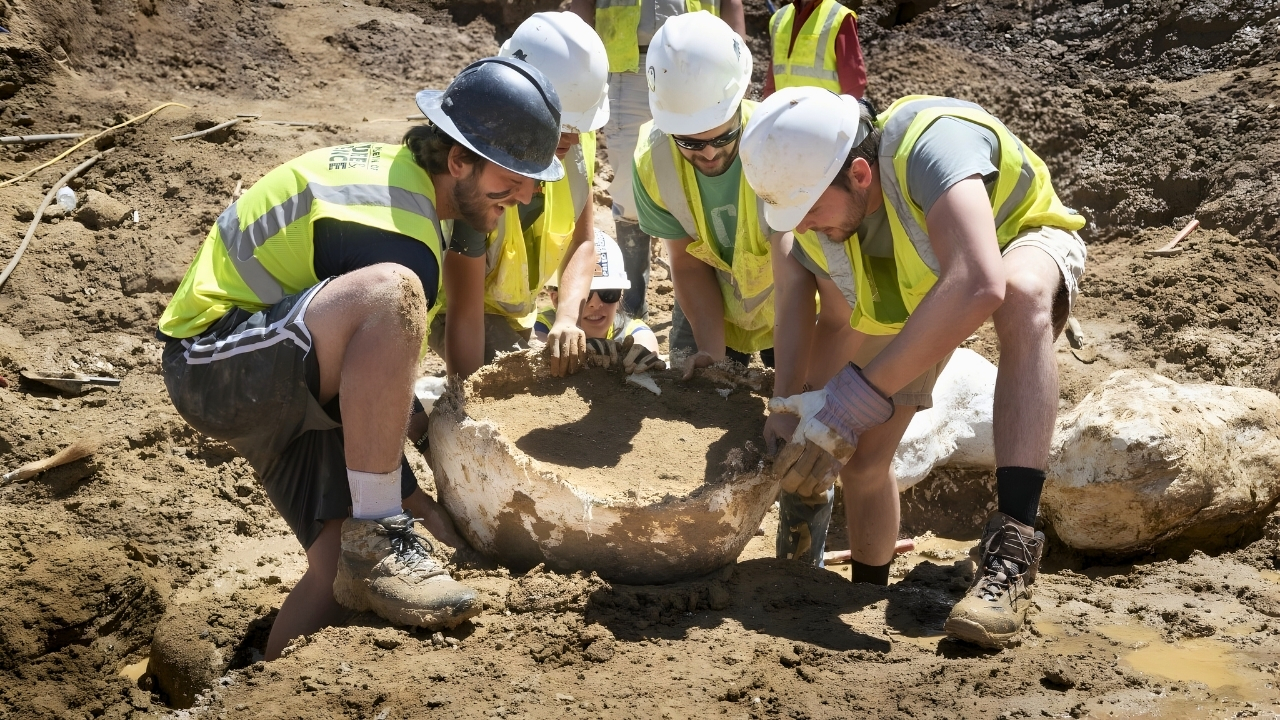
Sixty-six million years ago, a group of South American sauropods developed a surprising evolutionary advantage: the ability to rear up and balance on their hind legs for extended periods. Unlike their massive, four-legged relatives, these compact giants could reach food and gain advantages inaccessible to larger species. Recent research, using advanced engineering technology, has revealed how these dinosaurs achieved this feat and what it meant for their survival.
Sauropods and the Bipedal Breakthrough
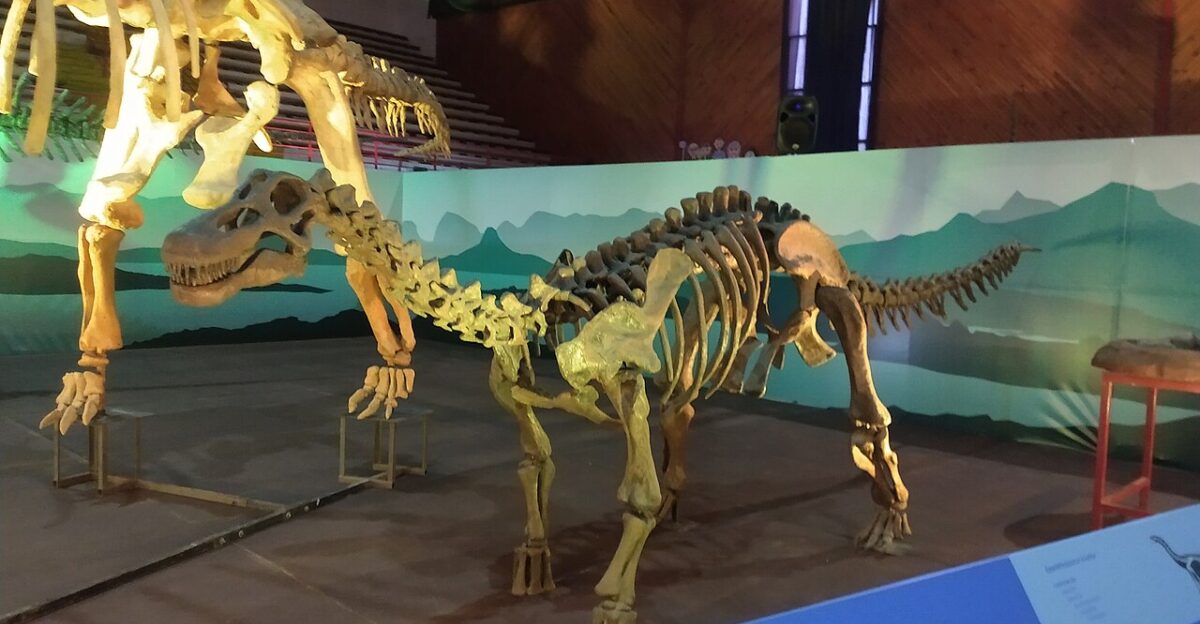
A multinational team of scientists digitally reconstructed the skeletons of seven sauropod species using finite element analysis—a computational method commonly used in modern engineering to test the strength of bridges and aircraft. Their focus was on two South American species: Uberabatitan ribeiroi from Brazil and Neuquensaurus australis from Argentina. Both were roughly the size of modern elephants, weighing between 10,000 and 13,000 pounds.
Simulations showed that these smaller sauropods experienced significantly less mechanical stress on their femurs compared to their larger relatives. This biomechanical advantage allowed them to rear up and maintain a bipedal stance for longer periods, opening up new possibilities for feeding and behavior.
International Collaboration and Rigorous Science
The research was led by Julian Silva Júnior, a postdoctoral scholar at São Paulo State University, with support from experts in Germany and Argentina. Funding from the São Paulo Research Foundation enabled the team to access rare fossil specimens from museums around the world. Their findings, published in the journal Palaeontology, provide a robust scientific foundation for the discovery.
The team’s approach combined paleontology and engineering, transforming fossilized bones into detailed digital models. By simulating both external forces (gravity) and internal forces (muscle action), they could accurately assess how these dinosaurs’ bones handled the stresses of rearing up. This dual-simulation method marks a significant advance in paleontological research, allowing scientists to reconstruct ancient behaviors with unprecedented precision.
Biomechanical Insights: Why Size Mattered
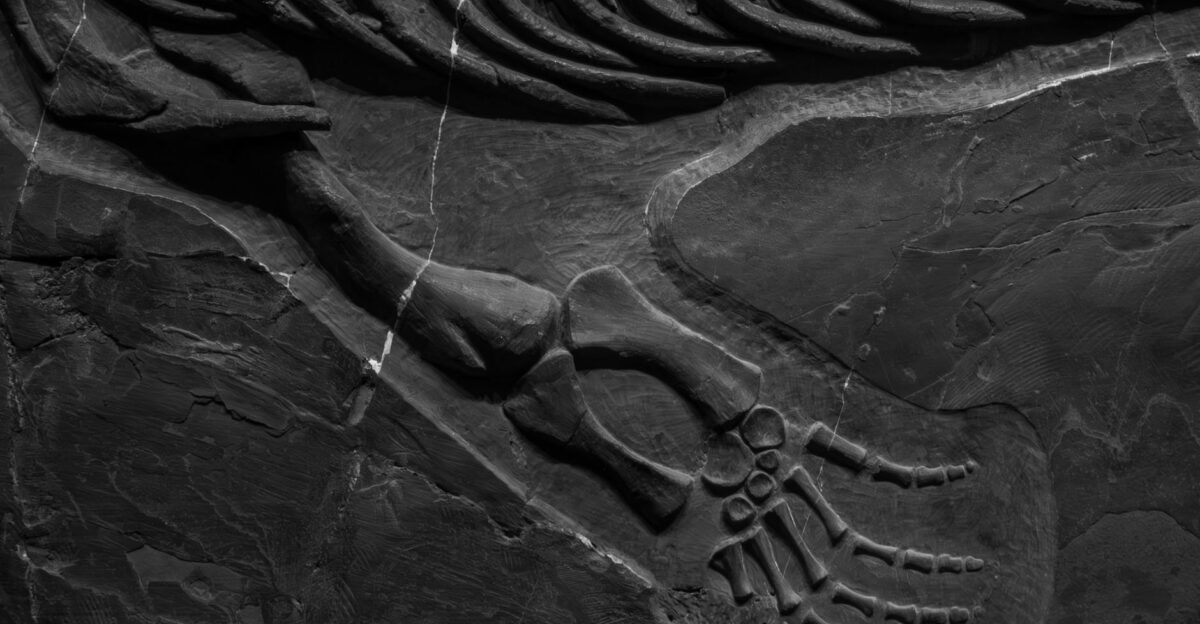
In the world of dinosaurs, being the size of an elephant was considered small. Adult Uberabatitan could reach lengths of 26 meters, making it the largest dinosaur found in Brazil, yet it was still dwarfed by 100-ton giants like Giraffatitan. The research revealed that Neuquensaurus and Uberabatitan had exceptionally robust femur bones, which dissipated mechanical loads more efficiently than those of larger sauropods.
Digital simulations measured femoral stress during bipedal stance: Neuquensaurus registered 1.09 megapascals, Uberabatitan 1.20, while Giraffatitan experienced more than double that stress. This difference meant that only the smaller species could comfortably maintain an upright posture, while larger sauropods were limited to brief, strenuous rearing.
Juvenile Advantage and Behavioral Implications
One of the study’s most striking findings was that juvenile Uberabatitan specimens were even better suited to bipedal behavior than adults. As these dinosaurs grew, their increasing size made sustained upright stance uncomfortable or risky, with femoral stress rising sharply. This suggests that young sauropods were the primary practitioners of bipedal feeding and display behaviors.
By rearing up, Neuquensaurus and juvenile Uberabatitan could extend their necks to reach vegetation more than 20 feet above the ground—food sources unavailable to strictly four-legged herbivores. This feeding strategy allowed them to exploit ecological niches and may have influenced their survival and reproductive success.
Beyond Feeding: Defense and Display
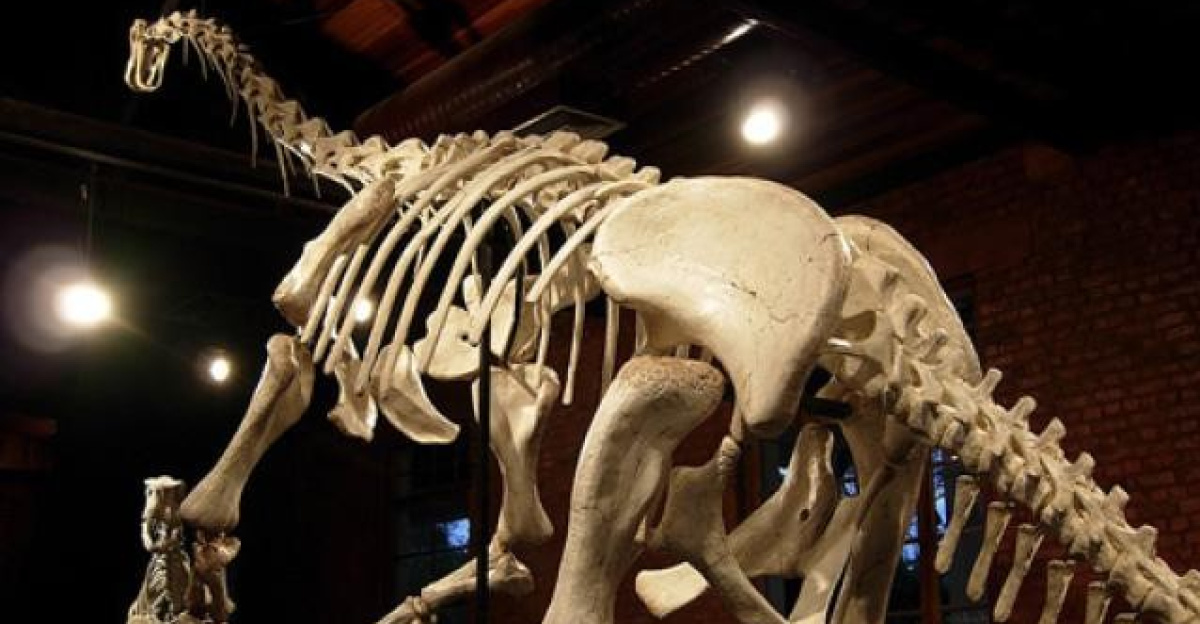
The ability to stand tall offered more than just access to food. Bipedal posture likely served as a defensive or dominance display, intimidating predators and rivals. A 10,000-pound dinosaur suddenly towering over its surroundings would have presented a formidable threat, potentially deterring attacks or asserting dominance during mating contests.
Males may have used this behavior to compete for mates, with vertical posture signaling fitness and strength. This parallels behaviors seen in modern animals, such as grizzly bears, which rear up to assert authority. In sauropods, smaller-bodied juveniles may have had a particular advantage in these contests.
Preserving Ancient Secrets and Future Directions
The study underscores the importance of interdisciplinary collaboration in paleontology. By combining expertise in fossil anatomy, engineering, and computer modeling, researchers can unlock new insights into the lives of extinct species. As fossil sites face threats from erosion, climate change, and human development, digital preservation and analysis become increasingly vital.
The discovery that mid-sized sauropods could stand upright answers a long-standing question in dinosaur science, but it also raises new ones. How did bipedal posture affect social dynamics, predator-prey interactions, and evolutionary pathways? What other hidden capabilities might be revealed by applying engineering methods to ancient bones?
Uberabatitan and Neuquensaurus have reshaped our understanding of dinosaur behavior and evolution. Their bipedal mastery highlights the role of adaptability in survival, suggesting that evolutionary success sometimes favors flexibility over sheer size. As technology continues to advance, more secrets from the distant past may come to light, offering a richer picture of life on Earth millions of years ago.