Grindr’s handling of hate-speech filtering exposed a paradox at the heart of modern dating apps. The company boasts roughly 14.5 million monthly users, making it a core space for LGBTQ+ connections worldwide.
Yet its sudden, selective ban on “no Zionists” content ignited debates over consistency and fairness.
Observers pointed out that targeting one political slur while leaving others untouched was unprecedented.
The episode put Grindr’s anti-harassment rules under a microscope, raising questions about how big apps moderate speech without bias.
Testing Boundaries

Journalists independently tested Grindr’s filters and found a bizarre inconsistency.
Trying to add “no Zionists” to a profile triggered an immediate error – “The following are not allowed: no Zionist, no Zionists”.
By contrast, equivalent phrases targeting other identities slipped through. Reporters noted that “no Jews,” “no Arabs,” “no Asians,” and even “no conservatives” were all accepted.
Both the singular and plural forms of the Zionist ban were blocked every time. These tests highlighted a narrow, selective censorship rule, not a blanket policy.
Industry Context
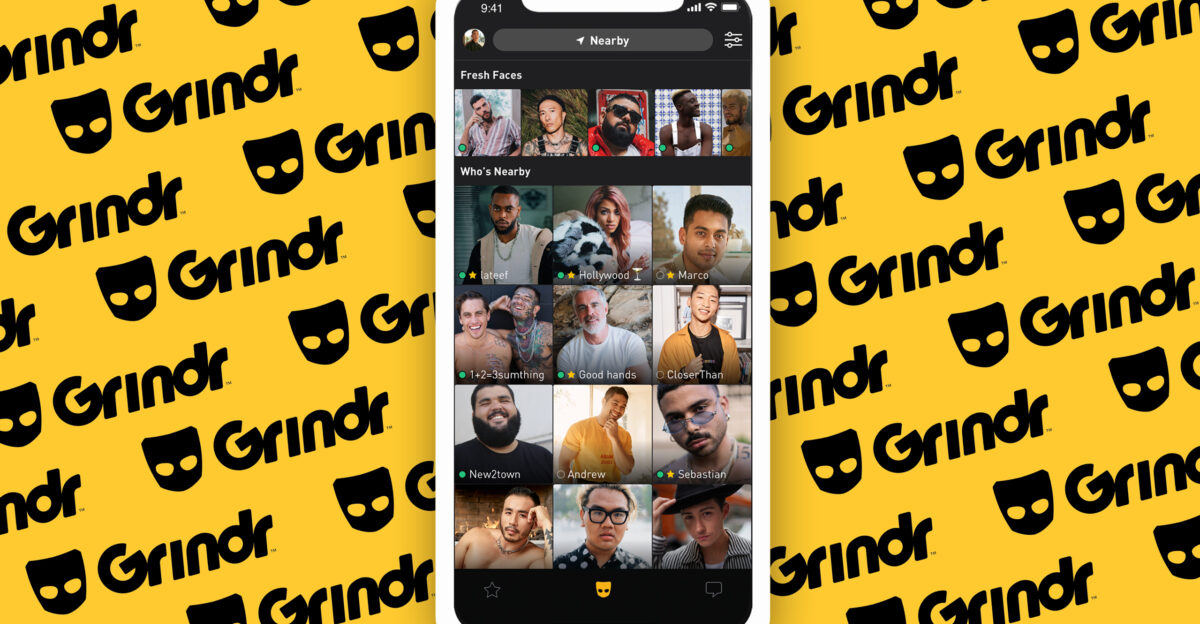
This wasn’t Grindr’s first race-related controversy. In 2018, the app launched a “Kindr” campaign to combat racial bias, after activists documented rampant “sexual racism” (like profiles stating “no Asians” or “no Blacks”).
At that time, CEO Landen Zumwalt said Grindr could “become something positive and inclusive” by addressing.
Yet even with Kindr, users still complained of exclusionary preferences.
One Grindr user even threatened legal action over surviving filters: “someone said he planned to sue Grindr… for allowing phrases like ‘no Asians’”starobserver.com.au. These struggles reflect a broader tension: dating apps are arenas for social bias, and content rules have always been hard to enforce consistently.
Historical Tensions
Six years earlier, Grindr quietly removed its ethnicity filter amid Black Lives Matter protests. The feature – which had let users exclude entire racial groups – was scrapped in June 2020 during Pride month as a show of solidarity.
Grindr announced it would “continue to fight racism… with a zero-tolerance policy”.
However, watchdogs noted the filter lingered in the code for weeks after the pledge.
Grindr’s Terms of Service already forbid any content a “reasonable person” would find “racially or ethnically… offensive”, but user complaints about inconsistent enforcement persisted.
Old stereotypes and body-shaming tags (like “no fats, no femmes”) remained common, highlighting how enforcement historically lagged behind policy.
The Block Revealed
The controversy hit a boiling point in July 2025. An independent report confirmed Grindr had silently added a new filter: typing “no Zionists” into one’s profile would generate an error message (despite no such phrase being banned elsewhere).
Users testing it saw only that single phrase flagged, even as blatantly exclusionary lines like “no FFA” (fats, femmes, Asians) passed through.
Grindr’s system automatically blocked “no Zionist”/“no Zionists” but nothing else.
The company later admitted this rule was put in place after “user escalations around its potentially inflammatory nature,” and quietly removed it after being pressed.
This unexpected selective block – not spelled out in any policy – sparked immediate scrutiny.
User Backlash
Grindr’s community reacted with anger and confusion. One user, Gabriel, demonstrated to reporters how he could freely type “no fats, no femmes, no Asians” – yet the app refused “no Zionists”. “It’s kind of crazy,” Gabriel said. “The Zionists one is so crazy” because nothing else was similarly blocked.
On social media and forums, screenshots of the error message went viral.
Reddit threads about the ban racked up thousands of upvotes and comments. Many users accused Grindr of double standards, suggesting political bias: if phrases like “no conservatives” were fine, why single out this one?
The error message and Gabriel’s reaction to it underscored a widespread feeling of unfairness in the community.
Community Response
Critics outside the app piled on. LGBTQ+ voices argued Grindr was “putting energy toward protecting a blatantly bigoted ideology” while ignoring others.
One Grindr user (“Green”) told 404 Media the policy was “gross” and “pathetic” – “to put energy towards protecting a blatantly bigoted ideology and not put the same energy towards protecting minority groups is pathetic”.
The Anti-Defamation League praised Grindr for banning anti-Zionist language, but flatly warned that “they should apply protection to all identities”. LGBTQ+ advocacy groups likewise questioned why only this identity was singled out.
The net effect: many felt Grindr was prioritizing one political grievance over ongoing issues of racism and fat-shaming.
Competitor Landscape
Grindr’s choice stood in stark contrast to other apps. For example, Scruff (another gay hookup app) took a hard line in 2018, begging users to drop racial slurs (“no Asians” etc.) from profiles.
Scruff’s CEO announced push notifications that educate people using any racial language, and even hid ethnicity fields by default. In contrast, apps like Hinge still let users filter search by ethnicity (though some data shows this is unpopular in younger users).
Surveys underscore how common bias remains: one study found roughly 75% of gay and bi men report facing discrimination on dating apps, with racism the top form.
Overall, moderation varies widely. Grindr’s selective block exposed cracks in industry standards, as a move seen by some as protection of one group while others suffer.
Platform Economics

Grindr’s approach is closely tied to its business model. In 2024, the company made about $344.6 million in revenue, with an adjusted EBITDA margin of around 43%, making it one of the most profitable dating platforms.
It earns roughly 84% of that from premium subscriptions, while the free tier is ad-heavy. Users are extremely engaged: on average, they spend over an hour per day in the app.
With ~11 million daily active users (14.5M monthly), any moderation policy can affect a huge audience.
Industry analysts note that user satisfaction drives Grindr’s value, so inconsistent content rules risk alienating subscribers.
Content filters aren’t just technical; they influence Grindr’s bottom line by shaping who stays active and pays for the service.
Policy Reversal

Under intense media and user pressure, Grindr backtracked within days. On July 29, 2025, the app quietly began allowing “no Zionists” again.
In a blog post a week later titled “No Place for Hate on Grindr,” the company admitted it had “temporarily introduced…an additional layer of moderation…to more proactively address inflammatory content – in this case, the phrase ‘No Zionists.’” It then clarified that the block was “recently removed”.
The post stressed that Grindr’s policy still bans all discriminatory speech – “discriminatory…‘no’ statements…don’t belong on Grindr” – and that it relies on user flags to catch violations.
Notably, the reversal itself came with no advance notice to users. By framing the change as a brief experiment now ended, Grindr tried to calm the storm.
Internal Tensions
Observers saw the about-face as evidence of internal debate. Analysts suspect employees and executives were divided on how aggressively to police speech.
When pressed by 404 Media and other outlets, a Grindr spokesperson repeated that the “no Zionists” filter was added after “user escalations” and that it was now rescinded.
The speed of the reversal – less than 48 hours from first report to lifting the ban – suggests leadership scrambled to manage the fallout. Moderation experts note this incident highlights a core challenge: balancing free expression versus community safety.
Grindr’s mixed signals underscored how hard it is to apply a uniform rule on a politically charged term without confusing or alienating parts of its diverse user base.
Leadership Context

At the center of Grindr’s strategy is CEO George Arison, a Georgian-born American businessman. Arison, an out gay father of two, joined Grindr’s board in May and became CEO in September 2022.
He had previously co-founded Shift Technologies (an online car marketplace) and worked in tech (including Google projects). Soon after he took over, Arison led Grindr through a $2.1 billion IPO in late 2022.
Early in his tenure, Arison faced blowback when his past tweets supporting some conservative politicians surfaced.
Despite this, his leadership focus has been on growth and profitability, doubling down on subscription revenue and apps’ core features.
Recovery Strategy
In response to the uproar, Grindr has doubled down on its stated guidelines.
The August 8 blog post reiterated that all “no” statements targeting protected traits are banned per the Community Guidelines, and that enforcement will be uniform.
Rather than introduce new rules, the company said it would lean on community reporting to catch violations: users are urged to flag bad profiles, and a human moderation team will review them.
Grindr portrayed this as clarification, not expansion, of its policies. By emphasizing consistency and transparency, the company aimed to rebuild trust. Future app updates are said to focus on clearer explanations of existing rules, rather than adding targeted blocks.
Expert Skepticism

Even after the reversal, many experts remained wary. Digital rights advocates pointed out that algorithmic filters can be blunt instruments – they often misfire and lack transparency.
Some questioned whether Grindr’s move was genuine reform or simply damage control.
Community researchers note that automated moderation may still unevenly affect marginalized users.
Without deeper fixes (like third-party audits or more diverse review teams), critics worry the same problems will recur. In short, observers argue Grindr’s quick fix was welcome but doesn’t guarantee a fairer system going forward.
Future Implications

Industry watchers say this incident has broader ripple effects. For one, it underscores the need for greater transparency in how dating apps set content rules.
Regulators and LGBTQ+ advocates are likely to press platforms for clear disclosure of their moderation criteria, especially on politically sensitive topics. The uproar also signals that users will watch app policies more closely; platforms can no longer rely on opaque changes.
Grindr’s handling may even shape norms for the whole dating app sector: competitors may be prompted to publish clearer community standards, and we may see calls for third-party oversight.
Ultimately, the “no Zionists” episode is a wake-up call that mismatched expectations on speech can rapidly escalate into reputation issues.
Political Dimensions
The controversy didn’t occur in a vacuum: it reflects larger political debates swirling on social media. Around the same time, discussions of free speech, ideology, and censorship – especially tied to the Israel-Palestine conflict – were igniting protests and policy fights online.
The ADL’s involvement highlights the issue: they consider anti-Zionist language a form of anti-Semitism and pressed Grindr to act.
This dating app incident became a microcosm of a heated national conversation on hate speech vs. legitimate criticism. It shows how global geopolitics can seep into everyday spaces – even a hookup app profile.
For many users, Grindr was unexpectedly drawn into the clash between identity politics and political expression that’s playing out across the internet.
International Implications

Grindr’s situation also has a global angle. The app operates in nearly every country (it reports users in 190 countries), and not all regions share the same cultural or legal views on hate speech.
Its brief stint under Chinese ownership (2016–2020) famously drew U.S. national security scrutiny due to data privacy concerns. Today, content rules must navigate diverse legal landscapes.
Some countries outlaw any content deemed “offensive” to the state or religion, while others protect political speech very broadly.
This means an expression banned on Grindr in one region might be allowed in another. The “no Zionists” rule – tied to international politics – highlights how a global app struggles to craft one-size-fits-all moderation for users from very different societies.
Legal Considerations

Experts warn that uneven enforcement could raise legal red flags. In some countries, advertising a bias or allowing discriminatory preferences can violate anti-discrimination laws.
Even in the U.S., platforms can face backlash: for instance, a Grindr user once threatened to sue because Grindr still permitted “no Asians” on profiles. While Section 230 shields apps from much user speech liability, blatant platform bias could prompt regulatory or legal scrutiny.
Companies must carefully balance free speech rights with fairness obligations. Inconsistent application of policies might invite claims of unfair treatment – for example, “Why protect one group but not others?” – which could become evidence in any legal challenge.
The “no Zionists” saga reminds industry lawyers that content policies themselves can become legal tinder.
Cultural Evolution
The clash also reflects shifting norms within LGBTQ+ communities. Many younger queer people today expect dating spaces to actively reject any form of discrimination. They see apps not just as hookup tools but as communities where inclusivity is enforced.
This debate over a single phrase highlights broader generational and ideological divides: older users might prioritize free speech, while younger users demand zero tolerance for language they consider hateful.
Dating apps have become cultural hubs where identity and politics intermingle. What’s acceptable banter for one user can feel like exclusion to another.
The Grindr incident underscores how gay dating spaces are not immune to the larger cultural wars – in fact, they often mirror society’s evolving attitudes about identity, inclusion, and the limits of acceptable discourse.
Broader Reflection
In the end, the “no Zionists” flap shows how niche platform decisions can spark universal questions of fairness and responsibility.
It demonstrates that even small changes to content filters can trigger big conversations about bias and corporate governance.
For tech companies, the lesson is clear: opaque moderation breeds distrust. The episode signals a growing demand for transparency and consistency in how online communities are governed. Above all, it reaffirms that user communities and media oversight are powerful forces.
Grindr’s reversal only came after public outcry, confirming that engaged users and journalists can shape platform behavior.
Moving forward, the industry is likely to watch this case as an example: companies may need to more clearly justify their rules, or risk facing the same kind of collective pushback.