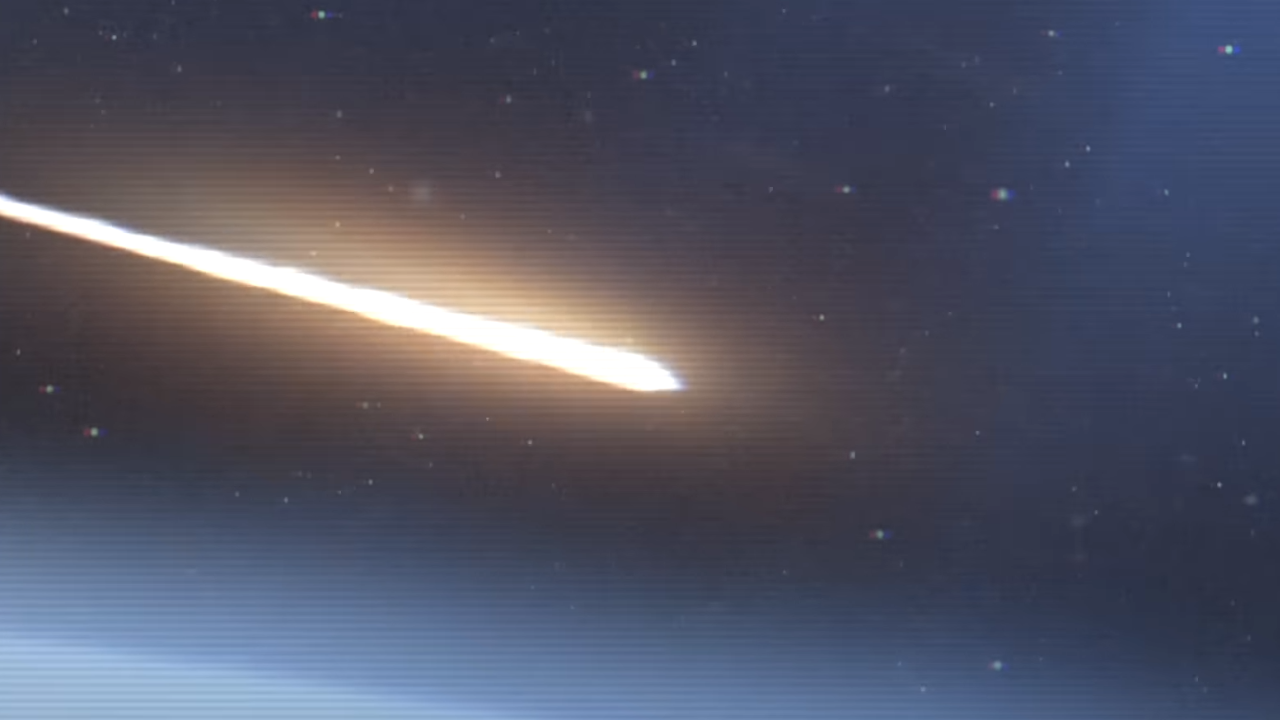
A comet unlike any seen before blazed through the inner solar system in late October 2025, captivating astronomers and the public alike. Designated 3I/ATLAS, it brightened dramatically as it neared the Sun, displaying a rare blue hue and accelerating in ways that defy conventional models. Telescopes worldwide, including Hubble and Webb, documented its passage, revealing a celestial object that moves faster and behaves more energetically than expected.
Unusual Acceleration and Brightening
As 3I/ATLAS approached the Sun, astronomers observed it accelerating in ways not explained by gravity alone. This non-gravitational acceleration is typically caused by outgassing—solar heat vaporizing the comet’s ices, producing jet-like thrust. At perihelion, the acceleration reached 135 kilometers per day squared radially away from the Sun and 60 kilometers per day squared transversely. These forces were much stronger than anticipated for an object of its size, and existing models failed to predict the magnitude of this effect. The comet’s rapid brightening also exceeded standard comet predictions, prompting scientists to investigate its composition and volatile materials.
Interstellar Origins and Trajectory
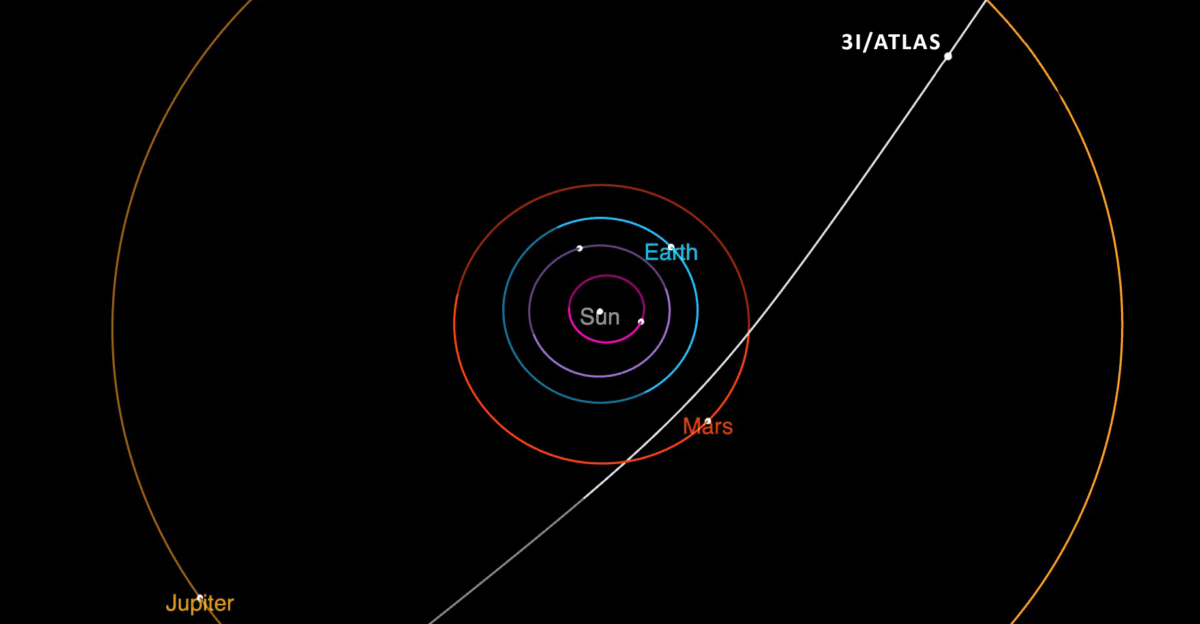
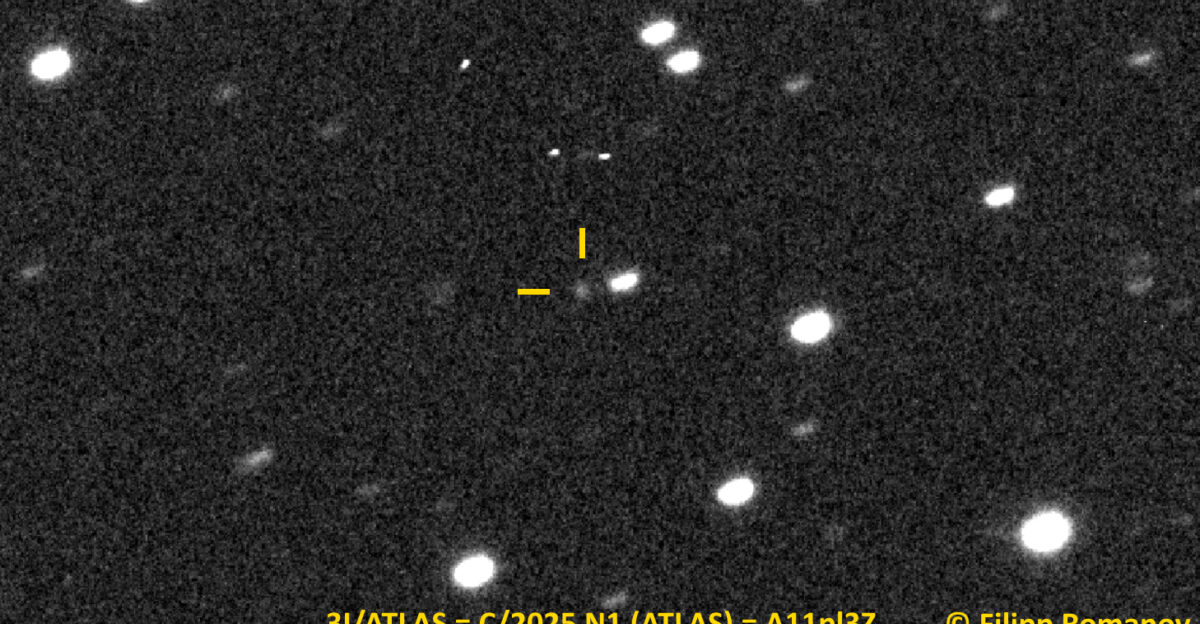
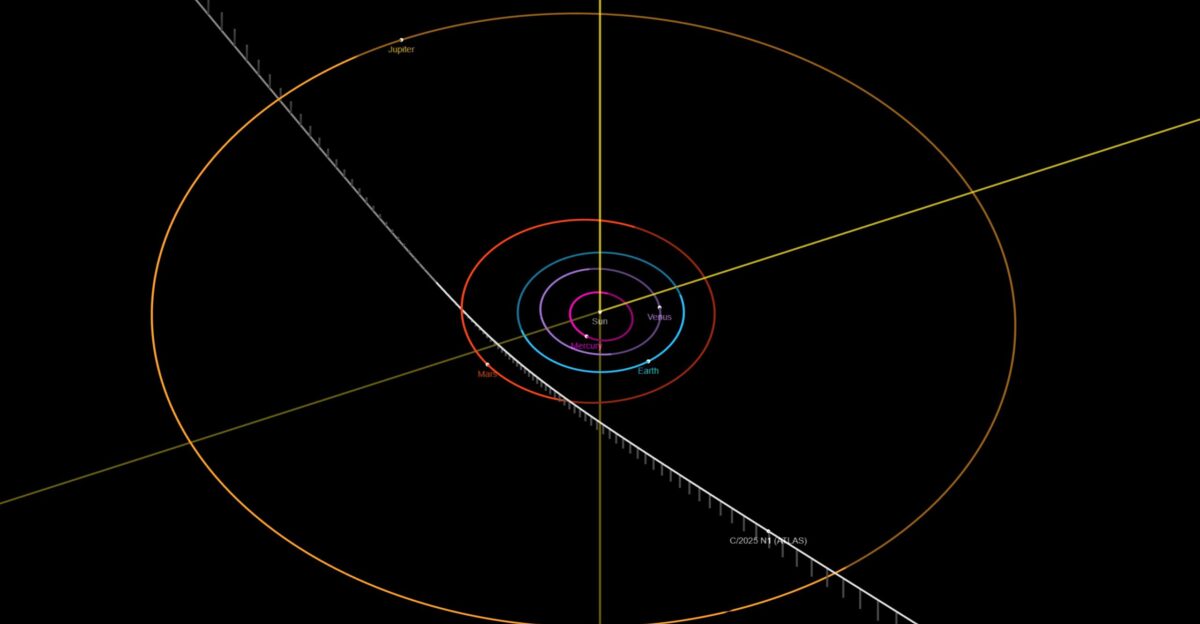
3I/ATLAS is only the third confirmed interstellar object to pass through our solar system, following ‘Oumuamua and 2I/Borisov. Discovered on July 1, 2025, by the NASA-funded ATLAS survey in Chile, it traveled for billions of years through interstellar space before entering our planetary neighborhood. Its trajectory brought it inside Mars’ orbit, with perihelion occurring on October 29, 2025, at 1.36 AU from the Sun. The closest approach to Earth is projected for December 19, 2025, at 1.8 AU—about 270 million kilometers—posing no threat to our planet. This orbit allows for continuous monitoring by both space-based and ground-based telescopes.
Observations and Scientific Response
At perihelion, multiple spacecraft, including STEREO-A and SOHO, recorded the comet’s dramatic brightening and possible bluish coloration, unusual for natural comets, which typically appear redder due to dust. NASA’s predictive models underestimated the comet’s activity by about a factor of two, with scientists describing the brightening as puzzling. The energetic behavior raises questions about the composition of its volatile ices and the nature of its outgassing. International teams from NASA, ESA, and the University of Hawai’i are collaborating to analyze the data, combining space-based and ground-based observations to refine models of interstellar comet motion.
Speculation and Expert Assessment
The comet’s unusual behavior has sparked both scientific curiosity and public speculation. Some scientists, including Harvard astrophysicist Avi Loeb, have suggested that the non-gravitational acceleration could indicate a technological origin, though they stress that natural explanations remain most likely. NASA responded to public concern, emphasizing that there is no evidence of alien technology and no threat to Earth. Most experts interpret the comet’s behavior as consistent with natural processes, possibly due to pristine interstellar ices that produce stronger outgassing than typical solar system comets. This explanation fits both the acceleration and the color changes observed near perihelion.
Looking Ahead and Broader Implications

3I/ATLAS is expected to become visible again to ground-based telescopes in December 2025, after emerging from behind the Sun. Upcoming observations will allow scientists to study mass loss, composition, and outgassing in detail, crucial for testing hypotheses about the comet’s unusual behavior. The event has spurred discussions about updating protocols for tracking and analyzing interstellar objects, with policymakers considering enhanced funding for sky surveys and rapid-response observation networks. International collaboration has strengthened, with agencies sharing data and resources to ensure comprehensive tracking and monitoring. This event underscores the value of continued investment in sky surveys and international research collaboration, setting a precedent for future interstellar discoveries and refining our understanding of how pristine interstellar objects behave when entering a solar system.