A rare interstellar visitor has ignited scientific curiosity and political debate as it speeds through our solar system. On October 31, 2025, U.S. Representative Anna Paulina Luna formally requested NASA release all unreleased images and data on comet 3I/ATLAS, following astronomers’ confirmation of an unusual “anti-tail”—a tail pointing toward the Sun rather than away. This extraordinary phenomenon, combined with the comet’s unique chemistry and speed, has drawn global attention and prompted a race among observatories to gather as much information as possible before the comet vanishes back into interstellar space.
Unraveling a Cosmic Mystery
The demand for transparency came after astronomers observed the rare anti-tail on 3I/ATLAS in October 2025. Anti-tails are seldom seen and occur due to a specific alignment between Earth and a comet’s orbital plane, offering a fleeting glimpse into the complex dynamics of cometary dust and gas. The sighting of such a feature on an interstellar object—only the third ever detected in our solar system—has fueled both scientific excitement and public intrigue.
3I/ATLAS was first spotted on July 1, 2025, by the ATLAS survey telescope in Chile, when it was about 670 million kilometers from the Sun. It quickly distinguished itself: traveling at over 209,000 kilometers per hour, with a nucleus estimated at 5 kilometers wide, it is among the largest and fastest interstellar objects ever observed. Its detection triggered a coordinated global effort, with observatories worldwide mobilizing to monitor its rapid journey.
Ancient Origins and Unusual Chemistry
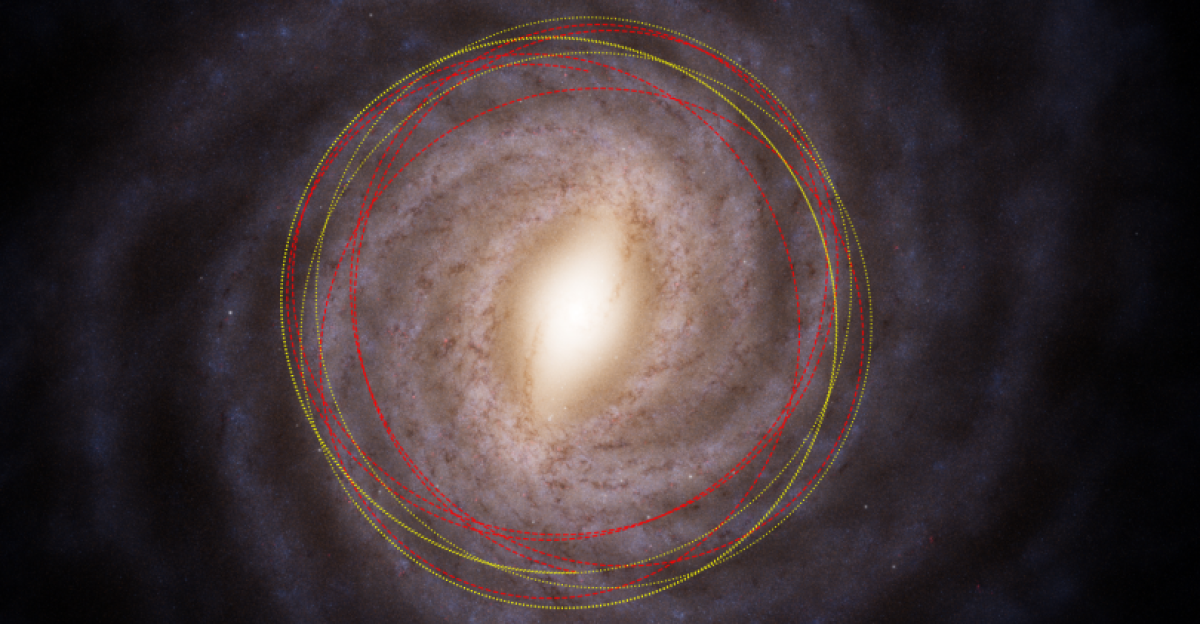
Scientists estimate 3I/ATLAS to be approximately 7 billion years old—predating our solar system by about 3 billion years. Researchers believe it originated in the thick disk of the Milky Way, a region populated by ancient stars. Studying the comet offers a rare opportunity to probe the chemical makeup of the early galaxy.
NASA’s Neil Gehrels Swift Observatory detected hydroxyl gas, a signature of water, around 3I/ATLAS when it was nearly three times farther from the Sun than Earth—a distance where water ice typically remains frozen. The comet was losing water at a rate of about 40 kilograms per second, defying expectations and providing a unique window into the behavior of interstellar ices.
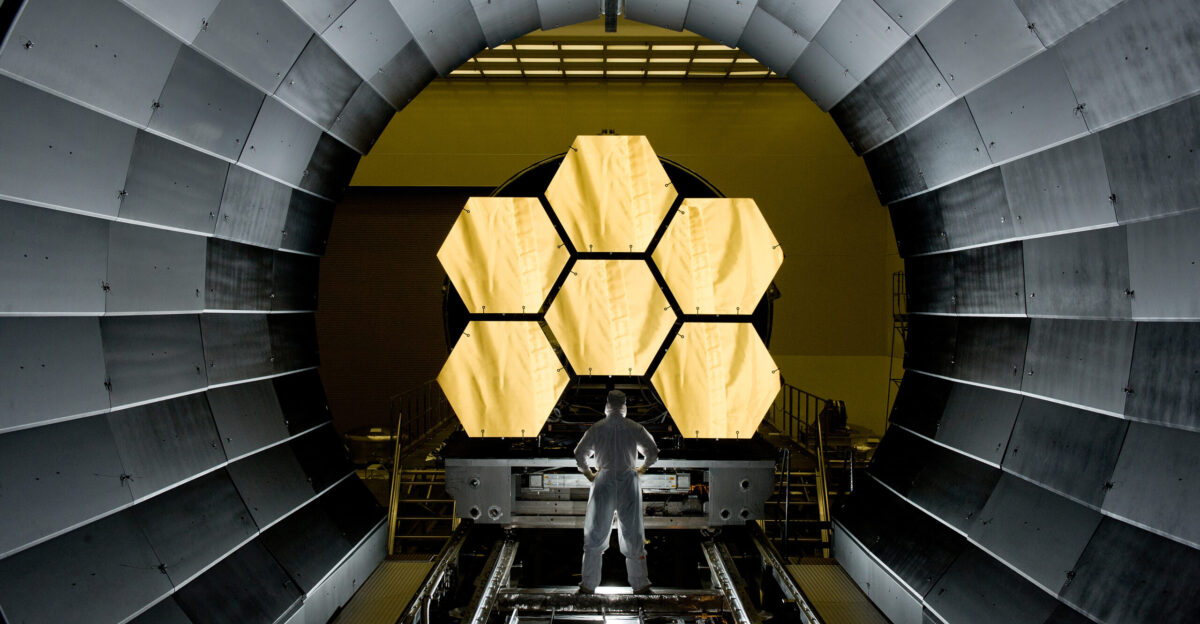
Further analysis by the James Webb Space Telescope revealed an unprecedented ratio of carbon dioxide to water, along with the presence of carbon monoxide, water ice, and carbonyl sulfide. These findings suggest the comet endured intense radiation in its home system, leaving chemical fingerprints that could help scientists reconstruct the conditions of its origin.
Dynamic Changes and Global Collaboration

As 3I/ATLAS approached the Sun, it underwent dramatic color changes—shifting from red to green to blue—reflecting the release of different gases and dust as sunlight heated its surface. The comet reached its closest point to the Sun, or perihelion, on October 29, 2025, between the orbits of Earth and Mars. During this passage, it brightened rapidly, offering astronomers a rare chance to observe its response to intense solar radiation.
NASA’s Jet Propulsion Laboratory detected subtle deviations in the comet’s trajectory, attributed to outgassing—the release of gas and dust as the comet heats up. This non-gravitational acceleration provides clues about the comet’s mass, structure, and activity, while remaining consistent with natural cometary processes.
The comet’s discovery has sparked unprecedented international cooperation. Major observatories—including Gemini South, Keck II, Hubble, and James Webb—have pooled resources and data, while amateur astronomers worldwide have contributed valuable observations. This collaborative effort aims to maximize scientific returns before the comet leaves the solar system for good.
Debate, Transparency, and the Search for Answers
The unusual features of 3I/ATLAS have inspired both mainstream scientific inquiry and more speculative theories. Avi Loeb of Harvard University has suggested the comet’s anomalies warrant consideration of artificial origins, though the prevailing consensus remains that it is a natural object. NASA, the European Space Agency, and leading physicists emphasize that the comet’s composition and behavior align with known cometary science.
Rep. Luna’s request for NASA to release all imagery—including from Mars orbiters—has fueled debate over government transparency and public access to scientific data, especially amid a partial government shutdown. The move reflects growing public interest in space exploration and the expectation that discoveries funded by taxpayers should be openly shared.
Looking Ahead: A Window into the Galaxy
3I/ATLAS will remain visible to astronomers through the end of 2025, with its closest approach to Earth on December 19. Its hyperbolic trajectory ensures it will soon leave the solar system, taking with it secrets from another star system. Scientists are racing to collect final observations, hoping to glean insights into the origins of water, organic compounds, and planetary systems beyond our own.
The comet’s passage offers a rare chance to study ancient material from the galaxy’s distant past. As researchers analyze its data and the public awaits further revelations, 3I/ATLAS stands as a reminder of the mysteries that still traverse the vastness of space—and the importance of open, collaborative science in uncovering them.