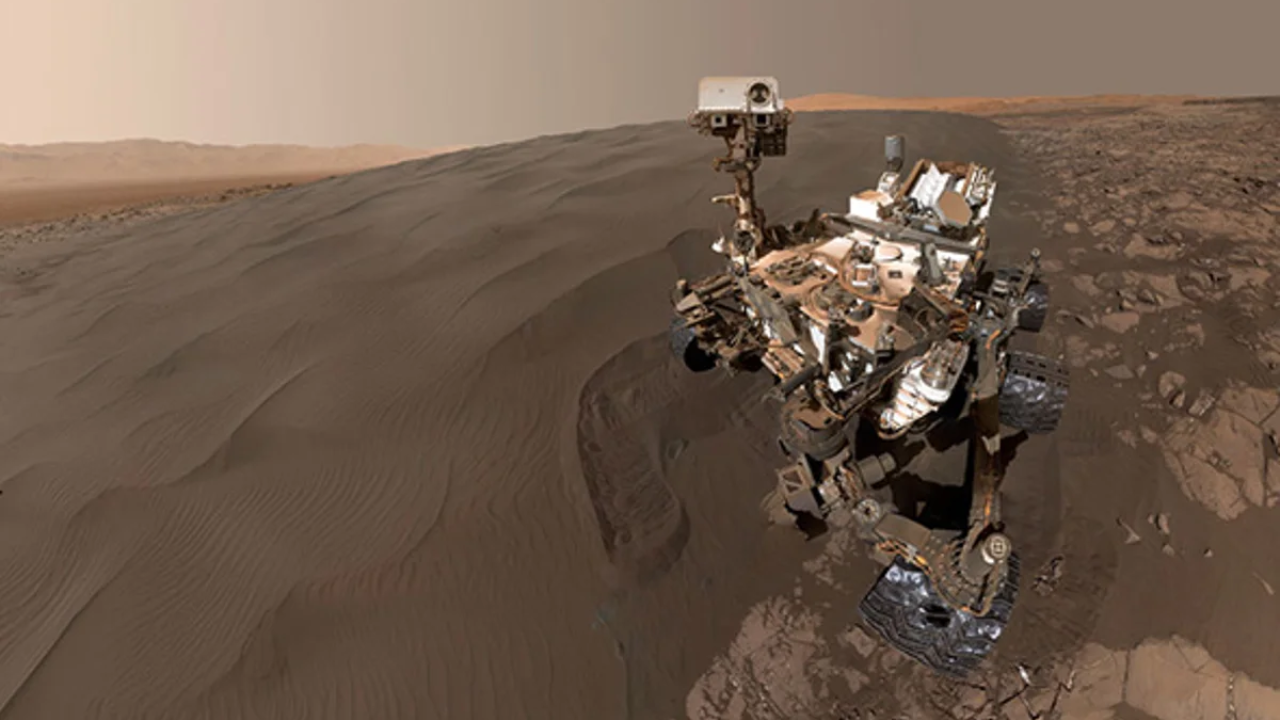
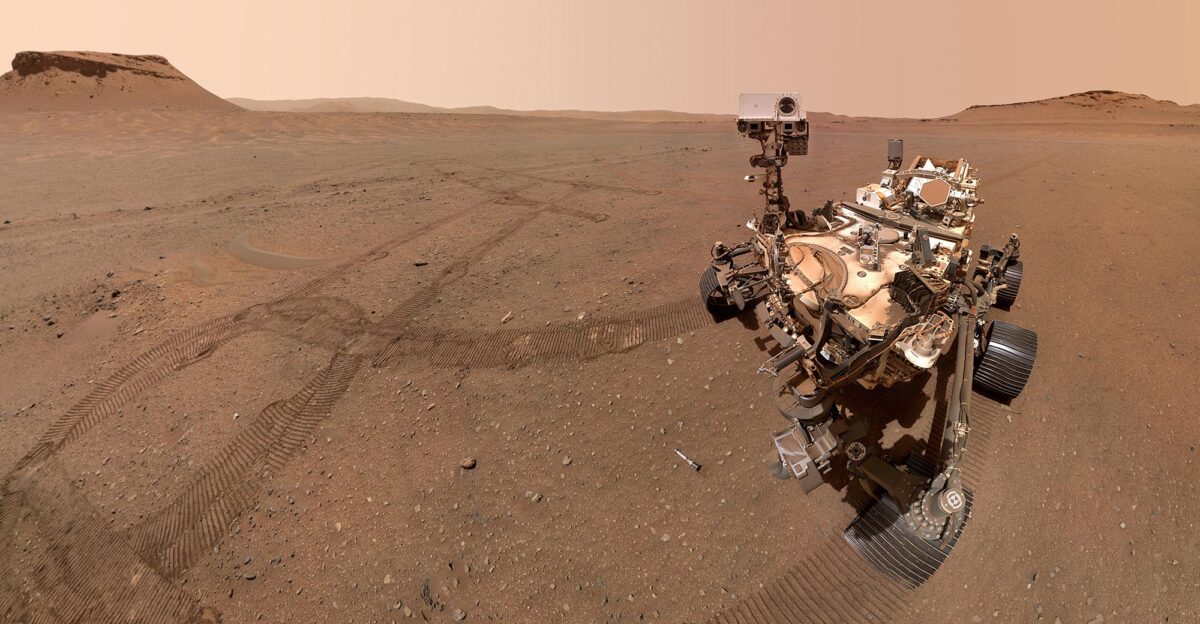
On 18 July 2024, the Perseverance rover on Mars captured an arrow-head shaped rock in the ancient riverbed of Jezero Crater marked by startling “leopard-like” spots. The rock, later named “Cheyava Falls” after a waterfall in the Grand Canyon, revealed large white calcium-sulfate veins alongside reddish hematite bands and tiny millimetre-scale pale patches ringed by dark halos.
The scene dropped scientists into the middle of a potential astrobiological gold-mine—an image that immediately raised hopes that NASA’s most daring rover may have stumbled upon traces of ancient Martian biology.
Stakes Escalate
The chemical signatures inside Cheyava Falls suggest more than geology. Scientists found traces of organic compounds, white veins of calcium sulfate and reddish hematite—minerals linked to water-rich environments, and millimetre-sized spots surrounded by darker rings.
On Earth, such patterns can form when microbes exploit chemical reactions involving iron and phosphate. If that’s what happened on Mars billions of years ago, we may be looking at the strongest hint yet of extraterrestrial microbial metabolism.
Ancient Watery Past

Jezero Crater once harboured a vast lake and river delta approximately 3.5 to 3.8 billion years ago, when Mars had surface water. Ground-penetrating radar mapped layers of sediment built up over time, ideal for preserving signs of life.
The Cheyava Falls rock emerged from the northern edge of Neretva Vallis, an ancient river valley feeding into the crater. In this water-rich terrain, the rover’s 22nd core sample may hold the story of Mars’ wet and possibly habitable past.
Mission Investment

The Perseverance mission cost roughly US $2.7 billion from design through its initial two-year prime mission, yet its plutonium-powered generator gives an operational lifetime of up to fourteen years.
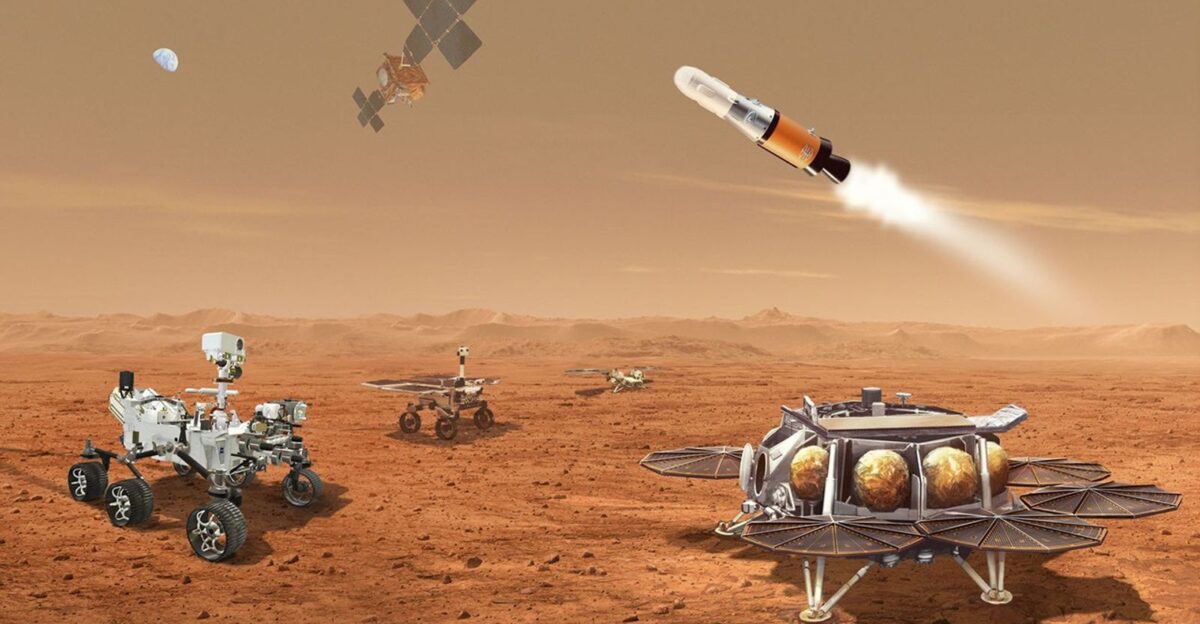
Since landing in February 2021, the rover has traversed Jezero’s floor collecting sample tubes that scientists believe hold the “right rocks” for biosignature detection. However, retrieving those samples for Earth-based labs would require a hugely more expensive multi-mission campaign.
Mission Budget Shock

In September 2023 an independent review board concluded the planned Mars Sample Return mission could cost between US $8 billion and $11 billion—far above the original $5.3 billion estimate—and would not return samples before 2040.
The ballooning cost and delayed timeline sparked congressional concern, placing the agency’s planetary science priorities and leadership into a political battleground.
Mission on the Brink
By late 2025, the $8–11 billion Mars Sample Return mission outlined in the 2023 Independent Review had been effectively shelved. Congressional appropriators rejected outright termination and allocated $300 million in July 2025 to keep development alive, yet the agency was directed to pursue radical redesigns that could render the original multi-billion-dollar architecture obsolete.
In practical terms, the mission as originally conceived—the $11 billion multi-spacecraft campaign reviewed in 2023—faced cancellation through budget constraints and strategic redirection, even as the sample-return goal itself remained nominally active through alternative approaches.
Regional Impact at JPL
The Jet Propulsion Laboratory (JPL) in California, which built and operates the Mars rovers, bore the brunt of budget uncertainty. Between January 2024 and October 2025, the lab conducted multiple rounds of layoffs, eliminating over 1,400 positions—about 25% of its workforce.
These cuts spanned engineers, scientists and support staff—eroding decades of institutional knowledge and dampening morale at one of Earth’s top space research institutions.
Human Perspective
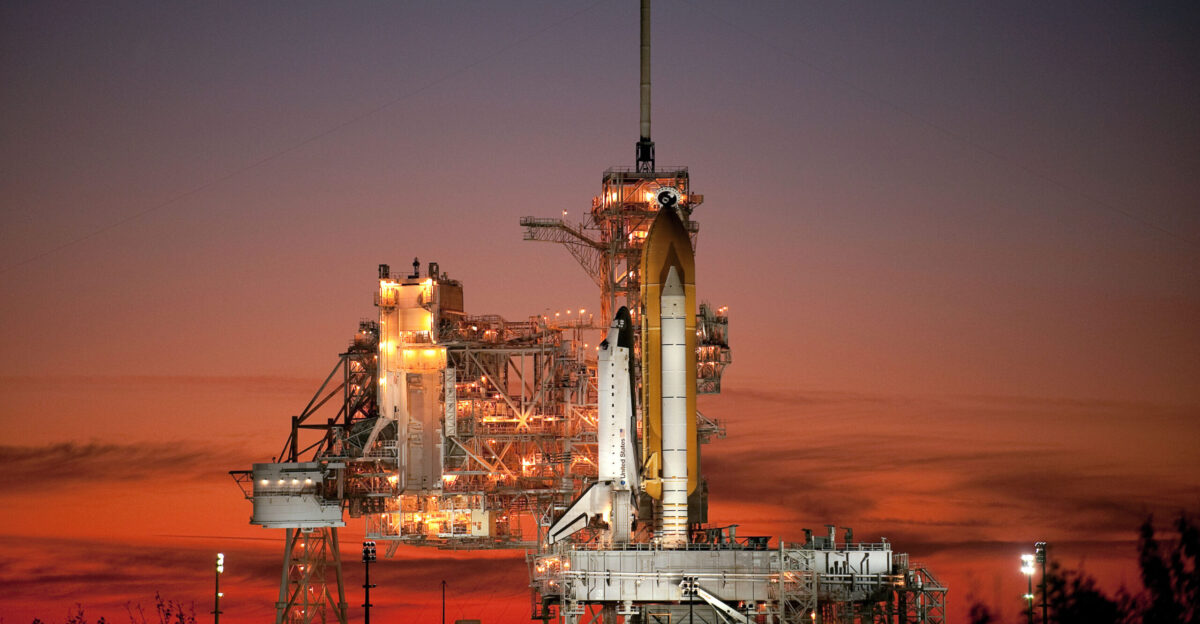
In a February 2024 memo, outgoing JPL Director Laurie Leshin described workforce reductions as “among the most challenging that we have had to make.” She stepped down in June 2025—and her successor, Dave Gallagher, inherited a lab where employees described morale as “at historic lows.”
One staffer shared: “The uncertainty is very unsettling… we expect more people will leave in the coming months.” The human toll of mega-budget science became starkly visible.
International Rivalry
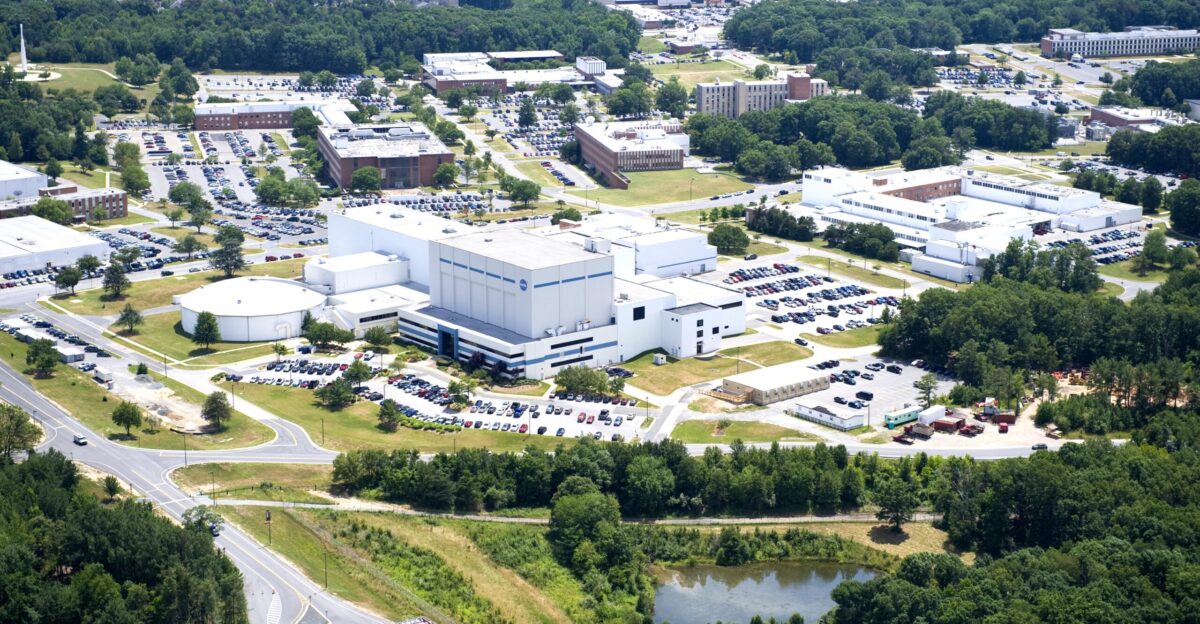
While NASA grapples with internal budget and schedule woes, China’s Tianwen-3 mission aims to launch in 2028 and return Mars samples by July 2031—nearly a decade earlier than NASA’s earliest possible return target.
Former NASA Administrator Bill Nelson warned in January 2025: “I don’t think we want the only sample return coming back on a Chinese spacecraft.” The global competition for Mars samples has intensified.
Budgetary Headwind
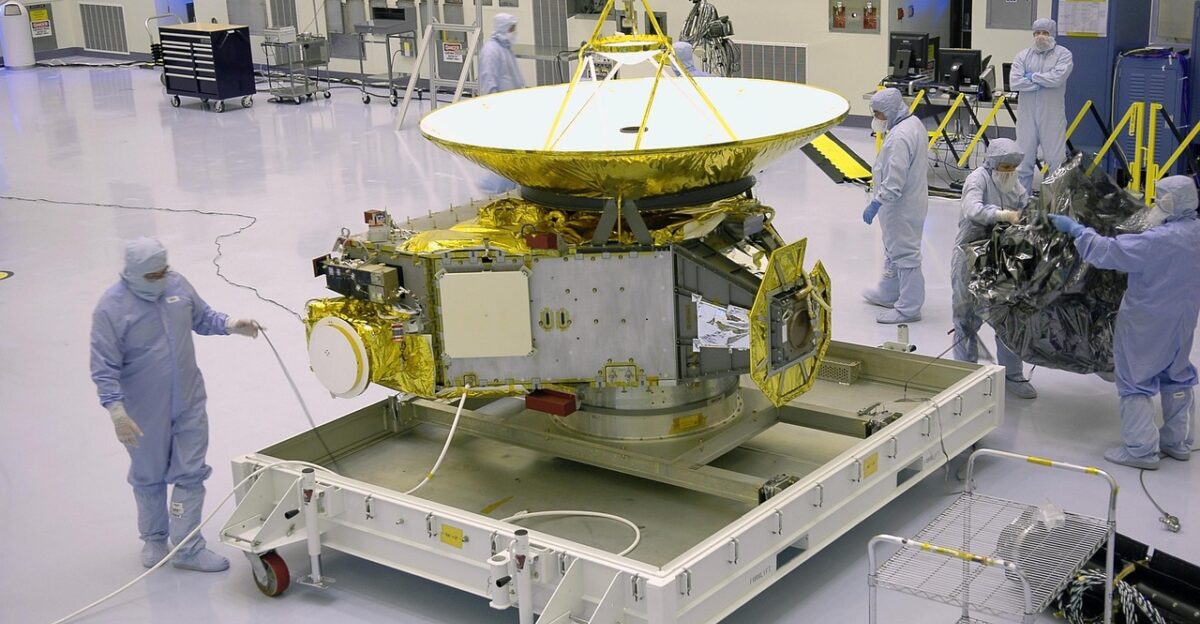
The fiscal constraints that forced NASA to abandon its original Mars Sample Return plan and seek commercial alternatives were part of broader budgetary pressures. The funding outlook for NASA’s planetary science efforts became more precarious when proposed cuts of 47% to the Science Mission Directorate surfaced—reducing from $7.3 billion to $3.9 billion in the FY2026 budget request.
The White House’s plan sought to cancel 41 space-science missions—about a third of NASA’s science portfolio. The Planetary Society described it as “an extinction-level event for the space agency’s most productive, successful and broadly supported activity: science.”
Rescue from Congress
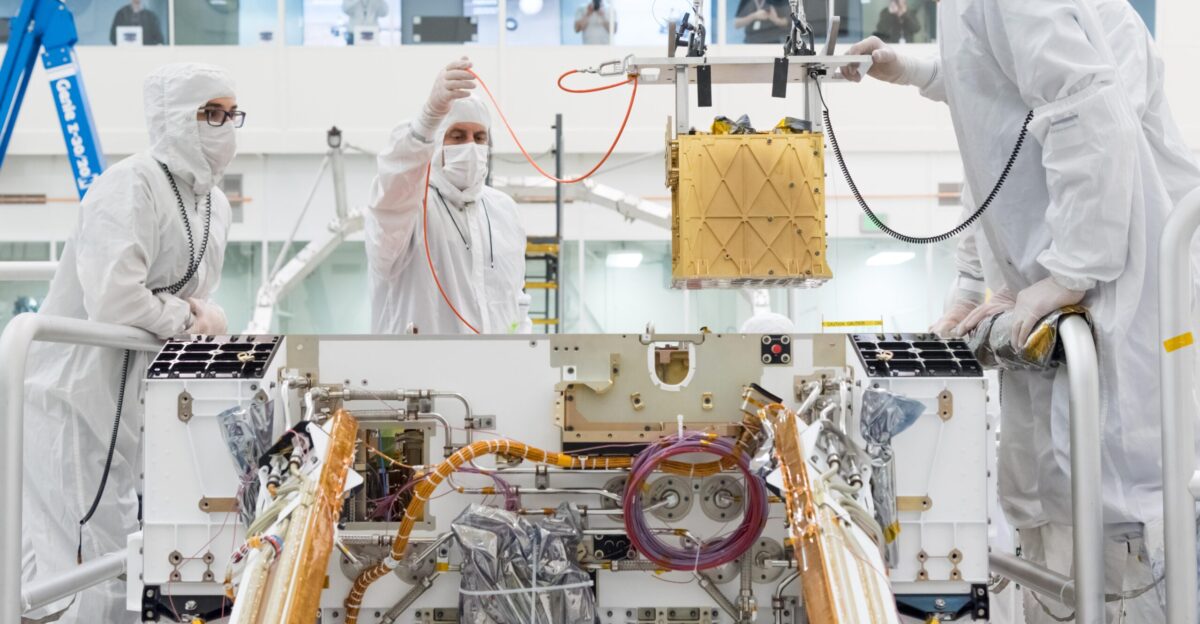
In a show of support, Congress rejected drastic cuts and in July 2025 the House Appropriations Committee earmarked $300 million specifically for Mars Sample Return redesign efforts. The Senate maintained full funding at $7.3 billion for NASA’s science directorate.
Their reports emphasized that the mission develops capabilities “critical to the success of human exploration of the Moon and Mars” and warned that abandonment would cede leadership to China.
Leadership at a Crossroads
Acting NASA Administrator Sean Duffy, also serving as Transportation Secretary, stood at the intersection of scientific ambition and fiscal restraint. At the September 10 2025 press conference announcing the Cheyava Falls findings, he remarked: “We believe there is a better way to do this, a faster way to get these samples back,” signaling a shift toward commercial partnerships.
His balancing act reflects NASA’s internal conflict between discovery and budgetary realism.
Strategic Pivot Underway
In early 2024, NASA formally solicited redesign proposals from commercial partners, research centres and private industry—a clear signal that the original Mars Sample Return architecture had been abandoned. The $11 billion mission plan reviewed in September 2023 was no longer viable; NASA’s request for proposals effectively cancelled that approach in favour of finding lower-cost alternatives.
The lab that designed Perseverance, JPL, found itself competing with external bidders for a mission fundamentally different from what it had spent years developing. Meanwhile, the European Space Agency (ESA) reassessed its contribution—the Earth Return Orbiter—and explored alternative mission uses should NASA terminate its campaign.
Congressional Mandate
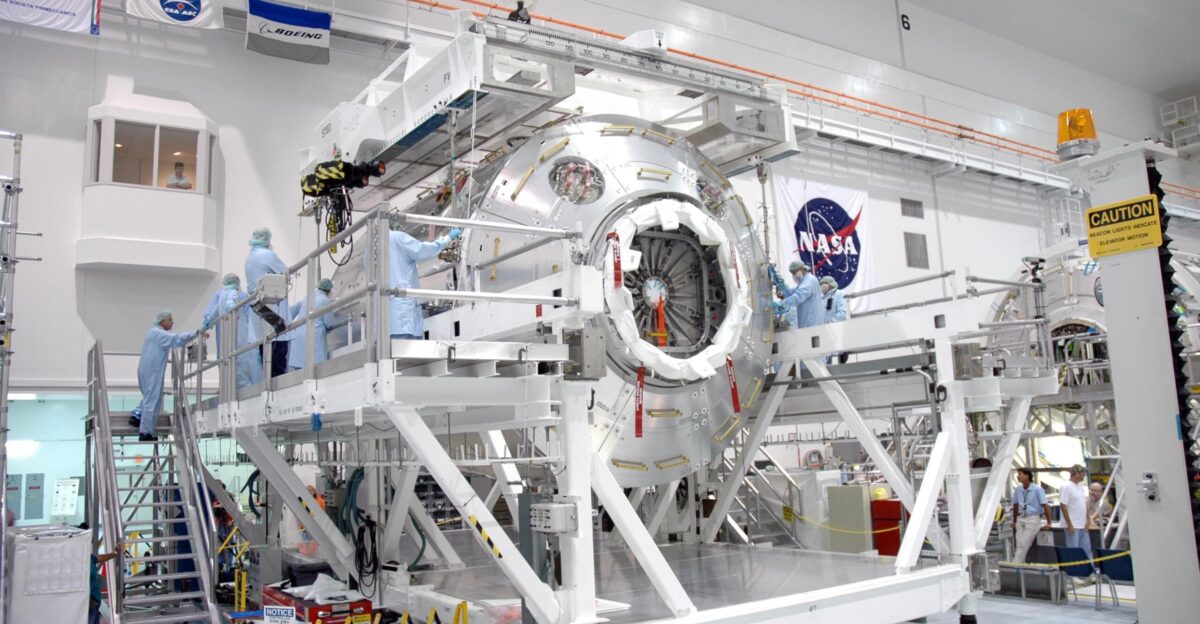
Responding to congressional directives, NASA was tasked with coordinating between its Science Mission Directorate and Exploration Systems Development Mission Directorate—explicitly linking Mars Sample Return technologies (autonomous rendezvous, ascent vehicles, containment) with human-mission capabilities.
The House report required NASA to submit within 30 days a detailed plan for leveraging commercial partnerships to reduce cost and accelerate timeline.
Expert Caution

Despite excitement, scientists emphasize that confirming biosignatures requires Earth-based laboratory analysis—something that cannot be accomplished on Mars. Project scientist Katie Stack Morgan said, “Astrobiological claims… require extraordinary evidence.”
The 2023 Independent Review Board found a “near-zero probability” of meeting the original 2028 launch date or budget. The excitement is real—but caution remains paramount.
Facing Forward
As of November 2025, the $8–11 billion Mars Sample Return mission outlined in the 2023 Independent Review had been shelved. The incoming U.S. administration faced a clear choice: invest in a redesigned, cost-effective sample-return mission using commercial partnerships to maintain U.S. leadership, or pivot toward human exploration and risk yielding first Mars-sample-return to another nation.
NASA continues analysing the Cheyava Falls core sample remotely while the tubes remain sealed aboard Perseverance, but the original multi-billion-dollar retrieval campaign has been replaced by a search for cheaper alternatives.
Political Dimension

The White House proposed a 24.3% cut to NASA’s budget—from $24.8 billion to $18.8 billion—marking the largest single‐year reduction in agency history and the lowest inflation-adjusted funding since 1961.
The administration prioritized human spaceflight via the Artemis program while proposing to phase out the SLS rocket, Orion capsule and Gateway lunar station after Artemis III. Congressional appropriators rejected this, maintaining funding while adding $10 billion via reconciliation.
Global Ripples

ESA invested billions into Mars Sample Return via its Earth Return Orbiter contribution and had expected returns from Perseverance’s samples. ESA’s Director-General acknowledged NASA’s budget constraints make mission cancellation “highly probable,” yet reaffirmed commitment to Mars exploration irrespective of U.S. decisions.
ESA also continues with its own rover mission lineup, such as the Rosalind Franklin (ExoMars) mission targeting 2028.
Scientific Debate at the Fine Line
While the leopard-spot patterns on Cheyava Falls are compelling, they may also have abiotic origins. Researchers draw parallels to the 1996 ALH 84001 meteorite findings—once hailed as signs of life but later re-interpreted as non-biological.
Scientists now emphasize that the mission isn’t about “returning any rock” but “the right rocks”—and Cheyava Falls qualifies by current criteria, but isn’t yet proof.
Generational Stakes
For more than 20 years planetary scientists designated Mars Sample Return a top priority. As the Planetary Society’s Casey Dreier said: “We have the ability, the know-how, and the resources to continue this search.”
Yet the current moment may represent a turning point—hundreds of NASA employees signed the “Voyager Declaration” in July 2025 warning leadership about major budget cuts. A generation’s quest could hinge on decisions now.
Broader Reflection
The Mars Sample Return saga crystallizes the tension between fiscal restraint and scientific ambition amid global competition. The projected $11 billion cost equates to roughly two weeks of U.S. military spending—but may answer humanity’s oldest question: Are we alone?
Whether Congress and the incoming administration choose to invest in retrieving Cheyava Falls—potentially the first physical proof of extraterrestrial life—will signal how the United States values exploration, discovery, and leadership in the 21st-century space race.