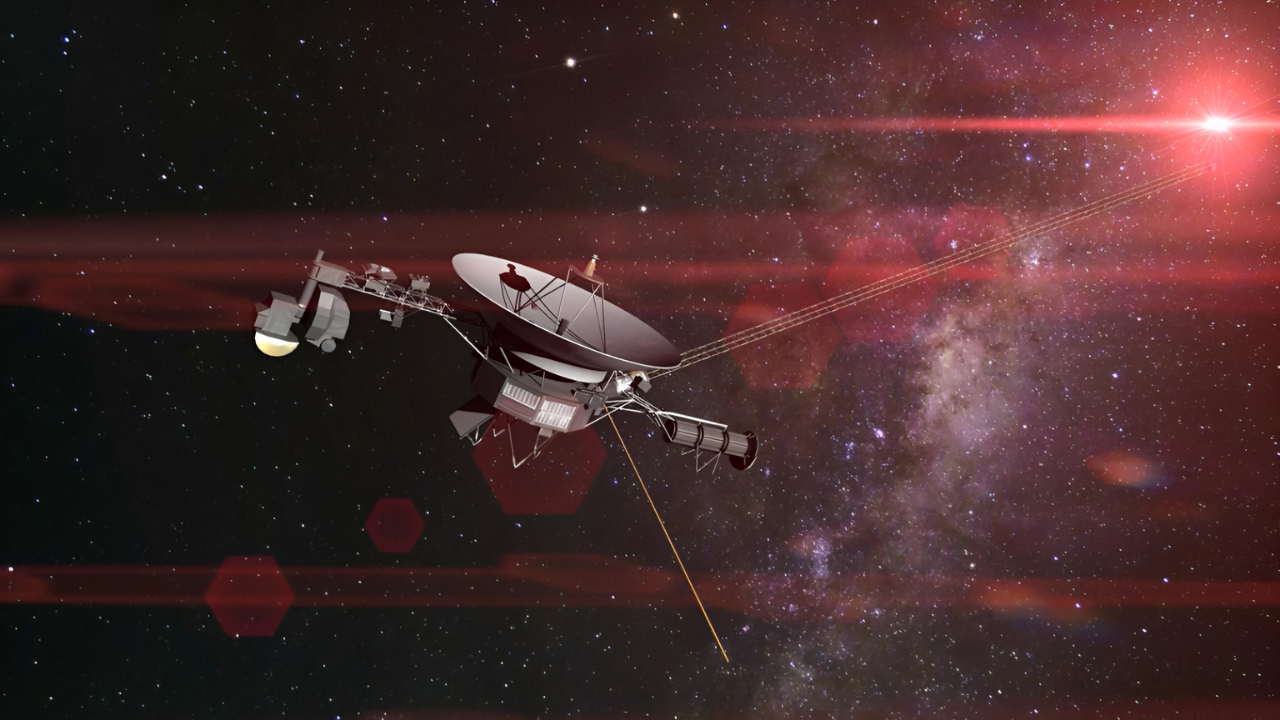
At the farthest reaches of our Sun’s influence, an extraordinary scene unfolded: the twin spacecraft Voyager 1 and Voyager 2 encountered a region of super-heated plasma, with temperatures soaring to 30,000–50,000 Kelvin (about 54,000–90,000 °F). This “wall” lies at the boundary between our solar bubble and interstellar space.
The discovery challenged long-standing models of how our heliosphere ends. Scientists had expected a cool, gentle transition — not a fiery barricade glowing hotter than the Sun’s visible surface.
Pressure Paradox
When Voyager 2 crossed the boundary known as the heliopause — the outermost edge of the Sun’s magnetic bubble — it measured a striking density surge of nearly twentyfold. Before crossing, electron density was about 0.002 particles per cubic centimetre; just beyond, it jumped to roughly 0.039 cm⁻³.
This abrupt change marks the cosmic balance point where the solar wind’s outward pressure finally yields to the interstellar medium pushing back. It’s where the Sun’s reach ends and the galaxy begins.
Twin Travelers
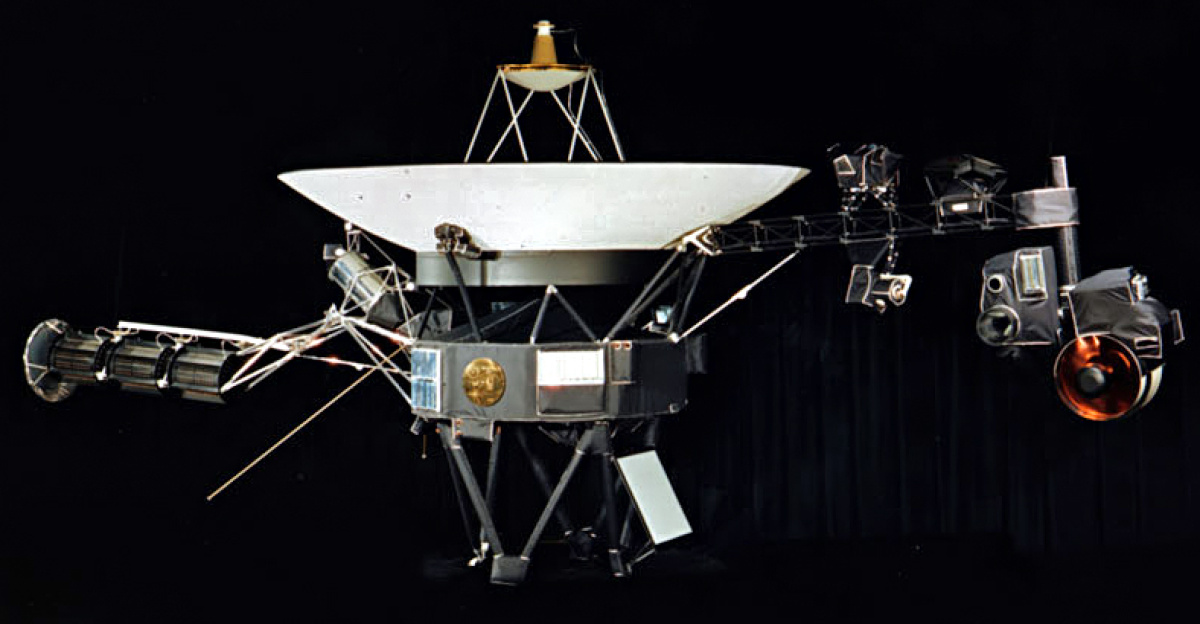
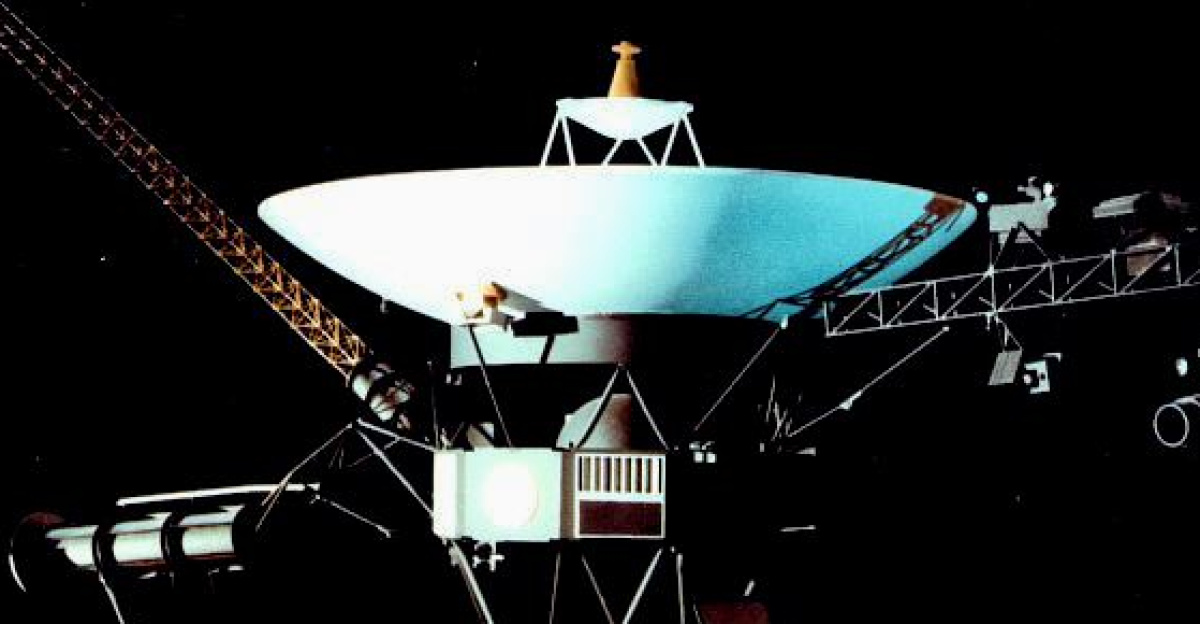
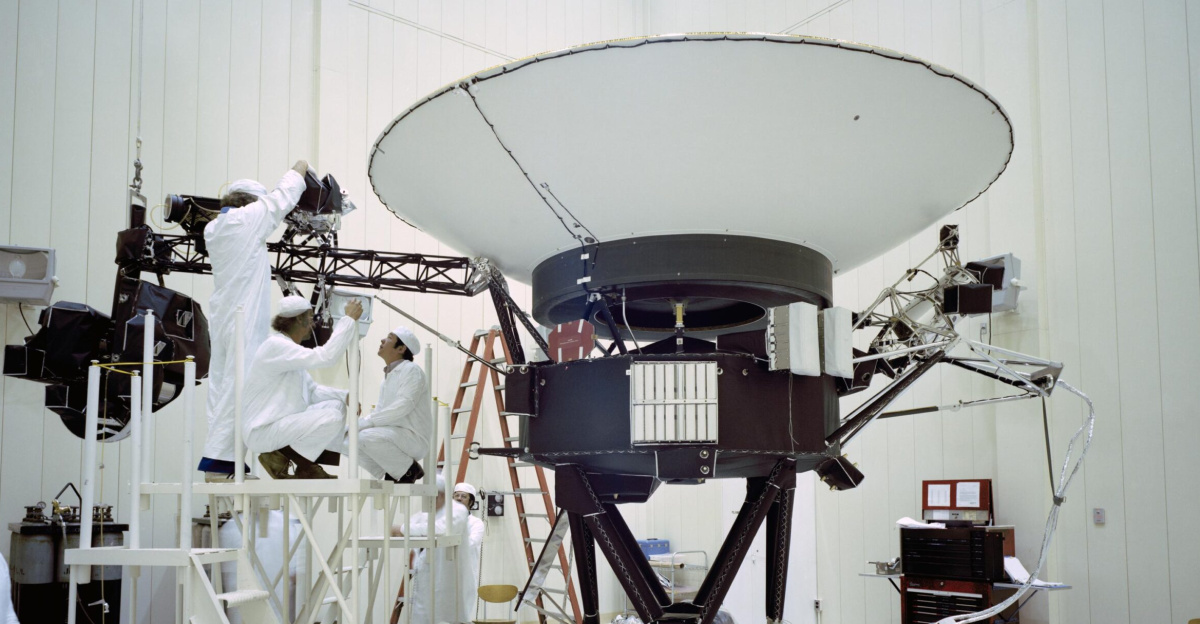
Voyager 1 and Voyager 2 launched from Cape Canaveral in 1977, initially built for short flybys of Jupiter and Saturn. Engineers loaded the spacecraft with redundant systems, betting NASA might approve extensions.
That foresight turned a four-year mission into humanity’s first interstellar journey. Nearly five decades later, the Voyagers remain our only robotic emissaries sailing through the galaxy beyond the Sun’s protective bubble.
Fading Power
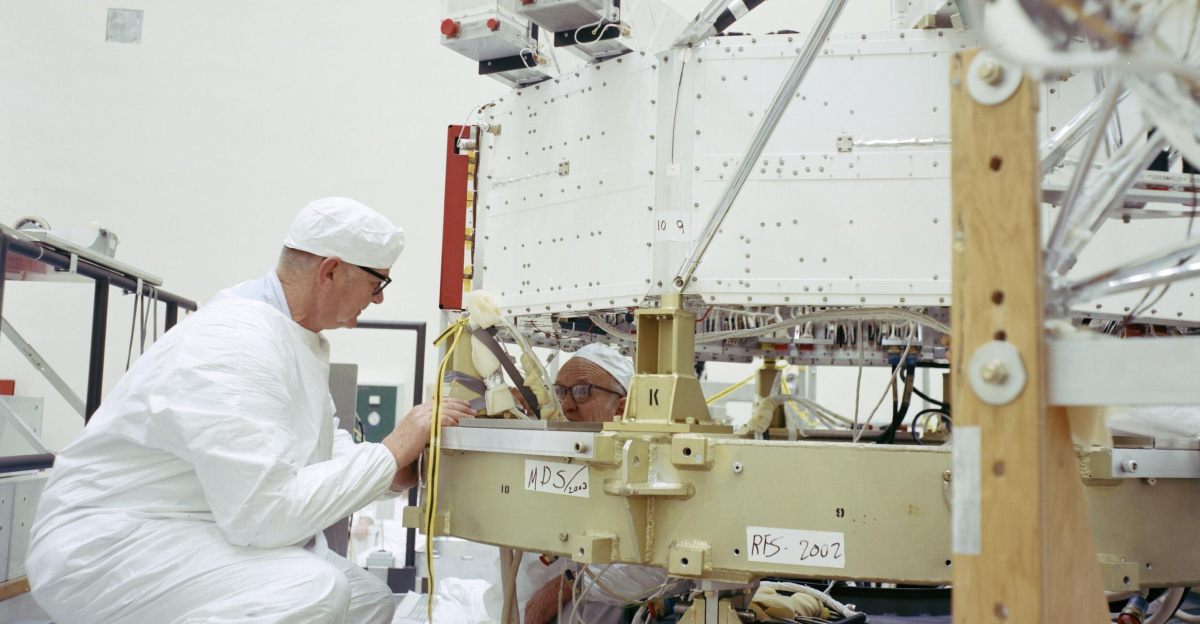
Each Voyager draws energy from plutonium-238 in its radioisotope thermoelectric generators, which lose about four watts every year as the isotope decays. By early 2025, NASA shut down non-essential instruments to stretch dwindling power supplies.
Voyager 1’s cosmic ray subsystem and Voyager 2’s low-energy charged-particle detector went silent, leaving only three active science instruments per probe. Against all odds, they continue transmitting faint whispers from interstellar space.
Wall of Fire
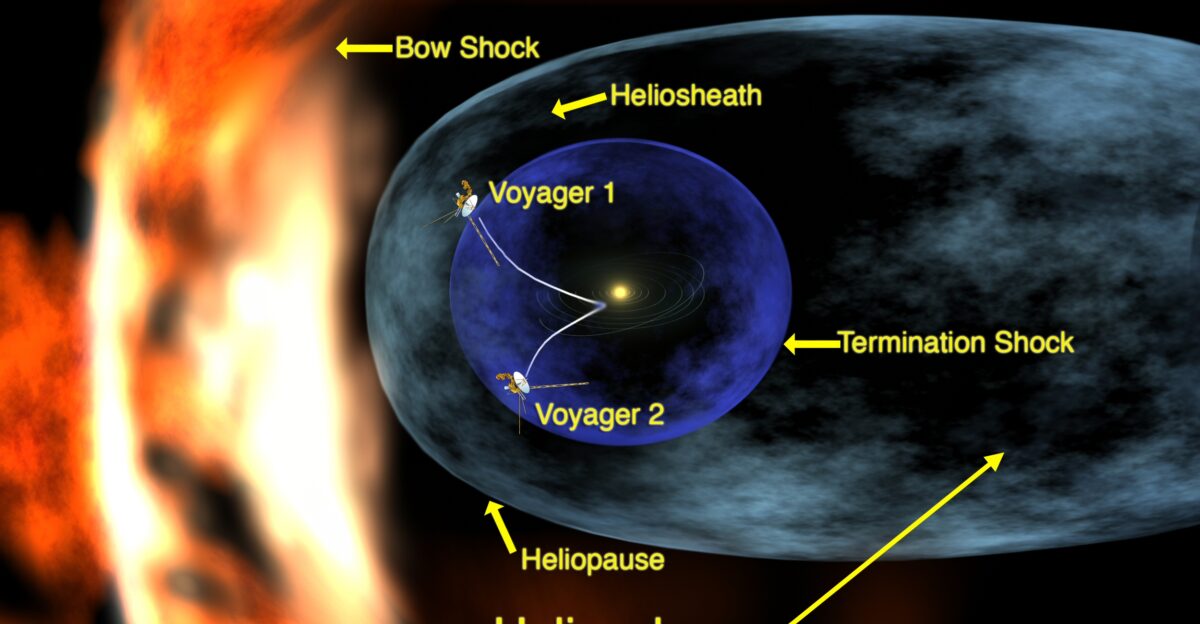
On August 25 2012, Voyager 1 became the first human-made object to cross the heliopause, 121.6 astronomical units from the Sun. Voyager 2 followed six years later at 119 AU. Both probes recorded plasma temperatures between 30,000 and 50,000 Kelvin — as hot as the Sun’s corona.
This fiery boundary, now dubbed the “wall of fire,” forms where the solar wind slams into interstellar plasma. Yet despite its ferocity, the spacecraft emerged unscathed, still sending data home.
Sparse Inferno
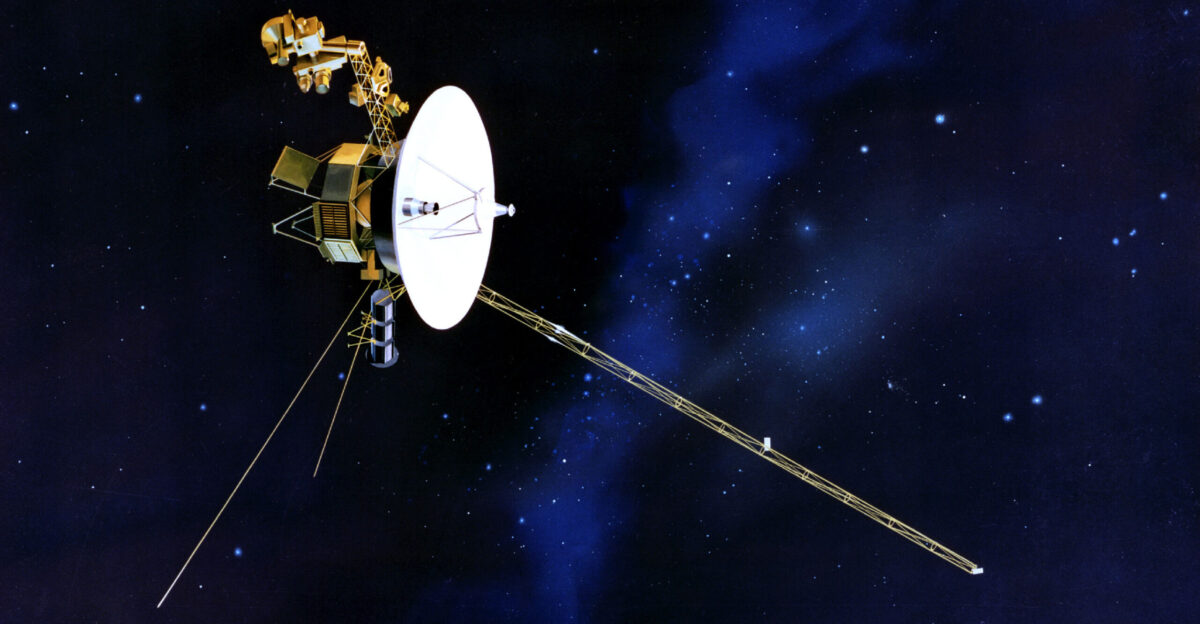
How could they survive such heat? Because heat in space isn’t like heat on Earth. The plasma’s temperature is high, but its density is extraordinarily low — only about 0.039 particles per cubic centimetre, twenty billion times thinner than Earth’s atmosphere.
With so few particles to transfer energy, the region behaves more like a ghostly glow than a furnace. The Voyagers passed through it untouched, showing that “hot” in space doesn’t always mean “dangerous.”
Unexpected Discovery
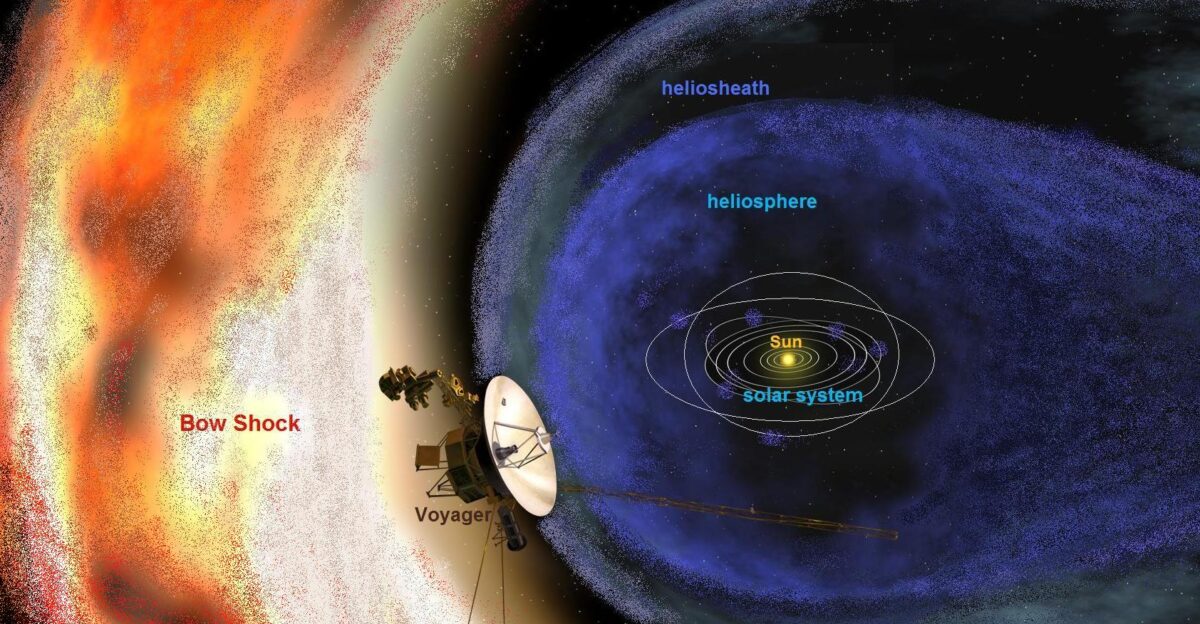
“The plasma gets compressed as it hits the heliosphere,” researchers explained in the Proceedings of the National Academy of Sciences. Models had predicted temperatures of just 15,000 to 30,000 Kelvin in this zone.
Instead, Voyager measured nearly double that, forcing scientists to rewrite how they think the Sun’s magnetic bubble interacts with the surrounding galaxy. The heliosphere, once seen as a gentle cushion, is far more dynamic and extreme than expected.
Termination Shock
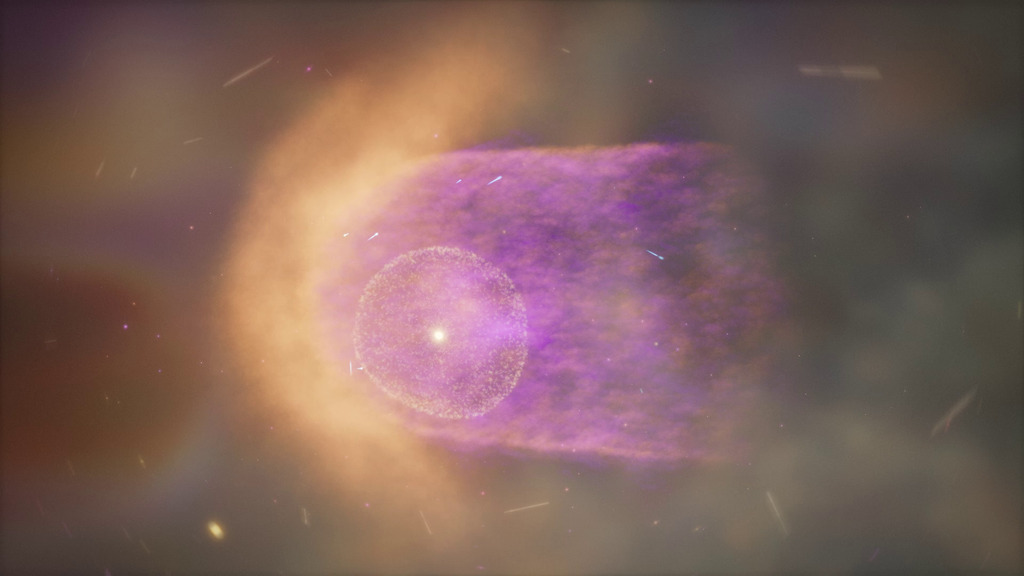
Before reaching the heliopause, both spacecraft crossed the termination shock — where the solar wind abruptly slows from supersonic speeds. Voyager 1 hit this boundary on December 16 2004 at 94 AU; Voyager 2 followed in August 2007 at 84 AU.
Between the shock and the heliopause lies the heliosheath, a turbulent transition zone. Here, particles accelerate and magnetic fields twist — the stormy moat surrounding the calm of interstellar space.
Hydrogen Wall?
Some models predict yet another structure beyond the heliopause: the hydrogen wall. This is where neutral hydrogen from the interstellar medium piles up ahead of the Sun’s magnetic shield, like snow before a plow.
Our solar system moves through the galaxy at about 26 kilometres per second, and this motion may compress hydrogen atoms into a faint, hot layer. Voyager data hint at its presence, but the evidence remains tantalisingly incomplete.
Silent Detection
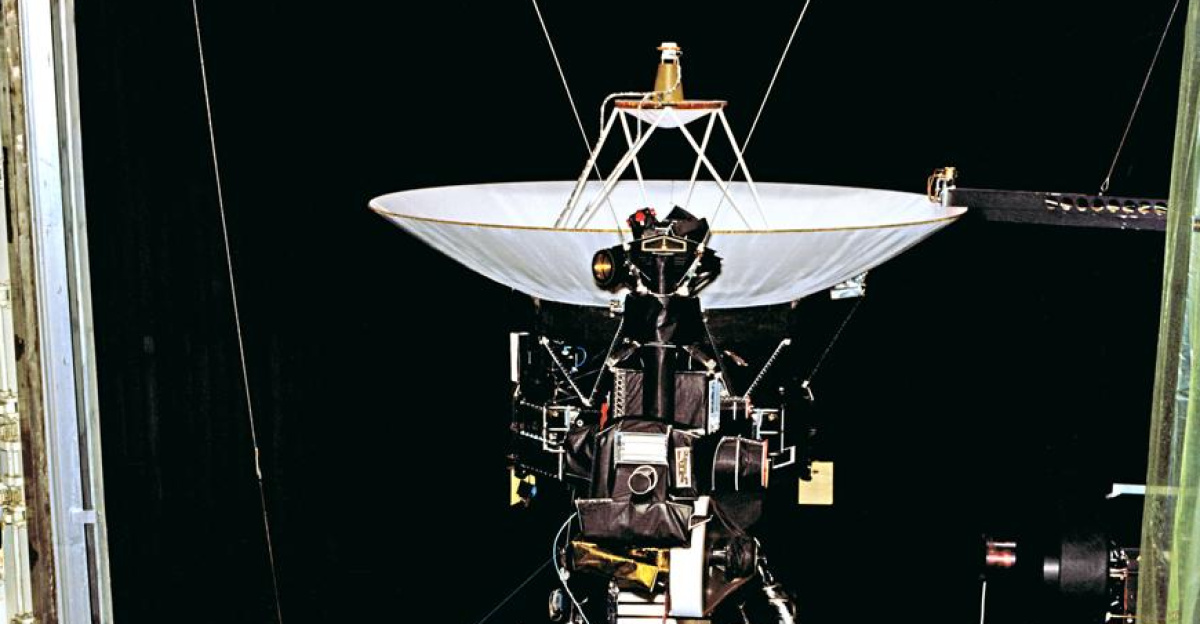
Voyager 1’s main plasma instrument failed in 1980, years before it reached the heliopause. Fortunately, engineers had equipped the craft with a plasma wave subsystem. That backup caught faint radio emissions — 2.6 kilohertz oscillations produced by electrons in interstellar plasma.
Those signals were the first proof Voyager 1 had entered true interstellar space. Without this unexpected redundancy, NASA might not have realised the crossing for more than a year.
Communication Struggle
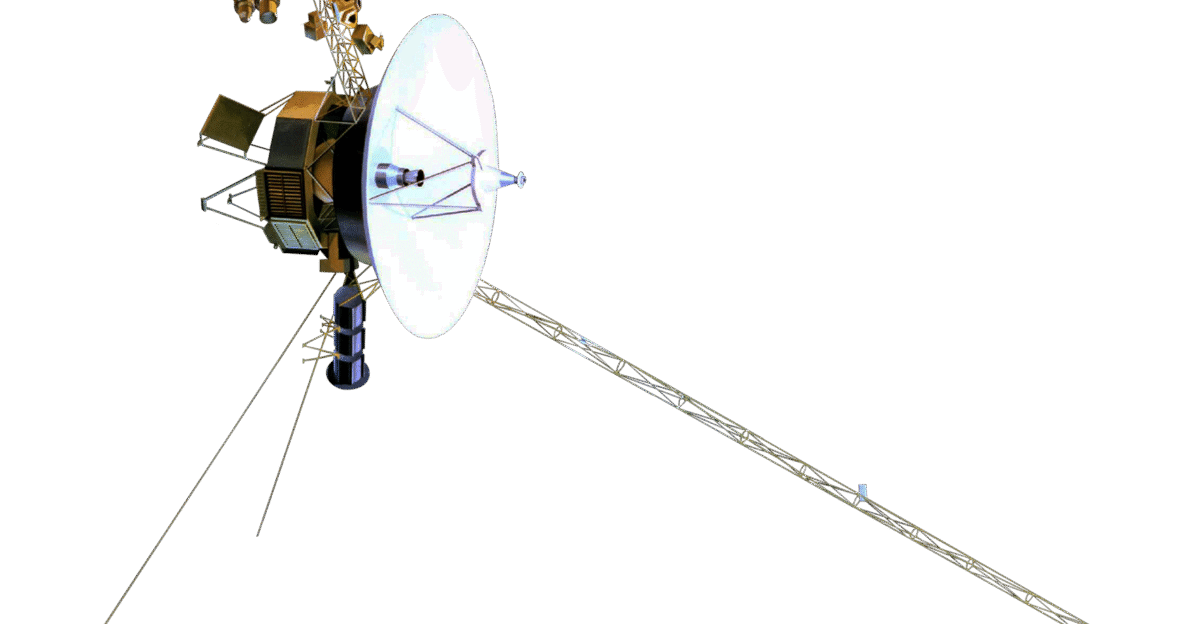
Voyager 1 now drifts more than 15 billion miles from Earth; Voyager 2 about 13 billion. Their radio messages, travelling at light speed, take nearly a full day to arrive — 23 hours for Voyager 1, 19.5 hours for Voyager 2.
The signal strength reaching Earth is 20 billion times weaker than the power required to run a wristwatch. Yet NASA’s Deep Space Network still hears those whispers from the dark, tracking our most distant explorers.
Deep Space Network
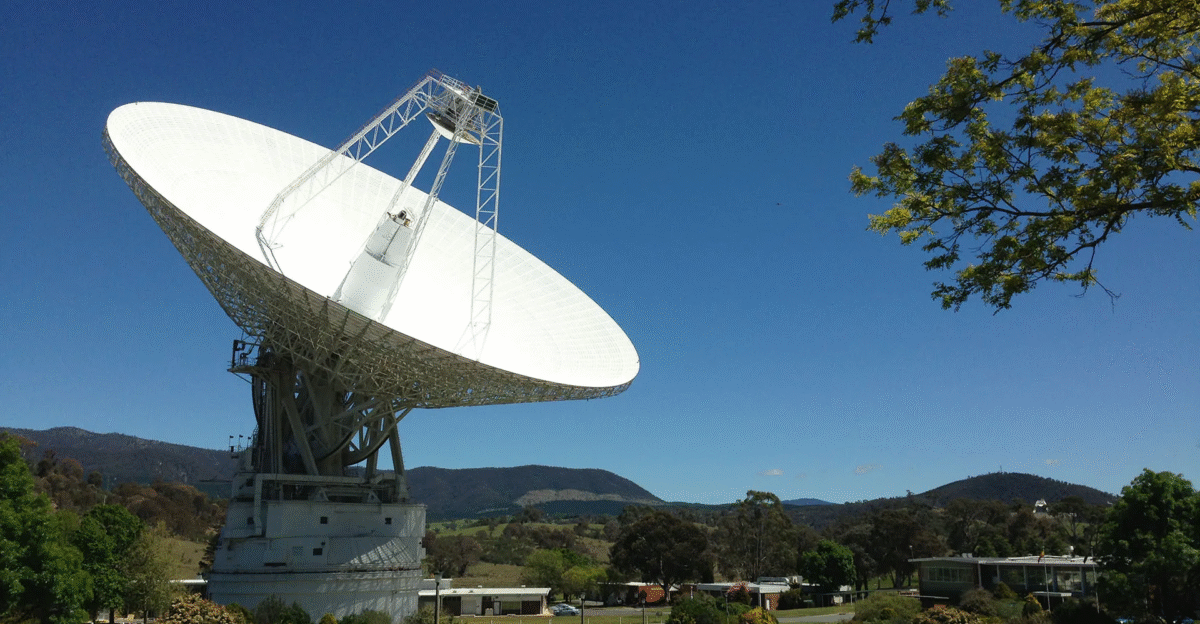
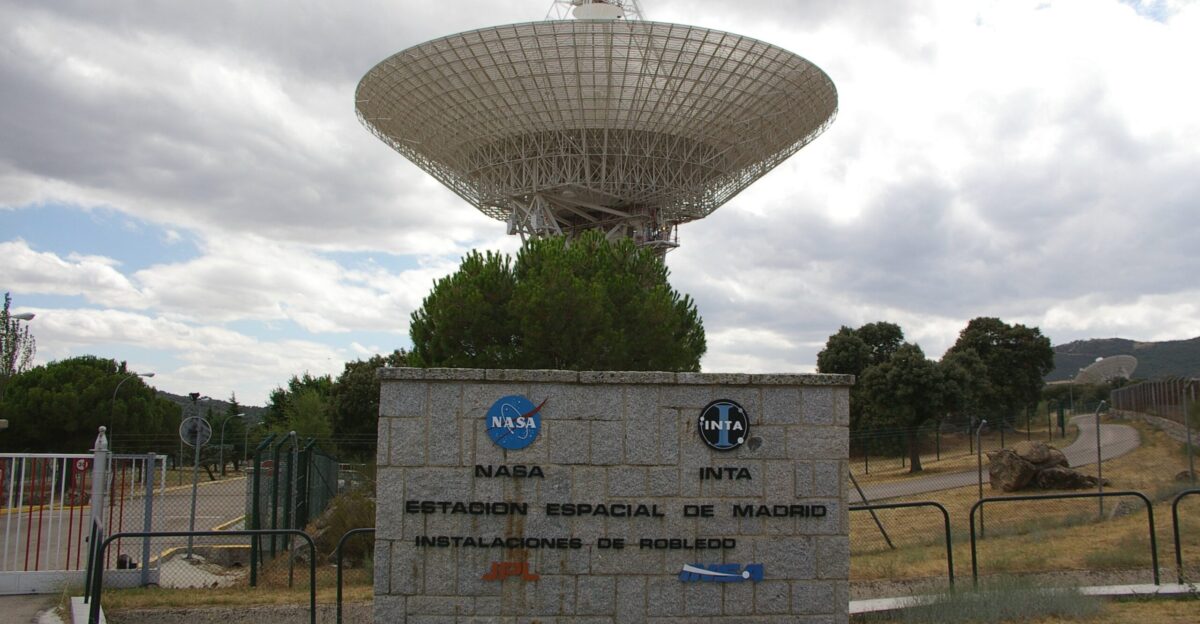
Maintaining that contact requires a global effort. The Deep Space Network’s 70-metre antennas in California, Spain, and Australia provide continuous coverage. Only Canberra’s dish can command Voyager 2 due to its southern path.
In 2024, the Madrid facility made history by linking all six antennas to amplify Voyager 1’s fading signal. These global listening posts form humanity’s interplanetary switchboard, keeping touch with the edge of eternity.
Power Preservation
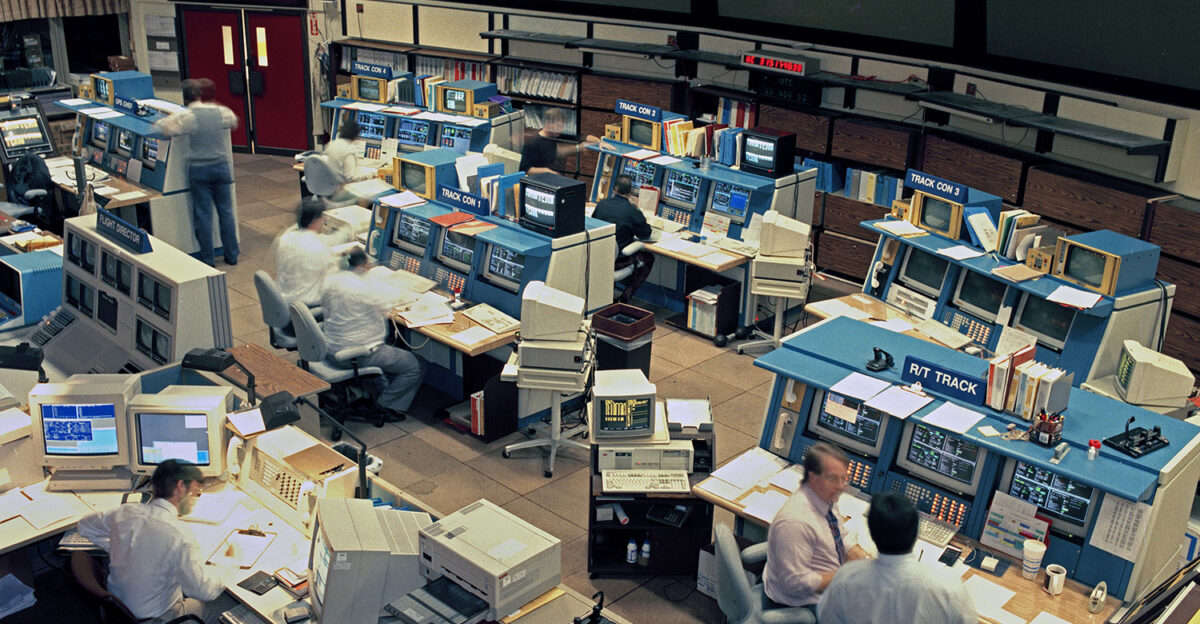
To keep science alive, project manager Suzanne Dodd and her team employed creative power triage. They shut off heaters protecting instruments from deep-space cold, allowing them to function far below tested limits.
They also relaxed voltage controls to conserve energy, accepting small risks to avoid shutting down more instruments. Each watt saved buys precious time — extra months or years to gather data no other craft can provide.
Scientific Windfall
“The farther the Voyagers go, the more valuable their data become,” said NASA scientist Linda Spilker. Voyager 1 revealed that the heliosphere blocks roughly 70 percent of galactic cosmic rays, acting as a radiation shield for the solar system.
Together, the two crossings showed that this protective bubble is asymmetrical — squashed and warped by interstellar pressures. The shape of our cosmic shelter may be far stranger than anyone imagined.
Future Mapmakers
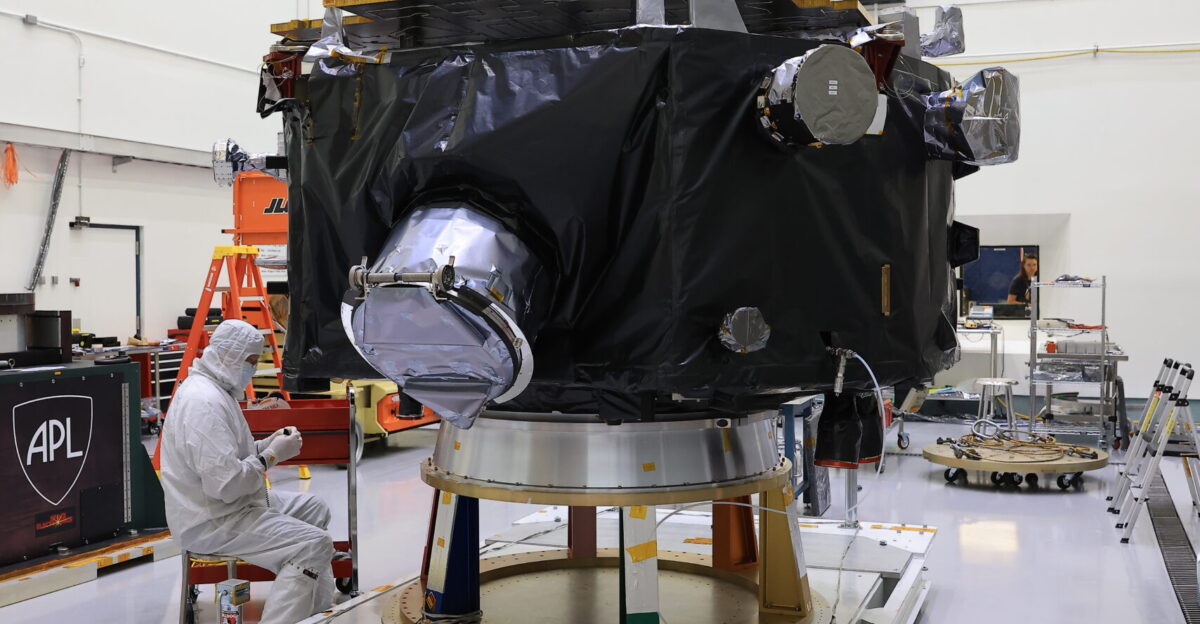
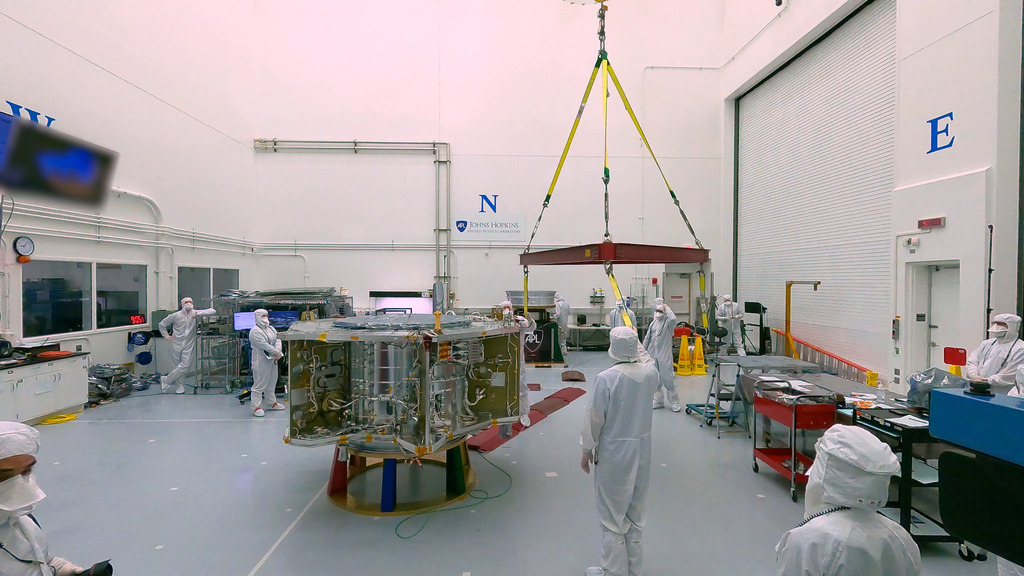
In September 2025, NASA launched the Interstellar Mapping and Acceleration Probe (IMAP) to study the heliosphere’s boundaries from Earth’s orbit. IMAP’s ten instruments will chart solar particles and magnetic flows in unprecedented detail.
Farther out, New Horizons — now 57 AU from the Sun — is expected to reach the heliopause in the 2040s or 2050s. When it does, it will become humanity’s third messenger to leave the Sun’s domain.
Heliospheric Protection
The heliosphere isn’t just a curiosity — it’s Earth’s radiation shield. It blocks much of the galactic cosmic energy that can shred DNA and strip atmospheres from planets.
When the Sun moves through denser interstellar clouds every few million years, that shield may shrink. During those epochs, Earth could face surges of cosmic radiation, possibly influencing climate and even biological evolution.
International Collaboration
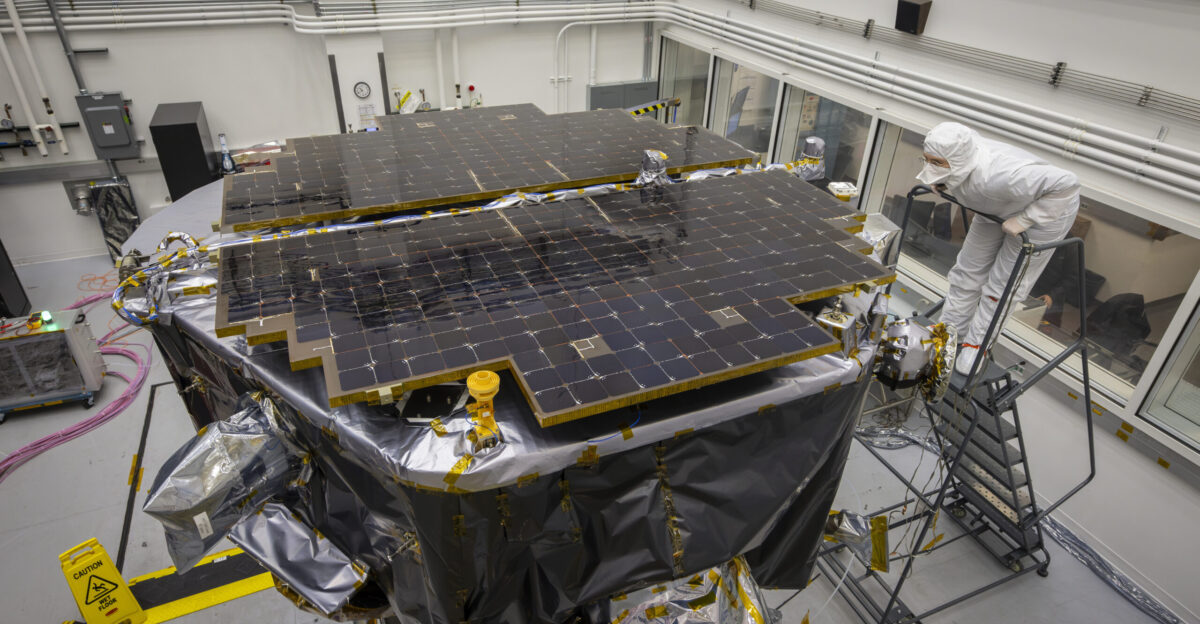
No single nation could maintain such a vast communication network alone. NASA’s Deep Space Network works in concert with Europe’s and other space agencies’ facilities to maintain 24-hour coverage.
Over 30 spacecraft, from Mars rovers to interstellar pioneers, share these antennas. Together they exemplify a rare form of unity: humanity cooperating across continents to listen to two tiny signals drifting among the stars.
Mission Duration Reality
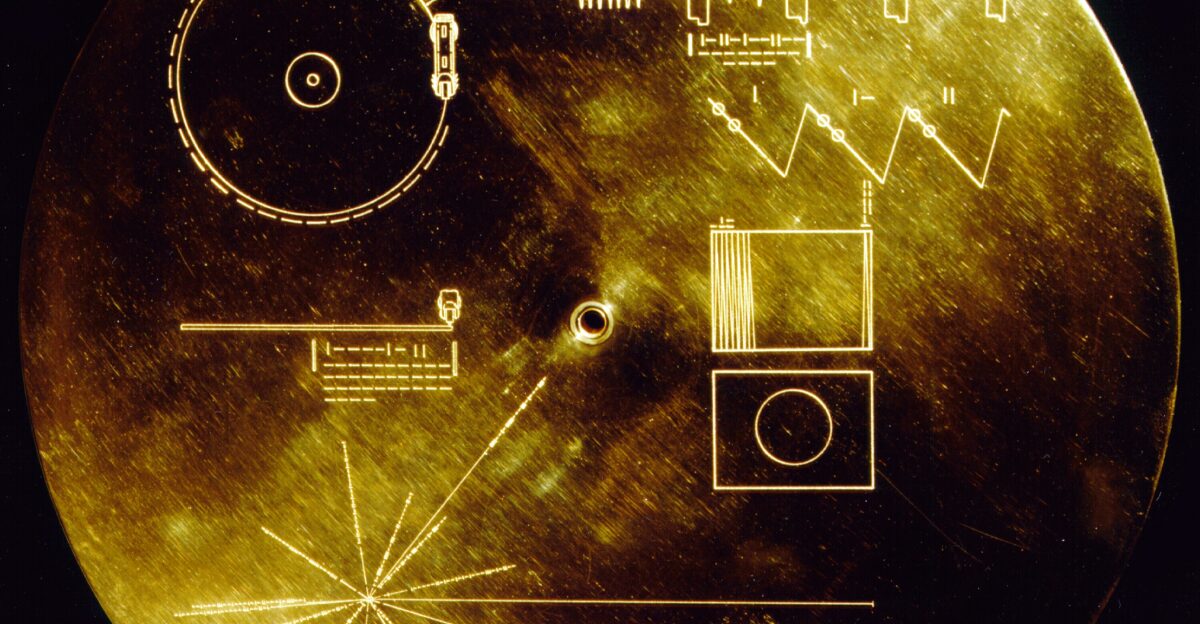
As of November 2025, Voyager 1 and 2 have each been operational for over 48 years. If they last two more, both will celebrate 50 years of continuous operation — the longest-running missions in space history.
Their endurance stands as a tribute to 1970s engineering and human persistence. Even as power fades, their data continue to illuminate the invisible border between our Sun’s domain and the galaxy beyond.
Golden Legacy
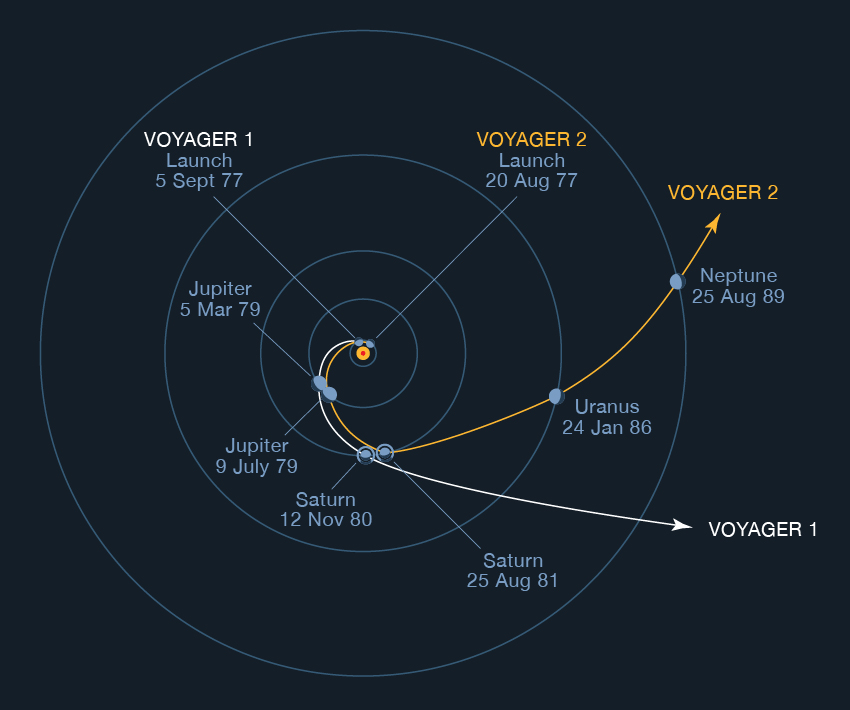
Each Voyager carries a 12-inch gold-plated copper record — a time capsule curated by Carl Sagan’s team. It contains 90 minutes of music, 55 greetings in human languages, 115 images, and the sounds of Earth’s natural world.
Designed to last a billion years, these “Golden Records” bear playback instructions etched in symbolic form. They now travel outward at tens of thousands of miles per hour, our civilization’s calling card to the cosmos.
Pale Blue Dot
![Taken by <a href="https://en.wikipedia.org/wiki/Apollo_8" class="extiw" title="w:Apollo 8">Apollo 8</a> crewmember <a href="https://en.wikipedia.org/wiki/William_Anders" class="extiw" title="w:William Anders">Bill Anders</a> on December 24, 1968, at mission time 075:49:07 <a rel="nofollow" class="external autonumber" href="https://history.nasa.gov/ap08fj/14day4_orbits456.htm">[8]</a> (16:40 UTC), while in orbit around the Moon, showing the Earth rising for the third time above the lunar horizon. The lunar horizon is approximately 780 kilometers from the spacecraft. Width of the photographed area at the lunar horizon is about 175 kilometers. <a rel="nofollow" class="external autonumber" href="https://grin.hq.nasa.gov/ABSTRACTS/GPN-2001-000009.html">[9]</a> The land mass visible just above the terminator line is west Africa. <b>Note</b> that this phenomenon is only visible to an observer in motion relative to the lunar surface. Because of the Moon's synchronous rotation relative to the Earth (i.e., the same side of the Moon is always facing Earth), the Earth appears to be stationary (measured in anything less than a geological timescale) in the lunar "sky". In order to observe the effect of Earth rising or setting over the Moon's horizon, an observer must travel towards or away from the point on the lunar surface where the Earth is most directly overhead (centred in the sky). Otherwise, the Earth's apparent motion/visible change will be limited to: 1. Growing larger/smaller as the orbital distance between the two bodies changes. 2. Slight apparent movement of the Earth due to the eccenticity of the Moon's orbit, the effect being called <a href="https://en.wikipedia.org/wiki/Libration" class="extiw" title="w:Libration">libration</a>. 3. Rotation of the Earth (the Moon's rotation is synchronous relative to the Earth, the Earth's rotation is <b>not</b> synchronous relative to the Moon). 4. Atmospheric & surface changes on Earth (i.e.: weather patterns, changing seasons, etc.). Two craters, visible on the image were named <i>8 Homeward</i> and <i>Anders' Earthrise</i> in honor of Apollo 8 by IAU in 2018. (<a rel="nofollow" class="external text" href="https://www.iau.org/news/pressreleases/detail/iau1811/">Press release</a>). The NASA image number is AS08-14-2383.](https://aws-wordpress-images.s3.amazonaws.com/ruckus/wp-content/uploads/2025/11/nasa-apollo8-dec24-earthrise-cropped.jpg)
On February 14 1990, at Sagan’s request, Voyager 1 turned its camera backward from 3.7 billion miles away and photographed Earth as a single pale pixel suspended in sunlight. “That’s here. That’s home. That’s us,” he wrote.
Afterward, NASA powered off the cameras forever to save energy. That tiny blue mote — our entire world, framed against the infinite dark — remains the most humbling self-portrait ever taken.