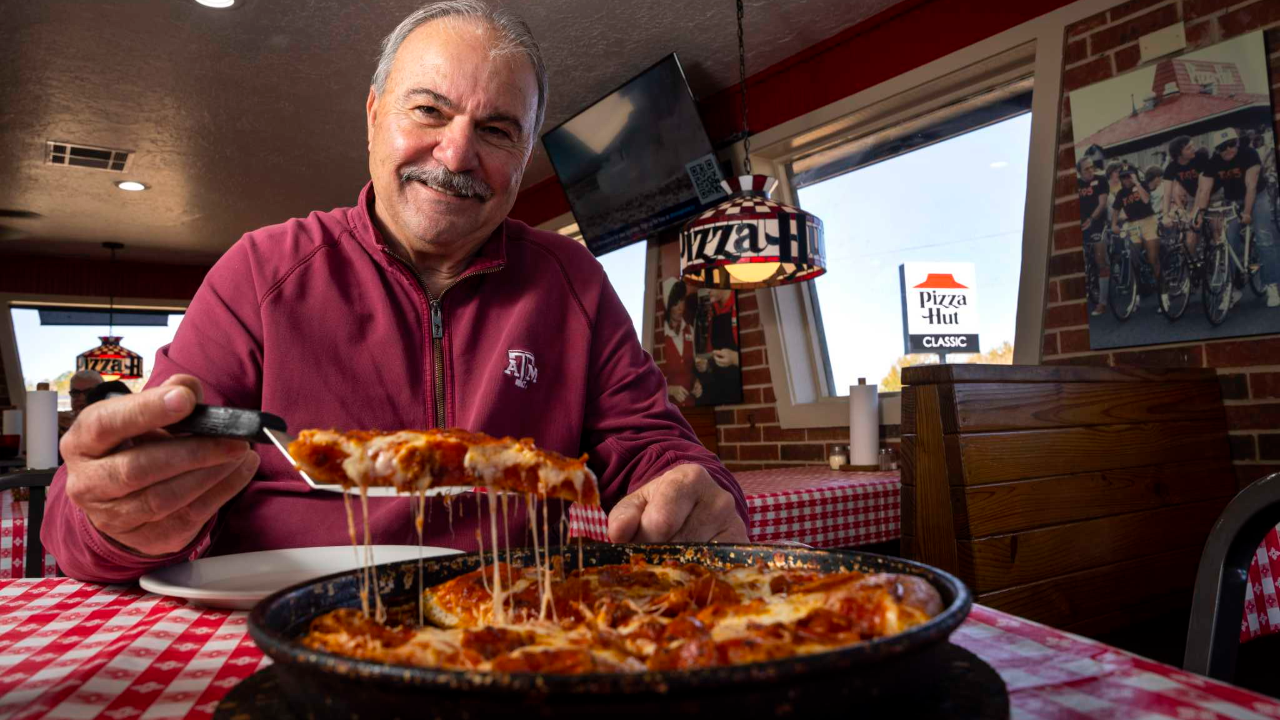
Pizza Hut, once the world’s leading pizza brand, is confronting its most significant challenge in decades. Eight consecutive quarters of declining U.S. same-store sales, franchise bankruptcies, and mounting labor pressures have prompted the parent company, Yum Brands, to launch a formal strategic review. CEO Chris Turner is leading the process, tasked with reshaping the brand’s future.
Franchisees, employees, and supply chain partners watch closely as the review could affect thousands of locations and hundreds of thousands of workers worldwide. The outcome may determine whether Pizza Hut can reinvent itself or follow other legacy chains into decline. Here’s what’s happening…
Leadership and Franchise Dynamics
Yum Brands oversees Pizza Hut’s nearly 19,900 global locations, with Chris Turner at the helm since October. On November 3, Turner announced a strategic review that could include selling parts or the entire brand. Turner succeeds David Gibbs and faces the challenge of addressing persistent U.S. struggles and franchisee stress.
Franchisees operate 99% of Pizza Hut locations. The Flynn Group runs over 1,000 U.S. stores and 260 in Australia after acquiring 937 NPC International units in 2021. Others, like EYM Pizza LP, filed for bankruptcy, affecting 127 locations in 2024. Yum Brands has retained Goldman Sachs and Barclays to advise on the review, though no deadline has been set. Decisions depend heavily on franchisee cooperation.
Employee Uncertainty and Labor Challenges
The strategic review has created widespread uncertainty across Pizza Hut’s global workforce. Corporate and franchise operations employ 85,000–140,000 people worldwide, while supply chain partners, delivery personnel, and support services extend employment to hundreds of thousands more.
Recent disruptions highlight the human cost. Over 1,100 California delivery drivers were laid off ahead of a $20 minimum wage increase in 2024. Workers in Los Angeles staged strikes to protest allegations of wage theft. In the U.K., DC London Pie Limited collapsed in October 2025, closing 68 restaurants and jeopardizing 1,277 jobs. “Every change at the top makes us worry about our jobs and our families,” employees report. Job security remains a central concern as restructuring looms.
Performance Pressures and Industry Comparisons
Pizza Hut’s U.S. financial performance lags behind competitors. In 2023, sales reached $5.38 billion, but declines persisted into 2025. Mature dine-in restaurants averaged $1.09 million per location in 2024, while delivery-focused stores generated less. Domino’s averaged $1.35 million, and Papa John’s $1.16 million per unit, underscoring structural profitability challenges.
The brand recorded its eighth consecutive quarter of U.S. same-store sales declines in Q3 2025, down 6% year-over-year. Taco Bell grew 7% and Domino’s 5.2% in the same period. “Pizza Hut’s challenges are emblematic of legacy chains struggling to adapt to new consumer habits,” analysts noted. International same-store sales grew 2% in Q3 2025, partially offsetting domestic declines, though franchisee disputes complicate global operations.
Adapting to Changing Consumer Preferences
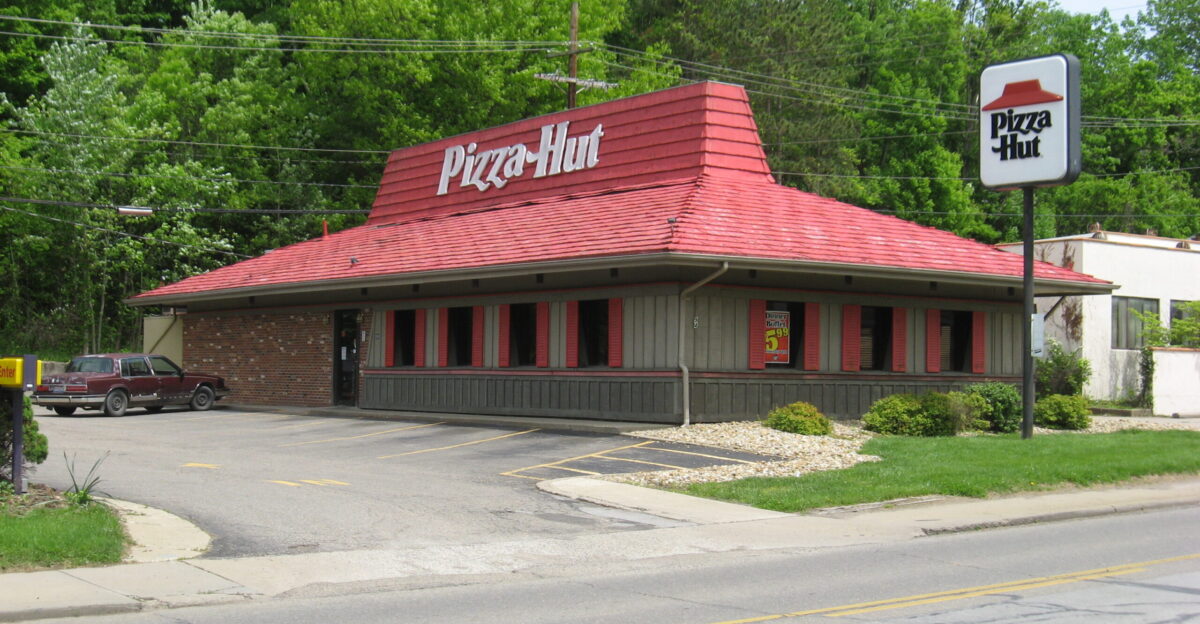
Pizza Hut has transformed its footprint, converting many “Red Roof” dine-in locations to delivery and carryout-focused restaurants. By 2024, traditional U.S. stores numbered 5,237, while delivery/carryout locations grew to 3,052. Nearly 90% of new construction now targets “delco” operations, reflecting modern consumer demand for convenience.
Delivery and carryout account for roughly 90% of business. Outsourcing to aggregators like DoorDash and Uber Eats reduced costs but sometimes hurt food quality and service consistency. Customer complaints about cold or late pizza have grown. Strategic changes may further impact menu offerings, pricing, or service, making consumer satisfaction a key factor in any future restructuring.
Global Context and Strategic Options
Pizza Hut’s strategic review arrives amid broader distress in the quick-service industry. Rising costs and reduced discretionary spending have affected multiple chains. Yum Brands is considering options including the sale of U.S. or global operations, partial divestiture, spin-offs, or operational restructuring. Potential buyers include private equity firms, franchisees, or other restaurant operators.
Market appetite is uncertain, especially after Apollo Global Management withdrew a $2.1 billion bid for Papa John’s in early November 2025. Outcomes at Pizza Hut could influence legacy brand survival benchmarks. Franchise disputes, operational challenges, and global market complexities will shape decisions, making this one of the most pivotal moments in the brand’s modern history.
Looking Ahead: Stakes and Implications
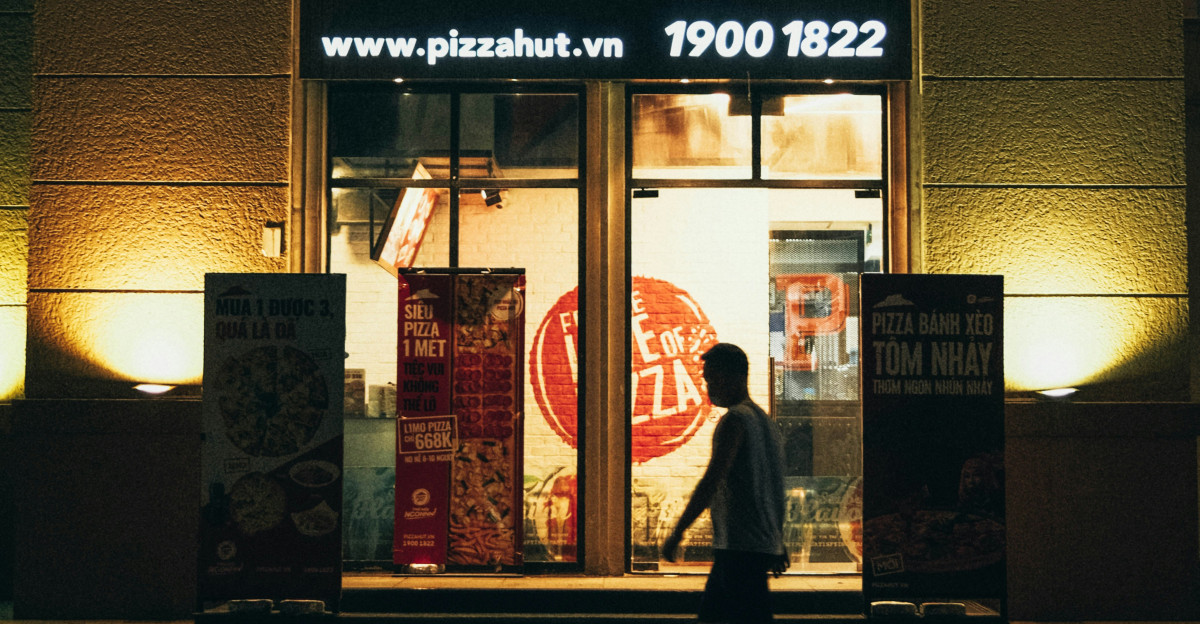
The strategic review’s impact extends far beyond corporate offices. Nearly 20,000 restaurants worldwide represent a vast employment ecosystem. Franchisees could face renegotiated agreements, restaurant staff may face job insecurity, and supply chain partners may see shifts in their contracts. Third-party delivery personnel and support staff await clarity on their futures.
Consumers may experience changes in menu options, pricing, and service quality. Globally, the brand’s outcome will influence market share and investor confidence in legacy chains. The decisions made in the coming months will determine whether Pizza Hut can successfully reinvent itself or become another casualty in an industry increasingly dominated by agile, digitally-driven competitors.