Pizza Hut, once the world’s pizza powerhouse, is facing a turning point. After eight consecutive quarters of declining same-store sales in the U.S., mounting franchise bankruptcies, and rising labor and delivery challenges, Yum Brands has launched a strategic review of the iconic chain.
The move could reshape thousands of stores, affect hundreds of thousands of employees, and ripple across international markets. With the brand’s future hanging in the balance, investors, franchisees, and customers are watching closely as Pizza Hut confronts its most dramatic crossroads in decades.
What’s Happening With Pizza Hut?
Yum Brands announced a formal strategic review of Pizza Hut yesterday. CEO Chris Turner, who took over in October, said the review may include selling parts or all of the brand. The process has no set timetable and may not result in a sale.
The review aims to maximize value for Yum Brands while positioning Pizza Hut for future success. Analysts note the move highlights challenges in Pizza Hut’s U.S. performance, long-term franchisee stress, and global operational adjustments.
Who Are The Decision Makers?
Yum Brands, the world’s largest restaurant company, oversees Pizza Hut. Chris Turner, CEO since 01 October 2025, directs the strategic review. Turner succeeded David Gibbs, a longtime Yum veteran. Pizza Hut itself operates as a division with nearly 19,900 stores globally, continuing to manage both company-owned and franchised outlets.
Franchisees, including Flynn Group and EYM Pizza LP, play key roles. They own hundreds of U.S. and international locations, and their financial health directly affects Pizza Hut’s performance. Their cooperation and stability are crucial for any strategic decision.
Employees Face Uncertainty
Pizza Hut employs an estimated 85,000–140,000 people worldwide, down from historical highs. U.S. stores alone account for roughly 65,000–79,000 employees. Workforce challenges include wage theft allegations, strike activity, and layoffs in California due to $20 minimum wage increases.
Global employees depend on stable ownership and consistent store operations. Any sale or restructuring could affect job security, pay, and store closures, particularly in regions with historically troubled franchises.
Franchisees Are Under Pressure
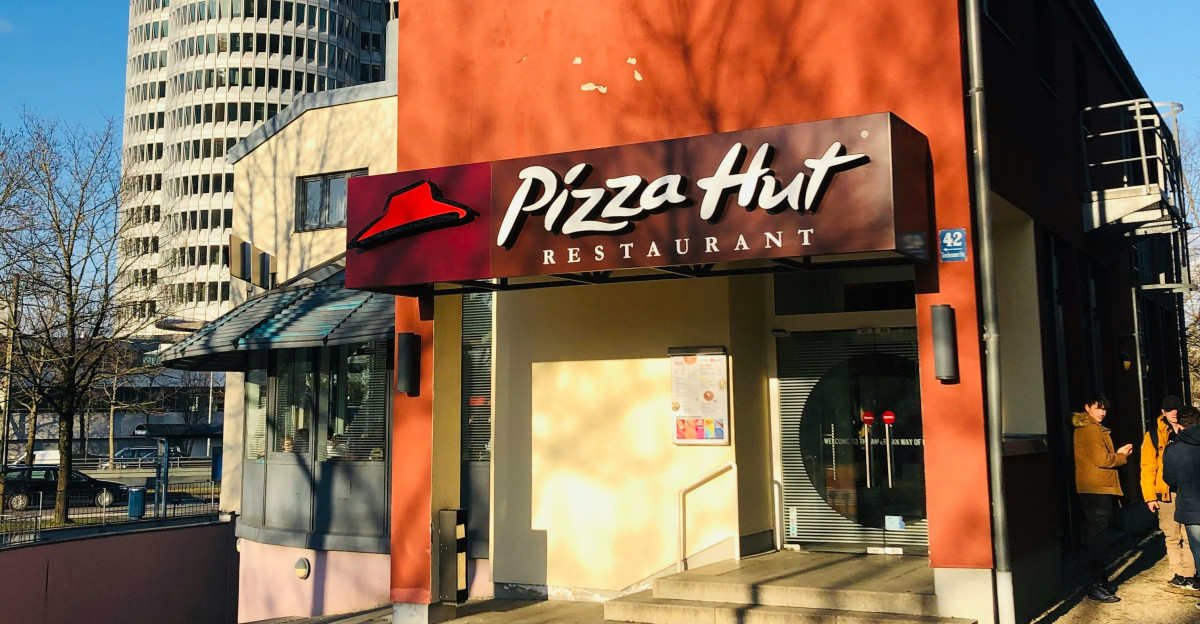
Flynn Group now operates 1,027 U.S. stores and nearly 300 in Australia after acquiring NPC International units in 2021. Other franchisees, like EYM Pizza LP, have filed for bankruptcy, affecting hundreds of stores.
Franchisee disputes, such as in India, further complicate operations. Advertising disagreements and regional differences disrupt marketing and sales, making strategic decisions for Pizza Hut more challenging.
Supply Chain Partners Involved

Pizza Hut Supply Chain Services provides equipment, ingredients, and services to company and franchise stores. Major suppliers include PepsiCo, Habib Oil Mills, and specialized logistics providers in regions like South Africa, Latin America, and Australia.
Partnerships with Dairy Farmers of America for sustainability and FTA Food Solutions in Australia highlight the global complexity. A sale could trigger contract reviews, renegotiations, or operational disruptions for these partners.
Consumers And Global Reach

Pizza Hut serves millions across 100+ countries with nearly 20,000 locations. U.S. sales totaled $5.55 billion in 2024. Delivery and carryout account for roughly 90% of business, while dine-in operations continue to shrink.
Consumer experience varies. Outsourced delivery to aggregators like DoorDash and Uber Eats affects speed and quality. Strategic changes may further alter menu offerings, pricing, or store access, impacting customer satisfaction.
The Strategic Review

The review, announced yesterdat, may include partial or full sale of Pizza Hut. Turner emphasized the need for new approaches to unlock brand value, whether within or outside Yum Brands.
Options under consideration include restructuring, divestiture, or spin-offs. No timeline is set, and the final decision will depend on potential buyer interest and operational priorities.
Performance Challenges
Pizza Hut reported its eighth consecutive quarter of global same-store sales declines in Q3 2025. U.S. stores fell 6–7%, contrasting sharply with Taco Bell’s 7% growth and Domino’s 5.2% gains.
Declining performance highlights challenges in off-premises delivery, high-cost dine-in stores, and franchise profitability. These trends drive Yum Brands’ urgency to review strategic options.
Financial Reality

Pizza Hut generated $5.55–$5.6 billion in U.S. sales in 2024. Average unit volumes of $839,000 lag behind Domino’s ($1.354M), Papa John’s ($1.157M), and Little Caesars ($900,000).
Many locations generate far less than competitors. Even mature dine-in restaurants average $1.088M, highlighting structural profitability issues. This underperformance weighs on Yum Brands’ overall earnings and investor confidence.
Store Footprint Transformation

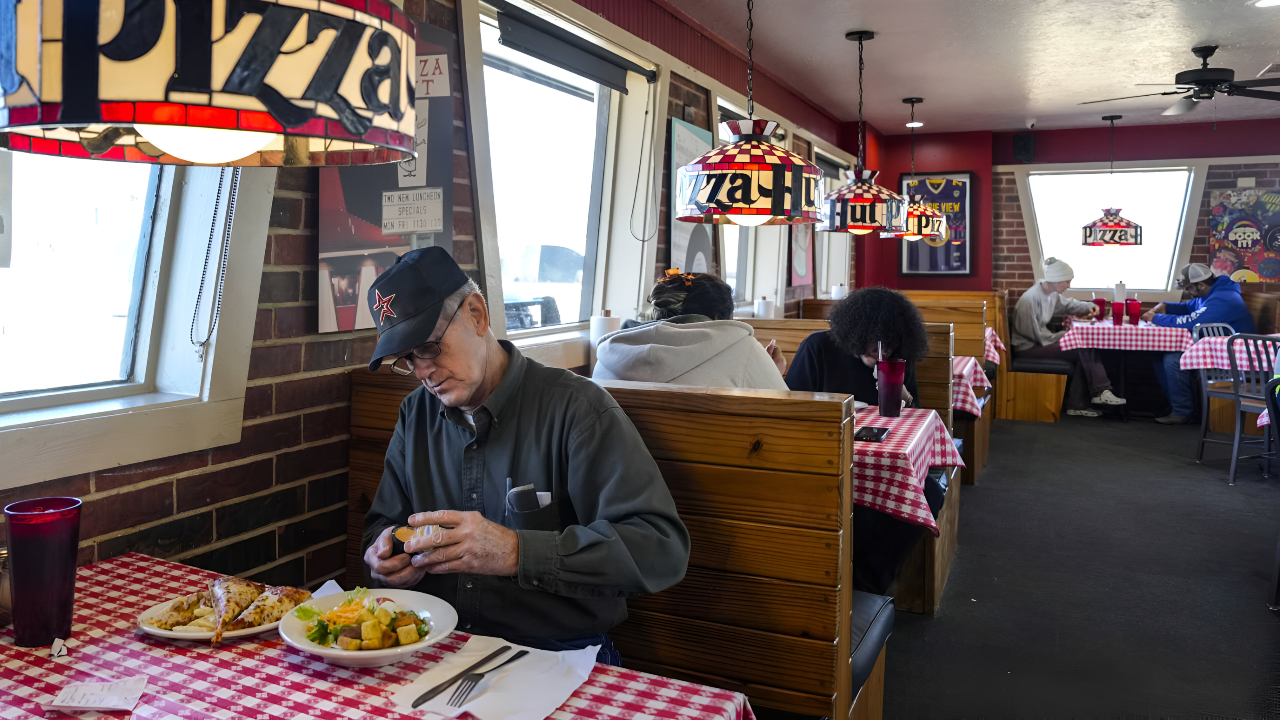
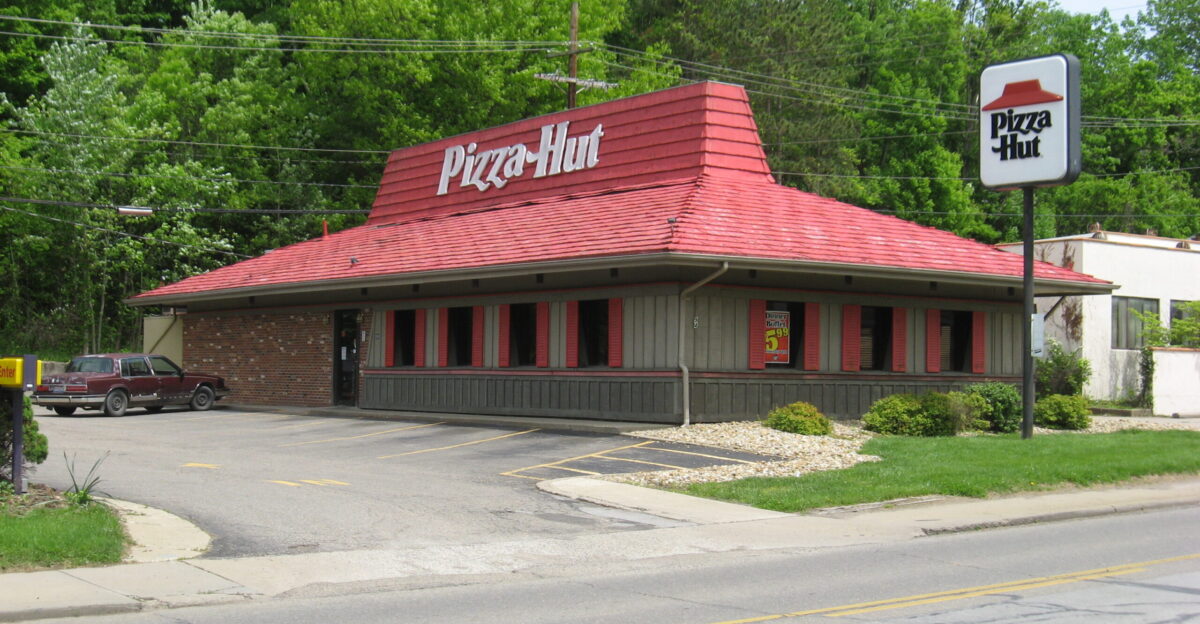
Pizza Hut has converted iconic “Red Roof” dine-in stores to delivery/carryout-focused restaurants. In 2024, traditional U.S. stores dropped to 5,237, while delivery/carryout locations grew to 3,052.
Non-traditional formats like kiosks and retail counters also expanded. Nearly 90% of new construction now focuses on delco operations, reflecting the brand’s pivot to modern consumer preferences.
U.S. Market Impact
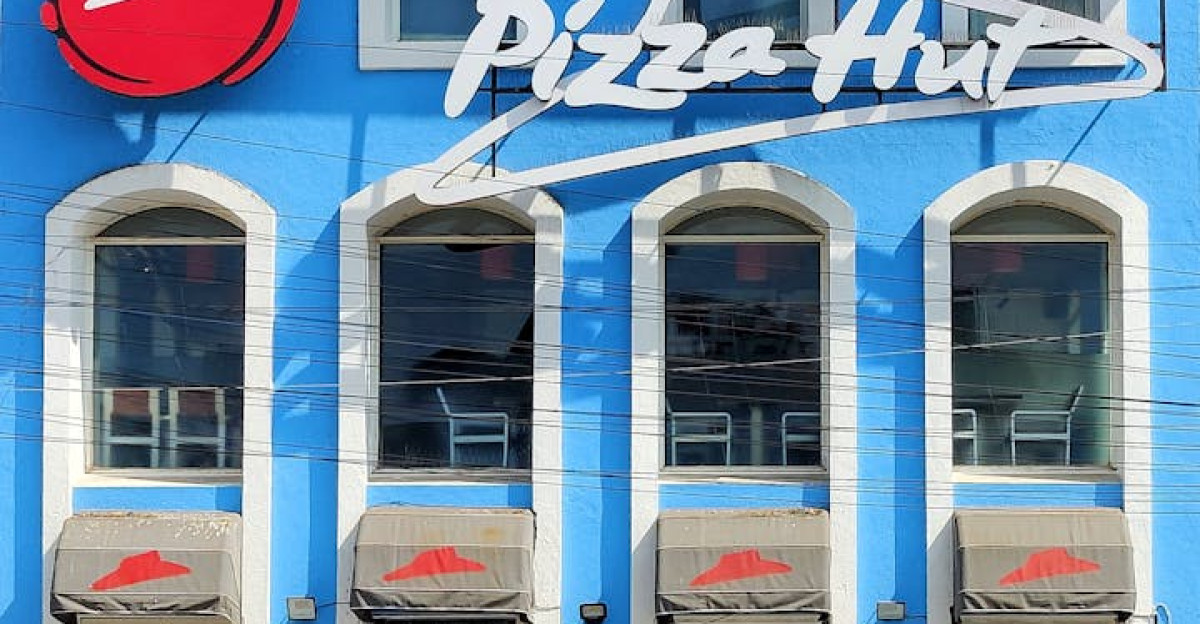
The U.S. represents 42% of Pizza Hut’s revenue. Same-store sales dropped 6% in Q3 2025, with franchisee stress concentrated in the East Coast, Midwest, and California.
Bankruptcies and closures have left service gaps, while the largest franchisees like Flynn Group carry significant exposure to ongoing operational risks.
International Operations
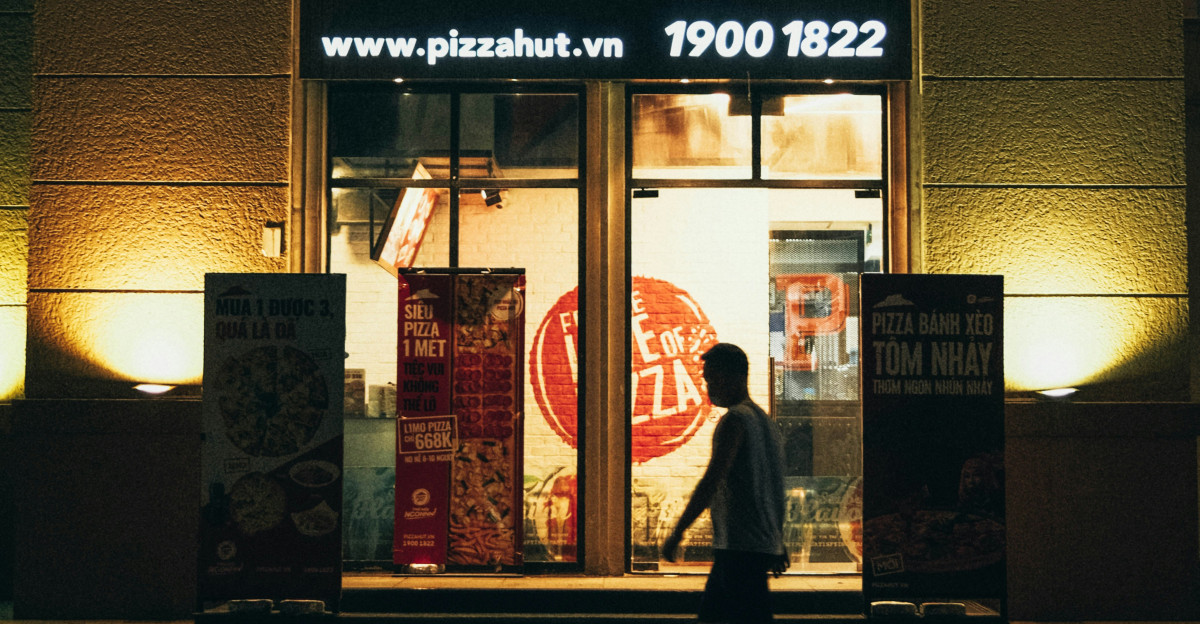
Pizza Hut operates 13,500 international stores across 100+ countries. China, Australia, India, and the U.K. represent key markets. Q3 2025 international same-store sales grew 2%, partially offsetting U.S. declines.
Franchisee disputes in India and advertising disagreements threaten performance. Supply chain and logistics challenges in Latin America and Australia add complexity for global operations.
Why The Crisis Exists
The iconic dine-in “Red Roof” model became obsolete as delivery and carryout dominated. Franchisees faced misaligned incentives, reducing profitability.
Competitive failures contributed: Domino’s, Little Caesars, Papa John’s, and Marco’s outperform Pizza Hut on unit volume. Rising labor, food, and real estate costs exacerbate systemic challenges.
Franchisee Financial Strains
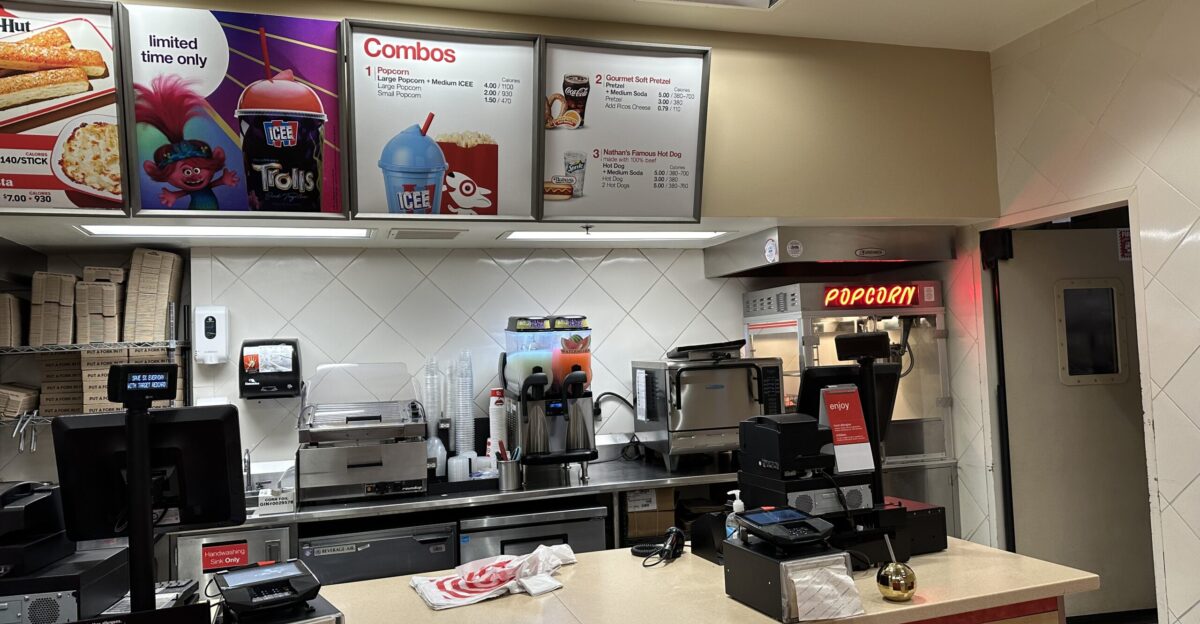
NPC International (2020) and EYM Pizza LP (2024) filed for bankruptcy due to weak sales, debt, and operational challenges. Flynn Group’s rapid expansion carries risk if store closures continue.
Franchisees may face renegotiated agreements, royalty adjustments, and supply chain disruptions. Financial health remains a key factor in any strategic transaction.
Delivery Platform Challenges

Third-party aggregators like DoorDash and Uber Eats have replaced in-house delivery, cutting costs but reducing food quality and service consistency.
Customer satisfaction may decline further. Store performance is vulnerable to outsourced delivery issues, affecting both profitability and long-term brand perception.
Industry Context

The review occurs amid a wave of quick-service restaurant distress. Recent transactions include Denny’s sale ($322M equity) and Red Lobster’s bankruptcy recovery.
Macro headwinds, including rising costs and reduced discretionary spending, affect all chains. Pizza Hut’s outcome may set benchmarks for legacy brand survival in the sector.
How The Review May Unfold
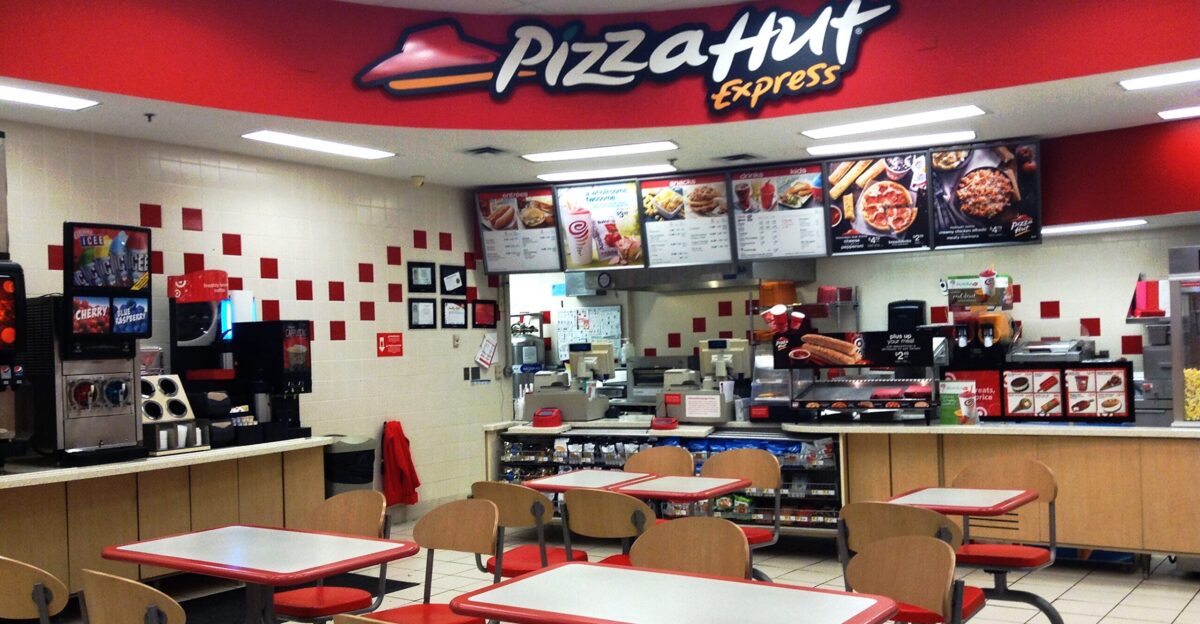
Yum Brands will explore options including sale of all or part of the U.S. or global system, partial divestiture, spin-offs, or operational restructuring.
Potential buyers range from private equity to international franchisees or strategic restaurant operators. Market appetite is uncertain, particularly after the withdrawn Papa John’s bid.
Stakeholder Impacts
Employees face job insecurity, potential wage changes, and store closures. Franchisees confront renegotiated agreements, royalty changes, and operational disruption. Supply chain partners may see contract shifts or reduced volumes.
Consumers could experience altered menus, service quality, pricing, and store access. Competitors stand to gain market share if Pizza Hut retrenches. Investors anticipate potential gains from reduced corporate complexity.