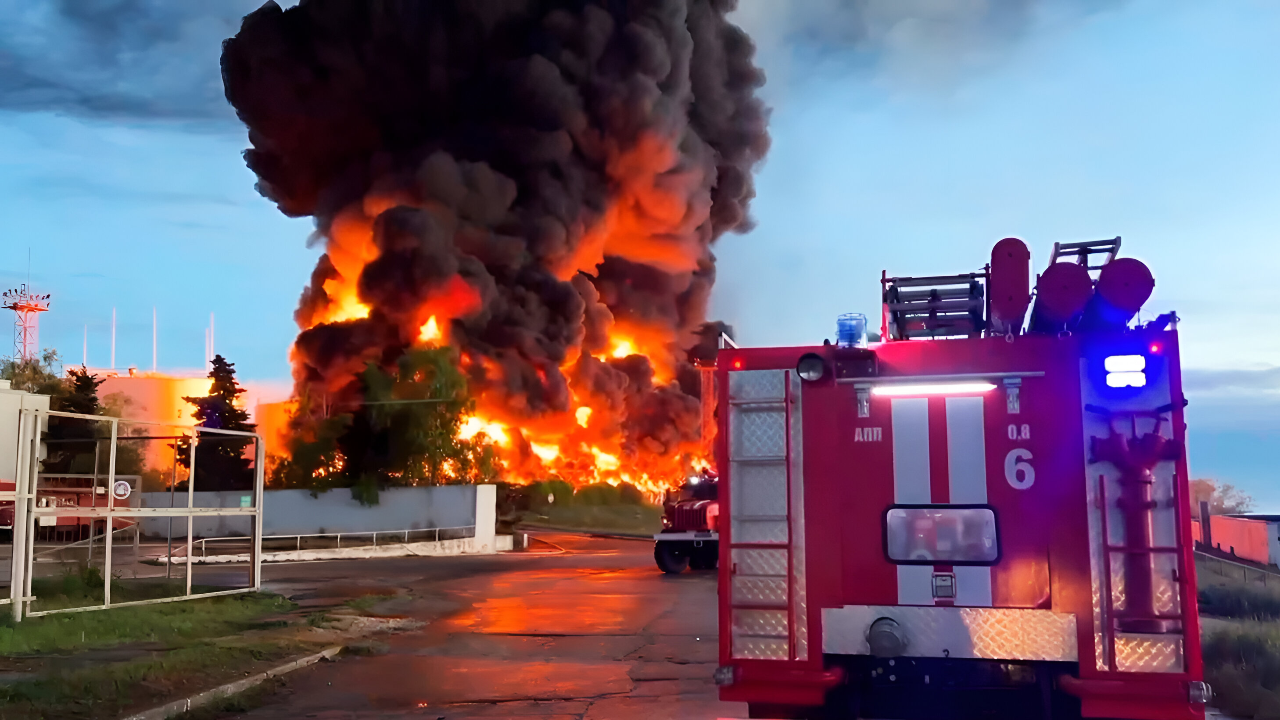
As winter approaches, Ukraine has dramatically escalated its attacks on Russia’s energy infrastructure. Throughout 2025, Ukrainian forces have struck more than 160 oil and energy facilities across Russia, creating fuel shortages in over 50 regions. These attacks have knocked out nearly 40% of Russia’s oil refining capacity, with some areas experiencing fuel shortages of up to 20%.
The campaign uses relatively cheap, hard-to-detect drones that cost far less than the expensive missiles Russia must fire to stop them. Ukrainian drones now reach targets up to 700 kilometers inside Russian territory, forcing Moscow to choose between protecting its front-line forces or defending distant energy sites.
Ukraine has destroyed nearly half of Russia’s Pantsir air defense systems this year, and domestic production cannot replace them fast enough. The attacks often happen on cold nights to maximize disruption as Russia prepares for winter, illustrating what military analysts call asymmetric warfare—where inexpensive weapons create disproportionate costs for the defender.
Significant Strikes Hit Moscow and Key Cities

On October 31, 2025, Ukraine launched coordinated strikes that hit critical infrastructure near Moscow and in other Russian cities. Neptune missiles struck the Vladimirskaya substation near Moscow, a power plant in Oryol, and a major refinery in Yaroslavl.
The Vladimirskaya substation, with an installed capacity of 4,850 MVA, caught fire, leaving over 224,000 people without power. Metro trains stopped running, and entire neighborhoods went dark. In Oryol, a city of 300,000 people, a drone strike on the central power plant knocked out both electricity and heating just as temperatures dropped near freezing.
This campaign represents Ukraine’s retaliation for Russia’s attacks on Ukrainian power infrastructure that began in October 2022, which plunged millions into darkness during the coldest months. The International Criminal Court later issued arrest warrants for Russian military officials responsible for those attacks on civilian infrastructure.
An Uncertain Winter Ahead

The ongoing attacks have exposed serious weaknesses in Russia’s aging Soviet-era energy grid. With sprawling networks and massive substations spread across the world’s largest country, Russia cannot effectively defend everything at once.
More than 50 Russian regions now face power outages and fuel shortages, with reports of stolen generators and rationed fuel becoming increasingly common. While the Russian government has managed to prevent total collapse by quickly restoring power, the repeated strikes are causing long-term damage that will worsen as winter intensifies.
Ukraine continues ramping up its drone production, aiming to build at least 30,000 long-range drones this year. Since January, Ukraine has struck over 20 of Russia’s 38 primary refineries, often hitting the same sites repeatedly to prevent repairs. New Ukrainian weapons, including the Flamingo, Ruta, and Neptune missiles, now enable strikes at distances approaching 2,000 kilometers.
As Ukrainian drone commander Robert “Madyar” Brovdi stated, “Blackouts are not scary. They’re just a bit inconvenient.” The coming winter will test whether Ukraine’s campaign can seriously damage Russia’s energy system or merely cause temporary hardship.