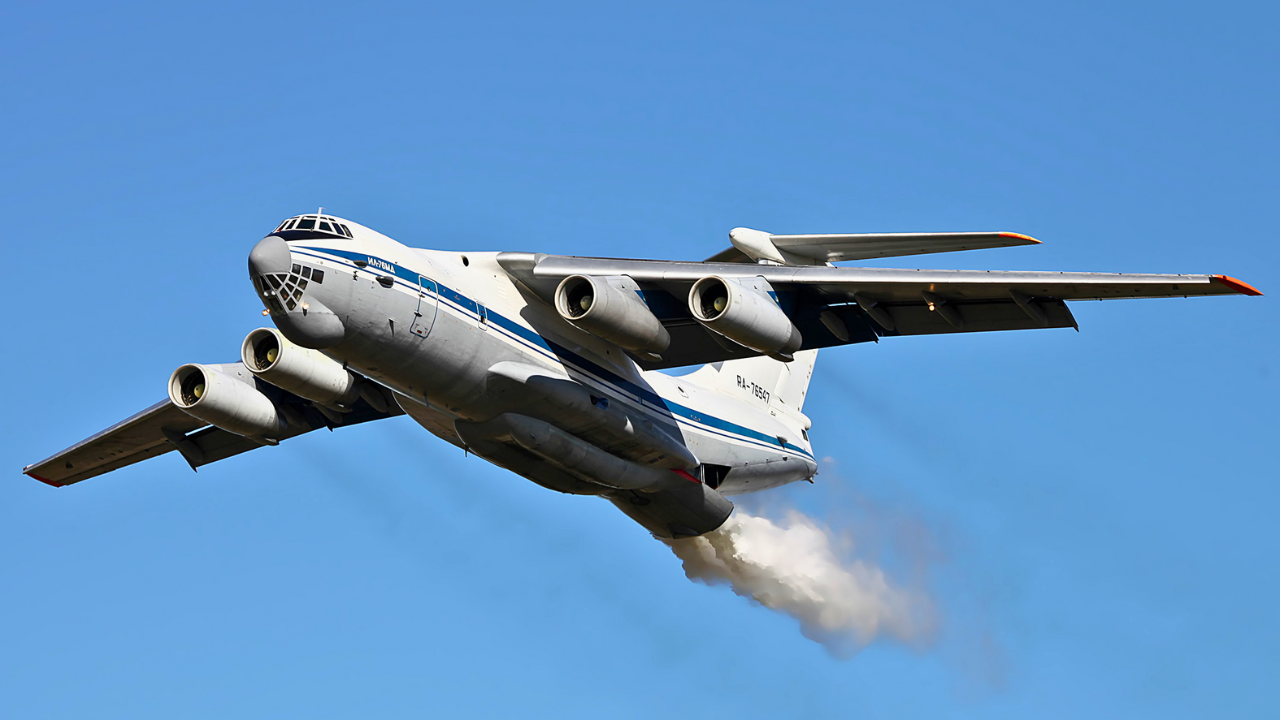
In the early hours of October 26, 2025, a massive four-engine cargo jet touched down in Caracas. The aircraft, a Russian Ilyushin Il-76 (registration RA-78765), arrived after a secretive multi-stop journey from Moscow. Its descent through the humid Venezuelan night drew immediate global attention. The moment it taxied to a halt, spotters and analysts worldwide began asking the same question—what exactly had just landed?
Its arrival coincided with heightened U.S.–Venezuela tensions and a sudden uptick in military activity across the Caribbean. Without ceremony, the aircraft remained on the tarmac for nearly 45 hours. Observers could only speculate about the nature of its cargo—whether it carried spare parts, weapons, or personnel—and why Russia had chosen this precise moment to make its move.
Behind the Flight: Why Now?

This flight took place against a backdrop of rising friction between Washington and Caracas, and as Moscow pursued deeper engagement across Latin America. The operator, Aviacon Zitotrans, is under U.S., Canadian, and Ukrainian sanctions for its longstanding ties to the Russian military and defense exports.
At nearly the same time, the U.S. Navy deployed the USS Gerald R. Ford carrier strike group to the region—an unmistakable show of force. Russia’s recent defense pacts with Venezuela, combined with the carrier’s presence, turned a single cargo mission into a geopolitical flashpoint.
Immediate Context: Regional Tensions
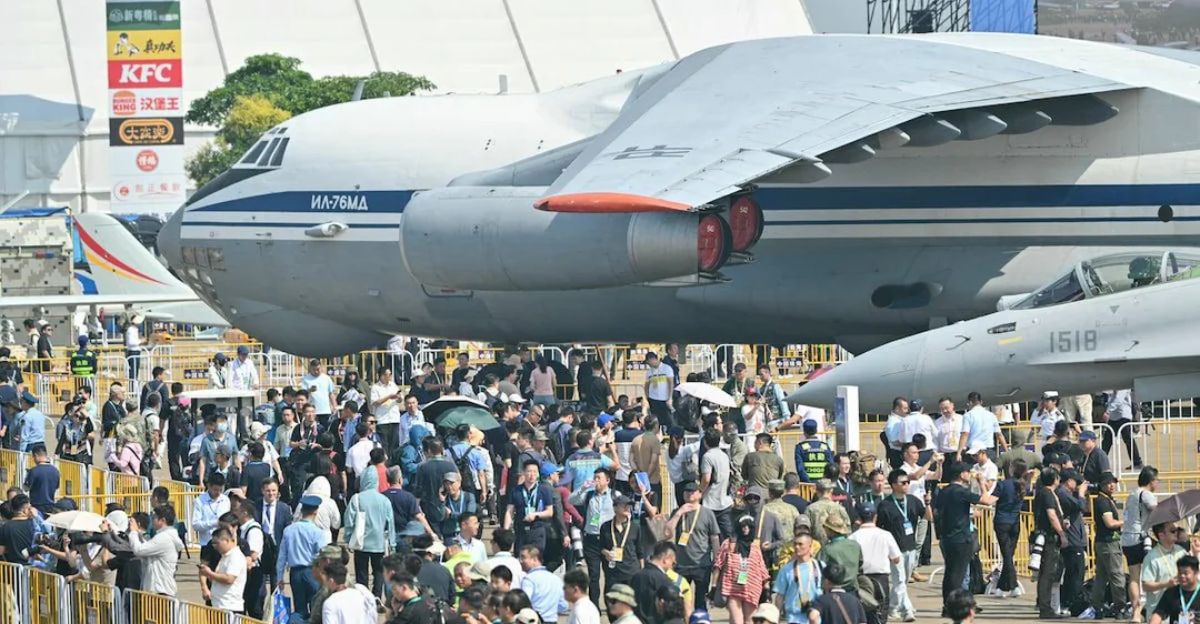
The arrival of a Russian military-linked transport in Caracas signals more than logistical cooperation—it underscores a changing balance of power in the Western Hemisphere. Venezuela and the United States remain locked in disputes over legitimacy, sanctions, and influence.
For Venezuela, the flight served as a declaration of defiance; for Washington, it looked like a provocation on its doorstep. As analysts framed it, Moscow had just re-entered America’s sphere of influence through the back door.
Flight Details: The Journey
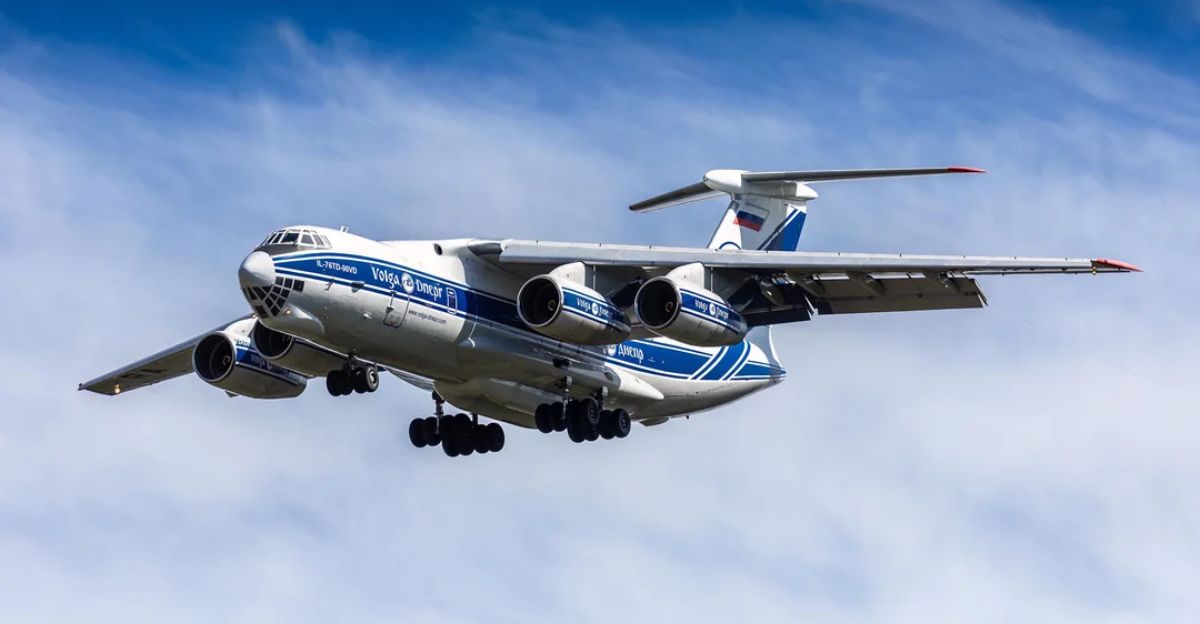
The Il-76 departed the Moscow area on October 24, 2025, embarking on a two-day odyssey that spanned continents. Its route took it through Armenia, Algeria, Morocco, Senegal, and Mauritania before crossing the Atlantic toward Venezuela.
Upon landing in Caracas, the plane stayed roughly 45 hours before departing. The Il-76 can haul up to 50 tons of cargo or 200 people—enough capacity for a significant weapons shipment or a battalion-sized troop transport. Every leg of the trip appeared designed for discretion.
The Operator: Aviacon Zitotrans
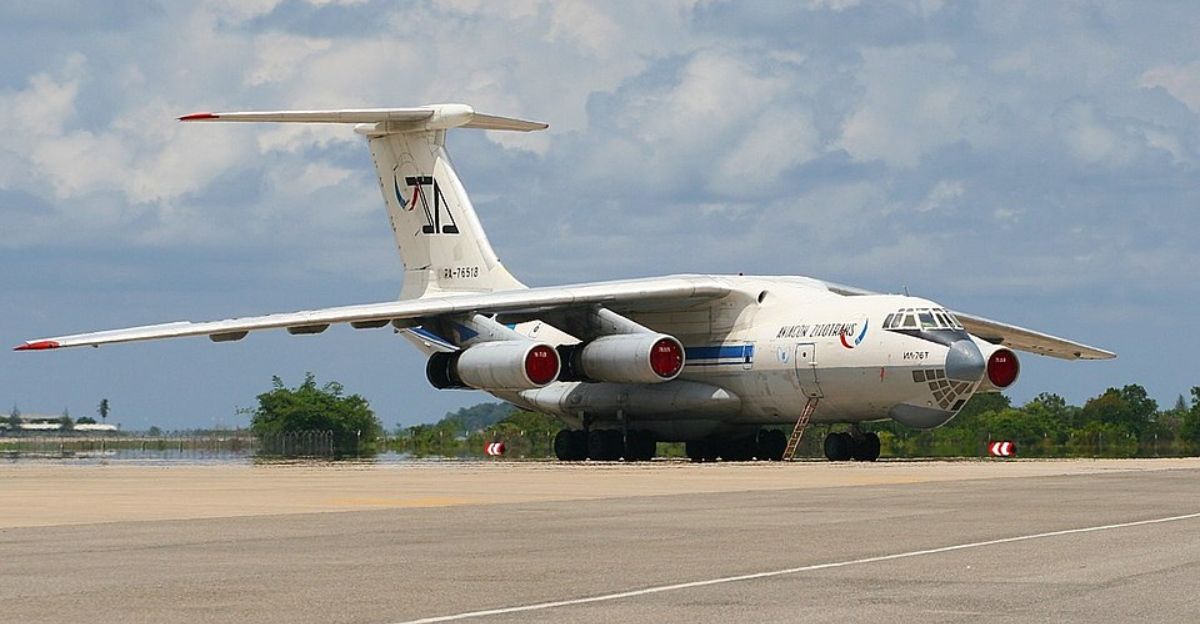
Aviacon Zitotrans runs a modest fleet of six Il-76TD aircraft but has outsized geopolitical significance. The company is sanctioned by multiple Western nations for coordinating deliveries linked to Russian military logistics.
Its aircraft have transported rockets, warheads, and helicopter parts worldwide—including to regions where Wagner-affiliated mercenaries once operated. Those same Wagner elements, now reorganized as the Russian Africa Corps, add intrigue to Aviacon’s global movements.
International Relations: Sanctions and Alignments
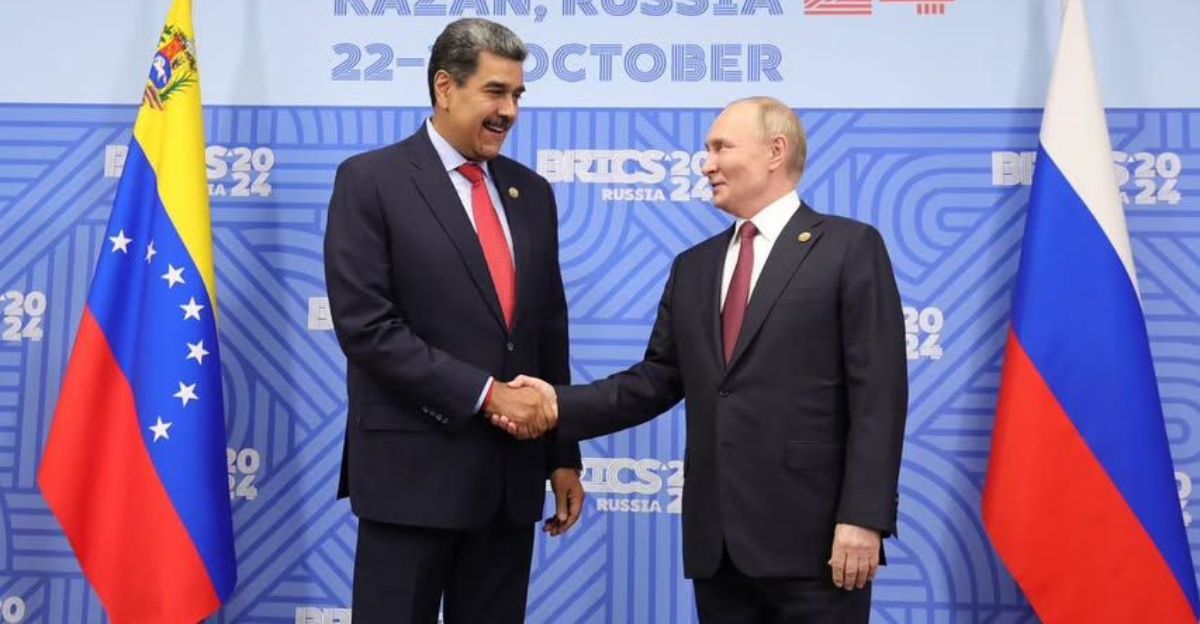
The landing quickly revived debate over the reach and enforcement of sanctions. U.S. and European officials began reviewing flight paths and trade links between Russia, Venezuela, and sympathetic nations across Africa.
For Moscow, the mission illustrated that sanctions can be navigated with the right alliances. For Washington and Brussels, it was a reminder of how fragile enforcement mechanisms can be when global partners are divided.
Operational Security
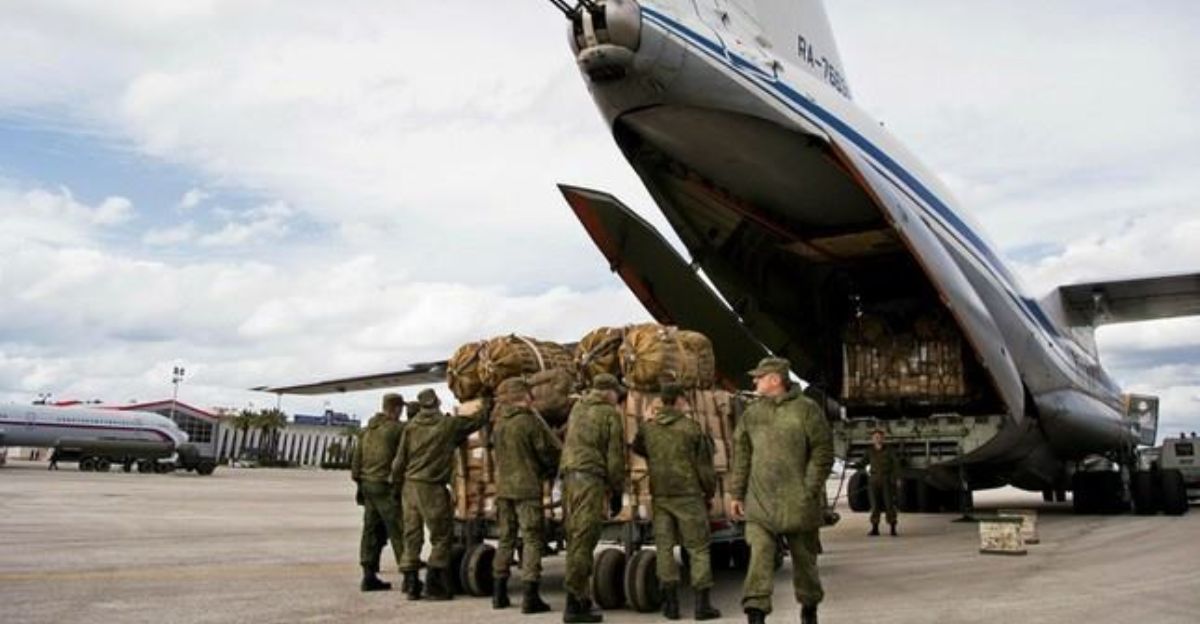
Despite the aircraft’s size, its crew maintained near-total secrecy. No public cargo manifests, no official statements, and a route meticulously planned to avoid Western radar scrutiny characterized the operation.
The 45-hour stay in Caracas drew intense interest from open-source trackers and intelligence analysts. Even seasoned observers noted how the path—looping through multiple friendly African states—evoked Cold War-era tactics.
Political Response: Official Statements

Caracas wasted no time dismissing U.S. criticism. President Nicolás Maduro accused Washington of “fabricating war,” echoing rhetoric that cast the flight as a sovereign right. State media portrayed the arrival as proof that Venezuela still had powerful friends.
Meanwhile, U.S. officials cited Aviacon Zitotrans’s history of military deliveries and expressed unease about the operation’s purpose. Regional leaders from Brazil to Colombia called for restraint, aware that one misstep could inflame the entire hemisphere.
Economic Context: Venezuela’s Ongoing Crisis

Beneath the geopolitical theater, Venezuela remains in deep economic distress. Inflation has eroded savings, industries have withered, and the bolívar lost about 60 percent of its value from August to October 2025.
In that environment, Russia’s assistance—whether technical, military, or symbolic—offers Maduro a narrative of resilience. For ordinary Venezuelans, however, foreign cargo planes do little to ease shortages or restore stability.
Regional Security Concerns
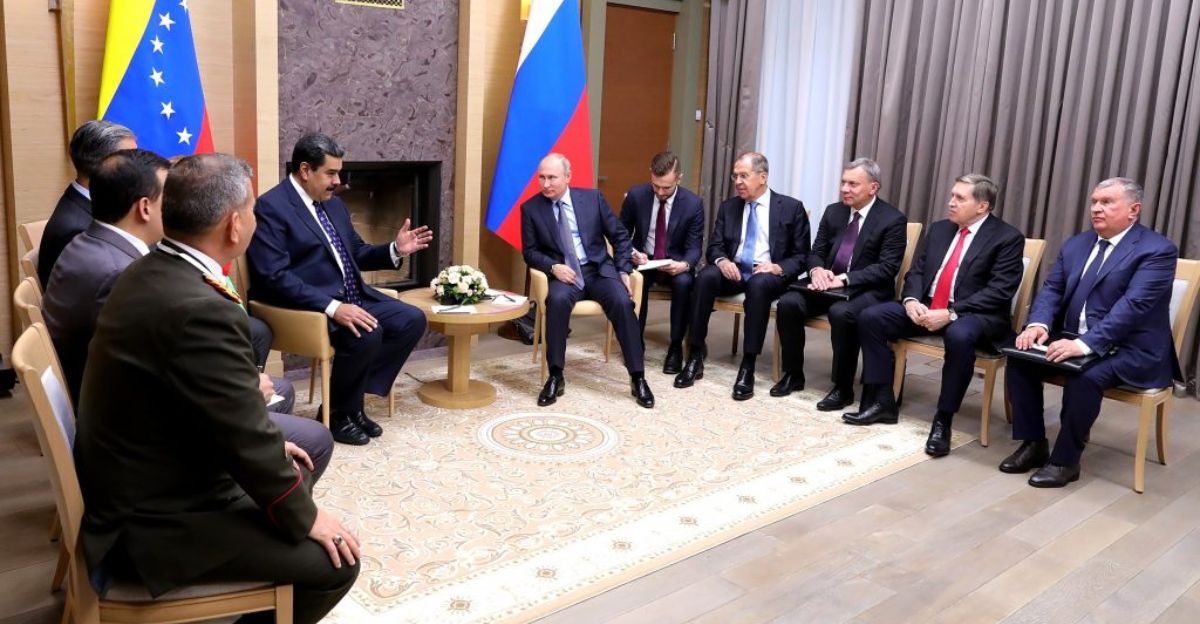
The mission has reignited debate over the scope of Russia’s military presence in Latin America. Moscow and Caracas have conducted joint exercises and weapons deals since the early 2000s, but the renewed activity feels different.
Analysts warn that each flight, however routine it may appear, can alter strategic calculations in the region. The optics of Russian aircraft unloading cargo in Caracas reverberate far beyond Venezuela’s borders.
Sovereignty Debate: Independence vs. Influence
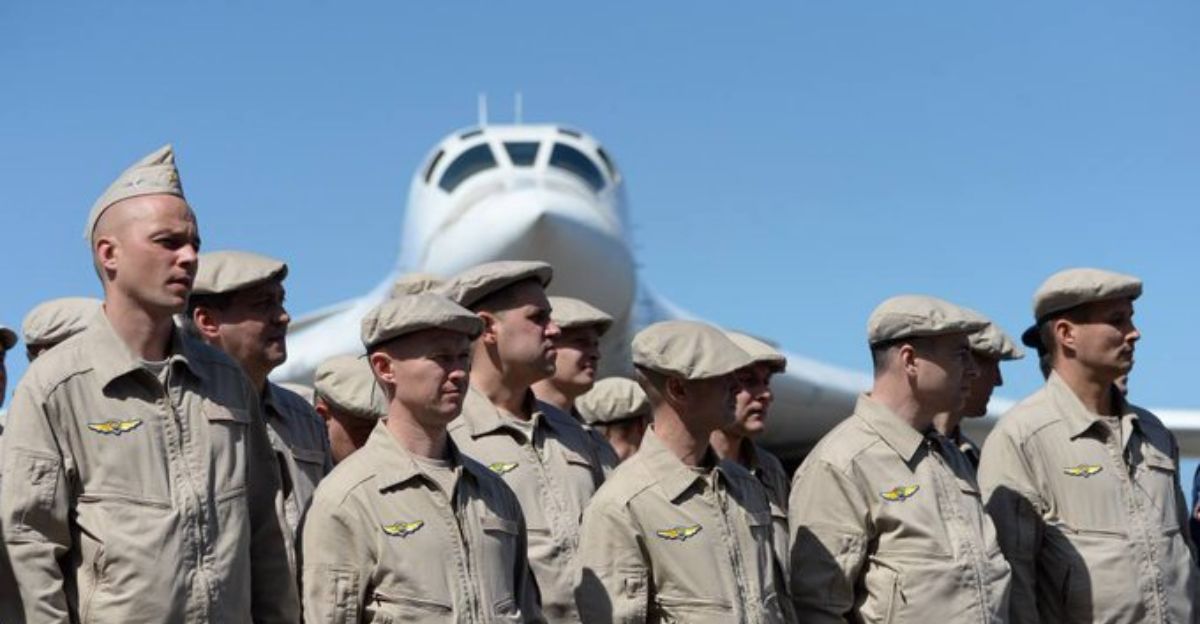
The Caracas landing has become a litmus test for regional views on sovereignty. Venezuelan officials insist their cooperation with Moscow protects national independence from “imperialist aggression.”
Critics counter that allowing a sanctioned Russian firm to operate military-grade flights undermines sovereignty instead—inviting dependency on a far-off power with its own strategic motives. The argument splits public opinion at home and abroad.
Global Perception: International Scrutiny
Around the world, the flight was seen as a probe of Western resolve. Observers in Europe and the Americas described it as a test case for how far Russia can project influence without direct confrontation.
In Latin America, opinion remains polarized. Some nations sympathize with Venezuela’s right to self-defense, while others fear being dragged into a new front of great-power rivalry. Either way, the symbolism proved powerful.
Strategic Implications
The operation highlights the endurance of Russian-Venezuelan military logistics despite sanctions. Russian contractors remain active in the country, servicing defense systems and infrastructure.
Venezuela, for its part, claims to possess around 5,000 Russian surface-to-air missiles—making any resupply or upgrade mission highly consequential. Analysts view the flight as part of a longer-term pattern of military normalization under international pressure.
Monitoring and Analysis
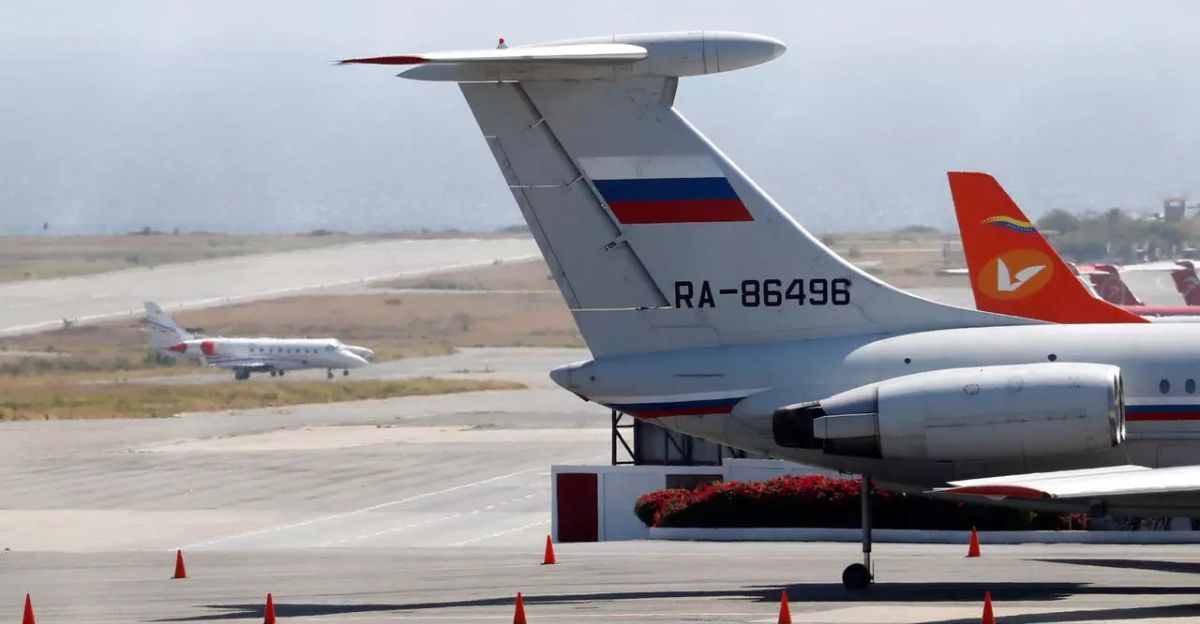
Defense analysts continue to track each stage of Russian-Venezuelan cooperation. The flight’s peculiar path and extended stay in Caracas remain subjects of daily review among open-source communities.
For intelligence professionals, it offers a valuable case study in sanctions evasion, air-logistics planning, and information control. For the public, it’s a reminder of how even one aircraft can shift narratives of power.
What’s Next? The Road Ahead
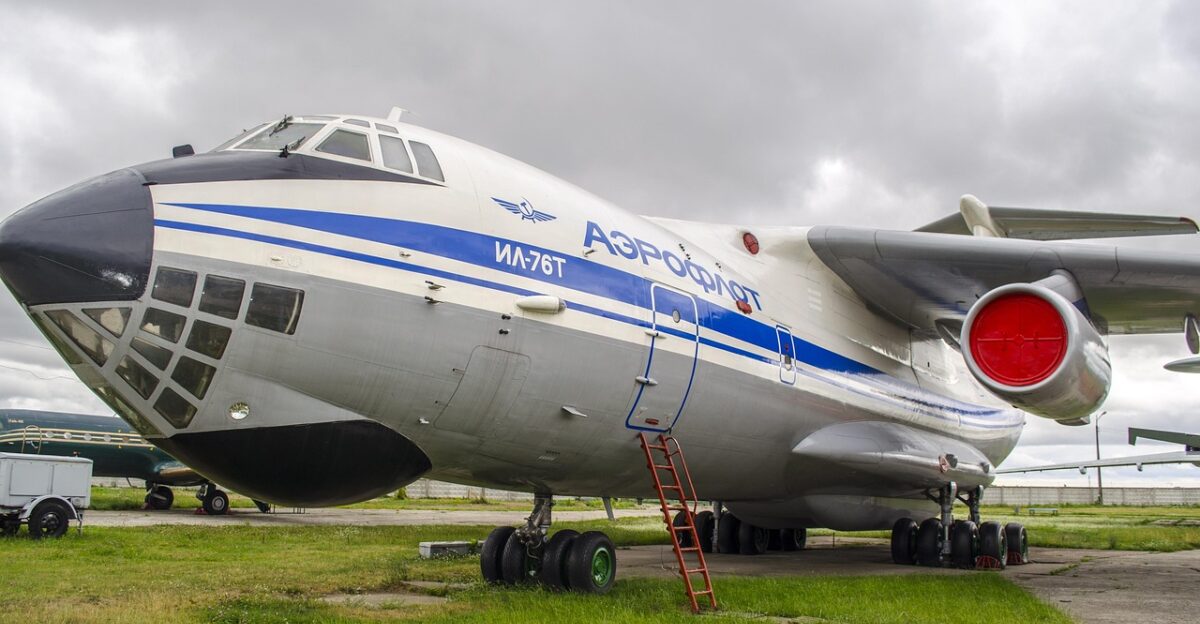
The Il-76’s landing in Caracas is unlikely to be the last. With tensions rising and global attention fixed on the Caribbean basin, the potential for further Russian flights cannot be ruled out.
Governments are already recalibrating policies—tightening sanctions, reinforcing surveillance, and seeking diplomatic off-ramps. Each subsequent move will shape whether this moment remains symbolic or marks a lasting shift in hemispheric dynamics.
The Speculation Gap: What’s Inside?
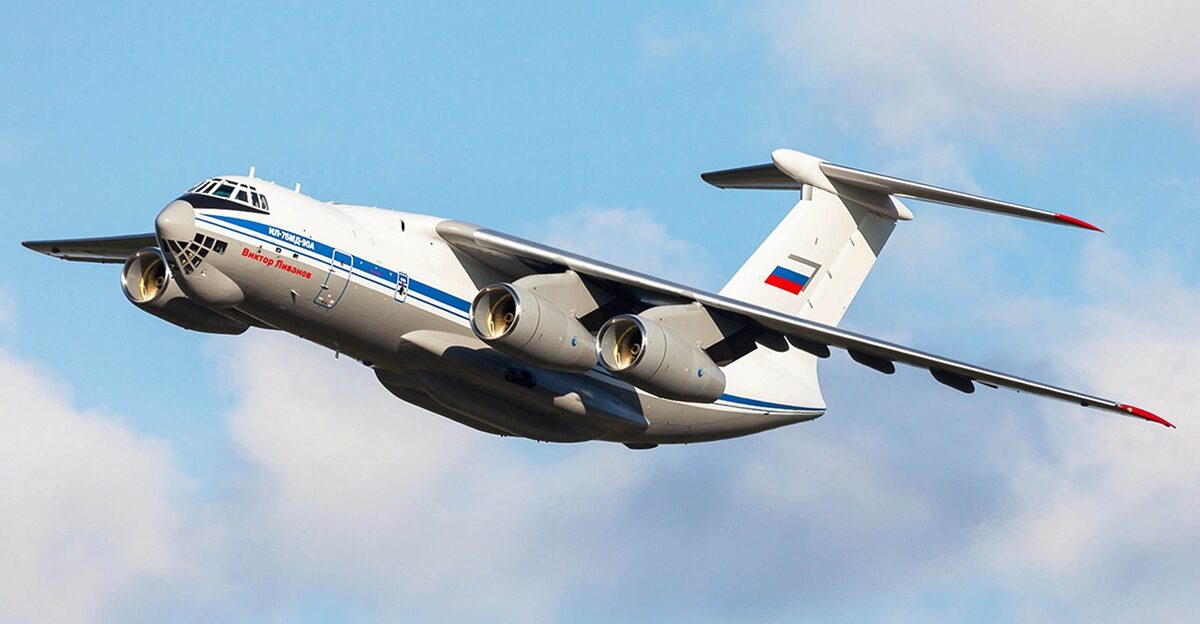
Officials have released no details about the cargo. Given the aircraft’s 50-ton or 200-person capacity, possibilities range from small arms and spare parts to advanced air-defense components or trained personnel.
Such uncertainty feeds both intrigue and anxiety. In intelligence circles, the lack of transparency is often more telling than confirmation—it suggests something worth concealing, especially amid global scrutiny.
The Route: Avoiding Detection
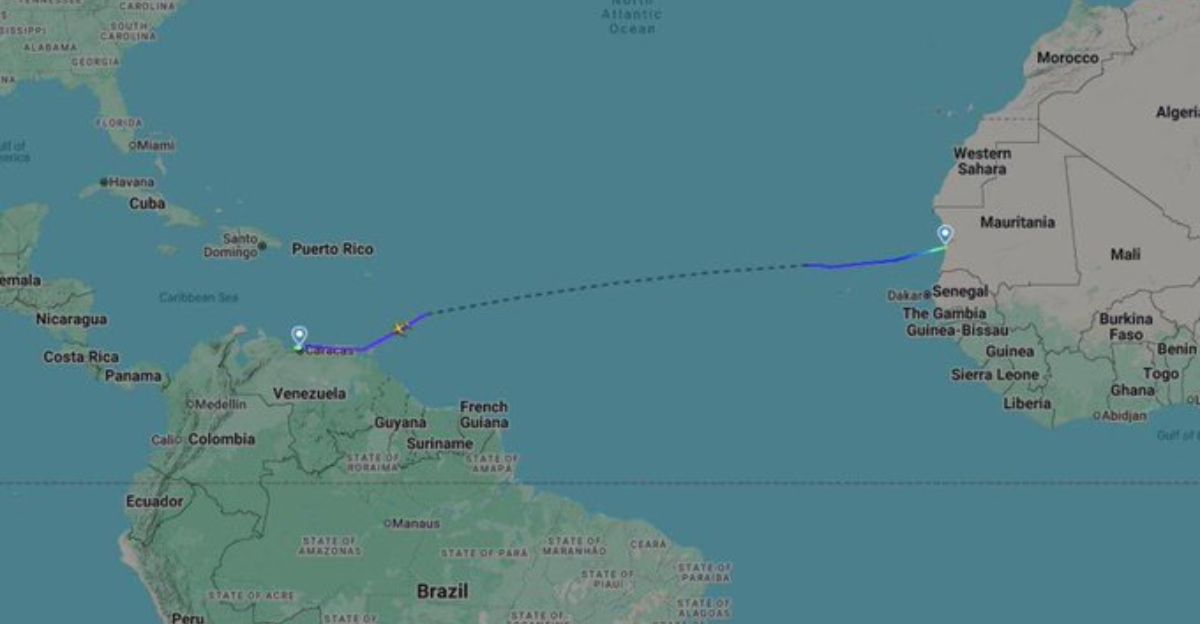
The Il-76’s six-stop journey—Moscow → Armenia → Algeria → Morocco → Senegal → Mauritania → Caracas—reveals a deliberate strategy. Each refuelling point lies in or near a state with established ties to Moscow.
Analysts note the route’s resemblance to Cold War supply corridors designed to avoid NATO-controlled airspace. It was a logistical feat stretching roughly 5,000 nautical miles across two continents before crossing the Atlantic.
Fleet Capacity: A Broader Picture
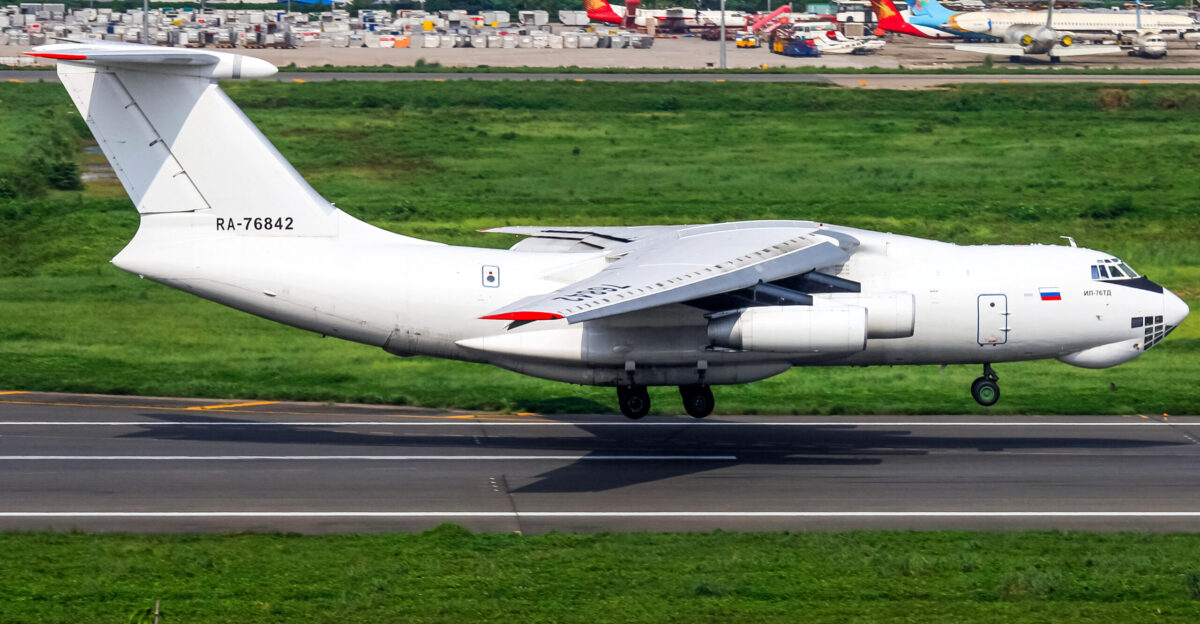
Aviacon Zitotrans’s six-aircraft fleet could, if mobilized simultaneously, transport up to 300 tons of cargo or 1,200 personnel—enough to supply a major defense system or deploy a sizable contingent.
That arithmetic underscores why one flight matters: it could represent a pilot run for a wider airlift. Western defense planners are watching closely for repeat patterns in radar data and satellite imagery.
Historical Comparisons: Cold War Echoes

This is the first confirmed Russian heavy cargo flight to Venezuela during the current U.S.–Venezuela standoff. The U.S. carrier deployment nearby adds a dimension unseen since Cold War rivalries played out in the Western Hemisphere.
For many analysts, the symbolism is unmistakable: Russia reviving old playbooks, and the United States rediscovering the vulnerabilities of its own neighborhood. History, it seems, is taxiing down the same runway.
Final Takeaways: Why It Matters
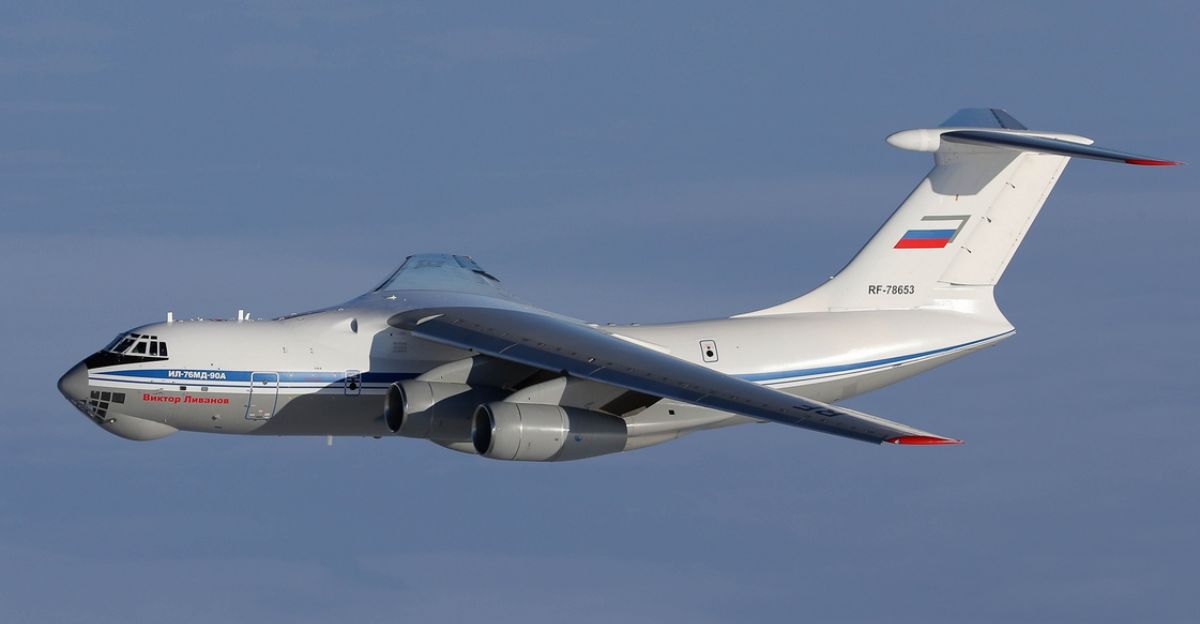
A single landing by a sanctioned Russian cargo jet may seem minor, but its implications are profound. It tests the boundaries of U.S. deterrence, highlights Russia’s global logistics network, and deepens Venezuela’s dependence on foreign patrons.
The Il-76’s touchdown in Caracas serves as both warning and signal: in an era of global tension, power can arrive quietly—inside a gray transport plane, under the radar, carrying consequences far heavier than its 50 tons of cargo.