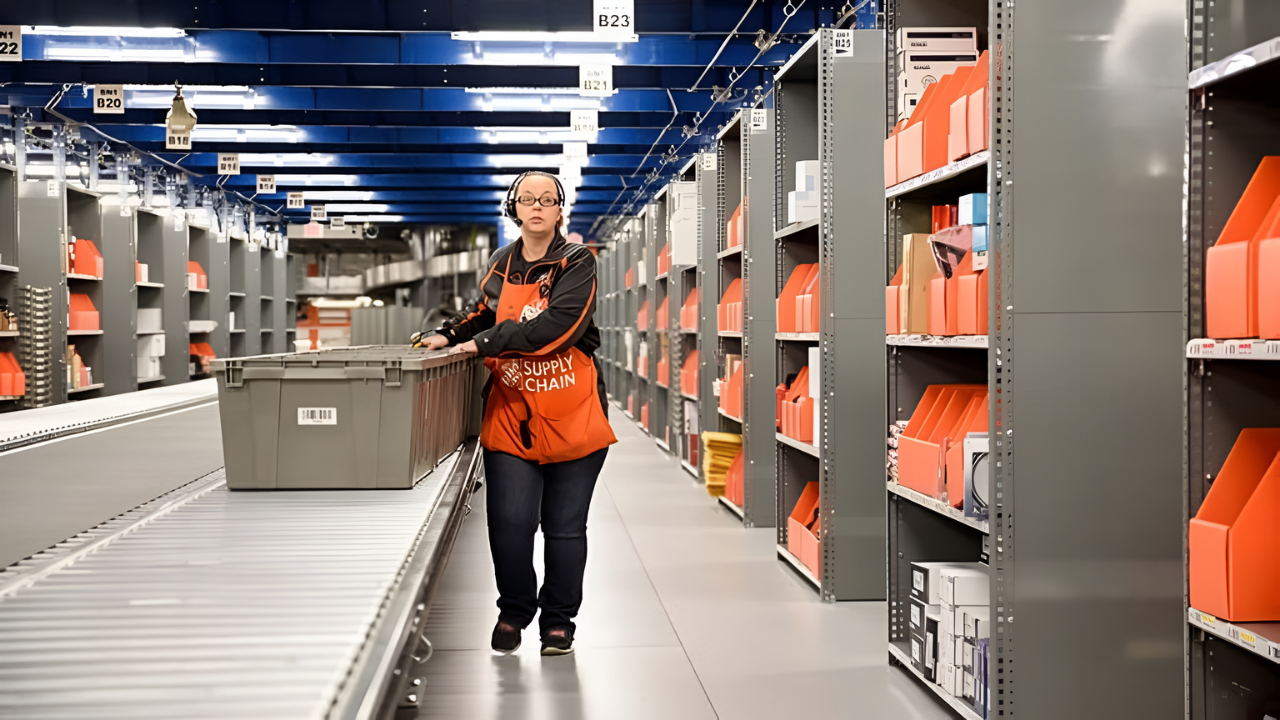
Forklifts idle. Pallets sit half-packed. In La Vergne, Tennessee, the familiar hum of Home Depot Supply’s warehouse is falling silent. By January 2026, this once-bustling facility will shut its doors—one piece of a nationwide consolidation plan that will erase 108 jobs.
The decision signals deep operational change within America’s home improvement giant as it consolidates distribution operations. What began as a single site closure now symbolizes a broader shift in how Home Depot is redefining its supply network for a new era.
The La Vergne facility sits within Home Depot’s newly expanded $10-billion-plus specialty distribution operation. Through its 2024 acquisition of SRS Distribution—a company generating approximately $10 billion in annual revenue—and 2025’s $5.5 billion GMS acquisition, Home Depot now manages one of the industry’s largest professional supply networks. The Tennessee closure is part of consolidating this sprawling infrastructure, which spans hundreds of distribution centers across North America.
Why Home Depot Is Consolidating Its Tennessee Facility
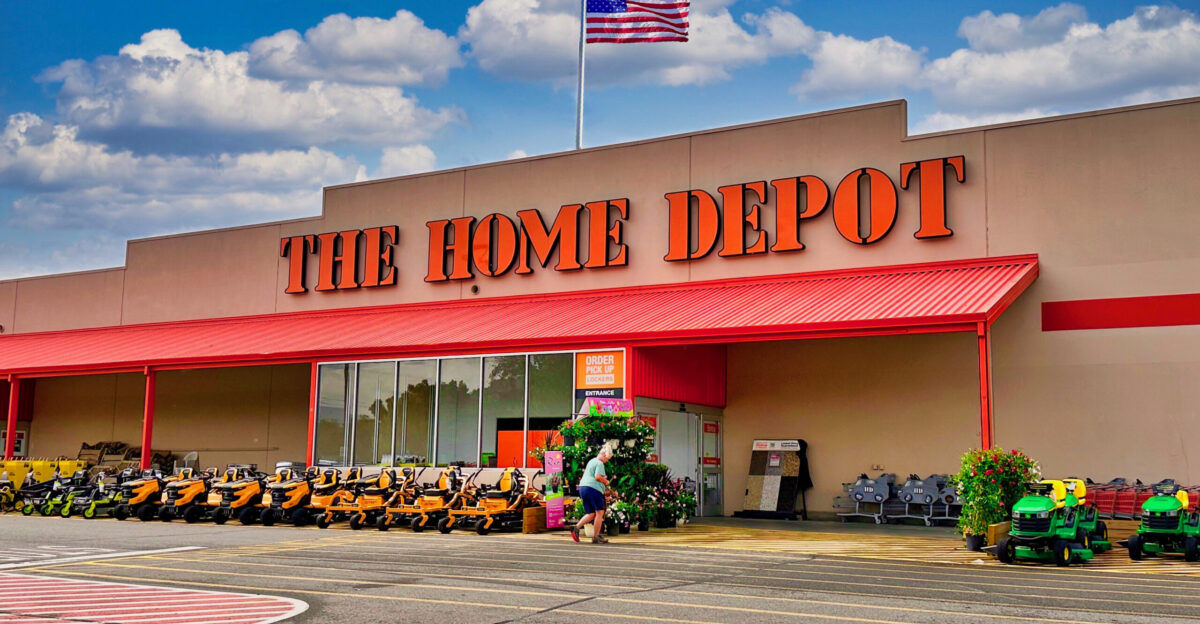
Home Depot Supply’s consolidation stems from its ongoing effort to streamline logistics and strengthen efficiency. The La Vergne site will merge into another nearby facility as part of a broader supply chain optimization strategy designed to cut redundancy and improve fulfillment speeds.
Executives describe the move as necessary to “simplify operations and enhance delivery” within an evolving retail landscape. Efficiency, not expansion, now drives Home Depot’s supply chain recalibration as the company modernizes its nationwide infrastructure.
The Human Cost: Complete Facility Workforce Eliminated
The consolidation will eliminate the entire workforce at the La Vergne location—108 employees who will lose their jobs when the distribution facility officially closes on January 9, 2026. Every position at the site will be terminated as operations transfer to a nearby facility, representing a complete workforce elimination at this location.
Each number reflects a worker, a family, and a local livelihood altered by corporate realignment. Home Depot says it is working with affected employees to provide support during the transition, but uncertainty remains high in the community.
Direct Impact: Limited Regional Disruption Expected

Although the closure affects local workers, Home Depot says consumers across Tennessee won’t notice delays. Orders once processed in La Vergne will shift to another regional hub equipped with advanced routing and automation systems.
These logistics upgrades, paired with delivery partnerships and technology-driven fulfillment tools, aim to preserve service quality throughout the transition. Home Depot’s digital investments are helping ensure that the human impact of consolidation doesn’t ripple outward to its customers.
Corporate Response: Investing in a Faster, Smarter Network
Even as facilities close, Home Depot continues expanding its logistics technology footprint. The retailer has deepened partnerships with DoorDash and Uber Eats to accelerate last-mile delivery, a collaboration that began in early 2025 and now supports same-day fulfillment in select markets.
The company’s $5.5 billion acquisition of GMS in September 2025 further signals its pivot toward tech-enabled, contractor-focused operations. Fewer warehouses, faster response times, and smarter logistics define the next stage of Home Depot’s supply strategy.
Competitive Landscape: Industry-Wide Adjustments
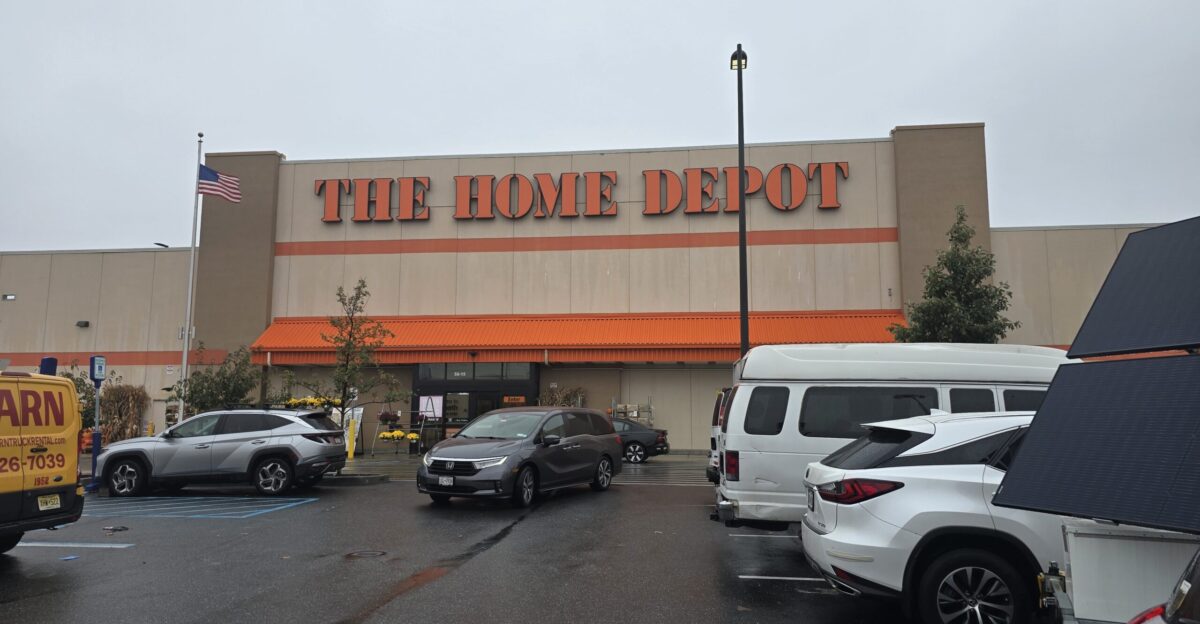
Home Depot’s consolidation reflects pressures reshaping the entire home improvement retail sector. Competitors like LL Flooring filed for bankruptcy in 2024, while several regional chains have faced instability in 2025, highlighting the challenges facing brick-and-mortar operations in a digital-first market.
With consumer habits evolving and operational costs rising, many companies are trimming assets and reconfiguring their logistics networks. Efficiency has become the industry’s new survival currency—and even market leaders are not immune to the trend.
Supply Chain Complexity: Modern Challenges, Tough Choices

Managing vast, tech-driven supply chains requires agility in the face of unpredictable costs, labor shortages, and consumer shifts.
For Home Depot, consolidation represents an attempt to regain control and eliminate inefficiency in a rapidly changing environment. But it also underscores how delicate modern logistics have become—and how each optimization comes with human and regional consequences.
Support for Affected Workers

State and local agencies are coordinating to assist displaced employees. The Tennessee Department of Labor and Workforce Development offers job retraining, resume guidance, and unemployment benefits through its Rapid Response program to help individuals navigate the transition.
These programs provide a critical safety net for workers suddenly facing layoffs. Officials emphasize that early participation in workforce services often leads to faster reemployment and stronger long-term career outcomes.
Regional Economic Context

Middle Tennessee’s economy remains relatively strong, but 2025 has been a year of adjustment across industries—from logistics to automotive manufacturing. The loss of 108 Home Depot Supply jobs adds to that list, intensifying concerns about regional job stability.
Economists estimate that the layoffs could remove millions of dollars in wages from the local economy. That reduction in spending power may ripple through nearby businesses, impacting everything from retail sales to housing demand.
Transition Resources: Help on the Ground

Workforce development boards and community organizations across Rutherford County are mobilizing to support affected families. Career fairs, retraining grants, and online learning partnerships are being deployed to connect workers with new opportunities.
Local leaders are urging displaced employees to act quickly, highlighting that early engagement with job services often leads to better results. For many, this support network will be crucial in navigating an increasingly competitive labor market.
Operational Efficiency: A Broader Industry Shift
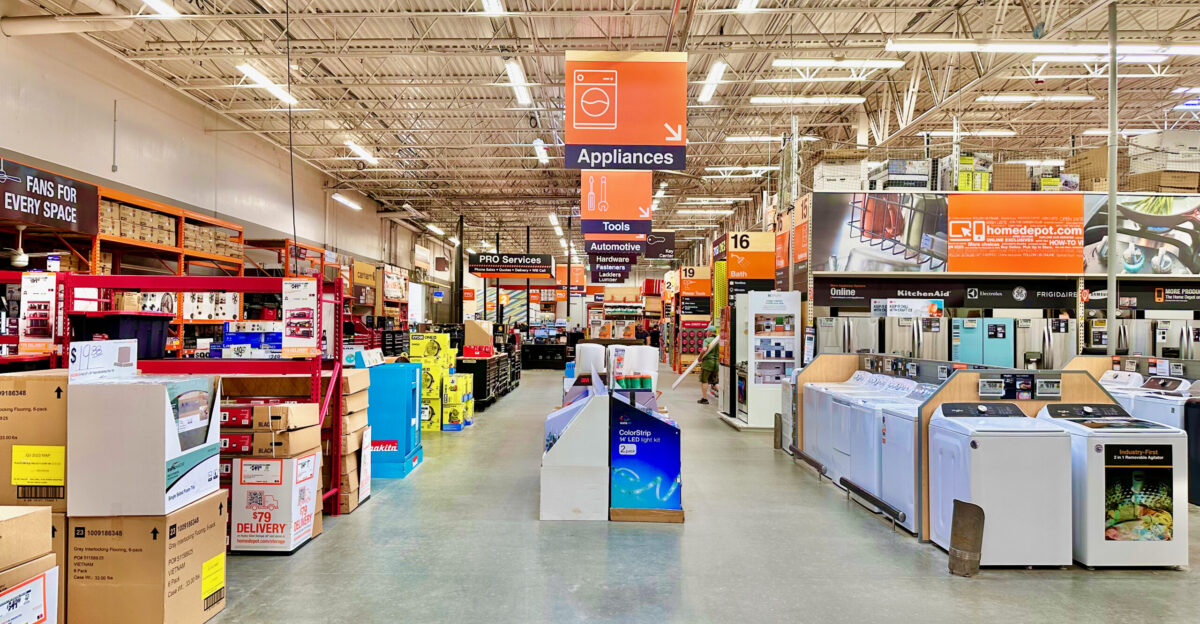
Across the U.S., retailers are consolidating facilities, adopting automation, and rethinking logistics to stay competitive. The Home Depot Supply restructuring reflects this larger wave of transformation sweeping the retail industry.
Rather than expansion, companies are pursuing leaner networks that maximize speed and cost-efficiency. For Home Depot, optimizing distribution hubs means fewer redundant facilities and more technology-driven control over inventory and fulfillment.
Recent Facility Adjustments
Home Depot’s consolidation strategy extends beyond La Vergne. In October 2025, the company closed a distribution center in Mexico, Missouri, affecting 61 employees. Additionally, J.B. Hunt announced the closure of its trucking operations facility at a Home Depot distribution center in Lithonia, Georgia, in October 2025, impacting 74 workers. These closures reflect the company’s ongoing effort to streamline operations and optimize its nationwide distribution network.
Consumer Experience: Service Standards Hold Firm

Home Depot insists customers will not experience disruptions during the transition. By leveraging predictive stocking, real-time tracking, and advanced routing software, the company aims to make deliveries faster and more reliable than before.
Digital platforms now play a central role in maintaining customer satisfaction. These upgrades demonstrate Home Depot’s commitment to ensuring that operational changes behind the scenes translate into visible improvements for shoppers.
Home Improvement Sector: Adapting to a New Era

The home improvement sector is undergoing a major evolution as companies adapt to shifting consumer expectations, economic pressures, and technological disruption. Some are consolidating while others invest heavily in e-commerce and digital infrastructure.
This dynamic environment reflects a broader retail reset. Efficiency, data-driven logistics, and omnichannel capability are becoming the core metrics of success—redefining how legacy brands like Home Depot compete and grow.
Strategic Context: Growth Amid Retrenchment

Despite widespread layoffs, Home Depot remains in growth mode in other areas. The GMS acquisition expands its reach into professional contractor services, while ongoing investments in automation and AI logistics enhance its long-term scalability.
The company’s strategy reflects a delicate balance: trimming excess while doubling down on its most profitable and future-oriented business segments. In essence, Home Depot is repositioning itself for sustained relevance in an increasingly digital market.
Looking Ahead: The Future of Home Depot Supply
As the lights dim in La Vergne, Home Depot’s broader transformation continues. The consolidation marks a painful but strategic turning point—one designed to future-proof operations amid shifting economic conditions and supply chain realities.
For the company, 2025 is about recalibration and efficiency. For the affected workers, it’s about resilience and renewal. The outcome of both journeys will help define what the next decade of American retail looks like.