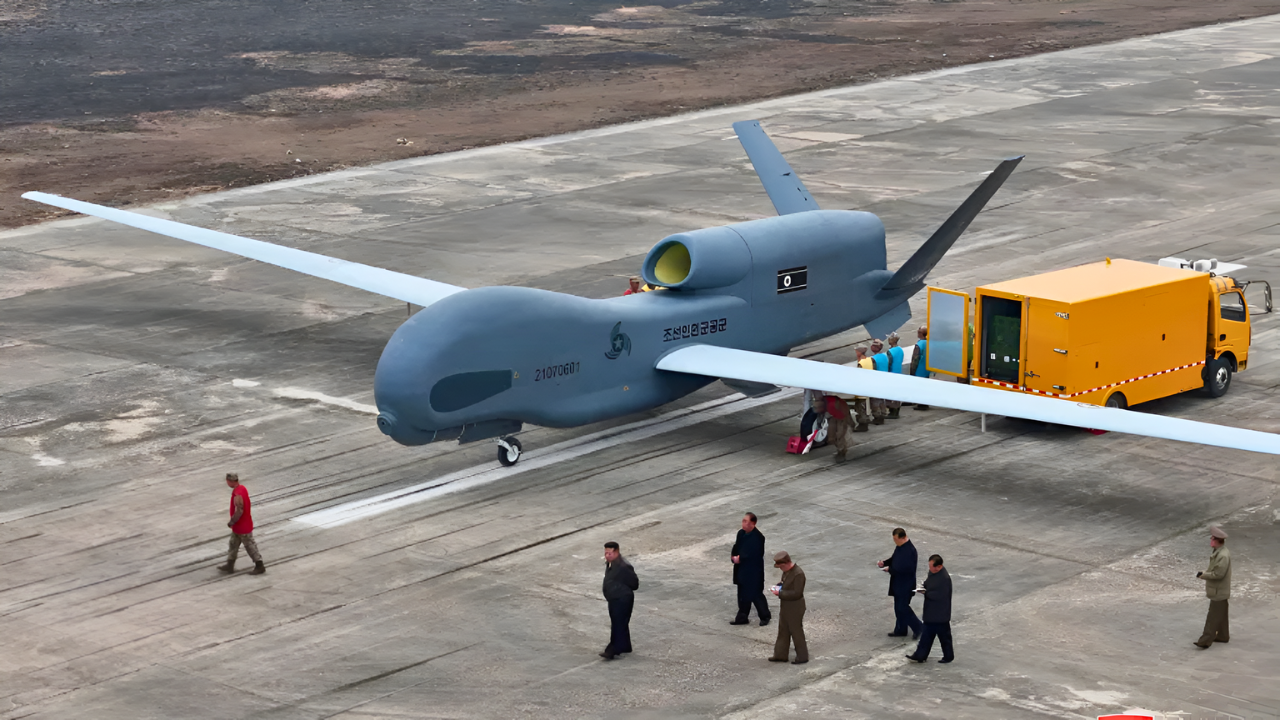
An unmanned aerial vehicle (UAV) that visually resembles the U.S. RQ-4 Global Hawk strategic reconnaissance drone was first publicly displayed by North Korea in 2023 and underwent flight testing in 2025. Under the direction of leader Kim Jong Un, this development represents a major advancement in Pyongyang’s military technology, especially its drone capabilities.
According to North Korean statements, the regime aims to develop drones with surveillance capabilities that could monitor military operations, including American bases across the region. The reconnaissance drone complements North Korea’s existing weapons systems—such as the Haeil underwater drones and ballistic missiles—which have demonstrated ranges exceeding 1,000 miles.
While actual performance specifications remain unverified, North Korea’s strategic threat to American forces in the Indo-Pacific region is heightened by this drone program, which increases its capacity for warfare and intelligence gathering.
The Historical Background of North Korea’s Development of Drones
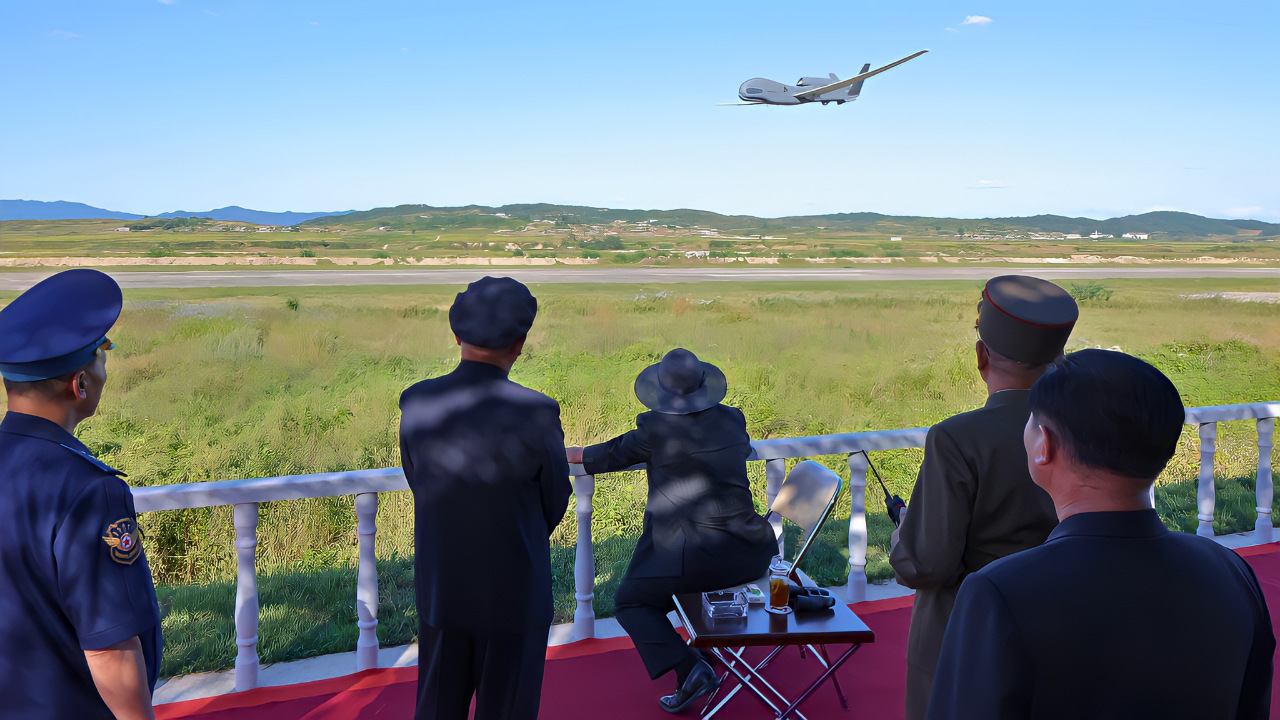
Decades of covert technology acquisition and reverse engineering are the foundation of North Korea’s UAV ambitions. Beginning with rudimentary drones in the early 2000s, the regime gradually improved its unmanned programs by integrating salvaged technology and foreign designs.
The result of these small improvements is the Global Hawk clone, which uses parts from Chinese jet clones and undergoes significant modifications. Decades of emphasis on asymmetric warfare tactics to offset overwhelming U.S. technological superiority are reflected in its unveiling.
Features of the Clone UAV’s Technology
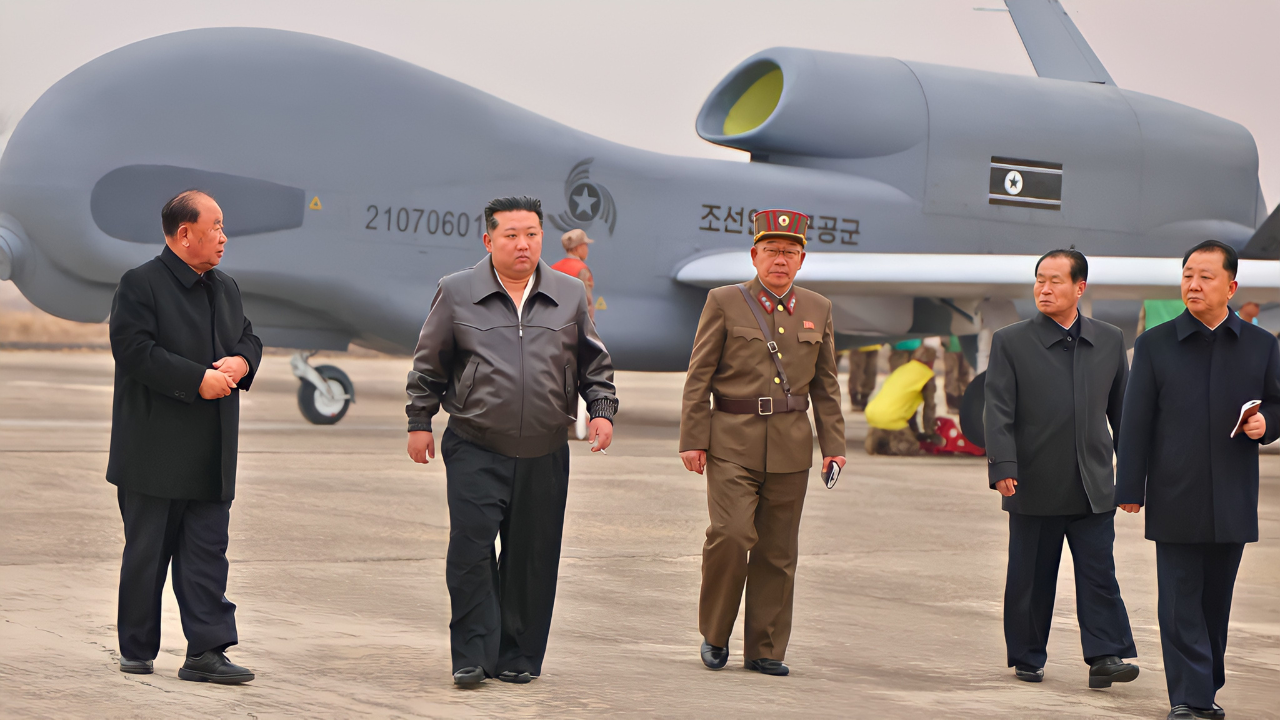
The V-tail configuration and dorsal air intake of the North Korean drone are among the many design elements that closely resemble the original Global Hawk. While analysts note it could potentially conduct wide-area surveillance missions, actual operational endurance and performance parameters remain unverified and are likely significantly less than the original’s 30+ hour capability.
According to reports, Pyongyang combined domestic and foreign manufacturing, including salvaged components. Although the drone’s payload and sensor capabilities remain unknown, experts emphasize the system likely lacks the advanced sensors and satellite communications that make the actual Global Hawk effective.
Strategic Consequences for American Bases
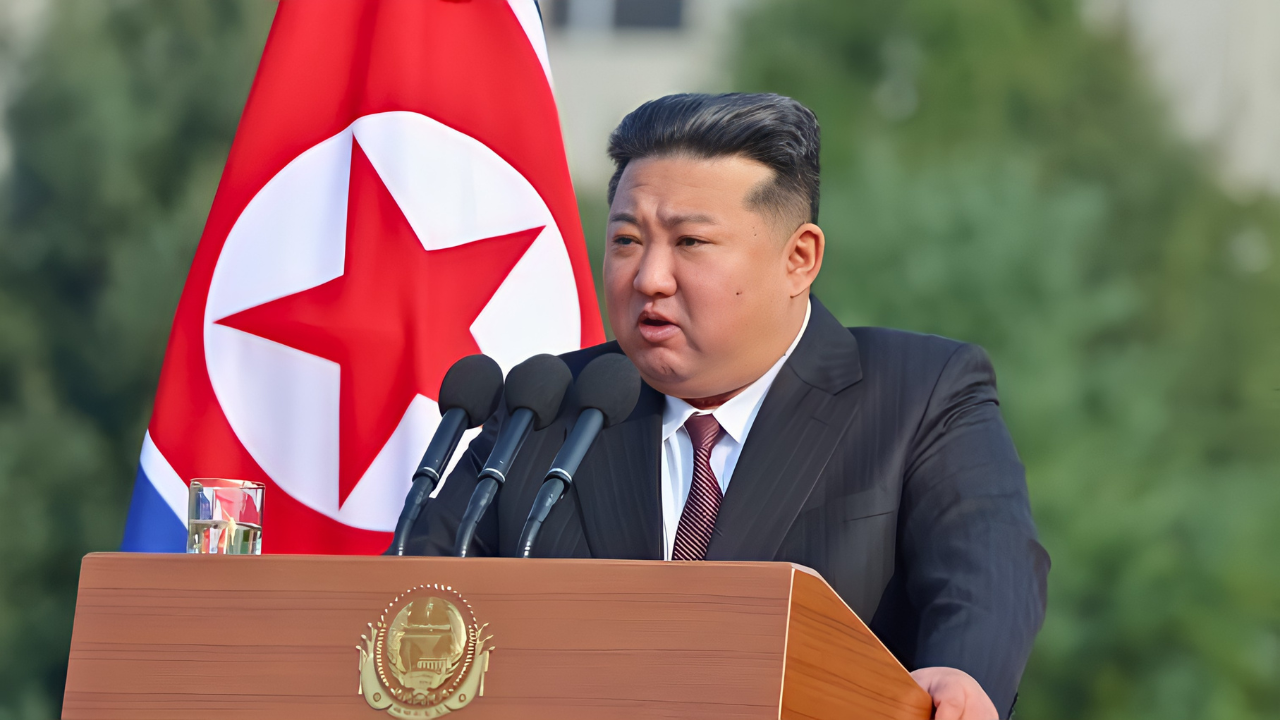
The potential surveillance capability of the UAV could pose a threat to American military installations in South Korea and Japan, with North Korean goals of extending range to more distant bases. Such drones’ surveillance could compromise operational secrecy and U.S. force protection.
Pyongyang’s offensive posture and deterrence can be strengthened by advancing drone capabilities, which could enable improved intelligence gathering for coordinated operations. The psychological impact alone compels U.S. forces to reevaluate their counterintelligence, readiness, and deployment strategies.
The Use of AI and Advanced Technologies in North Korea
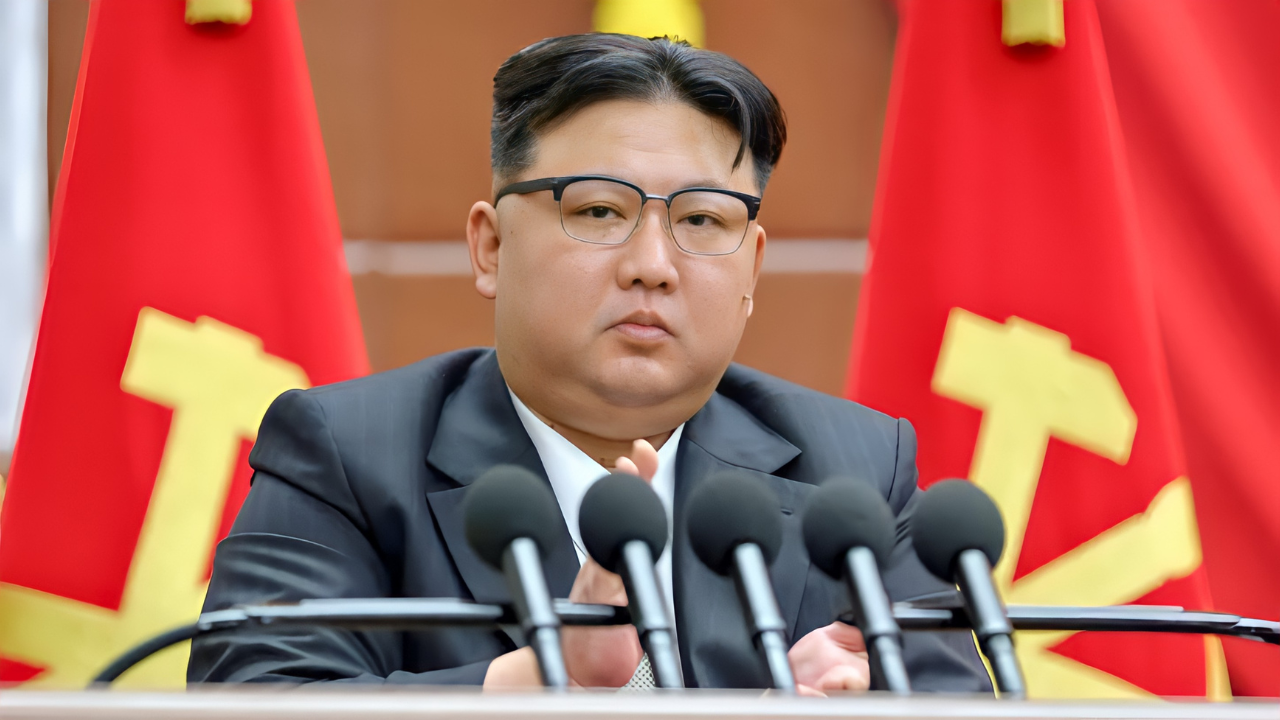
The integration of AI into military hardware, such as improving drone autonomy and targeting accuracy, is emphasized in Kim Jong Un’s 2025 directives. North Korea demonstrated rapid modernization beyond simple cloning when it unveiled “Kumsong” series drones with basic AI that could remember and hit targets on their own.
By potentially enabling fully autonomous long-range reconnaissance and strike missions, this AI development intensifies the threat posed by the Global Hawk clone and could change the dynamics of the conflict on the Korean Peninsula.
The U.S. military response and countermeasures
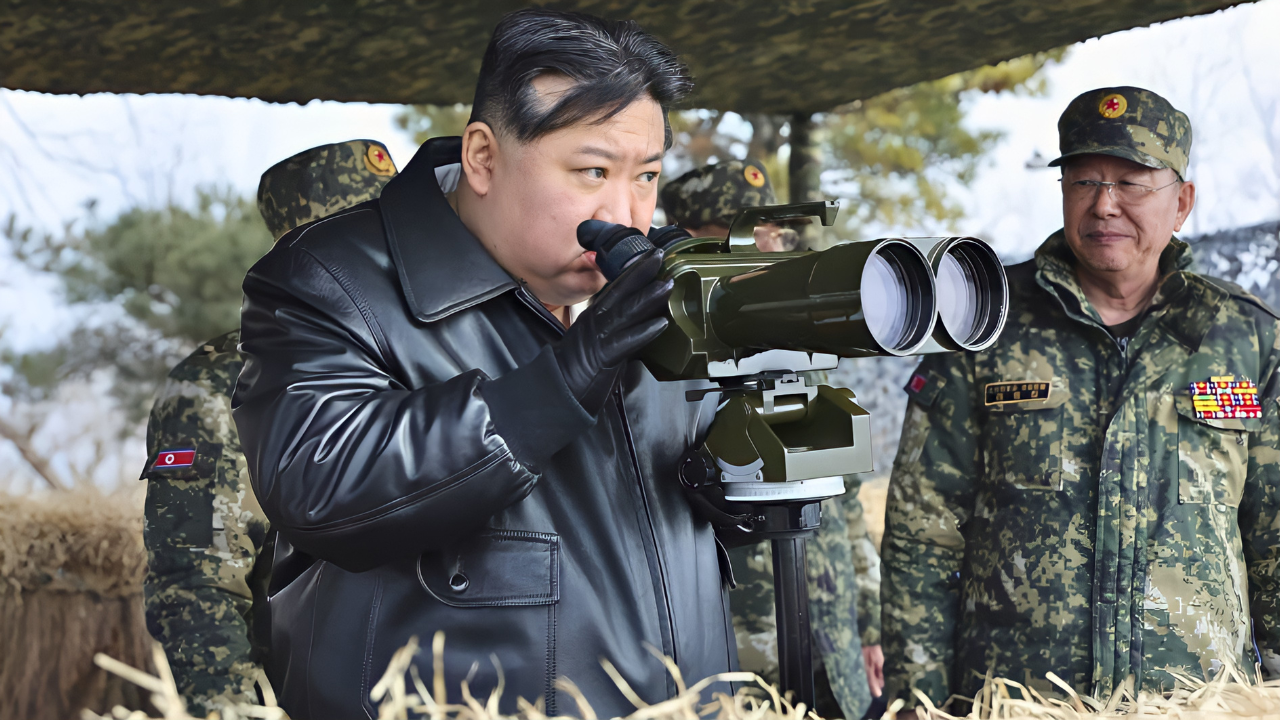
By launching new MQ-9 Reaper drone squadrons and improving ISR (intelligence, surveillance, and reconnaissance) missions, the United States has responded by strengthening drone operations and intelligence capabilities in Northeast Asia.
To counter the surveillance and strike threats posed by the Global Hawk clone, Pyongyang’s drone development calls for ongoing tactical innovation, such as electronic warfare and missile defenses.
Effect on Alliances for Regional Security

The military balance in the area is becoming more uncertain due to the development of near-peer North Korean drone technology. It puts pressure on U.S. forces, Japan, and South Korea to quicken their joint defense projects.
The unveiling of the clone at an arms show that Russian officials attended demonstrates Pyongyang and Moscow’s growing military-technological cooperation, which could change geopolitical alignments and jeopardize the security stability of the Indo-Pacific.
Strategic and Psychological Messaging
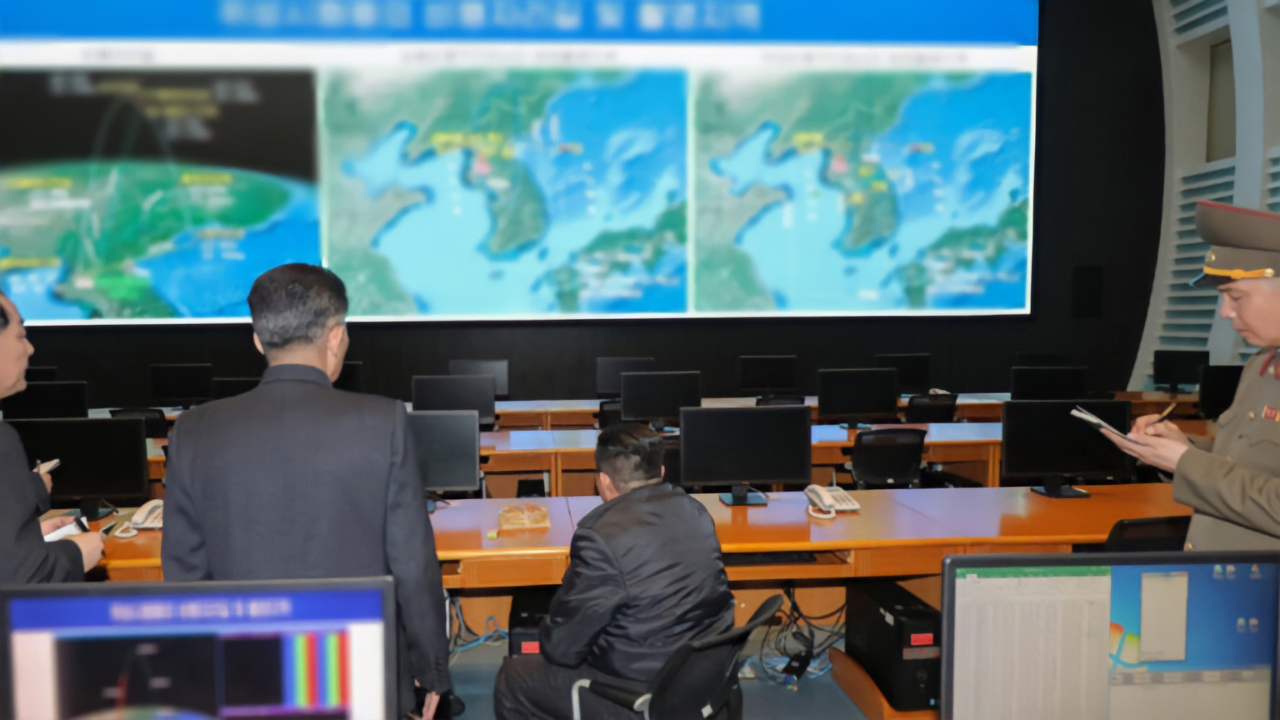
Deterring U.S. aggression and enhancing internal regime legitimacy are the two strategic and psychological goals of Kim Jong Un’s public demonstration of drone capabilities.
The portrayal of the clone dispatch as being on par with American capabilities is a potent narrative both at home and abroad. This action forces adversaries to view Pyongyang as a highly skilled military actor by demonstrating that North Korea can monitor and threaten important U.S. military assets.
Difficulties with Threat Assessment and Verification
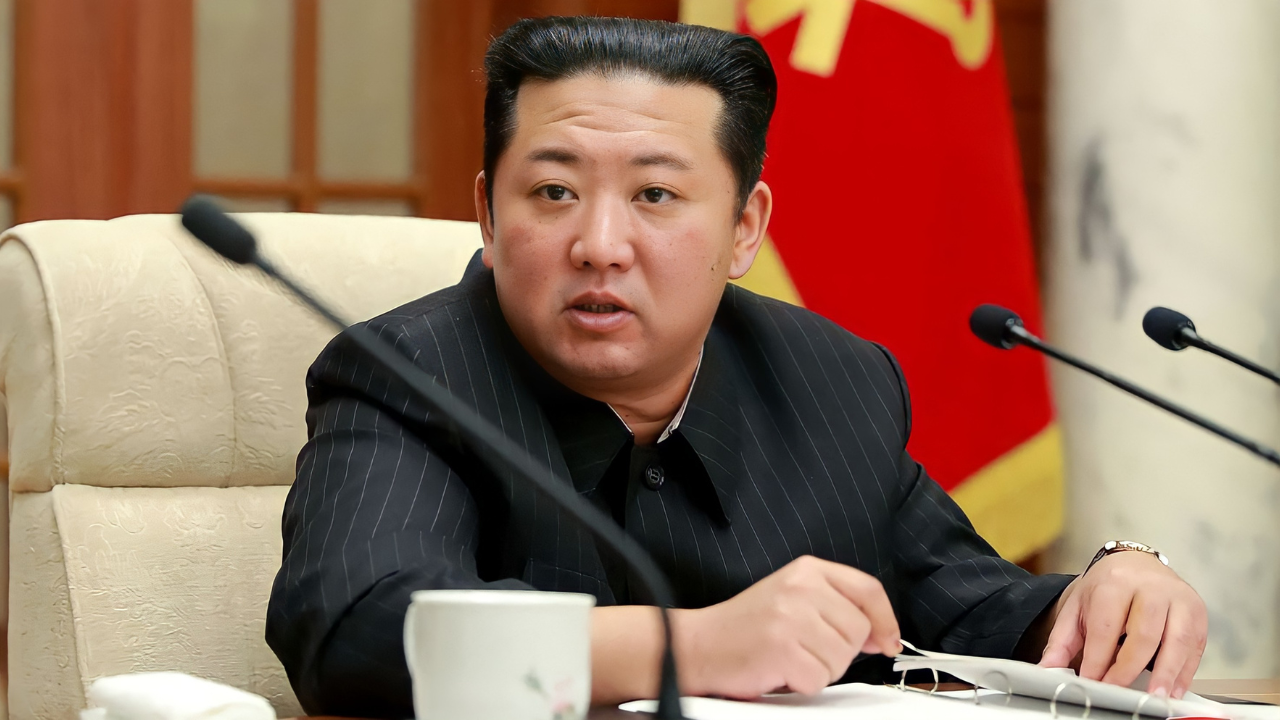
Despite their visual resemblance, little is known about the clone UAV’s true technical capabilities and operational state. Threat assessments are influenced by its speculative sensor suite, endurance, and communication systems.
Given Pyongyang’s history of quickly weaponizing new military technologies, intelligence services must constantly adjust to possible false information while also recognizing the real threat the drone poses.
Transformation of Asymmetric Warfare
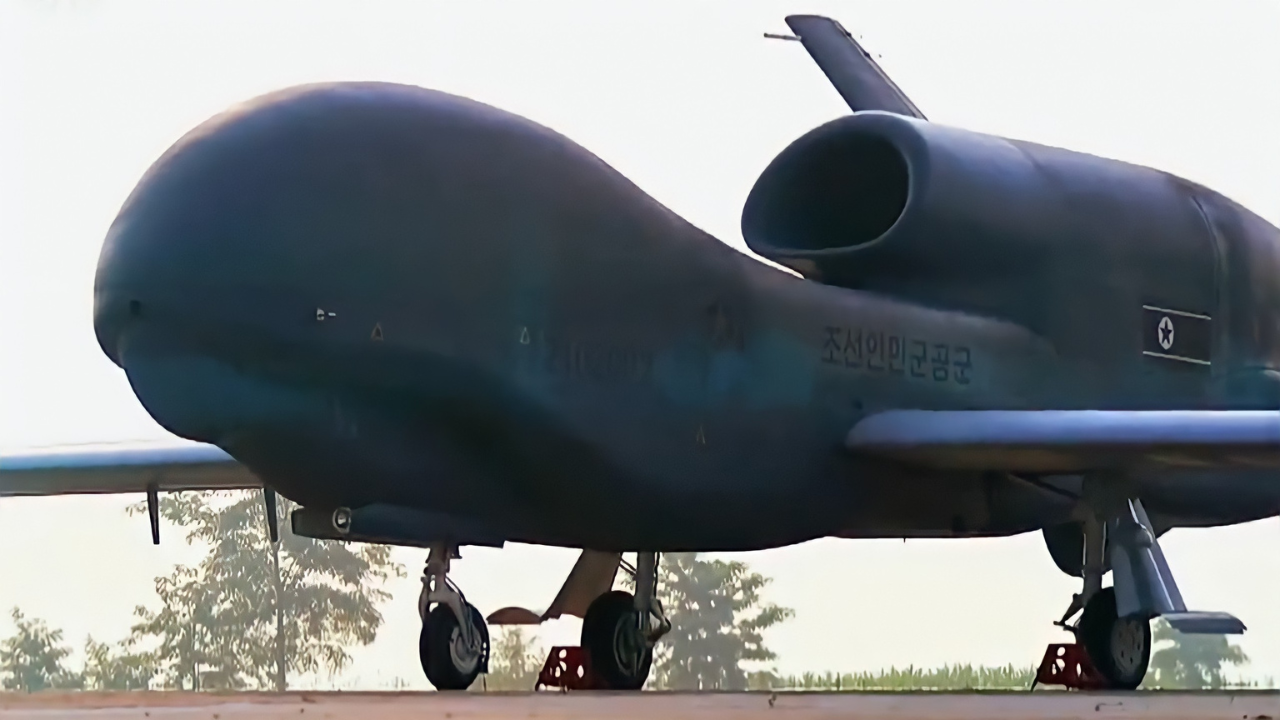
North Korea’s strategic shift toward asymmetric warfare is best illustrated by the Global Hawk clone, which maximizes impact through technology copies rather than proprietary innovation. By using this tactic, Pyongyang can take advantage of holes in American remote sensing and reconnaissance without having to match total military spending.
The strategy demonstrates a sophisticated comprehension of conflict in the twenty-first century, where data dominance can counteract brute force and change the psychology and results of battles.
Is Cloning a Risky Idea?

According to a contrarian viewpoint, replicating intricate U.S. systems could result in operational flaws because of subpar fabrication and software backdoors.
Cloned drones might be vulnerable to hacking or jamming if globally connected systems are left unguarded, which could make North Korea’s well-known investments vulnerable. The limitations of the clone present an intelligence opportunity for U.S. cyber and electronic warfare units.
Parallels in Historical Espionage
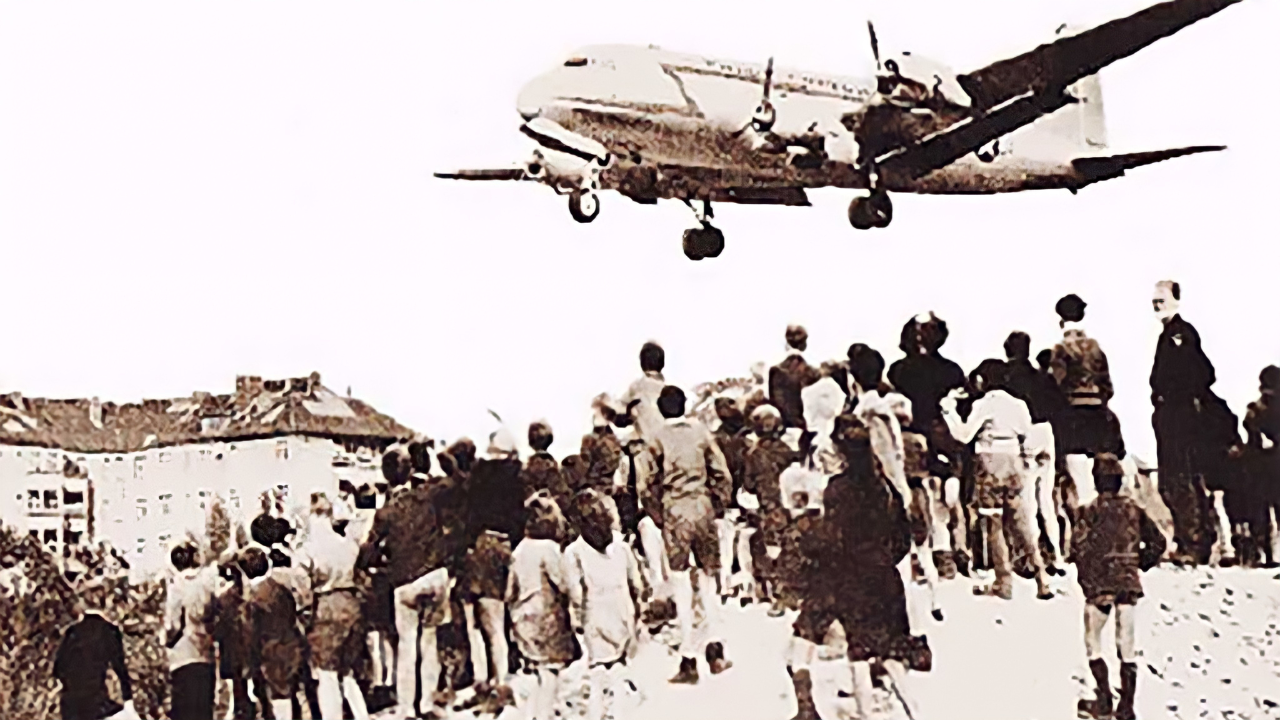
In the past, significant conflict changes have been preceded by the covert duplication of enemy technology; for example, the Soviet Union’s acquisition of intelligence on U.S. reconnaissance aircraft heightened Cold War signaling. Similar dynamics are evoked by North Korea’s drone development, indicating a prelude to intensified tensions or diplomatic pressure.
Given that drones are currently taking the place of manned aircraft in espionage and deterrence roles, the strategic unveiling may be compared to Cold War psychological brinkmanship.
Possible Secondary Impacts on the World’s Drone Industry
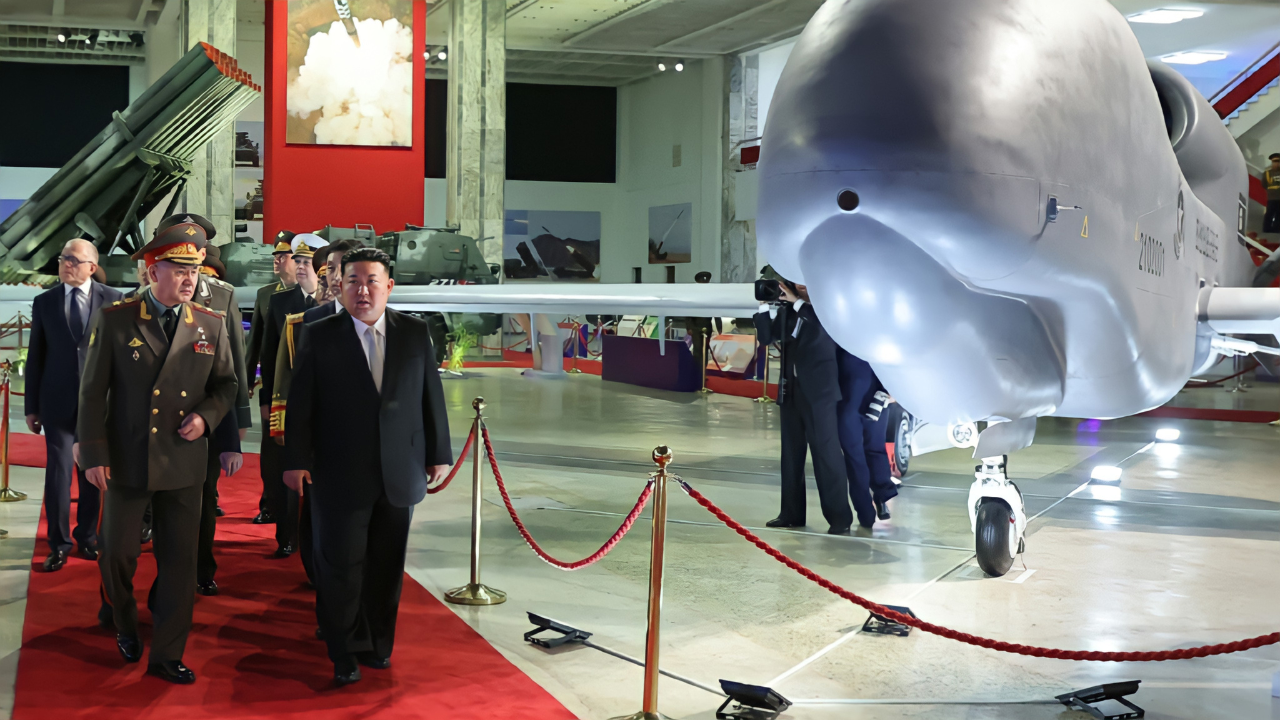
State and non-state actors may be encouraged to actively pursue UAV cloning and hybridization worldwide by North Korea’s overt targeting of sophisticated Western drone models. International drone export control regimes may become more complex and proliferation risks may rise as a result.
Pyongyang’s drone ambitions are having a transnational impact, as evidenced by reports that North Korean-aligned cyber actors are threatening European drone manufacturers with dual-use technologies.
Current Confirmed Information on the Effects of Military Exercises on Diplomacy
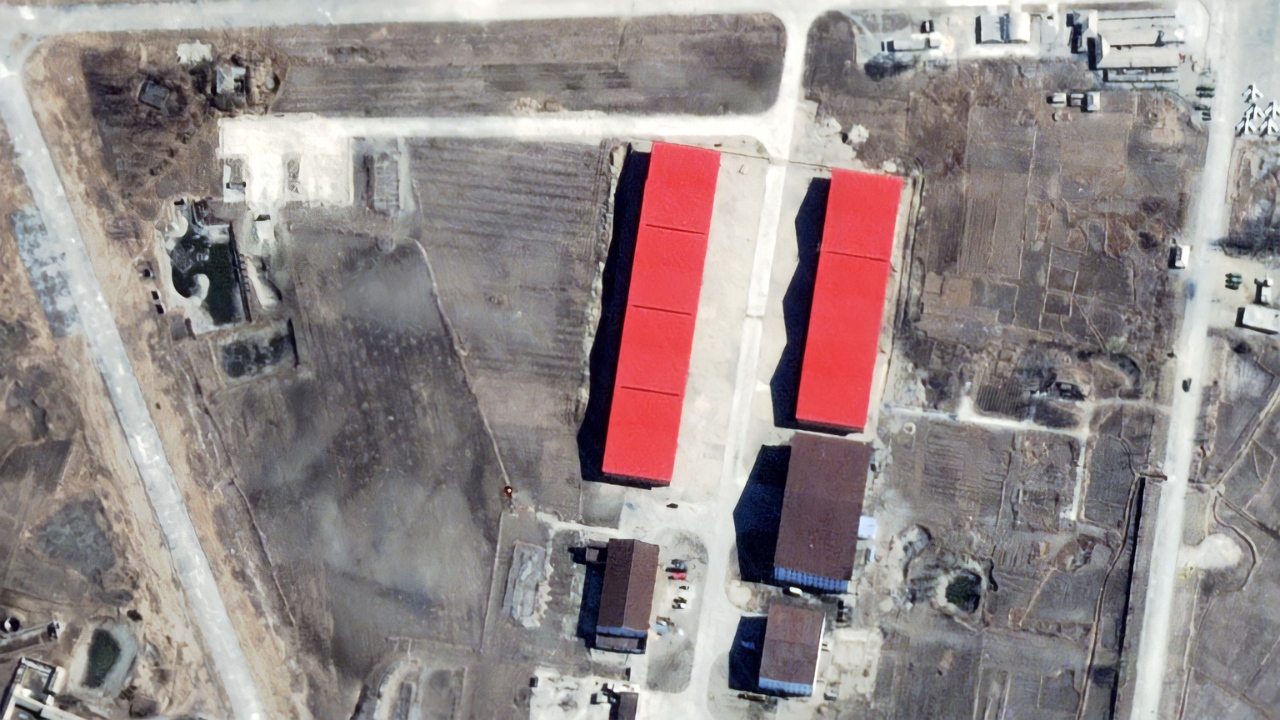
In direct response to North Korea’s drone developments, recent joint military exercises between the United States and South Korea have improved electronic warfare and included counter-drone operations. In the meantime, Pyongyang’s repeated missile launches and other weapons tests align with its attempts to exert diplomatic pressure.
Tension is increased by the increase in drone capability, which forces diplomatic channels to strike a balance between dialogue and sanctions in the face of growing security concerns.
Conclusion
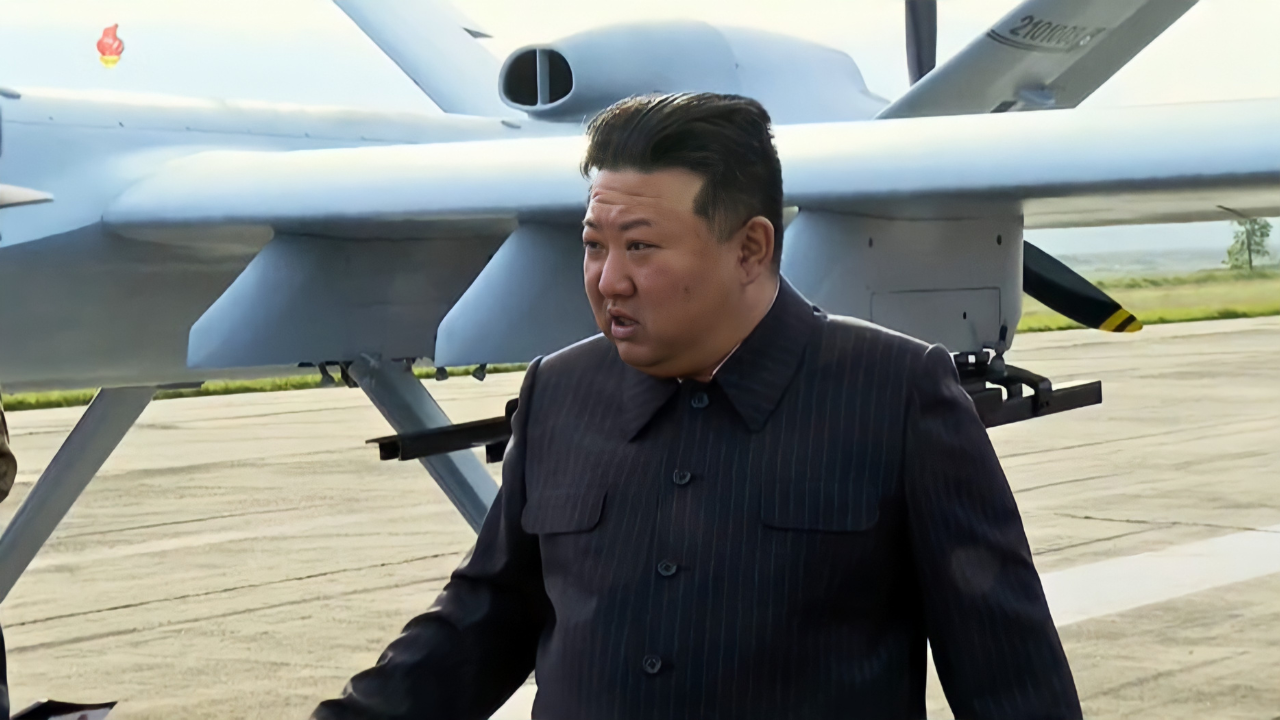
The deliberate strategic move by Kim Jong Un to advance drone capabilities increases Pyongyang’s power projection and heightens concerns about surveillance of American bases in the region. Long-term investments in UAV technology and AI-enabled autonomy are reshaping regional military dynamics, as evidenced by this development.
Although there are still difficulties with capability verification, the strategic and psychological effects are indisputable, forcing the United States and its allies to reevaluate their diplomacy and defenses in Northeast Asia. The advent of the drone serves as a sobering reminder that, rather than relying solely on firepower, modern warfare now more and more depends on technology replication, artificial intelligence advancement, and asymmetrical strategy.